
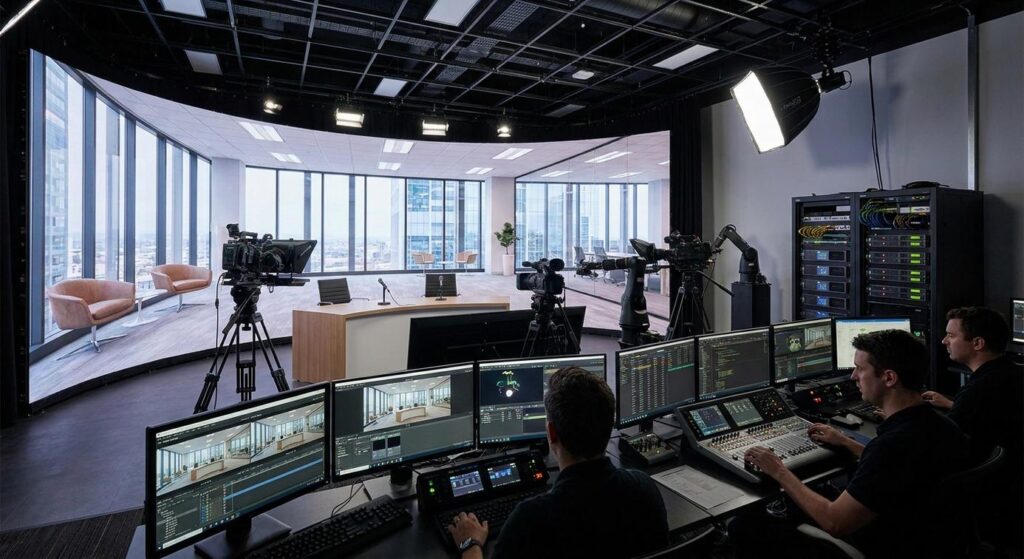
Introduction to Virtual Production in Corporate Settings
In the evolving landscape of B2B event streaming, the ability to simulate high-end Central Business District (CBD) office locations using virtual production is becoming increasingly valuable. This innovative approach not only enhances the visual appeal of events but also reduces the logistical constraints of physical locations. As companies seek versatile solutions for hybrid event production, utilizing virtual environments offers a scalable and cost-effective alternative.
Technical Foundations of Virtual Production
Virtual production utilizes advanced graphics technology to create immersive environments. Key technologies include photorealistic rendering engines such as Unreal Engine, which allow for real-time visualizations that replicate the ambiance of sophisticated office spaces. These engines, combined with high-resolution LED panels and virtual cameras, enable precise control over the virtual environment, making it indistinguishable from reality to the audience.
Rendering Protocols and Streaming Standards
Virtual production heavily relies on secure streaming protocols like SRT (Secure Reliable Transport) and video compression standards such as H.264 and H.265. These protocols ensure high-quality, low-latency streaming, essential for real-time interactions in a virtual environment. Industry standards like RTMP (Real-Time Messaging Protocol) and NDI (Network Device Interface) are also pivotal for seamless integration with existing broadcasting workflows.
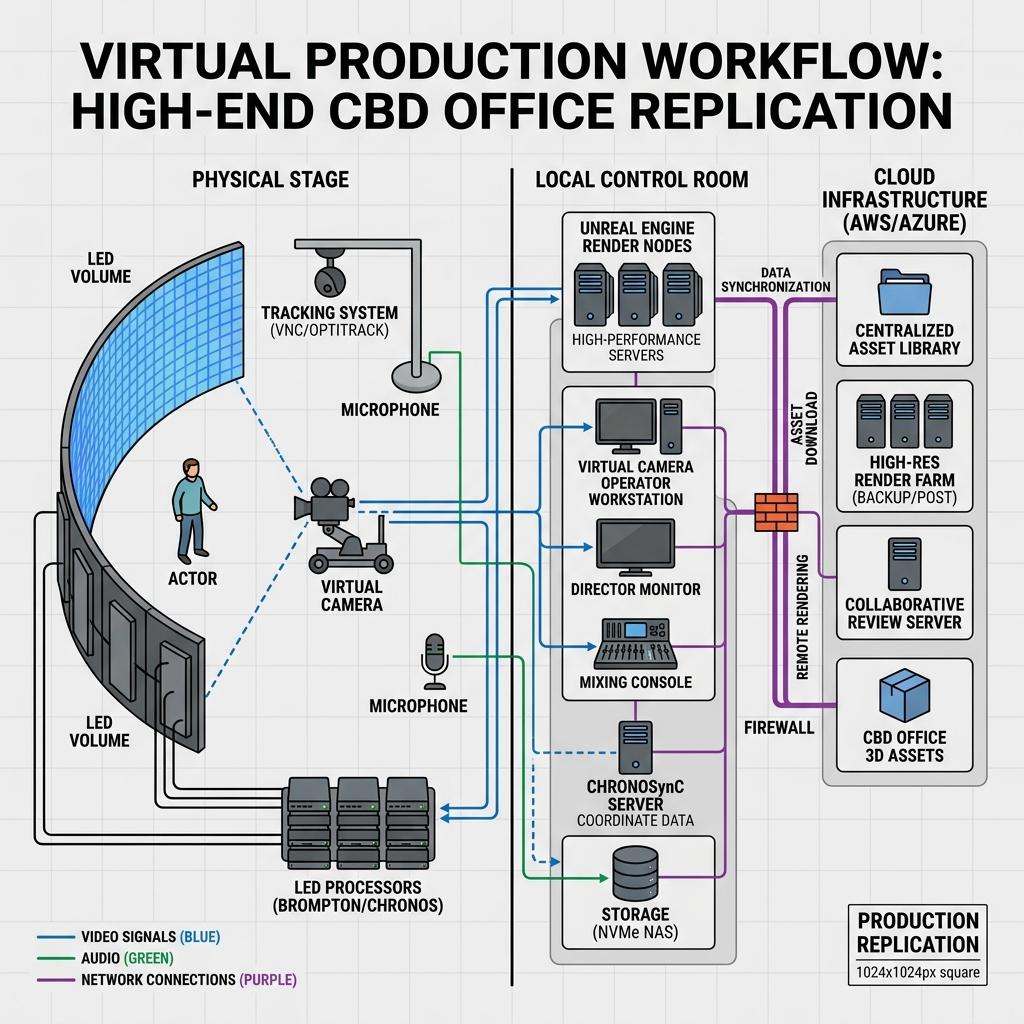
Infrastructure and Production Workflow
Implementing virtual production requires robust infrastructure that supports high data throughput and efficient video encoding. High-bandwidth network connections and enterprise-grade servers are crucial to handle the demands of real-time graphics rendering and streaming. Optimum performance is achieved through a combination of cloud-based solutions and on-premise hardware, offering the flexibility needed for diverse production scenarios.
Enterprise-Level Production Setups
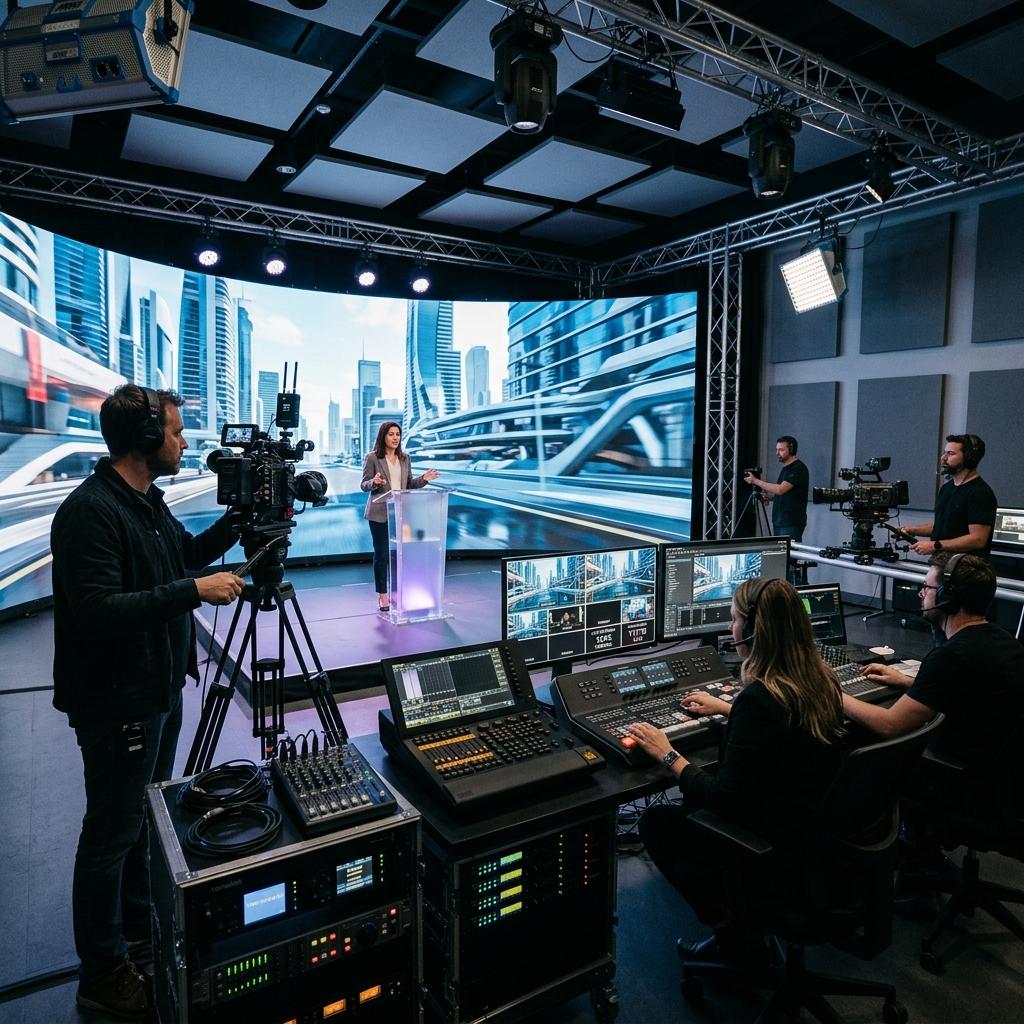
The modern virtual production setup integrates multiple 4K/UHD cameras with precise lens tracking and motion capture systems. This allows for dynamic camera movements, enhancing the realism of the virtual CBD office settings. Multiview monitoring and advanced video switching systems ensure seamless transitions between virtual scenes, contributing to a professional broadcast standard.
Audio-Visual Signal Routing and Management
Managing audio and video signals in a virtual production environment involves sophisticated signal routing architectures. SDI (Serial Digital Interface) and HDMI 2.1 are essential for maintaining high-quality signal integrity. Audio mixing consoles provide fine control over audio levels, ensuring crystal-clear sound reproduction, crucial for maintaining viewer engagement.
Network and Scalability Considerations
For successful virtual production, a high-performance network infrastructure is indispensable. This includes low-latency network switches and redundant pathways to prevent data loss during transmission. Consideration of scalability is vital for hybrid events that may concurrently stream to physical and virtual audiences. Failover strategies and quality of service protocols are implemented to maintain uninterrupted streaming, even under network duress.
Integration with Enterprise Platforms
Seamless integration with platforms like Microsoft Teams, Zoom, and Webex is crucial for ensuring smooth hybrid events. These platforms offer features that support synchronized playback and audience interaction, providing a cohesive experience across all user interfaces. The integration process involves thorough compatibility checks and compliance with ISO streaming standards.
Conclusion: Implementing Virtual Production for Enterprise Events
Adopting virtual production techniques to mimic high-end CBD office locations offers enterprise planners a distinct advantage in delivering visually compelling and efficient events. By leveraging state-of-the-art technology and forging reliable integration strategies, companies can substantially enhance their event production capabilities while maintaining cost-effectiveness. With the proper technical infrastructure and workflow in place, virtual production becomes a powerful tool for modern corporate storytelling and engagement.
Jeremy Lee is a seasoned digital marketing director and strategist with over two decades of experience in the industry. As the founder of Sotavento Medios, I manage a diverse portfolio of over 50 businesses, helping brands grow through advanced search strategies and digital innovation. My work focuses on bridging the gap between traditional search engine optimisation and the evolving world of AI-driven answer engines.
get in touch