
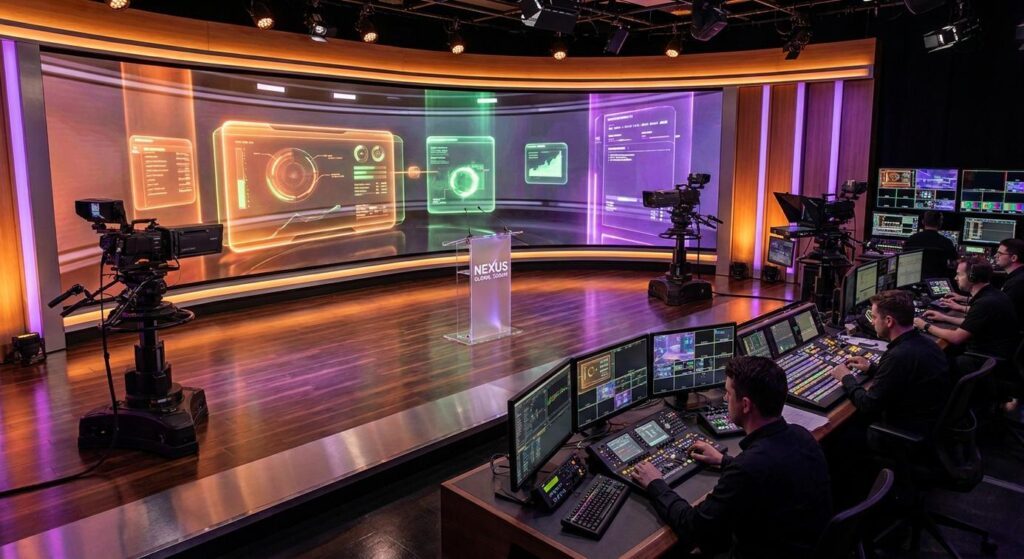
The Rise of Hybrid Events in the Modern Business Landscape
In recent years, the paradigm of corporate events has shifted dramatically. Businesses are no longer confined to physical venues; the hybrid model seamlessly integrates physical and virtual elements to create dynamic experiences. With the introduction of Augmented Reality (AR) interactivity, the future of hybrid events is poised to offer unparalleled engagement.
The application of AR in B2B event streaming enhances real-time data visualization, remote participation, and interactivity, offering businesses a robust platform for communication and connection. With protocols such as Secure Reliable Transport (SRT), Real-Time Messaging Protocol Secure (RTMPS), and Network Device Interface (NDI) playing a critical role, event streaming is more reliable and versatile than ever before.
Technical Infrastructure for Hybrid Events
Enterprise-Grade Streaming Protocols
At the core of successful hybrid events is the integration of robust streaming protocols. SRT and RTMPS are favored for their high level of security, reliability, and low latency, crucial for large-scale corporate events. Additionally, NDI improves video production quality across distributed workflows by allowing low-latency sharing of video and audio over standard IP networks.
Augmented Reality in Streaming Workflows
AR technology, integrated within live streaming workflows, can enhance user interaction by overlaying digital content on the physical environment. This is facilitated by advanced encoding standards like H.265 which allows higher compression efficiency and supports UHD resolutions, making AR overlays detailed and immersive.
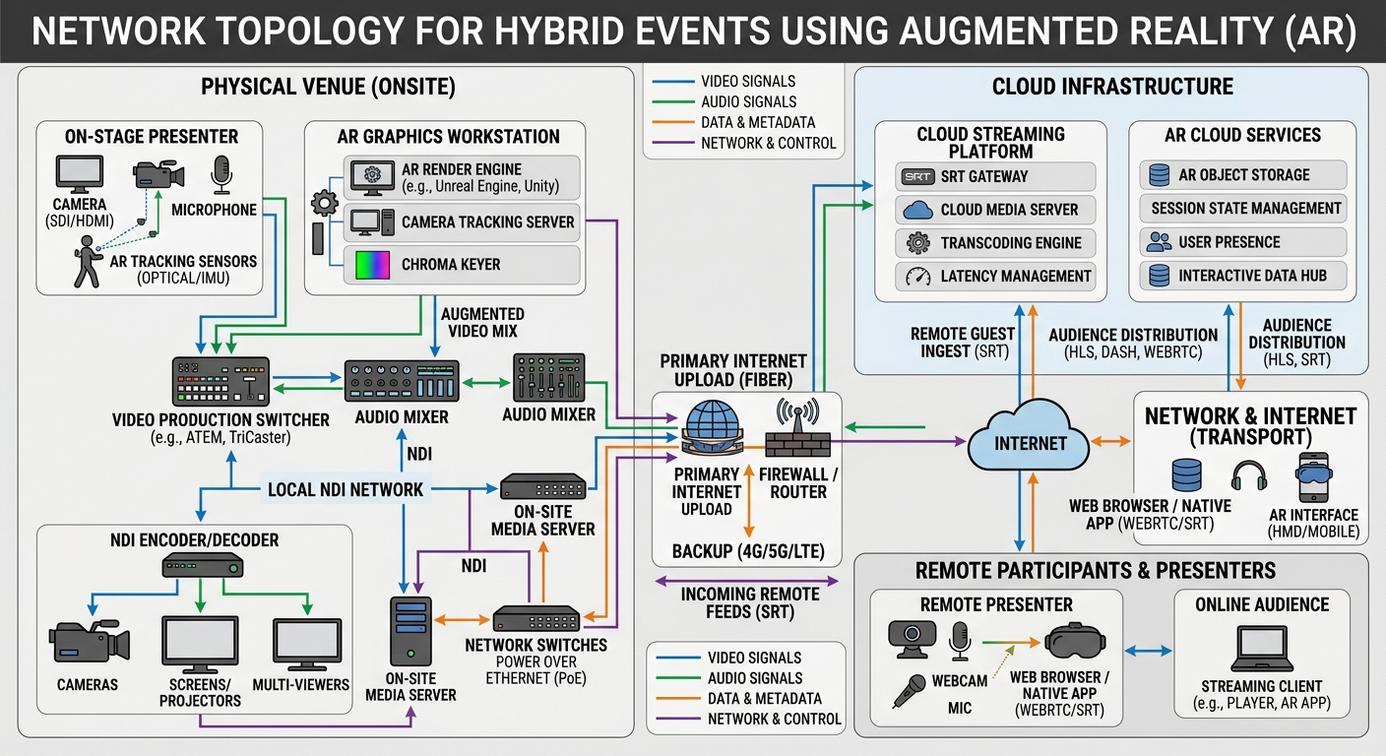
AR Production Workflows and Equipment
Multi-Camera and Switching Systems
Incorporating AR requires multi-camera setups synchronized through NDI|HX and SDI for high-definition video switching. Modern switchers support real-time overlays, essential for dynamic AR content integration. Professional switchers like the ATEM line provide robust features for managing complex video feeds.
Comprehensive Networking Architecture
Network architecture must accommodate varying video resolutions and data flows. Utilizing Quality of Service (QoS), bandwidth can be effectively managed to prioritize critical video feeds, ensuring seamless integration with enterprise platforms such as Microsoft Teams and Zoom.
Implementing AR in Hybrid Enterprises
Enterprises interested in leveraging AR must focus on scalable cloud-based solutions as well as on-premise setups. Cloud streaming platforms offer elasticity, allowing resources to be ramped up or down based on demand. However, an on-premise infrastructure may provide more control and lower latency for high-stakes corporate events.
Real-World Implementation Strategies
For seamless execution, deploy redundant systems for failover support and leverage program feed monitoring and NDI broadcast configurations to manage multiview displays. Implementing ISO recording ensures that each camera feed can be individually recorded and edited post-event.
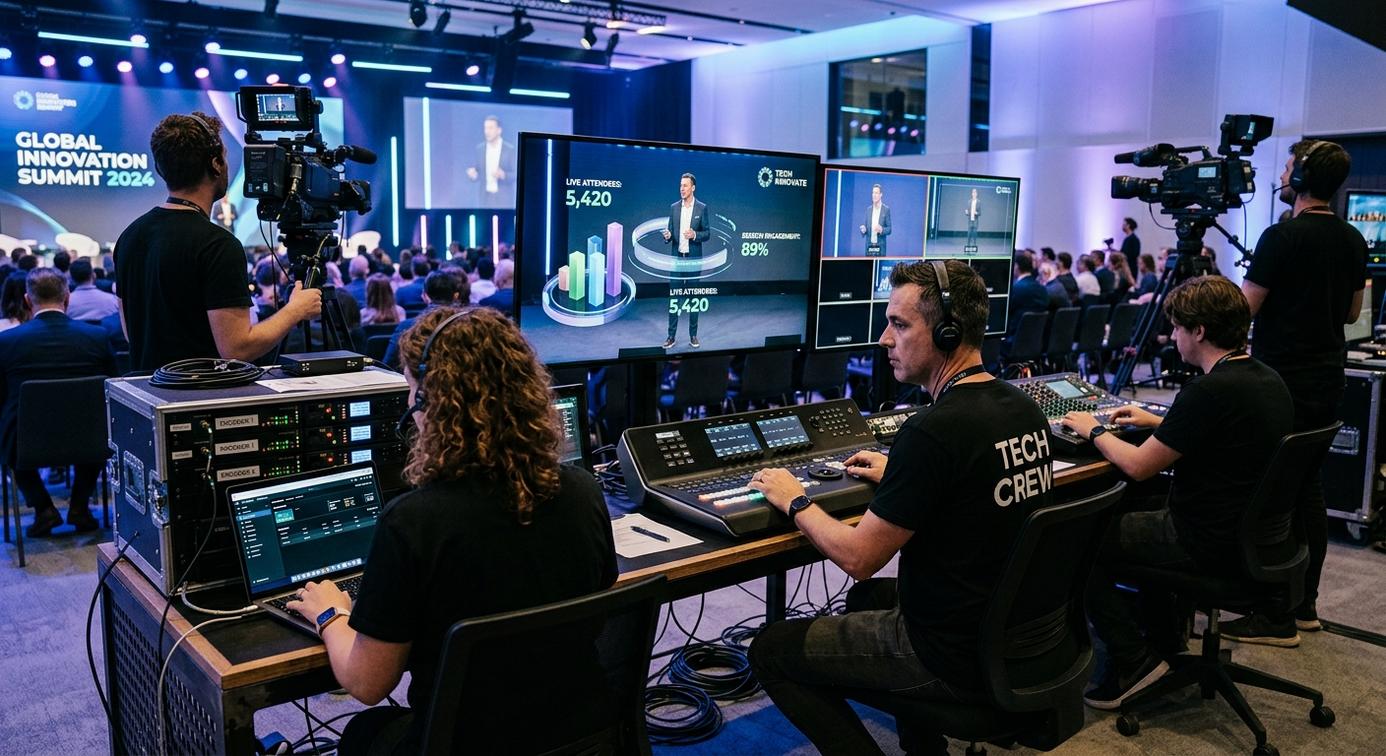
Conclusion: The Future of AR-Enhanced Hybrid Events
With augmented reality, hybrid events not only create inclusive multidimensional experiences but also offer robust enterprise-grade solutions. By implementing these technical strategies and staying aligned with industry standards like SMPTE and ISO, enterprises can elevate their event production capabilities, ensuring a seamless, engaging experience for audiences worldwide.

Jeremy Lee is a seasoned digital marketing director and strategist with over two decades of experience in the industry. As the founder of Sotavento Medios, I manage a diverse portfolio of over 50 businesses, helping brands grow through advanced search strategies and digital innovation. My work focuses on bridging the gap between traditional search engine optimisation and the evolving world of AI-driven answer engines.
get in touch