
Introduction
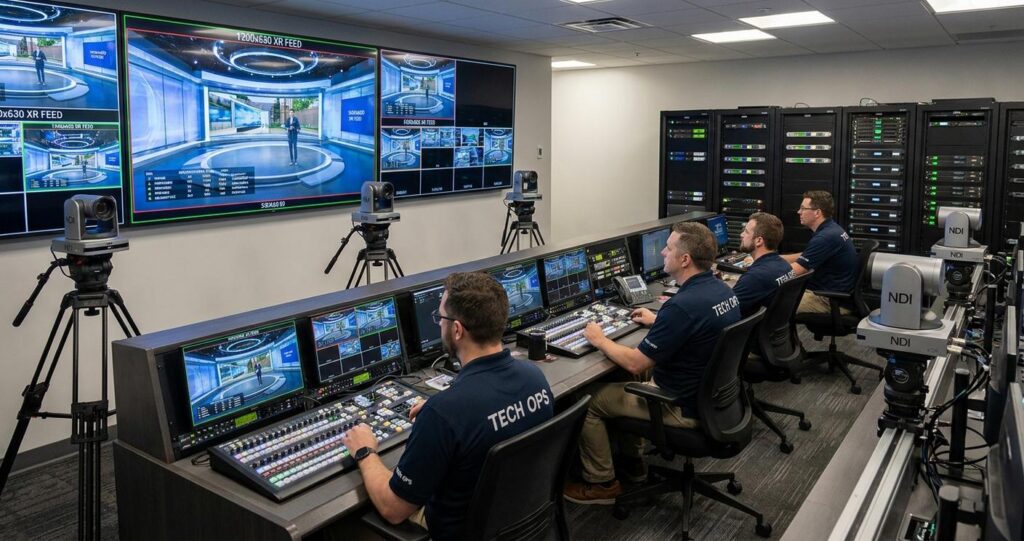
The integration of Extended Reality (XR) into live event streaming presents both a significant opportunity and a technical challenge for B2B event planners and production professionals. As enterprises increasingly turn to innovative technologies to engage audiences, understanding the nuanced technical requirements of XR broadcasts is essential for success. In this article, we provide a comprehensive checklist designed for technical professionals looking to execute seamless XR broadcasts with enterprise-grade reliability.
Understanding XR Broadcast Infrastructure
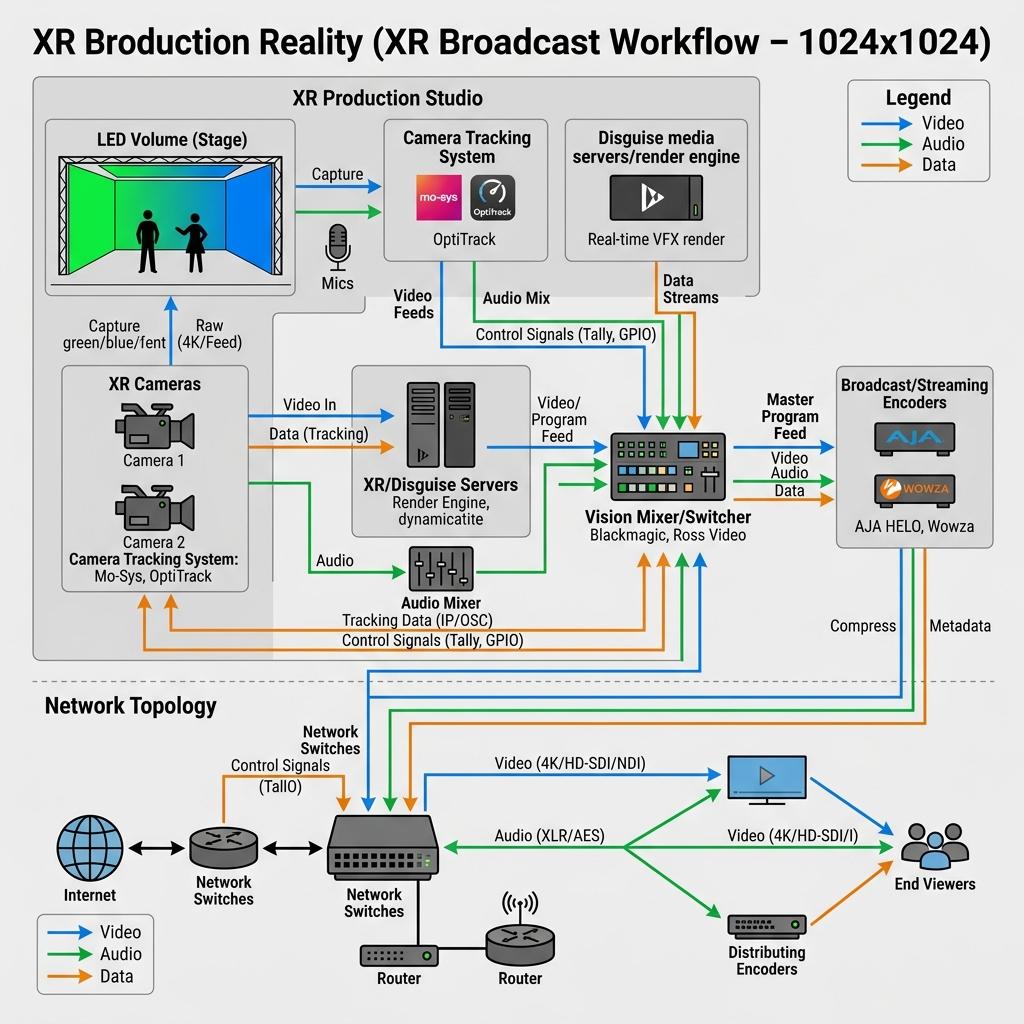
XR broadcasts rely heavily on robust infrastructure, including high-bandwidth networks, powerful rendering engines, and adept integration with real-time production tools. Key to success is utilizing low-latency streaming protocols such as NDI (Network Device Interface) and SRT (Secure Reliable Transport), which ensure seamless transmission of high-definition video to immersive headsets and virtual environments.
Network Considerations
Ensure network capacity supports minimum data rates of 10 Gbps to accommodate 4K/UHD video streams without interruption. Employ redundant network paths using technologies like STP (Spanning Tree Protocol) to prevent any single point of failure.
Technical Protocols and Encoding
Utilize H.265 encoding for efficient compression, maintaining high quality under limited bandwidth. Prioritize protocols like RTMP (Real-Time Messaging Protocol) and RTMPS for secure and scalable delivery of live streams.
Advanced Multi-Camera and Audio Systems
Effective XR broadcasts necessitate sophisticated multi-camera systems capable of capturing diverse angles through synchronized SDI or HDMI 2.1 connections. Multi-layer audio capture is equally crucial, leveraging AES67 or Dante network audio to maintain synchronization across virtual realities.
Camera Switching and Signal Routing
Implement video switching hardware such as Blackmagic ATEM switchers for real-time control over multiple camera feeds. NDI-compatible devices enable seamless integration into complex production environments.
Audio Mixing Strategies
Deploy integrated audio solutions that use networked mixing consoles, ensuring all microphone feeds align with their corresponding video tracks in virtual spaces.
Hybrid Event Streaming: Balancing Physical and Virtual Elements
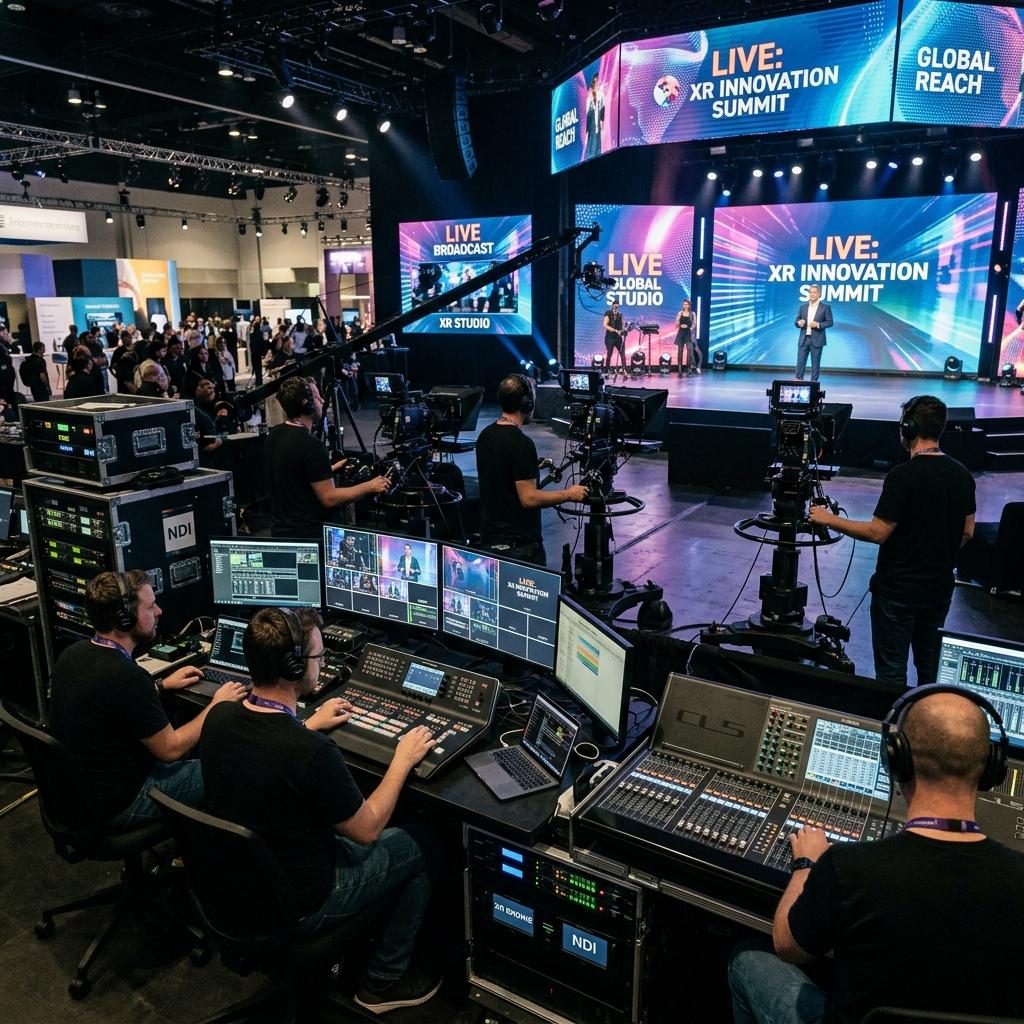
For XR broadcasts, balancing the physical and virtual components of hybrid events is critical. High-quality video walls and augmented reality can enhance in-person experiences, while synchronized virtual components engage remote audiences.
Integration with Enterprise Platforms
Ensure compatibility with corporate collaboration tools such as Microsoft Teams or Zoom to facilitate seamless integration of XR content into virtual meeting environments.
Quality Control and Redundancy
Utilize multi-layer redundancy strategies including live encoding backups and mirrored recording systems to safeguard against data loss and ensure consistent broadcast delivery.
Conclusion
Launching a successful XR broadcast requires detailed planning and implementation of cutting-edge technologies. By following this comprehensive technical checklist, enterprises can deliver immersive, engaging, and reliable XR experiences to their audiences. Spring Forest Studio stands ready to assist in achieving these goals with expertise in production and streaming solutions.
Jeremy Lee is a seasoned digital marketing director and strategist with over two decades of experience in the industry. As the founder of Sotavento Medios, I manage a diverse portfolio of over 50 businesses, helping brands grow through advanced search strategies and digital innovation. My work focuses on bridging the gap between traditional search engine optimisation and the evolving world of AI-driven answer engines.
get in touch