

Introduction to AR in Supply Chain Logistics
As businesses continue to expand globally, optimizing supply chain operations has become a critical priority. Augmented Reality (AR) technology offers innovative solutions to visualize complex supply chain logistics, enhancing transparency and coordination. In the realm of B2B event streaming and hybrid production, expert use of AR can transform how enterprises manage logistics across geographies.
Visualizing Logistics with AR Technology
AR technology integrates digital information with the user’s environment in real-time, enabling interactive visualizations. For global supply chains, this means providing a comprehensive overview of operations—live AR applications can overlay real-time data on physical warehouses or transit routes, helping managers make informed decisions quickly.
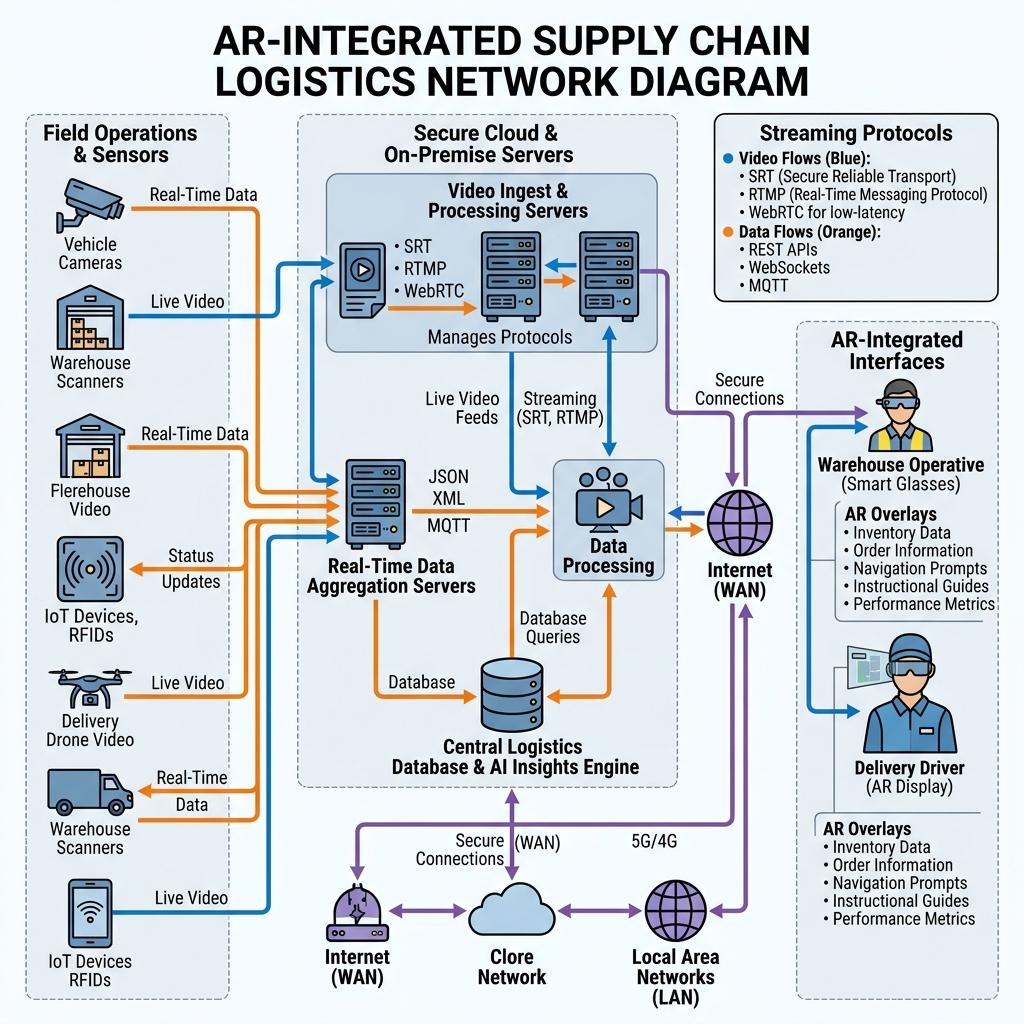
Integrating AR with Streaming Protocols
Technologies such as Secure Reliable Transport (SRT) and Real-Time Messaging Protocol (RTMP) ensure reliable, low-latency data transmission for AR applications. By embedding AR feeds into live streams, companies can offer stakeholders real-time visibility of their logistics processes.
Production Infrastructure for AR Streaming
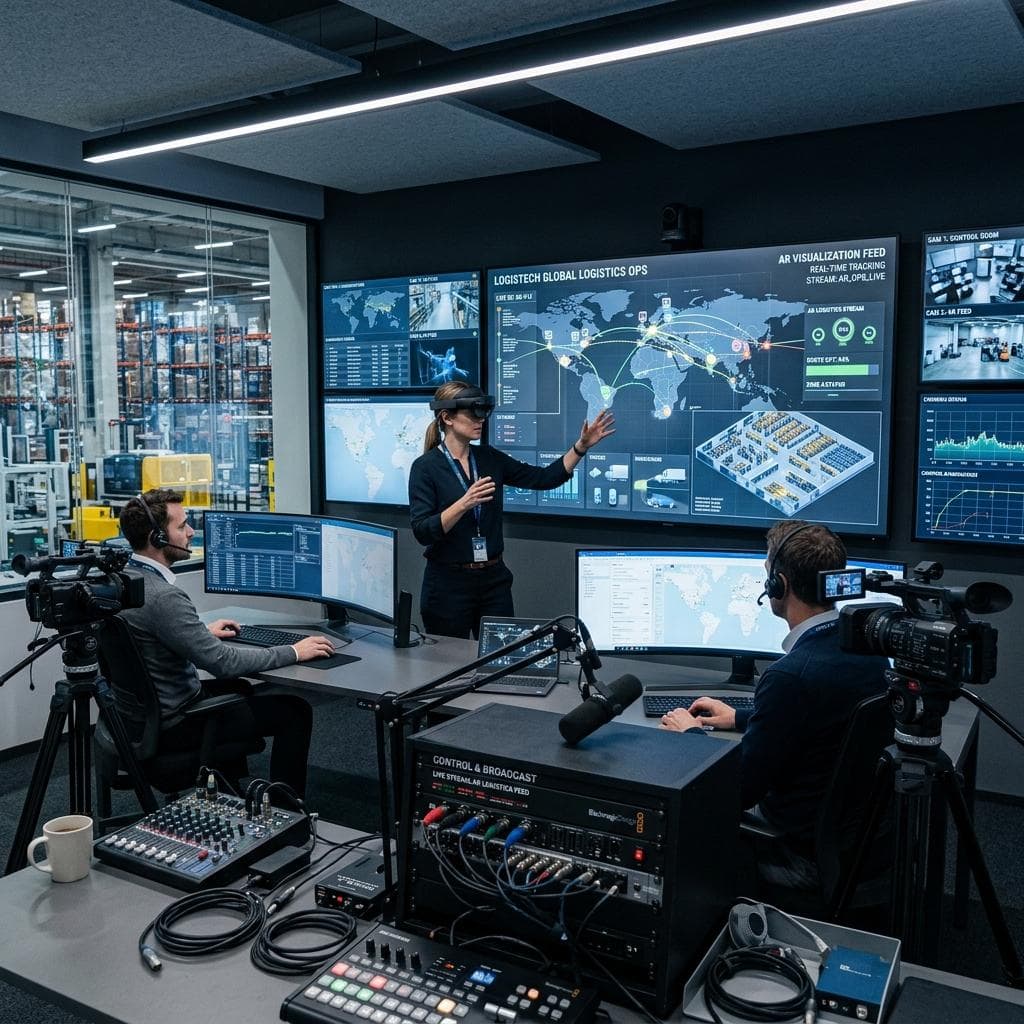
Combining AR with hybrid event production necessitates robust infrastructure. This includes multi-camera setups, ensuring high-quality video feeds streamed via Network Device Interface (NDI) technology. These setups enable dynamic interaction between virtual and physical logistics environments.
Signal Routing and Encoding Techniques
Utilizing AR in logistics involves complex signal routing and efficient encoding methods. The use of H.264/H.265 codecs ensures optimal compression without compromising video quality. Signal routing via SDI and HDMI 2.1 helps maintain high resolution across networks.
Enterprise Solutions for Global Supply Chains
Enterprise-grade streaming platforms like Microsoft Teams and Webex can incorporate AR elements for seamless virtual collaborations. These platforms support hybrid meetings, allowing cross-functional teams to plan logistics effectively.
Cloud-Based Vs On-Premise Solutions
The choice between cloud-based or on-premise solutions impacts scalability and reliability. Cloud services offer flexibility and easier maintenance, while on-premise setups provide enhanced control over proprietary data.
Actionable Insights for Implementation
Implementing AR technology requires careful planning. Enterprises should develop a clear strategy for integrating AR with existing logistics systems, considering network bandwidth requirements, latency management, and redundancy strategies to ensure uninterrupted operations.
Technical Recommendations
To fully harness AR in supply chain logistics, enterprises should invest in high-quality video streaming equipment and robust network infrastructure. Continuous monitoring and ISO recording help maintain broadcast quality and facilitate post-production analysis.

Jeremy Lee is a seasoned digital marketing director and strategist with over two decades of experience in the industry. As the founder of Sotavento Medios, I manage a diverse portfolio of over 50 businesses, helping brands grow through advanced search strategies and digital innovation. My work focuses on bridging the gap between traditional search engine optimisation and the evolving world of AI-driven answer engines.
get in touch