
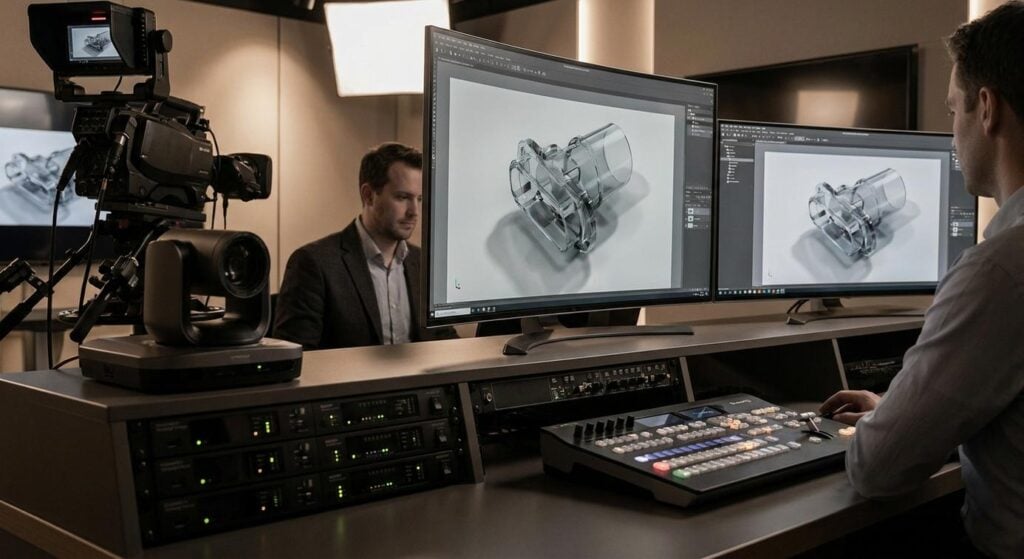
Introduction: Revolutionizing B2B Product Demonstrations with Realistic Physics
In the rapidly evolving landscape of B2B event streaming and hybrid production, the integration of realistic physics in 3D product demonstrations has emerged as a game-changing innovation. This technology enables companies to showcase their products with unprecedented accuracy and immersion, providing potential clients with a tangible experience. Leveraging advanced technologies such as real-time rendering and physics engines, businesses can create highly detailed simulations that closely mimic real-world behavior.
The adoption of these technologies aligns perfectly with the goals of B2B event streaming, where delivering precise and engaging content is paramount. By incorporating realistic physics, companies can enhance the visual appeal and informative value of their presentations, ultimately driving engagement and conversions.
Utilizing Realistic Physics with Advanced Streaming Protocols
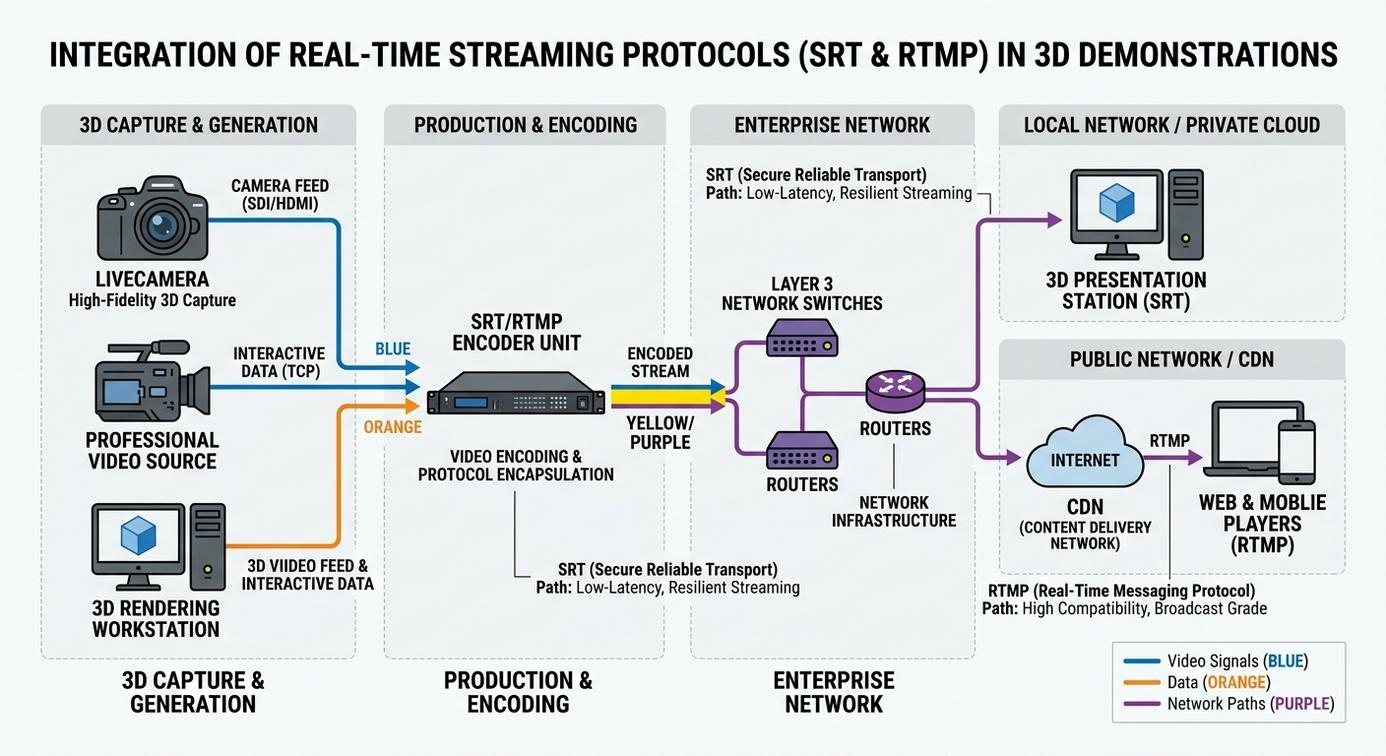
Integrating realistic physics into 3D demonstrations requires robust streaming protocols like Secure Reliable Transport (SRT) and Real-Time Messaging Protocol (RTMP). These protocols ensure high-quality delivery of graphics-intensive content with minimal latency.
SRT protocol, known for its resilience against packet loss, adapts to network conditions and maintains low latency, critical for live 3D demonstrations. Similarly, RTMP facilitates real-time broadcasting, essential for maintaining engaging and interactive presentations.
Implementing Multi-Camera Setups for Enhanced Engagement
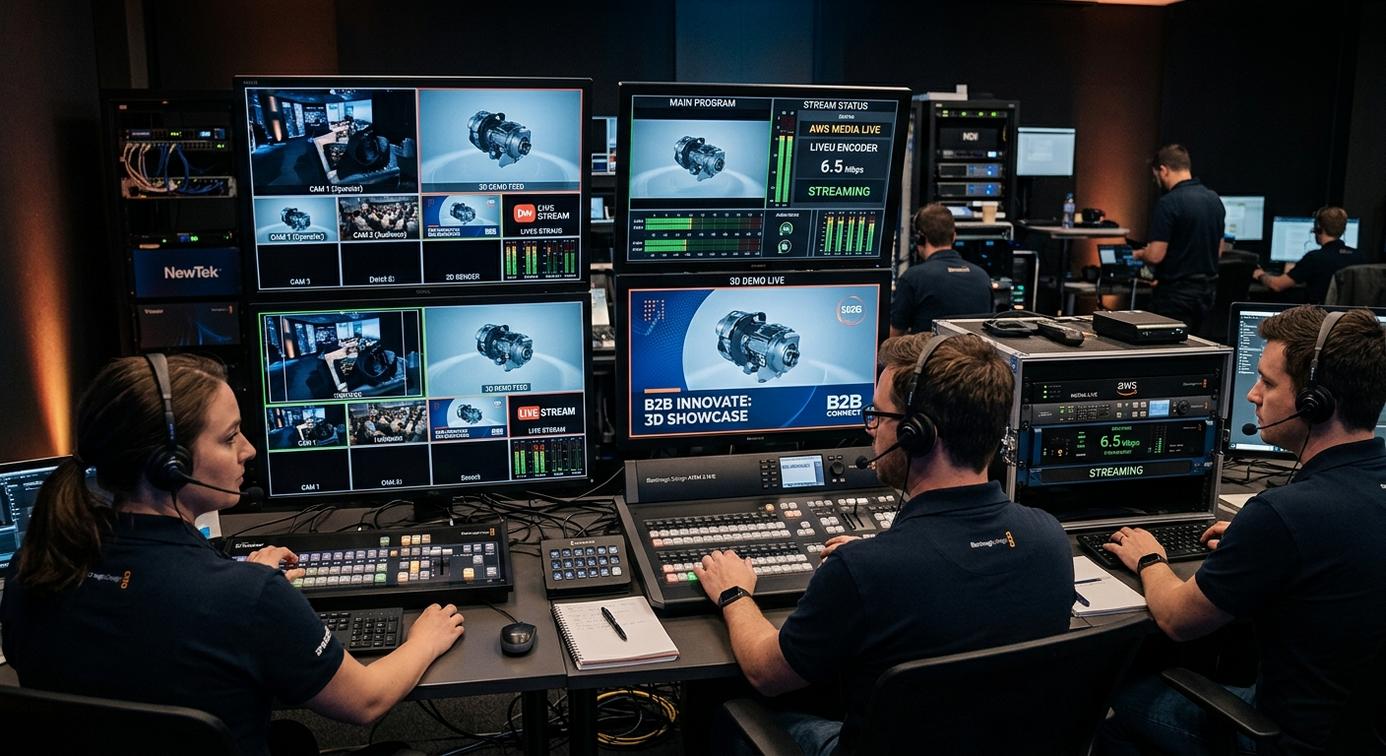
The complexity of 3D product demonstrations often necessitates multi-camera setups to capture different angles and perspectives. This setup requires strategic placement and switching of cameras, which can be managed through NewTek’s Network Device Interface (NDI) protocol for smooth and efficient video transmission across networks.
Architecting Hybrid Streaming Infrastructure
A combination of on-premise equipment and cloud-based platforms can optimally support hybrid events, reaching both physical and virtual audiences. Enterprises should consider incorporating both to maximize their reach and flexibility. For instance, local SDI (Serial Digital Interface) connections provide robust video signal integrity, while cloud services enable scalable deliveries across various platforms like Microsoft Teams or Zoom.
Ensuring Network Stability and Redundancy
Network stability is a cornerstone of successful streaming. Implementing redundant internet connections and failover strategies can prevent disruption during live events. Utilizing dual encoders and adaptive bitrate streaming ensures a consistent viewer experience despite varying bandwidth conditions.
Enterprise-Grade Solutions for Large Scale Demonstrations
To handle large corporate events, enterprise-grade solutions must be considered, including high-capacity encoders and transcoders that support 4K/UHD resolution. Implementing ISO (International Organization for Standardization) compliant workflows ensures that data management and video quality adhere to industry standards, promoting reliability and professionalism in demonstrations.
Optimizing Encoding and Compression Technologies
The use of efficient encoding formats like H.265 (HEVC) over H.264 can significantly reduce the bandwidth required for streaming high-resolution content, maintaining quality while optimizing network resources.
Conclusion: Advancing Corporate Streaming with Realistic Physics
The integration of realistic physics in 3D product demonstrations presents a significant advancement in the realm of corporate streaming and hybrid event production. By leveraging cutting-edge technologies and robust infrastructure, businesses can deliver compelling, interactive demonstrations that captivate their audience and drive business outcomes.
Jeremy Lee is a seasoned digital marketing director and strategist with over two decades of experience in the industry. As the founder of Sotavento Medios, I manage a diverse portfolio of over 50 businesses, helping brands grow through advanced search strategies and digital innovation. My work focuses on bridging the gap between traditional search engine optimisation and the evolving world of AI-driven answer engines.
get in touch