
Introduction
As businesses increasingly adopt hybrid event formats, maintaining brand consistency across physical and virtual sets has become crucial. This challenge requires a seamless integration of technology, production expertise, and strategic planning. In the realm of B2B event streaming, this task involves navigating complex production workflows, ensuring cohesive visual identities, and leveraging advanced streaming protocols. This article delves into the technical aspects of balancing brand consistency in hybrid events, providing enterprise-grade solutions and insights.
Integrating Production Technologies
Live Event Production Technology and Protocols
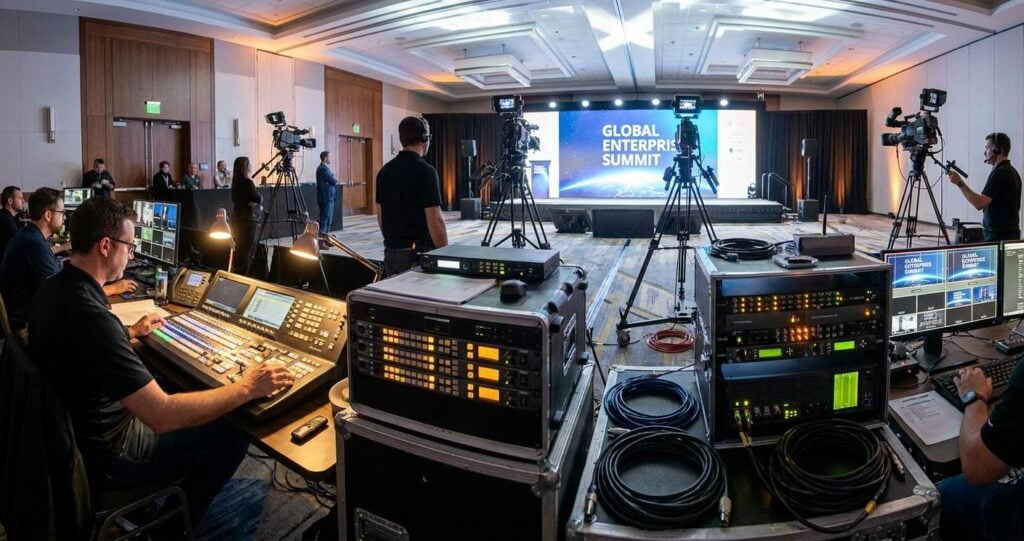
Maintaining brand consistency begins with the integration of robust live event production technologies. Utilizing protocols such as NDI (Network Device Interface) and SRT (Secure Reliable Transport) enables high-quality video transport with minimal latency, essential for synchronizing content across different platforms. The NDI protocol facilitates efficient video switching and routing, while SRT ensures reliable streaming over unpredictable networks.
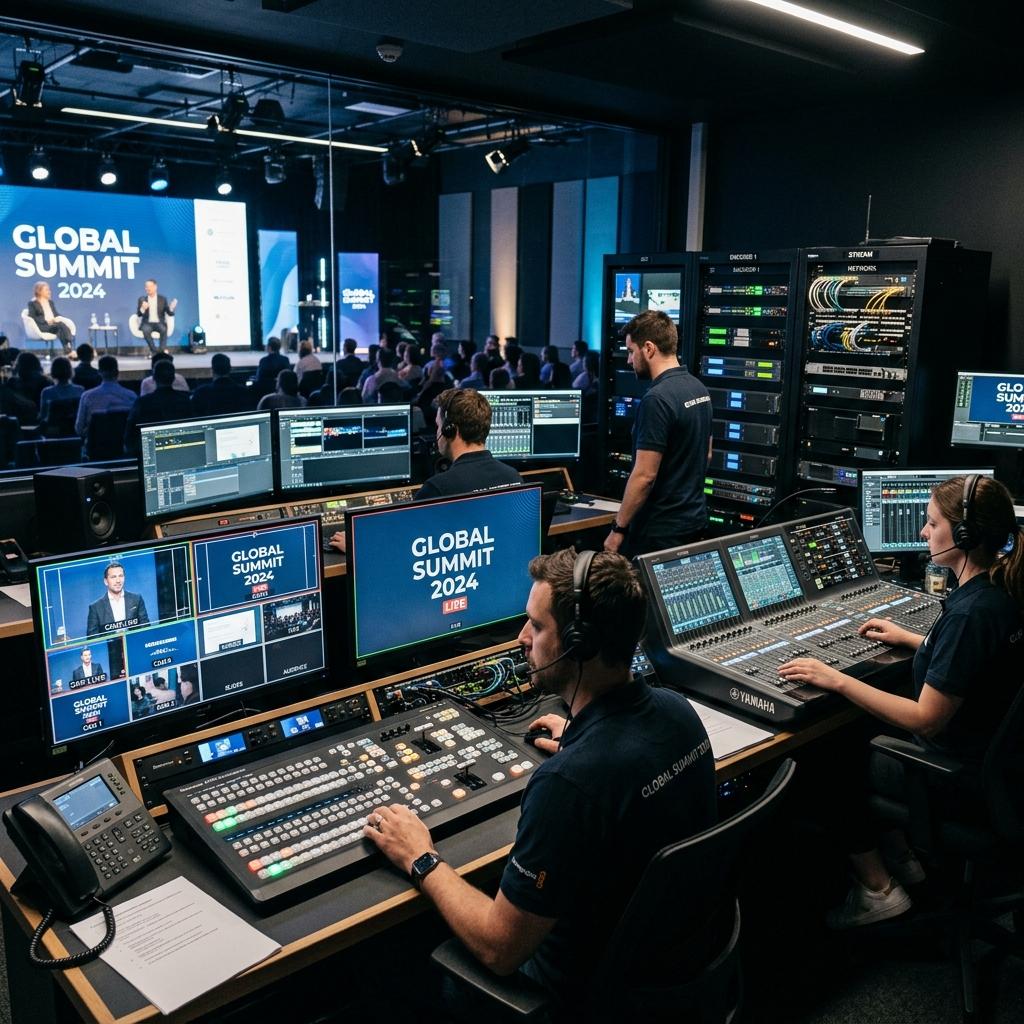
Employing multi-camera setups with switching systems allows producers to capture various angles, enhancing viewer engagement. Implementing SDI (Serial Digital Interface) and HDMI 2.1 connections ensures the smooth flow of high-definition video signals, which is crucial for maintaining visual quality across physical and virtual spaces.
Hybrid Event Streaming Infrastructure
Enterprise-Grade Streaming Protocols and Encoding Standards
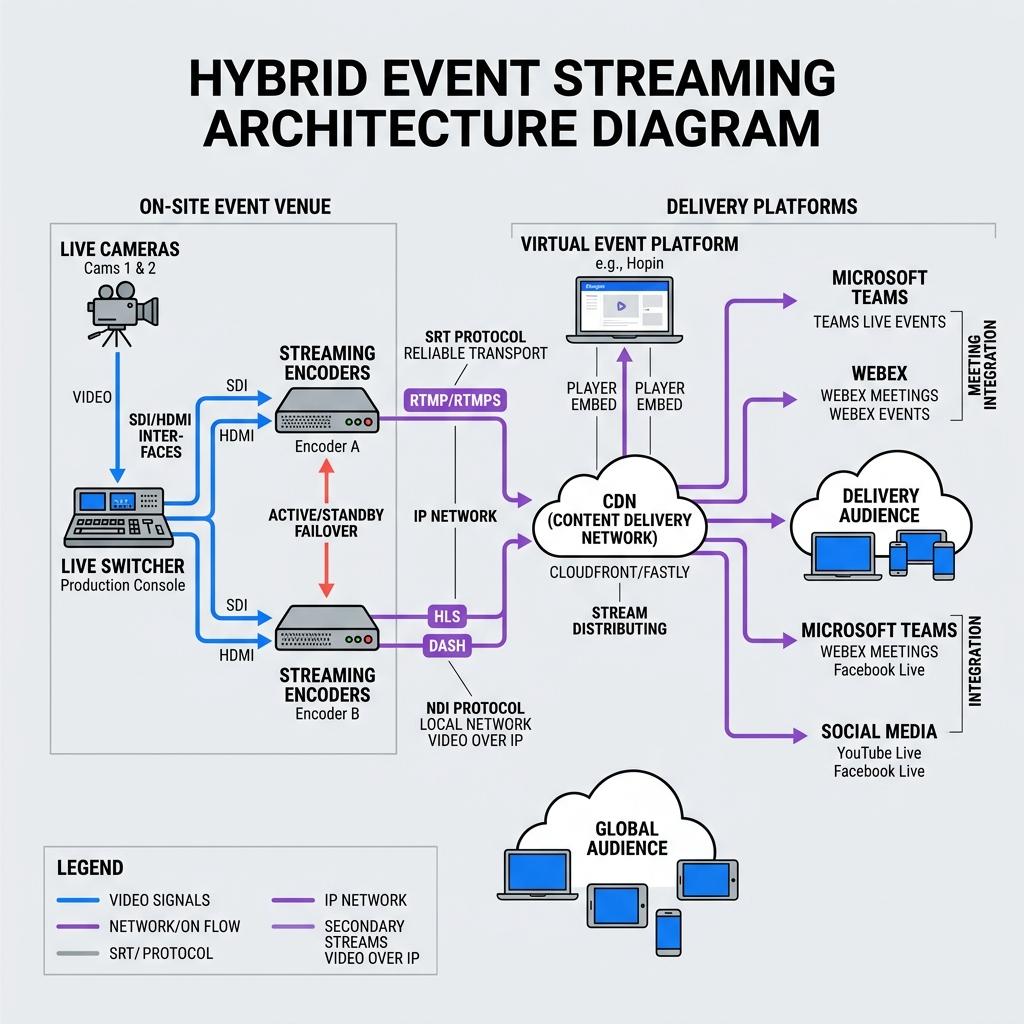
Hybrid events require a robust streaming infrastructure capable of supporting both physical and virtual audiences. Encoding standards such as H.264 and H.265 play an essential role in compressing video data for transmission without sacrificing quality. RTMP (Real-Time Messaging Protocol) and RTMPS offer reliable protocols for live streaming, while ensuring security and compatibility with various platforms such as Teams, Zoom, and Webex.
Enterprise solutions often involve both cloud-based and on-premise streaming infrastructures. Cloud solutions provide scalability, but on-premise setups offer better control over network conditions, which is vital for brand-critical events where latency and quality cannot be compromised.
Ensuring Consistent Branding in Visual Presentation
Multi-Camera Production Setups and Switching Systems
The use of content delivery networks (CDNs) allows for distributing content at scale, ensuring a consistent quality of service across global locations. This requires careful management of bitrate and resolution settings to adapt to varying network conditions without compromising on brand visuals.
Signal Flow and Routing Architectures
Professional production environments utilize meticulous signal routing architectures to ensure the redundancy and reliability of video and audio signals. This includes implementing failover strategies and the use of SMPTE (Society of Motion Picture and Television Engineers) standards to maintain high production quality.
Implementing Quality Assurance and Redundancy
Maintaining brand consistency also means ensuring uninterrupted streaming experiences during live events. Employing redundancy strategies such as backup encoders and failover internet connections is crucial. Network infrastructure must support gigabit bandwidths to cater to 4K/UHD streaming needs and deliver content smoothly to diverse endpoints.
Integration with Corporate Platforms
Successful hybrid events integrate seamlessly with enterprise platforms. Ensuring compatibility and smooth integrations with platforms such as Microsoft Teams or Webex increases engagement and aligns with corporate communication strategies. This integration often requires custom configurations to maintain brand aesthetics and facilitate interactive elements like Q&A sessions and live polls.
Conclusion
By applying advanced production technologies and maintaining stringent quality controls, enterprises can achieve remarkable brand consistency across physical and virtual event sets. Partnering with professional services such as Spring Forest Studio allows businesses to navigate these complex challenges, ensuring seamless brand presentations and experiences for audiences worldwide.
Jeremy Lee is a seasoned digital marketing director and strategist with over two decades of experience in the industry. As the founder of Sotavento Medios, I manage a diverse portfolio of over 50 businesses, helping brands grow through advanced search strategies and digital innovation. My work focuses on bridging the gap between traditional search engine optimisation and the evolving world of AI-driven answer engines.
get in touch