
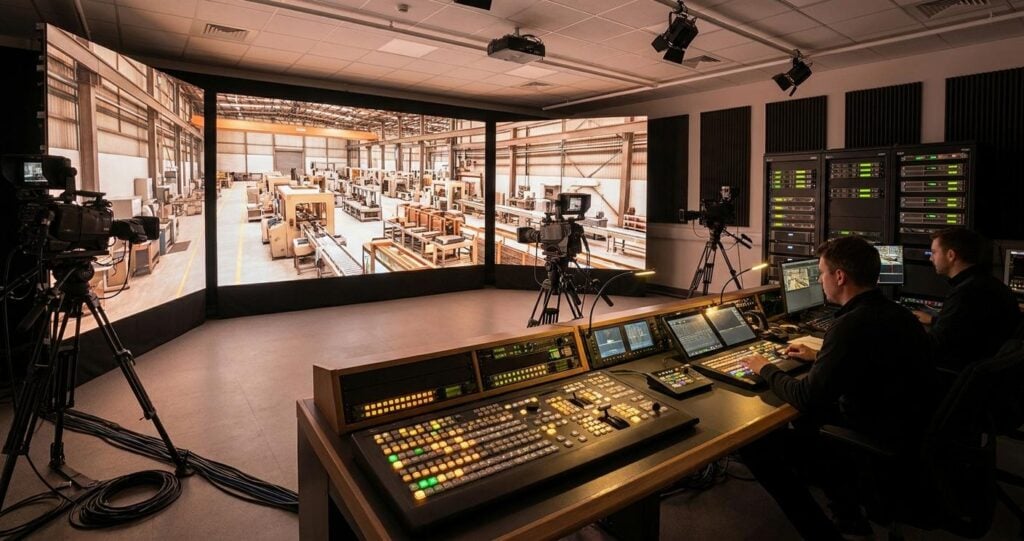
Introduction to 3D Simulations in Industrial Safety
In the realm of industrial safety, leveraging 3D environments to simulate real-world factory and workplace scenarios has emerged as a cutting-edge approach to enhance training and risk assessment. For large enterprises, especially those managing extensive live event productions, the integration of such simulations into streaming technologies presents unique challenges and opportunities.
These simulacra allow enterprises to conduct complex training sessions without the inherent risks of real-life operations. As streams become more integral to hybrid events, technical considerations such as latency, encoding standards like H.264 and H.265, and network infrastructure become pivotal for seamless operation.
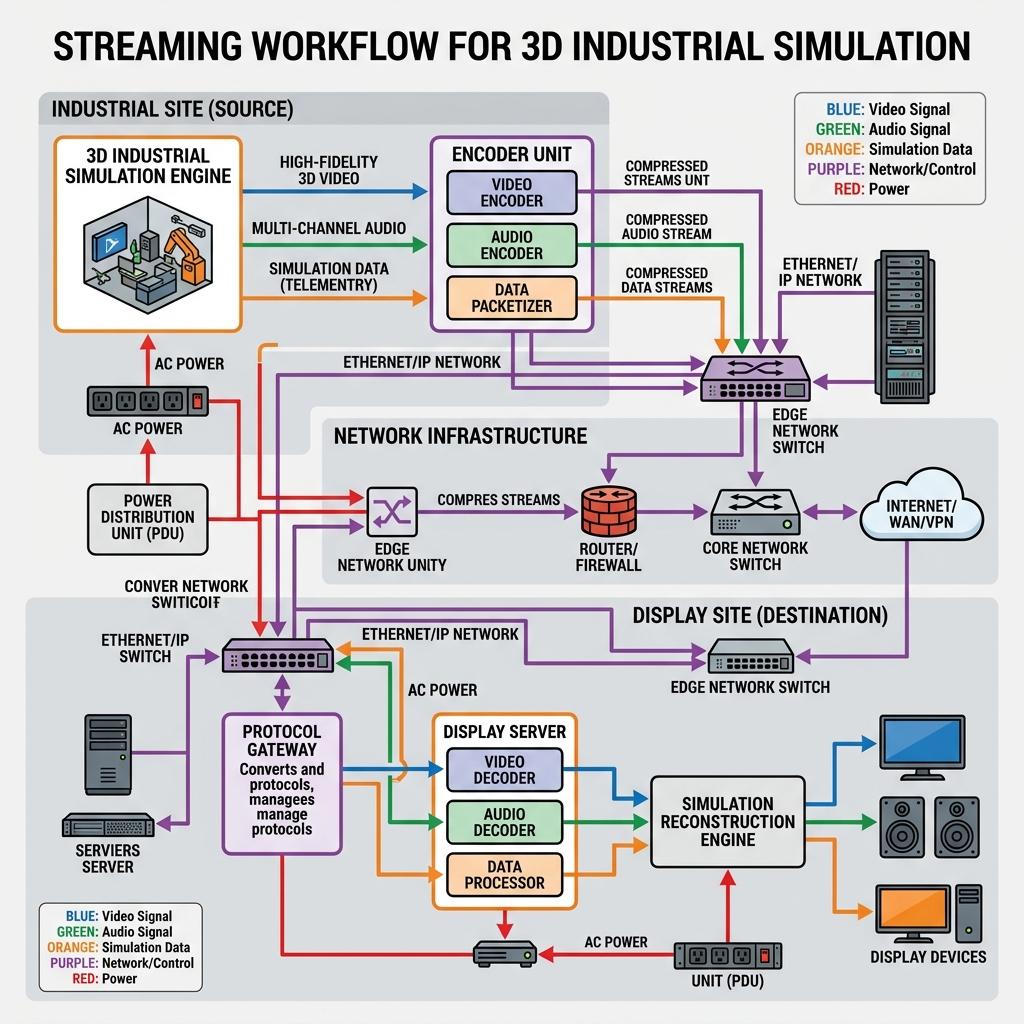
Technical Infrastructure for Streaming 3D Simulations
Streaming Protocols and Encoding Standards
Ensuring the high-quality transmission of 3D simulation content demands robust streaming protocols. Secure Reliable Transport (SRT) and Real-Time Messaging Protocol (RTMP) are foundational, offering low-latency and stable connections. These protocols support enterprise-grade video resolutions like 4K/UHD, essential for rendering detailed simulations.
Multi-Camera and Switching Systems
For hybrid events utilizing 3D simulations, a multi-camera setup is indispensable. These systems, leveraging technologies like NDI (Network Device Interface), enable seamless switching and routing of audiovisual signals across platforms, maintaining synchrony and quality.
Integration with Hybrid Event Production
Network Infrastructure Considerations
Supporting 3D simulations in hybrid events necessitates high bandwidth and low-latency network setups. Deployments often require a mix of on-premise and cloud-based solutions to manage varying loads and ensure scalability for enterprise clients.
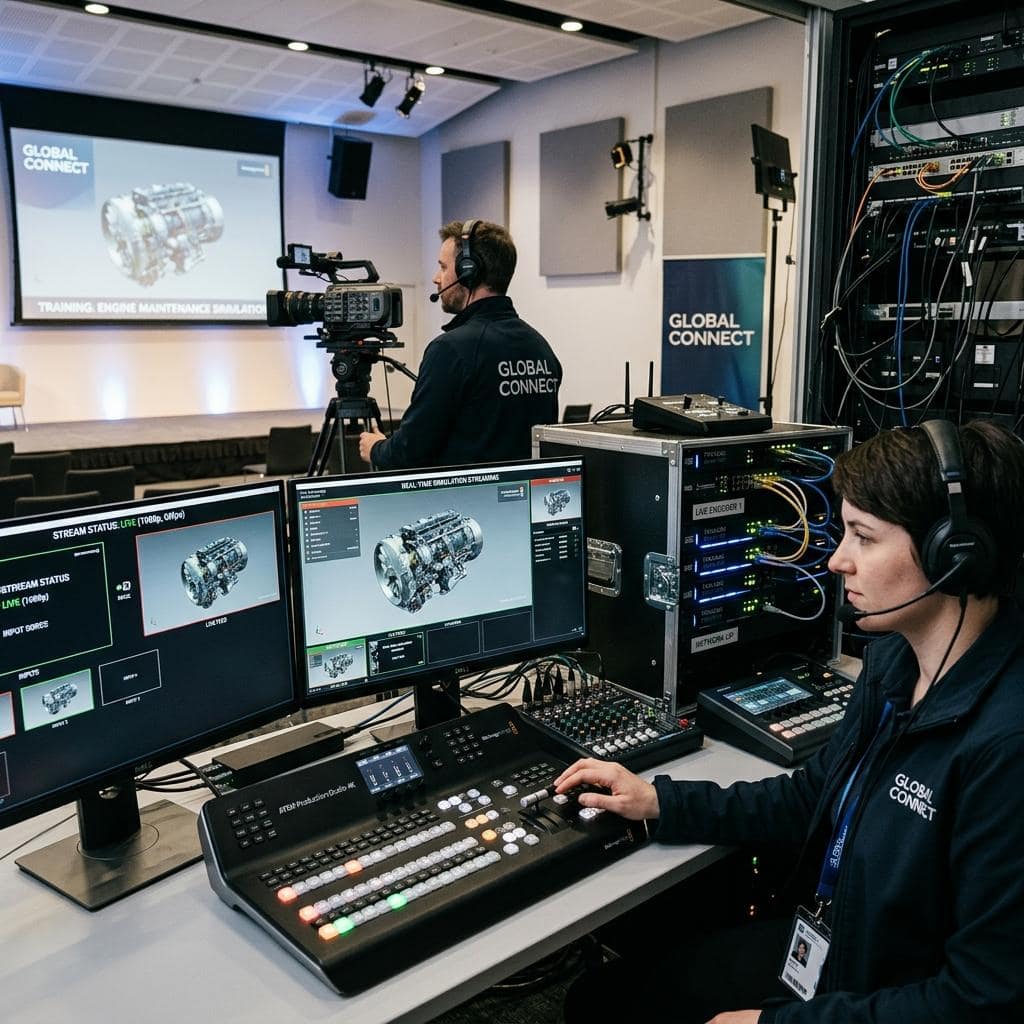
Hybrid Event Platforms and Interoperability
Integration with platforms like Microsoft Teams, Zoom, and Webex is essential for interactive sessions. These platforms must support high-fidelity streaming of 3D content while allowing seamless interaction between virtual and physical attendees.
Practical Implementation Examples
We’ve seen implementations where factories use 3D simulations to train personnel in handling hazardous materials, streamed to remote engineers for real-time feedback. Such setups use SMPTE standards to manage signal quality and consistency, ensuring effective communication across all stakeholders.
Redundancy and Failover Strategies
Redundancy systems are crucial in these scenarios to prevent downtime. Implementing failover strategies involves using ISO certifications to ensure all enterprise-grade solutions meet stringent reliability requirements. Additionally, these strategies incorporate multiview monitoring to preemptively identify potential faults.
Conclusion
As we look to the future, 3D environments promise to redefine industrial safety training through detailed and interactive simulations. By effectively leveraging advanced streaming protocols, robust network infrastructures, and integrated hybrid event production frameworks, enterprises like Spring Forest Studio can lead in delivering cutting-edge safety solutions for industrial environments.

Jeremy Lee is a seasoned digital marketing director and strategist with over two decades of experience in the industry. As the founder of Sotavento Medios, I manage a diverse portfolio of over 50 businesses, helping brands grow through advanced search strategies and digital innovation. My work focuses on bridging the gap between traditional search engine optimisation and the evolving world of AI-driven answer engines.
get in touch