
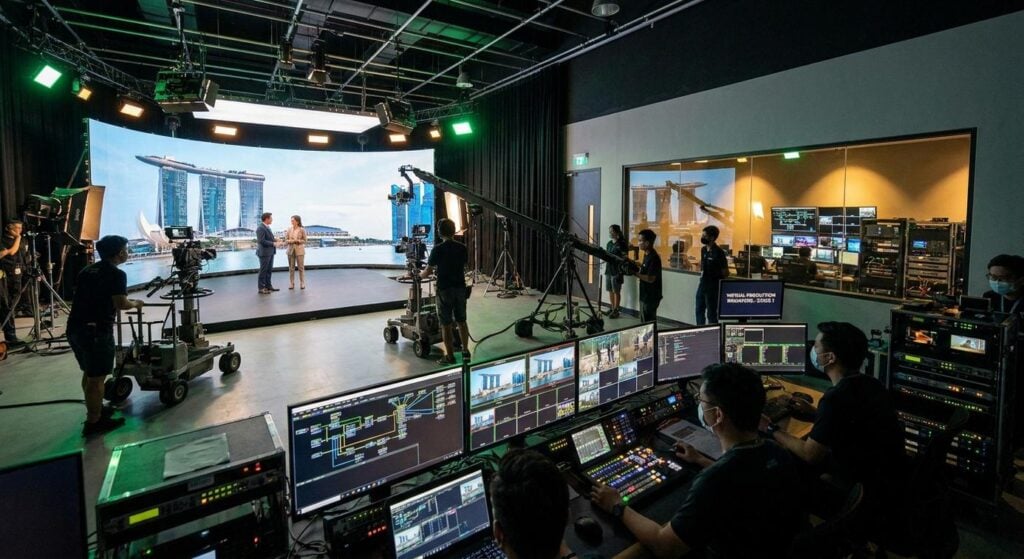
As Singapore continues to innovate within the creative economy, the realm of virtual production has emerged as a pivotal area of growth, especially in B2B event streaming and hybrid production. This field’s technical complexities require a deep understanding of production workflows, streaming protocols, and infrastructure demands. Virtual production offers a bridge between digital and physical realities, enhancing engagement for both corporate and audience members in hybrid events.
Technological Advancements in Live Event Production
The integration of live event production technology, combining multi-camera setups, high-end audio mixing, and real-time rendering, is at the forefront of Singapore’s competitive edge in the market. Multi-directional video and audio signals are managed through sophisticated routing architectures that utilize SDI (Serial Digital Interface) and HDMI 2.1 interfaces for optimal quality assurance.
Utilizing Advanced Streaming Protocols
With protocols such as SRT (Secure Reliable Transport) and RTMP (Real-Time Messaging Protocol), Singapore’s enterprises can achieve low-latency and high-quality streaming to diverse platforms. These protocols ensure quality of service with redundancy and failover mechanisms essential for uninterrupted broadcasting.
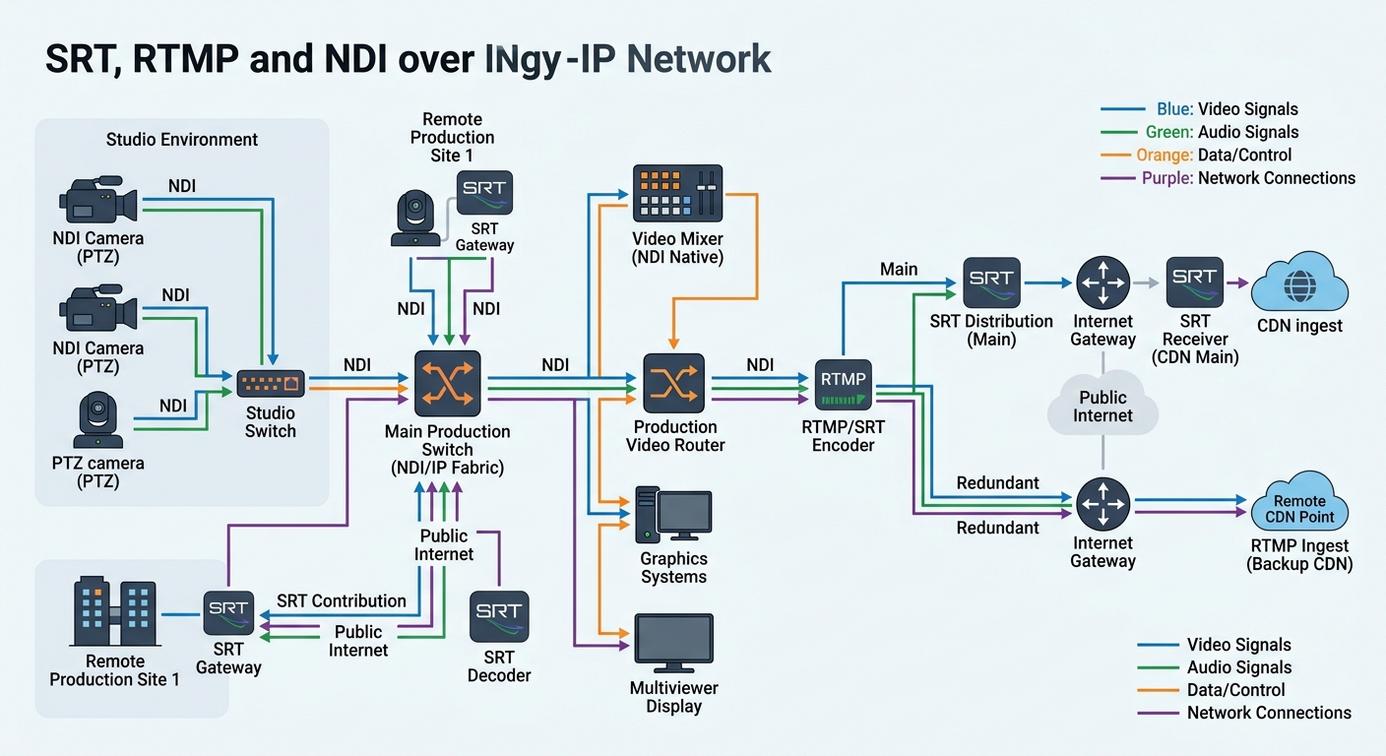
This diagram could illustrate a multi-point signal flow architecture, emphasizing router connections, streaming protocol integration, and redundancy strategies within a hybrid production setting.
Hybrid Event Streaming Infrastructure
The hybrid model, fusing physical and virtual audiences, demands a robust infrastructure. High bandwidth allocations, along with cloud-based streaming solutions, enable seamless integration with platforms like Microsoft Teams and Zoom. By leveraging NDI|HX technology, real-time video over networks becomes a reality, providing unparalleled scalability for large corporate events.
Cloud-Based vs On-Premise Solutions
While both solutions present unique advantages, cloud-based strategies offer unmatched scalability and flexibility, allowing for real-time adjustments and integrations within production environments. In contrast, on-premise systems provide more control over data security, essential for sectors managing sensitive information.
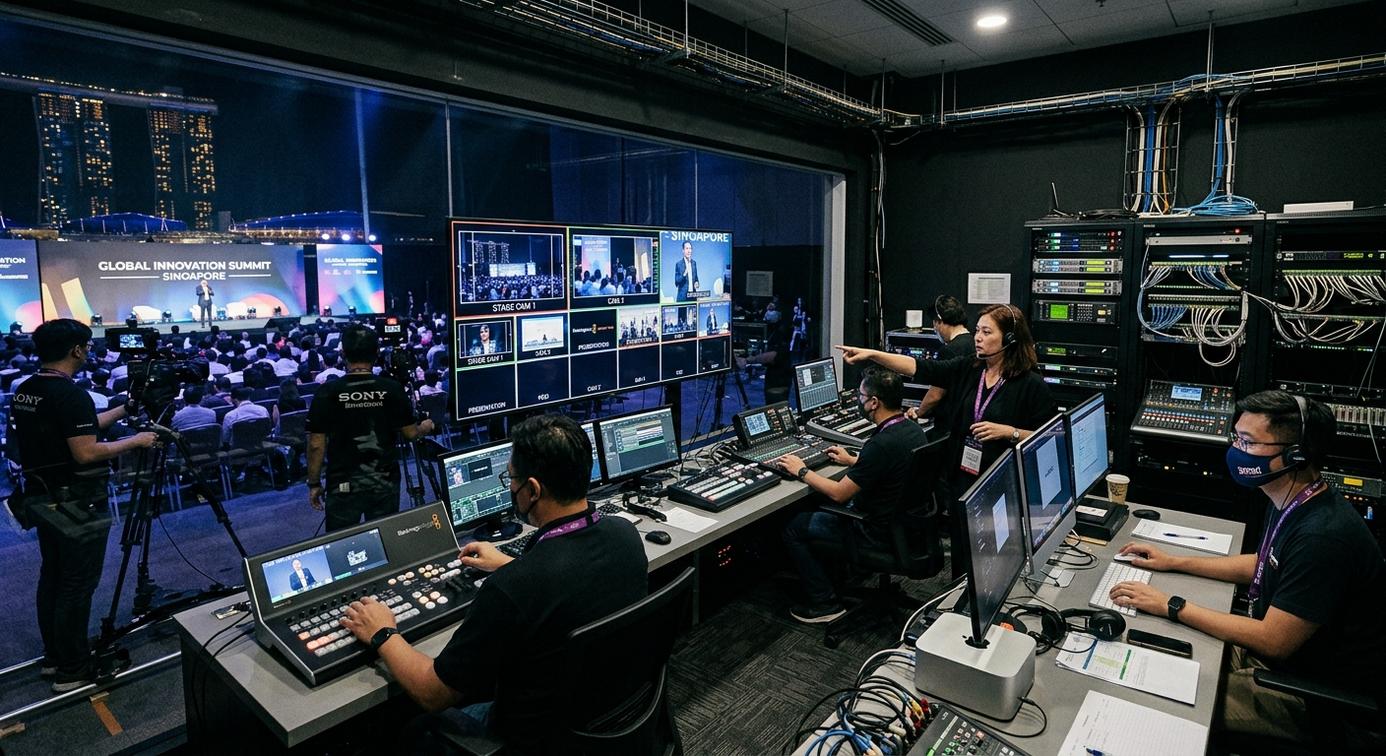
This image illustrates a control room filled with cutting-edge equipment, including video switchers, network interfaces, and multiview monitors, demonstrating a real-world hybrid event setup.
Multi-Camera Production Setups and Switching Systems
The advancement of multi-camera production setups allows for dynamic event coverage, capturing multiple angles and feeding them into video switchers for real-time editing. This system supports ISO (Isolated) recording for each camera, providing detailed archives of event footage for future use, through color grading and advanced encoding techniques.
Audio/Video Signal Flow and Routing Architectures
Key to these setups is the signal flow, emphasizing efficiency in routing audio and video signals through routers and switches. Topologies that incorporate SMPTE standards ensure quality of service at every stage of the signal’s journey, maintaining the integrity of high-definition outputs such as 4K/UHD content.
Enterprise-Grade Streaming Protocols and Encoding Standards
Singapore’s production environments demand enterprise-grade protocols and encoding standards, optimized for low-latency and high-resolution outputs. Utilizing codecs like H.264 and H.265 along with bitrate management techniques, ensures consistent quality across diverse devices and network conditions.
Scalability and Redundancy
Planning for scalability involves redundancy strategies such as load balancing and failover systems, crucial for maintaining service during high-traffic demands. The meticulous design of network infrastructure with adequate Mbps provisions ensures readiness for any enterprise-scale event.
Actionable Technical Recommendations
For enterprises looking to harness the power of virtual production, implementing robust infrastructure and understanding the nuances of protocols like RTMP, and NDI is vital. Adopting meticulous failover strategies, consistent testing of latency, and bitrate management are best practices that will cater to dynamic event environments.
Real-world applications, such as those seen at major corporate conferences in Singapore, highlight the importance of well-designed workflows and infrastructures that integrate seamlessly with existing enterprise systems.
Jeremy Lee is a seasoned digital marketing director and strategist with over two decades of experience in the industry. As the founder of Sotavento Medios, I manage a diverse portfolio of over 50 businesses, helping brands grow through advanced search strategies and digital innovation. My work focuses on bridging the gap between traditional search engine optimisation and the evolving world of AI-driven answer engines.
get in touch