
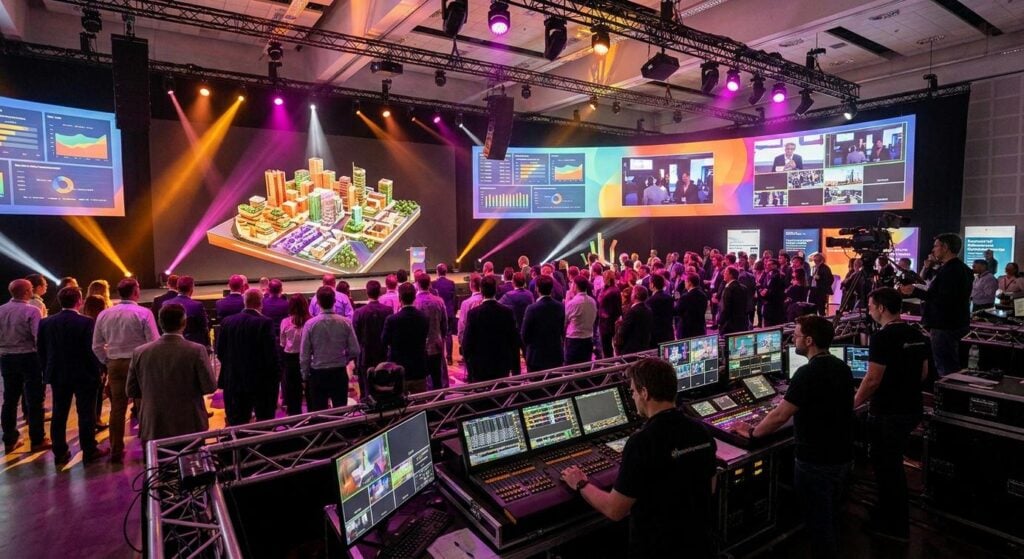
Introduction to Transforming Presentations in the Digital Age
As businesses strive to captivate audiences in increasingly dynamic digital environments, the shift from traditional 2D PowerPoint presentations to 3D immersive experiences stands as a pivotal innovation. This transition not only enhances engagement but also aligns with the advanced B2B event streaming and hybrid production technologies that have reshaped corporate events. The evolution from flat, static slides to immersive, multi-dimensional presentations can significantly elevate the attendee experience, creating more interactive and memorable events. In this comprehensive analysis, we explore the technical intricacies and infrastructure considerations vital to making this transition seamless and impactful.
Understanding 3D Immersive Presentation Technologies
3D presentation technologies leverage a combination of hardware and software tools to create three-dimensional, interactive environments. Key players in this domain include holographic display systems, AR and VR setups, and advanced projection mapping techniques. When deploying 3D presentations, understanding the technical specifications such as resolution (4K/UHD quality), frame rates (60 fps), and codec support (H.264/H.265 encoding) is essential for ensuring quality output.
Technical Integration and Streaming Protocols
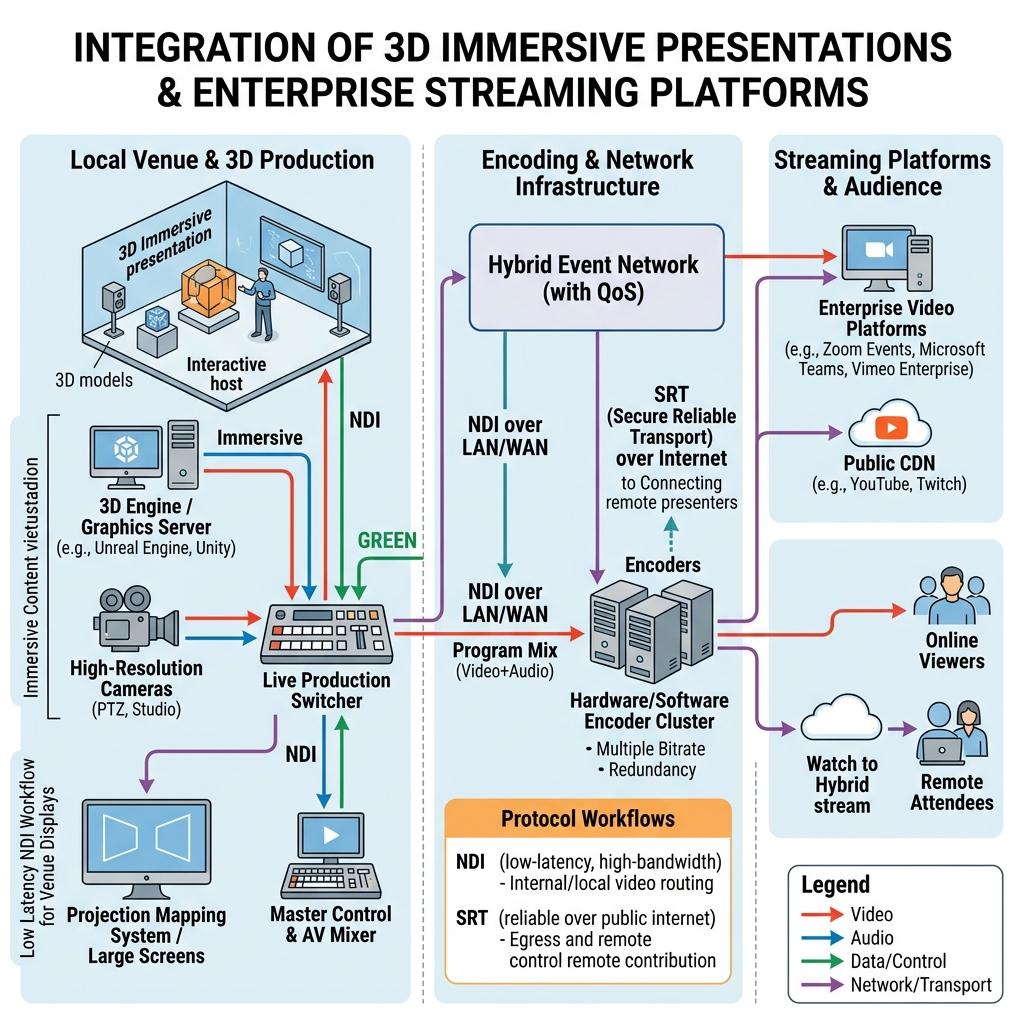
The backbone of a successful 3D immersive experience lies in robust streaming protocols and seamless integration with existing enterprise systems. Standards such as NDI (Network Device Interface) and SRT (Secure Reliable Transport) play critical roles in ensuring low-latency and high-quality content delivery. These protocols facilitate smooth video switching and real-time rendering, essential for maintaining audience engagement.
Infrastructure Requirements for 3D Streaming
Transitioning to 3D presentation formats necessitates a reevaluation of existing network and production infrastructure. Key components include the utilization of high-bandwidth SDI (Serial Digital Interface) connections, HDMI 2.1 support, and implementation of advanced network architectures capable of handling heavy data loads. Configuration must support enterprise-grade streaming through RTMP/RTMPS, with consideration for scalability and redundancy to handle large event capacities.
Integration with Hybrid Event Platforms
For corporate events blending virtual and in-person participation, integration with platforms like Microsoft Teams, Zoom, and Webex becomes essential. Proper configuration ensures seamless 3D content delivery to all audience segments, maximizing reach and impact while maintaining quality control.
Production Workflows for 3D Presentations
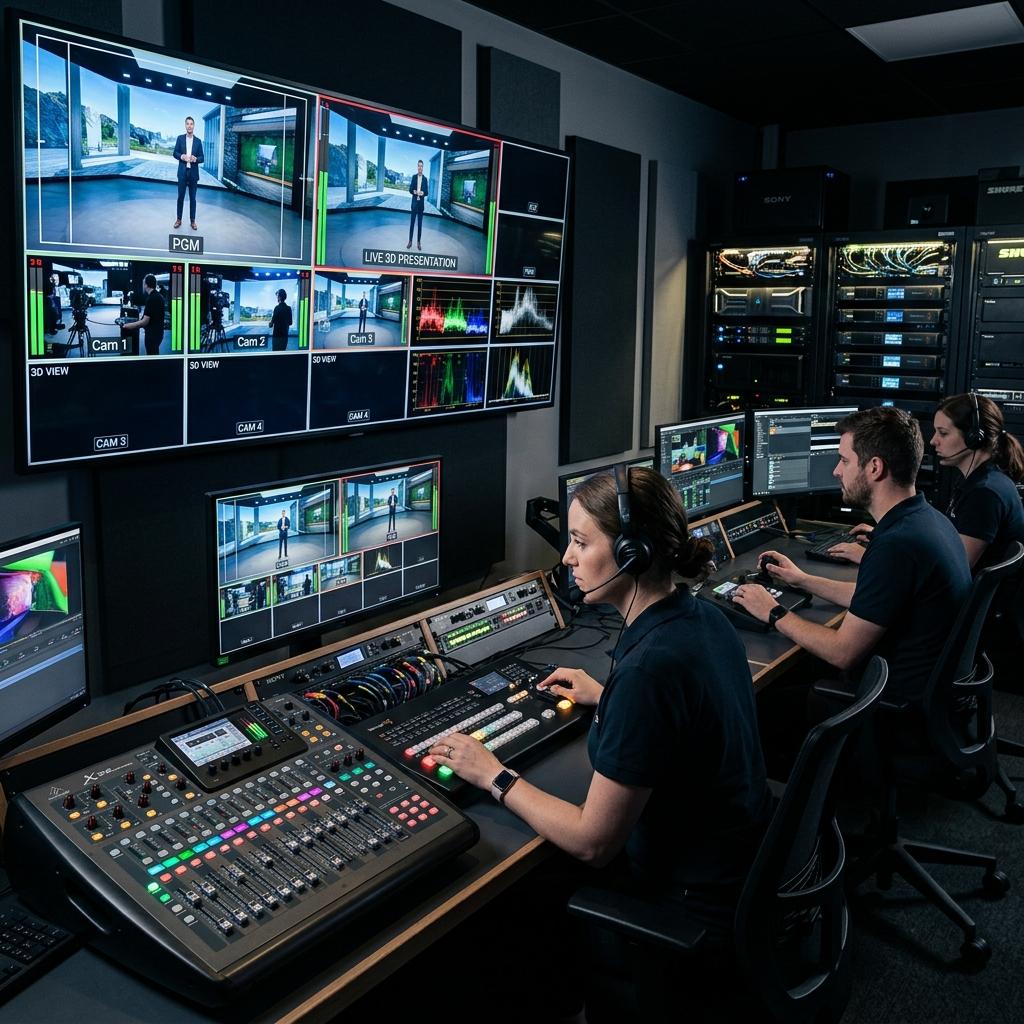
Effective implementation of 3D presentations requires meticulous planning of production workflows. Multi-camera setups, utilizing both fixed and dynamic cameras, are vital for capturing the depth and interactivity of 3D environments. Video switching systems and audio mixing consoles must be optimized for 3D output, with considerations for signal routing and latency management to deliver synchronized, immersive experiences.
Assessing Quality of Service and Redundancy
Ensuring high quality service in 3D event streaming involves deploying robust redundancy systems and failover strategies. Implementing ISO recording for backup and utilizing multiview monitoring systems enables production teams to maintain continuity and troubleshoot in real-time, preserving the immersive experience.
Actionable Recommendations for Implementing 3D Immersive Presentations
Enterprises looking to adopt 3D immersive presentations should begin by conducting a thorough infrastructure assessment, identifying necessary upgrades in bandwidth and hardware capabilities. Partnering with technical experts, such as those at Spring Forest Studio, ensures that production and streaming systems are configured to support these advanced technologies. Regular training for technical staff and a focus on continuous process improvement will aid in maintaining cutting-edge presentation capabilities.
Overall, the transition to 3D immersive presentations offers immense potential for enhancing corporate communication and engagement. By leveraging advanced production workflows and robust streaming infrastructures, enterprises can deliver transformative event experiences that resonate with audiences.

Jeremy Lee is a seasoned digital marketing director and strategist with over two decades of experience in the industry. As the founder of Sotavento Medios, I manage a diverse portfolio of over 50 businesses, helping brands grow through advanced search strategies and digital innovation. My work focuses on bridging the gap between traditional search engine optimisation and the evolving world of AI-driven answer engines.
get in touch