
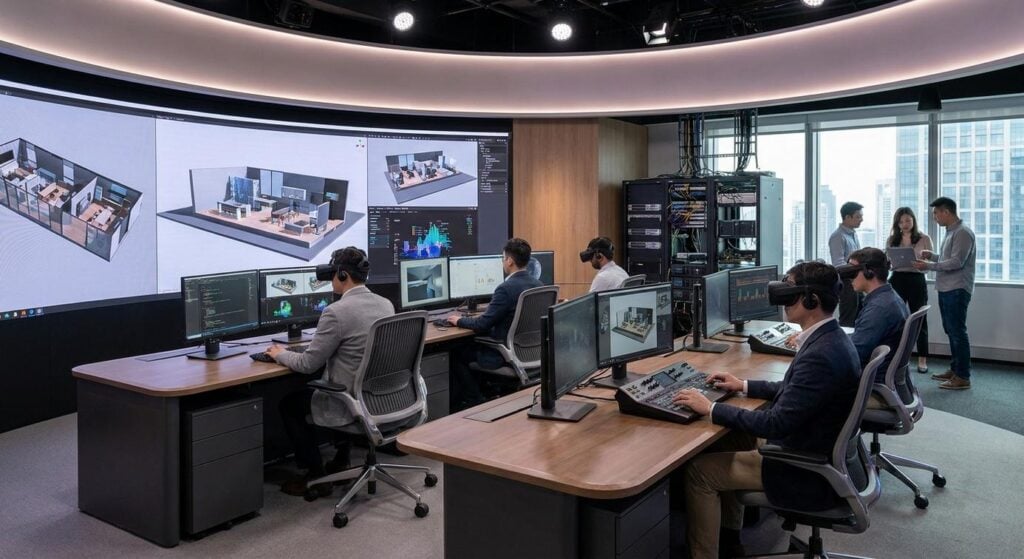
How to Engage Viewers with Interactive Elements in a 3D Space
In the rapidly evolving domain of B2B event streaming, the ability to engage audiences with cutting-edge interactive elements within a 3D space has become a vital differentiator. As enterprises seek to blend in-person and virtual experiences, leveraging 3D interactive environments can significantly enhance viewer engagement and participation. This article will delve into the technical intricacies and practical implementations for achieving this in a professional setting.
Understanding the Impact of Interactive 3D Spaces
The integration of 3D spaces into live event streaming not only captivates viewers but also fosters more dynamic and engaging participant interactions. By using technologies such as WebGL and VRML, organizations can create immersive environments that enable real-time audience participation. This section will explore the technologies powering these 3D visualizations and their implications for B2B streaming infrastructures.
Implementing 3D spaces requires robust computational capabilities and optimized streaming protocols like SRT (Secure Reliable Transport) to manage latency and ensure seamless delivery. Moreover, employing efficient encoding standards such as H.264/H.265 allows for high-quality visuals without overwhelming bandwidth limits.
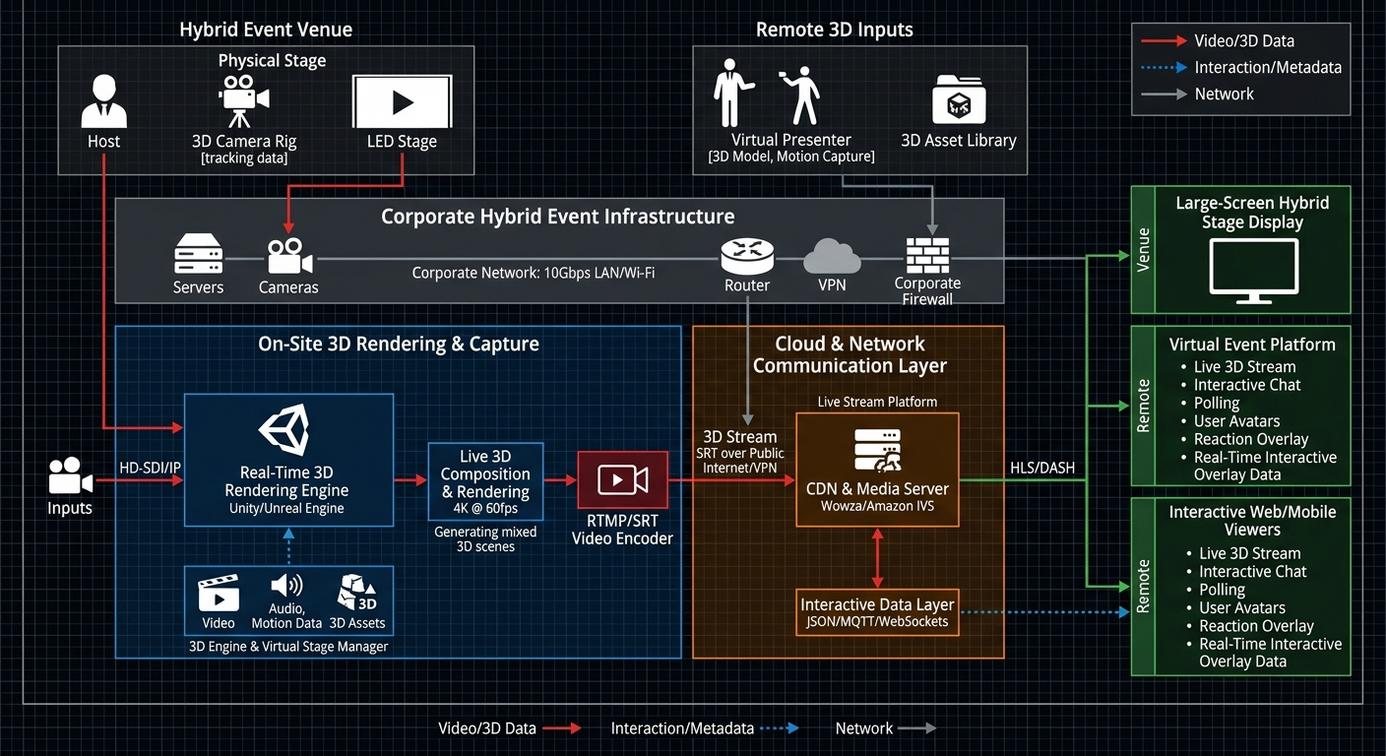
Technical Setup for Enhanced Interaction
Creating an interactive 3D environment involves more than just visual elements; it requires a comprehensive multi-camera production and switching system designed to capture and deliver different angles and perspectives. Using NDI|HX technology, video feeds can be transmitted across IP networks with minimal latency, enhancing the viewer’s immersive experience.
Network Infrastructure Considerations
Effective 3D streaming mandates a reliable network infrastructure. Gigabit Ethernet and fiber optic connections are recommended to manage high data loads. Implementing VLAN configurations can further segment and manage network traffic efficiently.
Audio/Video Signal Flow
Utilizing professional-grade audio-video signal routing architectures ensures clarity and synchronicity in broadcasts. Employing SDI for video and AES audio standards facilitates a high-quality production environment, vital for corporate events demanding precision and reliability.
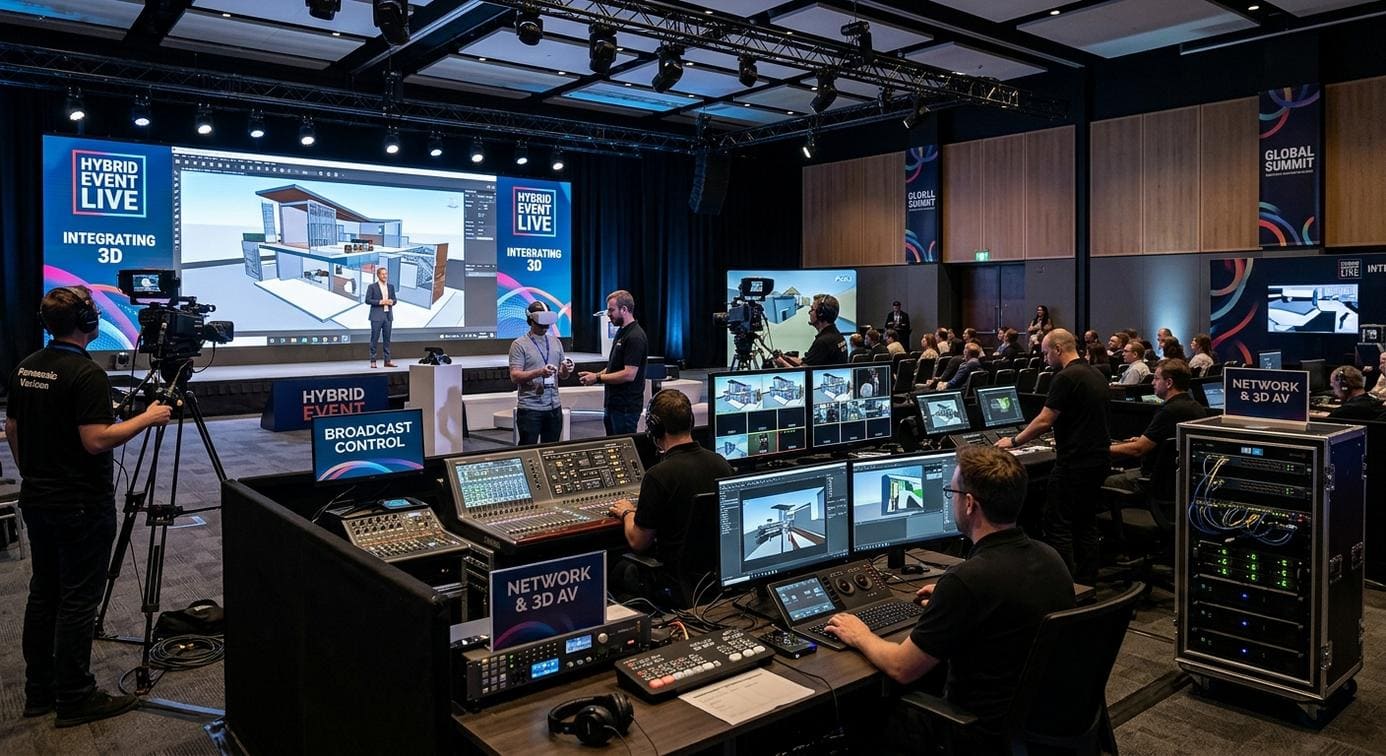
Integrating Interactive Elements into Enterprise Platforms
As hybrid events become more prevalent, integrating 3D interactive elements with platforms like Teams, Zoom, and Webex is crucial. Leveraging APIs and SDKs, enterprises can offer viewers a seamless experience from web-based access to virtual and augmented reality devices.
Scalability and Redundancy Strategies
Designing a scalable solution involves deploying cloud-based media servers alongside on-premise systems to ensure flexibility and reliability. Implementing redundancy and failover mechanisms, such as load balancers, guarantees uninterrupted service during critical corporate events.
Quality of Service
Comprehensive monitoring solutions are essential to uphold quality of service. Employing real-time analytics tools helps track viewer engagement and technical performance, allowing for dynamic adjustments to the content delivery process.
Practical Implementation Scenarios
Consider a corporate product launch event where attendees can explore a 3D model of the new product, interact with it, and provide live feedback. Such scenarios necessitate robust planning and infrastructure to provide a seamless and immersive participant experience.
Real-world Case Study
An enterprise client utilized a hybrid-event streaming setup, incorporating interactive 3D elements to replicate a live trade show. This involved building a virtual booth where attendees could navigate through product displays, engage with live hosts, and participate in interactive discussions, exemplifying how immersive technology can transform corporate communications.
Conclusion
Engaging viewers with interactive elements in a 3D space offers a myriad of opportunities for corporate communication innovation. By meticulously planning and deploying appropriate streaming technologies and protocols, organizations can create captivating experiences that elevate viewer interaction and satisfaction.

Jeremy Lee is a seasoned digital marketing director and strategist with over two decades of experience in the industry. As the founder of Sotavento Medios, I manage a diverse portfolio of over 50 businesses, helping brands grow through advanced search strategies and digital innovation. My work focuses on bridging the gap between traditional search engine optimisation and the evolving world of AI-driven answer engines.
get in touch