
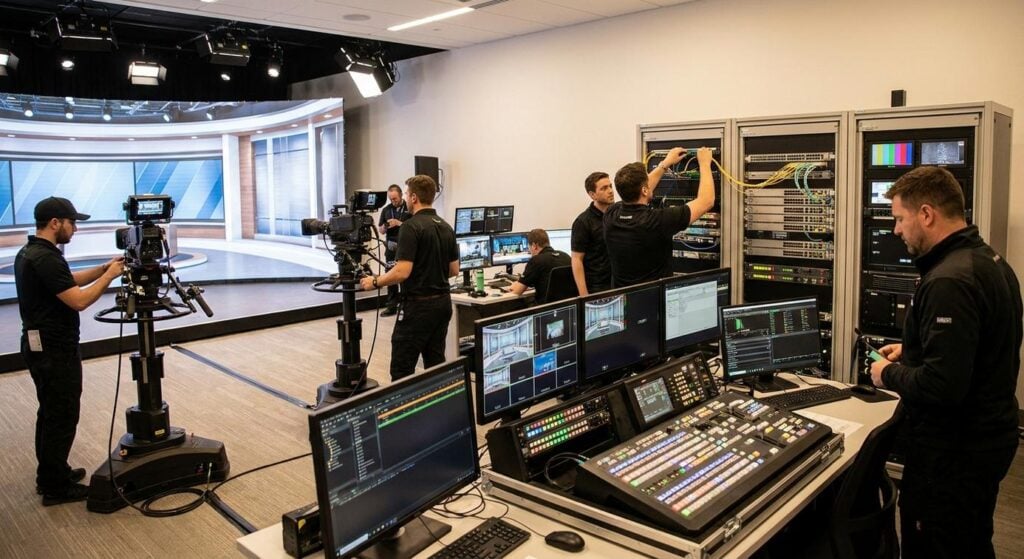
Introduction: Navigating B2B Event Streaming Challenges
As the demand for extended reality (XR) technologies continues to grow, businesses are increasingly leveraging XR streaming to engage audiences in hybrid and live event settings. The robust integration of virtual and physical environments poses several technical challenges, particularly concerning the high-speed data requirements essential for seamless performance. This article explores the intricate logistics behind XR streaming, focusing on network infrastructure, data transmission protocols, and enterprise-grade solutions tailored to B2B streaming demands.
Data Throughput and Network Capacity
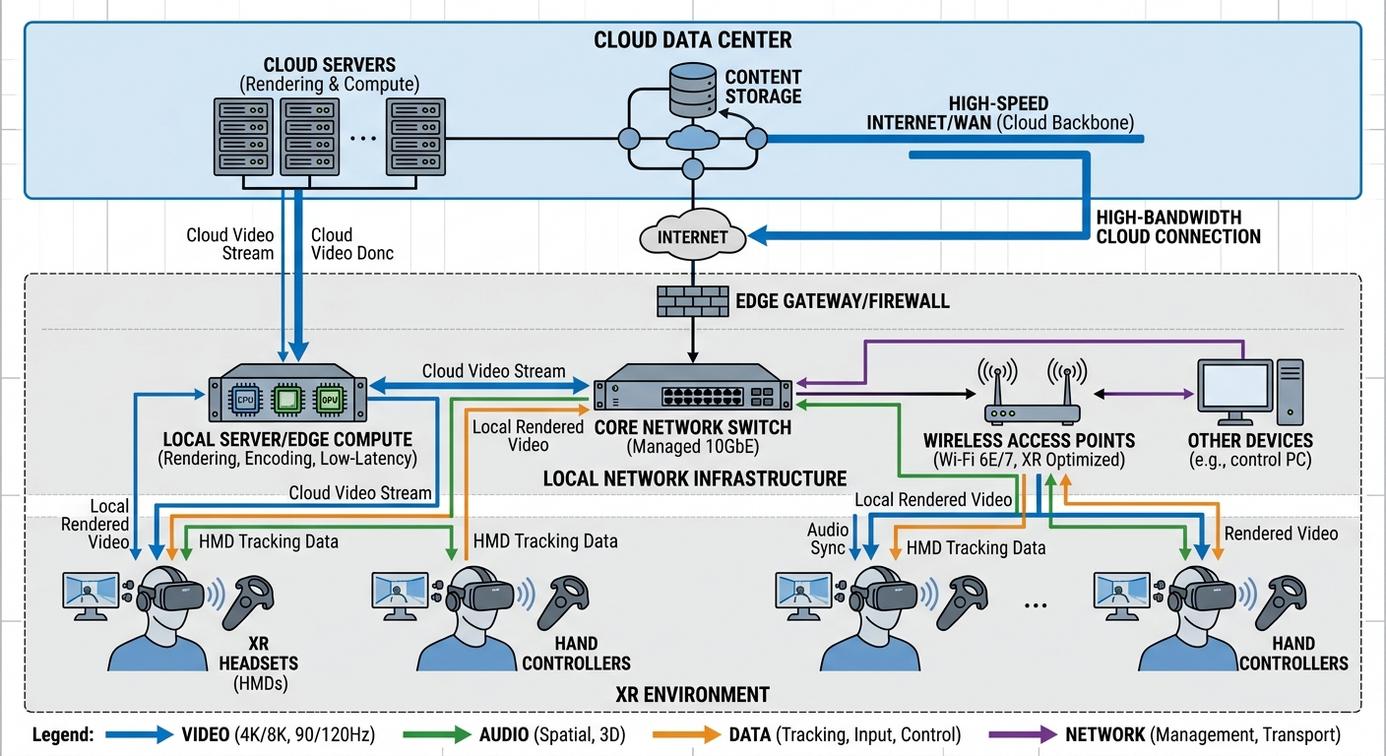
The backbone of successful XR streaming lies in navigating the complexities of data throughput and network capacity. Typical XR applications, such as virtual reality (VR) and augmented reality (AR) experiences, require real-time processing of high-resolution video streams which necessitate bandwidth capacities often exceeding 1 Gbps for 4K/UHD content. Recognizing the constraints imposed by such requirements, streaming infrastructure must incorporate advanced network topology, utilizing both cloud-based systems and on-premise solutions to manage load balancing and data optimization effectively.
Protocols and Encoding: Ensuring Quality and Reliability
The application of advanced protocols like Secure Reliable Transport (SRT) and Network Device Interface (NDI) is crucial for maintaining stream quality amidst varying network conditions. These protocols enhance fault tolerance, offering adaptive bitrate streaming and error correction capabilities to mitigate packet loss. Employing codecs such as H.264 and HEVC (H.265) further minimizes latency while preserving image fidelity, ensuring that XR streams remain immersive across corporate events of varying scale and complexity.
Integration of Multi-Camera Systems and Dynamic Switching
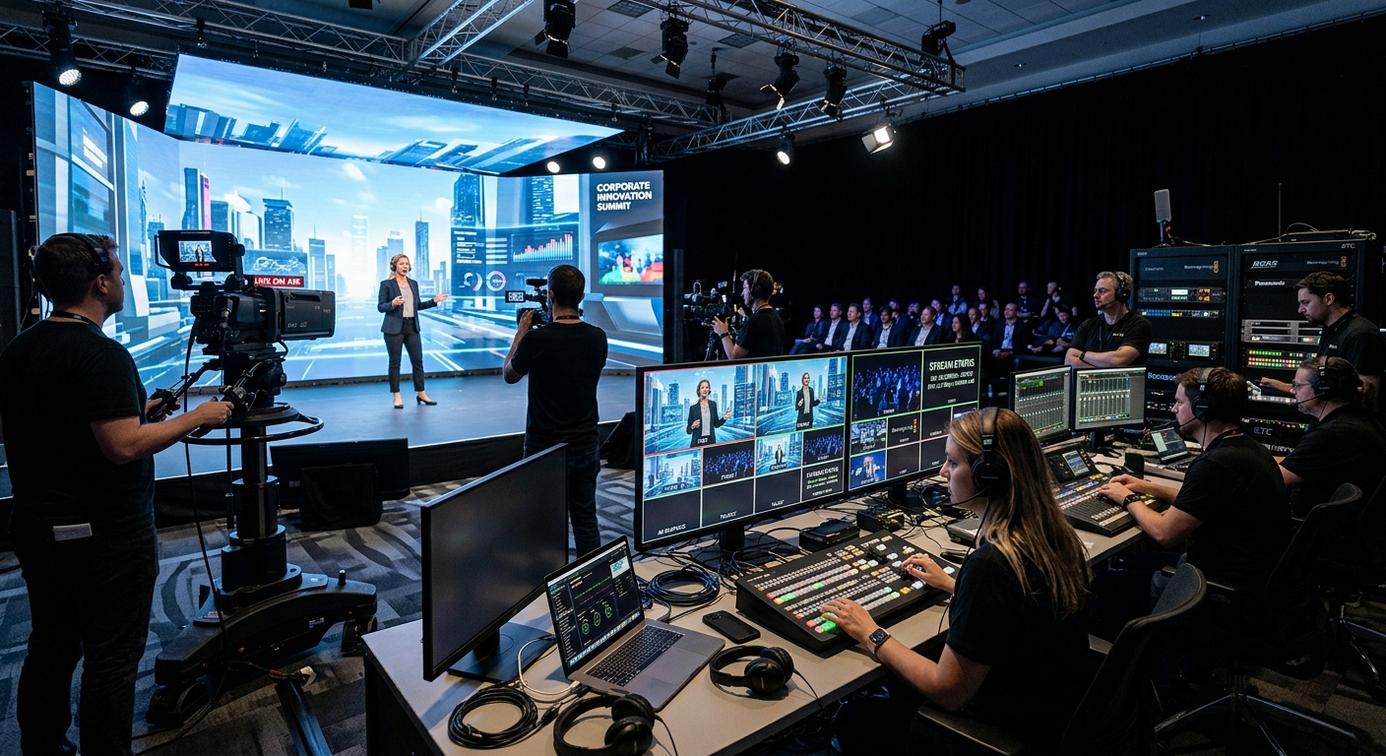
Enterprise-level XR streaming demands comprehensive integration of multi-camera setups to produce dynamic and engaging content. Using switchers that support SDI and HDMI 2.1 connections facilitates seamless transitions between camera feeds, while talkback systems and multiview monitoring enable real-time collaboration among production teams. The precision in audio/video signal flow and synchronization ensures an uninterrupted viewing experience, crucial for professional-grade XR applications.
Network Infrastructure and Scalability
To support the scalability required for large corporate events, a robust network infrastructure must be established. This involves implementing redundancy and failover strategies, leveraging both fiber-optic cabling and enterprise Wi-Fi solutions to secure high-speed data transmission. Enterprises must meticulously plan network architecture to accommodate the fluctuating demands of XR streaming, balancing on-premise capabilities with the flexibility of cloud solutions, ensuring seamless hybrid event execution.
Cloud vs On-Premise Streaming Solutions
The decision between cloud-based and on-premise solutions is pivotal in XR streaming logistics. While cloud platforms offer scalability and reduced initial investment, on-premise options afford greater control and security over data management. A hybrid approach often proves most effective, using cloud resources for temporary scale-ups during peak demand and relying on robust on-premise systems for consistent baseline operations.
Implementation Guidelines and Best Practices
Spring Forest Studio recommends implementing comprehensive network assessments to identify bottlenecks before deployment. Ensuring compatibility with enterprise platforms such as Microsoft Teams, Zoom, and Webex is also critical for hybrid interaction. Additionally, maintaining up-to-date IT protocols and redundant systems guarantees resilience against network failures, thus securing the quality and continuity of XR streaming across diverse corporate settings.
Quality of Service and Redundancy Strategies
Implementing comprehensive QoS policies is essential to prioritize XR data packets, thereby minimizing latency and ensuring stream consistency. Regular infrastructure audits can preempt potential disruptions, while deploying dual pathways for data transmission serves as an additional hedge against packet loss and service interruption, quintessential for maintaining professional streaming standards.
In conclusion, mastering the logistics of high-speed data for XR streaming entails a nuanced understanding of technical protocols, infrastructure planning, and implementation finesse. By adhering to best practices and leveraging advanced technologies, Spring Forest Studio positions itself as a leading facilitator of innovative B2B streaming solutions for enterprise clients.

Jeremy Lee is a seasoned digital marketing director and strategist with over two decades of experience in the industry. As the founder of Sotavento Medios, I manage a diverse portfolio of over 50 businesses, helping brands grow through advanced search strategies and digital innovation. My work focuses on bridging the gap between traditional search engine optimisation and the evolving world of AI-driven answer engines.
get in touch