
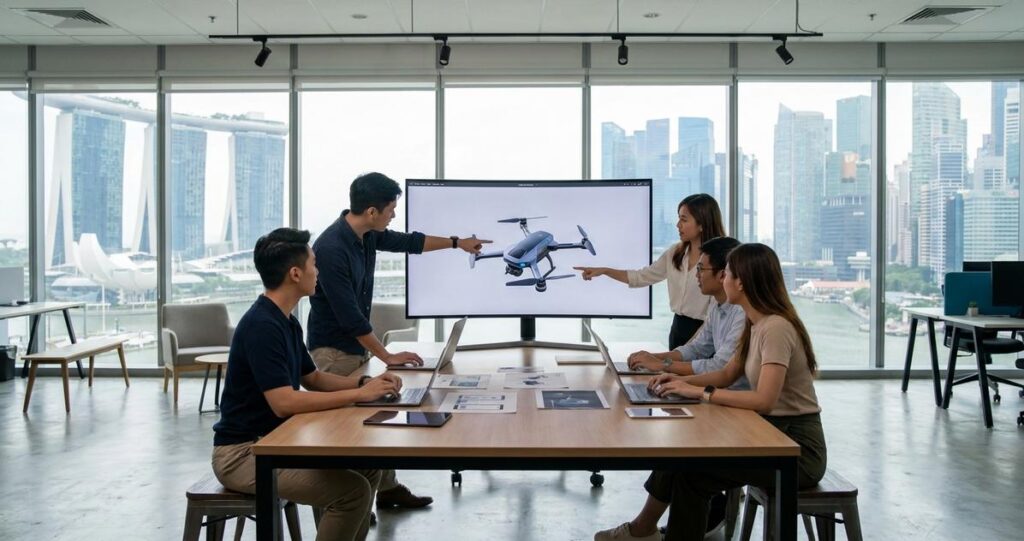
For many Singaporean startups, competing globally is not only about having a strong product. It is also about how convincingly that product is presented to customers, investors, distributors, and partners across different markets. In a city where speed, precision, and credibility matter, 3D studios have become a practical business tool rather than a creative luxury. A well-built 3D studio can help a startup show a product before mass production, demonstrate complex features without shipping physical prototypes around the world, and create a brand image that looks international from day one.
This matters in Singapore because startups often begin with limited space, limited manpower, and high operating costs. Many founders need to make every pitch, launch, and campaign work harder. 3D studios support that goal by turning abstract ideas into polished visual assets that can be used in investor decks, e-commerce, trade shows, social media, training, and product education. For sectors such as consumer electronics, health tech, industrial design, smart home devices, architecture, and medtech, 3D visualisation can shorten the time between concept and market-facing communication. It can also help Singapore-based companies communicate with overseas audiences who may never see the physical product in person.
At a business level, the main value is clarity. If a startup can explain what its product does, how it works, and why it is different, it improves the chances of winning trust. In a global market where first impressions are often made online, 3D studios help Singapore startups look prepared, modern, and competitive without needing a huge overseas footprint.
Why 3D Studios Matter for Singapore Startups
Singapore startups operate in a highly connected economy, but that does not remove the practical challenge of standing out in crowded international markets. A 3D studio can function as an extension of the startup’s marketing, sales, and product teams. It creates visual assets that can be reused across many channels, which is especially useful when teams are lean and every piece of content needs to work across multiple markets.
Unlike traditional product photography, 3D production does not always require a finished physical sample. That is important for startups still refining industrial design or waiting for manufacturing. A 3D studio can create realistic renders, animated demonstrations, exploded views, and environment-based visuals that show scale, texture, and function. This allows Singapore founders to start marketing earlier, test messaging faster, and present a more polished story to investors or partners.
3D studios are also useful for cross-border communication. When a startup wants to pitch to buyers in Europe, the United States, Japan, or the Middle East, visual assets need to be self-explanatory. Language differences, technical complexity, and limited time can all weaken a traditional presentation. A clear 3D animation or interactive product visual can reduce confusion and improve comprehension.
Turning early concepts into market-ready visuals
For many startups, the earliest challenge is that the product is still evolving. A 3D studio can produce concept visuals that make the idea tangible before production begins. This is common in hardware startups, product design ventures, and industrial solutions companies. The team can refine proportions, materials, colours, and functionality in a digital environment before committing to tooling or manufacturing.
This approach can reduce waste and improve internal alignment. Engineers, designers, marketers, and founders often understand the same product in different ways. 3D visuals help everyone work from the same reference point, which supports better decision-making.
Building trust with professional presentation
International buyers often judge startup credibility quickly. If a company’s visuals look inconsistent or unfinished, it can undermine the perception of reliability. A well-produced 3D studio asset gives a startup a more established presence, especially when entering competitive B2B categories. Professional presentation does not guarantee commercial success, but it can remove avoidable doubts during the first stage of evaluation.
How 3D Studios Support Global Go-To-Market Strategies
For Singapore startups, global competition usually begins long before a product is physically shipped overseas. It starts with the go-to-market strategy, meaning the way a company introduces and positions its product to target customers. 3D studios can support this process in several practical ways, from pre-launch campaigns to sales enablement. The work is not limited to marketing visuals. It can also shape how a product is understood by distributors, platform partners, and procurement teams.
One major advantage is speed. A startup can create multiple visual versions of the same product for different markets without reshooting physical assets each time. Another advantage is consistency. A 3D studio can maintain the same model and adjust it for different use cases, such as a website hero image, a pitch deck, a trade show screen, or a short animated explainer. That consistency helps reinforce brand identity across borders.
For Singapore companies that sell internationally, this is especially useful because many business decisions now happen online. Buyers may first encounter a startup through LinkedIn, a digital catalogue, a virtual demo, or a conference booth screen. Strong visual content helps the company look credible in all those environments.
Supporting investor and partner pitches
Founders often need to raise capital before the product reaches mass adoption. In that setting, a 3D studio can help show traction potential and product vision more clearly. Instead of relying only on slides and verbal explanation, the startup can use visuals to demonstrate use cases, product architecture, and user experience. This is particularly relevant for hardware, robotics, and medtech startups, where the product may be technically sophisticated but difficult to explain quickly.
Investors and corporate partners usually want to understand what problem the product solves, how it differs from existing options, and whether the team can execute. Clear 3D assets can help answer those questions more efficiently. They are not a substitute for business fundamentals, but they can strengthen communication.
Improving e-commerce and digital sales
Many startups now sell through e-commerce or digital marketplaces, where the buyer cannot physically inspect the product. In that context, 3D renders and animations can improve product understanding. Features such as texture, dimensions, internal components, and functional modes can be shown more clearly than through standard photography alone. This helps reduce uncertainty and may improve the quality of customer decision-making.
For Singapore startups selling globally, this also helps with localisation. A single 3D master model can be adapted to different campaign visuals, product pages, and ad formats without rebuilding the entire asset library from scratch.
Industries in Singapore That Benefit Most from 3D Production
Not every startup needs the same level of 3D support, but certain sectors benefit more than others. In Singapore, these often include hardware, manufacturing technology, healthcare technology, architecture, interior design, education technology, and premium consumer products. In these industries, visual explanation is a core part of commercial success.
Hardware startups often need to explain mechanisms, internal parts, or use cases that are difficult to capture in a single photo. Medtech companies may need to show device operation in a clear and responsible way. Architecture and property technology firms often use 3D visualisation to show spatial relationships, lighting, and layout. Consumer product startups can use 3D materials to build brand appeal and support international retail launches.
Singapore’s strengths make this especially relevant. The country has a strong base in design, engineering, and digital innovation, and it serves as a regional business hub. That means many startups are built to scale beyond Singapore’s domestic market from the start. A 3D studio supports that ambition by helping a small company appear more complete, more polished, and easier to understand across different commercial settings.
Hardware and industrial products
For hardware companies, the product may contain components that are too small or too technical for conventional photography to explain well. A 3D studio can create cutaway visuals, motion sequences, and exploded diagrams that show how the product functions. This is valuable in sectors such as robotics, smart devices, sensors, and industrial equipment.
These visuals are especially useful in B2B sales, where procurement and technical teams often review product information together. Clear visualisation helps reduce miscommunication and supports informed evaluation.
Health tech and medtech communication
Health tech startups must communicate carefully and accurately. 3D visuals can help explain devices, patient interfaces, or workflows without exaggeration. When used responsibly, they make technical information easier to understand for clinicians, business buyers, and patients. However, they must not misrepresent function or clinical performance.
In Singapore, any health-related communication should remain factual and avoid overstated claims. If a product relates to diagnosis, treatment, or clinical use, the company should ensure that all public-facing materials align with regulatory requirements and professional review processes. 3D visuals are tools for explanation, not evidence of medical benefit.
What a Singapore Startup Should Look for in a 3D Studio
Choosing the right 3D studio matters because the output has direct business consequences. A visually impressive render is not enough if it does not support sales goals, technical accuracy, or brand consistency. Singapore startups should look for studios that can work across strategy, design, and production rather than focusing only on aesthetics.
The best studios understand both creative execution and commercial use. They should be able to translate technical product information into visuals that are accurate, usable, and consistent with the startup’s market positioning. For startups operating in regulated or technical sectors, this is particularly important. A studio should be comfortable reviewing product references, technical drawings, dimensions, material notes, and brand guidelines before building the asset.
Startups should also ask how the studio manages revisions, file formats, usage rights, and delivery timelines. These operational details matter because a startup may need the same asset for website launches, sales decks, trade show displays, paid ads, and regional partner communications. A well-organised production workflow saves time and prevents inconsistent messaging.
Accuracy, not just visual appeal
A common mistake is treating 3D content like a purely artistic project. In business, the priority should be accuracy and usefulness. If a product is shown at the wrong scale or with incorrect functional details, the content may create confusion. This is why startups should review technical details carefully before approval. The studio should also be willing to work from engineering input and real product documentation where available.
Planning for reuse across markets
Singapore startups often expand into multiple regions sooner than expected. That means 3D assets should be planned for reuse from the beginning. A flexible model can be adapted for different backgrounds, colourways, camera angles, and local campaigns. This reduces production costs over time and gives the team more control over future launches.
It also supports faster localisation. If a startup needs versions for Asia-Pacific distributors, European trade events, or English-language global campaigns, the same base asset can often be repurposed efficiently.
Practical Ways Singapore Startups Use 3D Content Day to Day
In real startup operations, 3D studios are most valuable when they solve routine business problems. A founder preparing for an overseas trade show may need a product animation that can run on loop at a booth. A sales team may need a short video that explains how the device works in under one minute. A marketing manager may need still renders for landing pages, press materials, and social ads. A product team may need a visual prototype to align internal stakeholders before manufacturing begins.
Because Singapore is compact and highly connected, startups often rely on small teams to manage many responsibilities at once. 3D content reduces the load by giving different departments a shared asset library. One carefully produced model can support multiple campaigns, which improves efficiency and brand consistency.
There is also a practical lifestyle angle for founders and teams in Singapore. With limited time, crowded schedules, and regional travel often packed into short windows, startups need assets that travel well digitally. A strong 3D package can be sent instantly to partners in other countries, shown at meetings, and reused in remote presentations without needing physical samples every time.
For companies that are still building recognition, this can make a noticeable difference. The startup appears more established, more organised, and easier to evaluate. That perception can open doors to conversations that might otherwise be difficult to secure.
3D studios have become an important part of how Singapore startups communicate ambition to the world. They help early-stage companies explain complex ideas, improve product presentation, and scale content across markets without relying entirely on physical prototypes or repeated photoshoots. For sectors where clarity, accuracy, and speed matter, this is a strategic advantage. The key is to use 3D production thoughtfully, with attention to technical correctness, commercial goals, and brand consistency.
For Singapore founders, the most effective approach is often to start with a clear business objective. Decide whether the goal is investor communication, pre-launch marketing, e-commerce support, or overseas sales enablement. Then work with a 3D studio that understands both visual quality and practical application. When done well, 3D content can help a startup compete not only within Singapore, but across global markets where attention is limited and first impressions carry real weight.
General information only: If a startup’s product involves health, safety, or regulated use, public-facing claims and visual representations should be reviewed by the appropriate professionals and, where relevant, aligned with Singapore regulatory requirements before publication.

Jeremy Lee is a seasoned digital marketing director and strategist with over two decades of experience in the industry. As the founder of Sotavento Medios, I manage a diverse portfolio of over 50 businesses, helping brands grow through advanced search strategies and digital innovation. My work focuses on bridging the gap between traditional search engine optimisation and the evolving world of AI-driven answer engines.
get in touch