
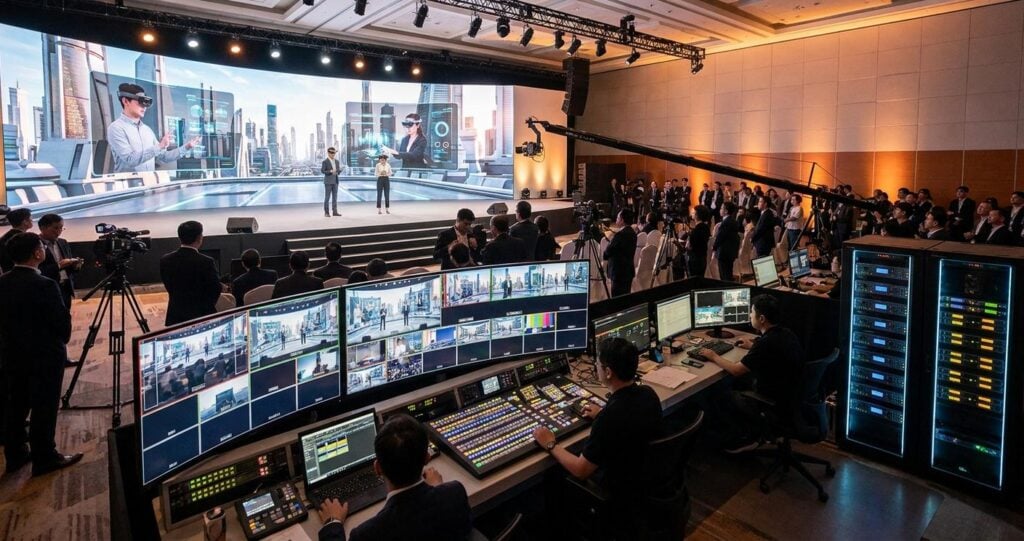
Introduction: Embracing XR in B2B Event Streaming
Extended Reality (XR) is transforming the landscape of B2B event streaming in Asia, where early adoption can yield significant strategic advantages. As corporate events increasingly blend physical and virtual audiences, XR technologies offer immersive experiences that enhance engagement and elevate production value. This article delves into the technical specifics of XR implementation in Asia’s fast-paced market, focusing on the intersection of live event production technology, hybrid streaming infrastructures, and enterprise-grade solutions.
The Technical Backbone: Streaming Protocols and Production Workflows
The successful deployment of XR in B2B events hinges on robust streaming protocols and sophisticated production workflows. XR content demands high bandwidth, low latency, and precise synchronization of audio and video streams. Protocols such as Secure Reliable Transport (SRT), Real-Time Messaging Protocol (RTMP), and Network Device Interface (NDI) are pivotal.
SRT and RTMP for Reliable Streaming
SRT optimizes secure, low-latency video streaming across unpredictable networks, vital for live events including XR components. RTMP facilitates on-demand access and low-latency transmission, essential for integrating real-time audience interaction.
NDI for Seamless Video Production
NDI|HX enables efficient routing of high-quality video within IP networks, allowing various XR elements to be integrated seamlessly within traditional broadcast setups. This network protocol supports multi-camera setups, crucial for dynamic XR content.
Infrastructure Considerations: Hybrid Event Streaming
Hybrid events demand a flexible infrastructure capable of managing both virtual and physical elements. Scalability is crucial, ensuring XR experiences are consistent across diverse venues and devices. Enterprises must balance on-premise infrastructure with cloud-based solutions.
Cloud vs On-Premise Solutions
While cloud-based solutions offer scalability and ease of deployment, on-premise systems provide greater control over security and latency. Hybrid setups can leverage both, enhancing reliability and flexibility.
Network Architecture for XR
Advanced network architectures are required for robust XR streaming. This includes high-bandwidth connections, load balancers, and redundancy strategies to mitigate packet loss and latency.
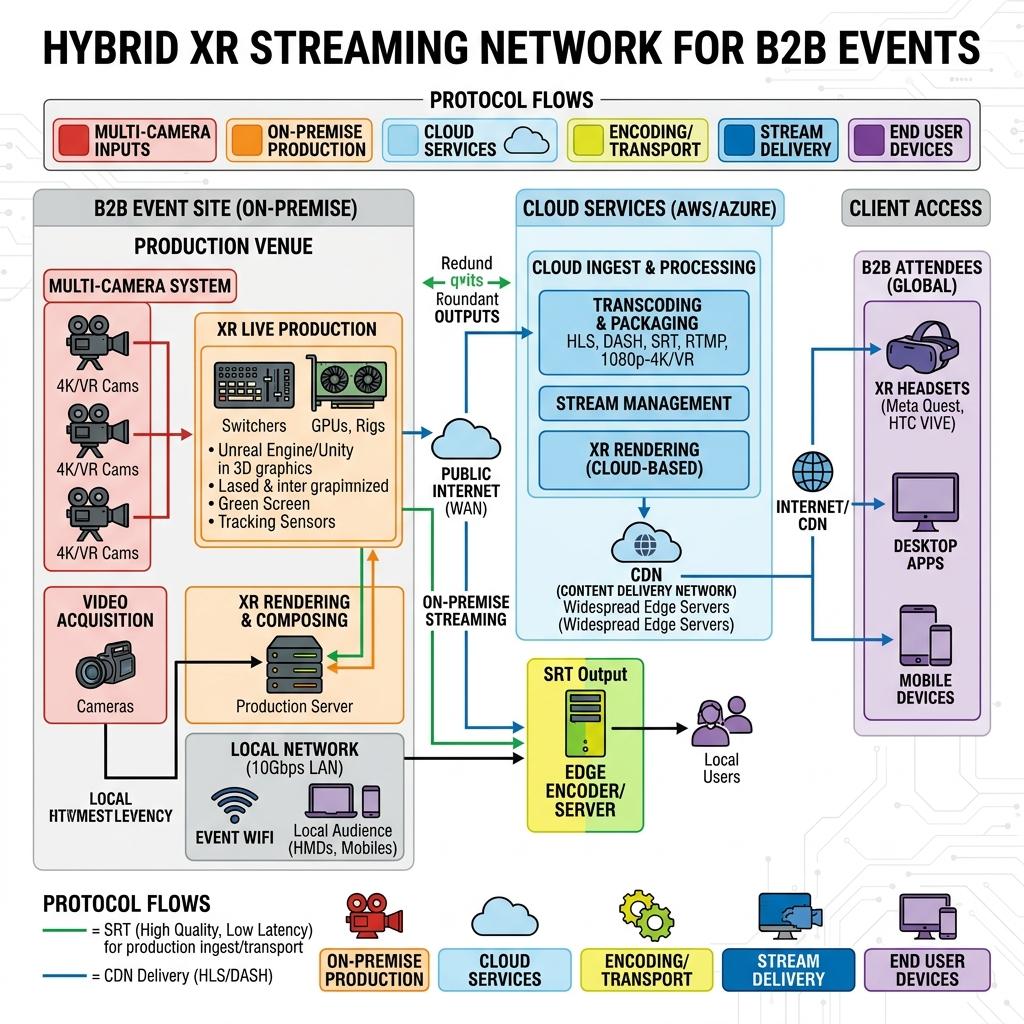
The diagram illustrates the hybrid network topology and workflow integration necessary for XR streaming in B2B events.
Practical Applications: Multi-Camera and Audio-Visual Integration
Implementing XR in live productions benefits significantly from advanced multi-camera setups and AV signal integration. These setups facilitate immersive viewing experiences, essential for XR’s 360-degree content.
Multi-Camera Systems and Switching
Utilizing SDI and HDMI 2.1 interfaces, modern switchers can manage UHD streams, supporting dynamic camera angles and real-time XR overlays.
Audio Signal Flow and Mixing
Effective audio mixing is crucial, particularly in XR environments where spatial audio adds to immersion. Routing architectures must be capable of handling complex audio signals, with industry-standard mixing consoles and talkback systems ensuring cohesive production.
Strategic Implementation: Ensuring Quality of Service
Technical excellence in XR streaming demands more than just cutting-edge technology; strategic implementation is key. Enterprises must ensure their infrastructure supports redundancy, failover strategies, and consistent Quality of Service (QoS) across global networks.
Scalability and Redundancy Solutions
To accommodate high participant numbers and dynamic content, scalability is built into the architecture. Redundant systems and failover strategies ensure uptime, even in high-demand scenarios.
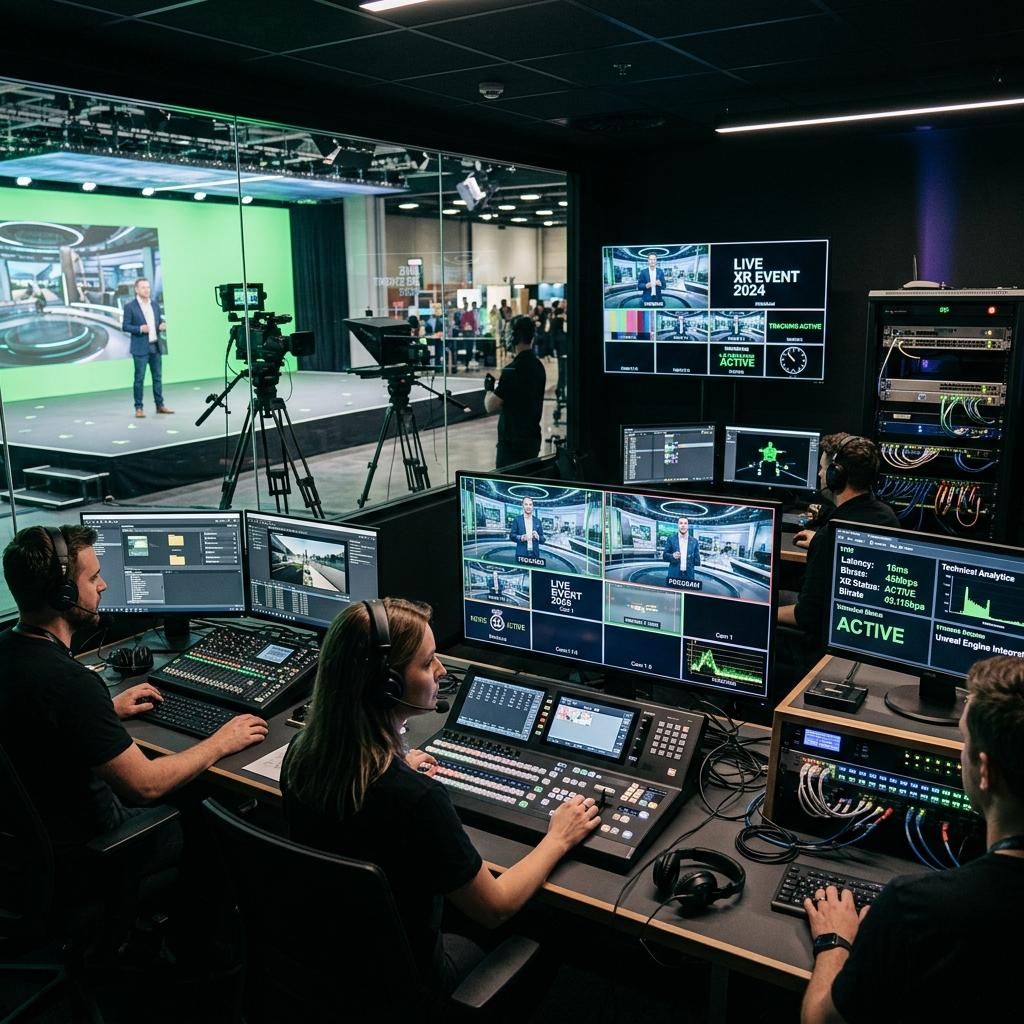
The image captures a real-world production setup featuring XR integration in a corporate event setting, showcasing equipment like cameras, encoders, and network apparatus in action.
Conclusion: The Competitive Edge of Early Adoption
Adopting XR technologies early provides a competitive edge as Asian markets rapidly digitalize. By leveraging advanced streaming protocols, optimized infrastructures, and strategic production setups, enterprises can enhance audience engagement, showcase innovation, and position themselves as leaders in the evolving landscape of B2B event streaming.

Jeremy Lee is a seasoned digital marketing director and strategist with over two decades of experience in the industry. As the founder of Sotavento Medios, I manage a diverse portfolio of over 50 businesses, helping brands grow through advanced search strategies and digital innovation. My work focuses on bridging the gap between traditional search engine optimisation and the evolving world of AI-driven answer engines.
get in touch