
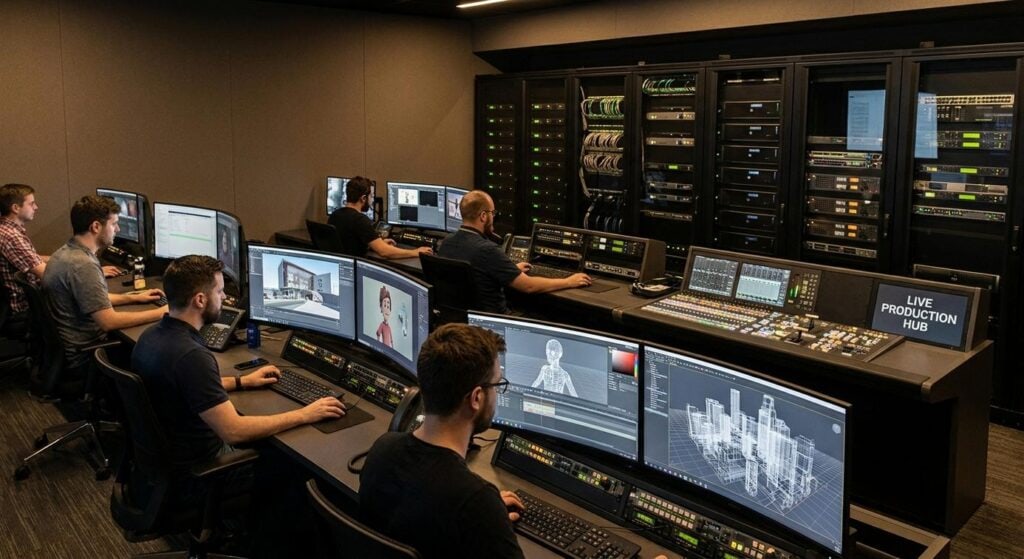
How to Source 3D Models for Your Virtual Event Production
As the demand for virtual and hybrid events continues to grow, the need for high-quality 3D models in B2B event streaming is becoming increasingly prominent. These models not only enrich the virtual experience but also add significant value by enhancing visual storytelling and engagement. This comprehensive guide will walk you through advanced technical considerations and best practices for sourcing 3D models, ensuring a seamless integration into your live and hybrid event production.
Understanding the Role of 3D Models in Event Production
3D models play a crucial role in virtual event environments, providing a realistic representation of objects and spaces. In the context of B2B streaming, they can be used for virtual set designs, interactive product demonstrations, and dynamic background scenes. This necessitates understanding file formats such as OBJ, FBX, and GLTF to ensure compatibility with industry-standard production software and platforms.
Sourcing High-Quality 3D Models
When sourcing 3D models, it is essential to prioritize quality, polygon count, and optimization for real-time rendering. Many enterprise-grade platforms require models that are both detailed and optimized to prevent performance bottlenecks during streaming. File size and render efficiency must be balanced to maintain high visual fidelity without exceeding network bandwidth constraints.
Utilizing Professional 3D Model Libraries
To find high-caliber models, consider leveraging professional 3D model libraries such as TurboSquid or CGTrader. These platforms provide a wide range of options tailored to various industry requirements, ensuring that your models meet enterprise standards for realism and detail.
Integrating 3D Models into Live and Hybrid Productions
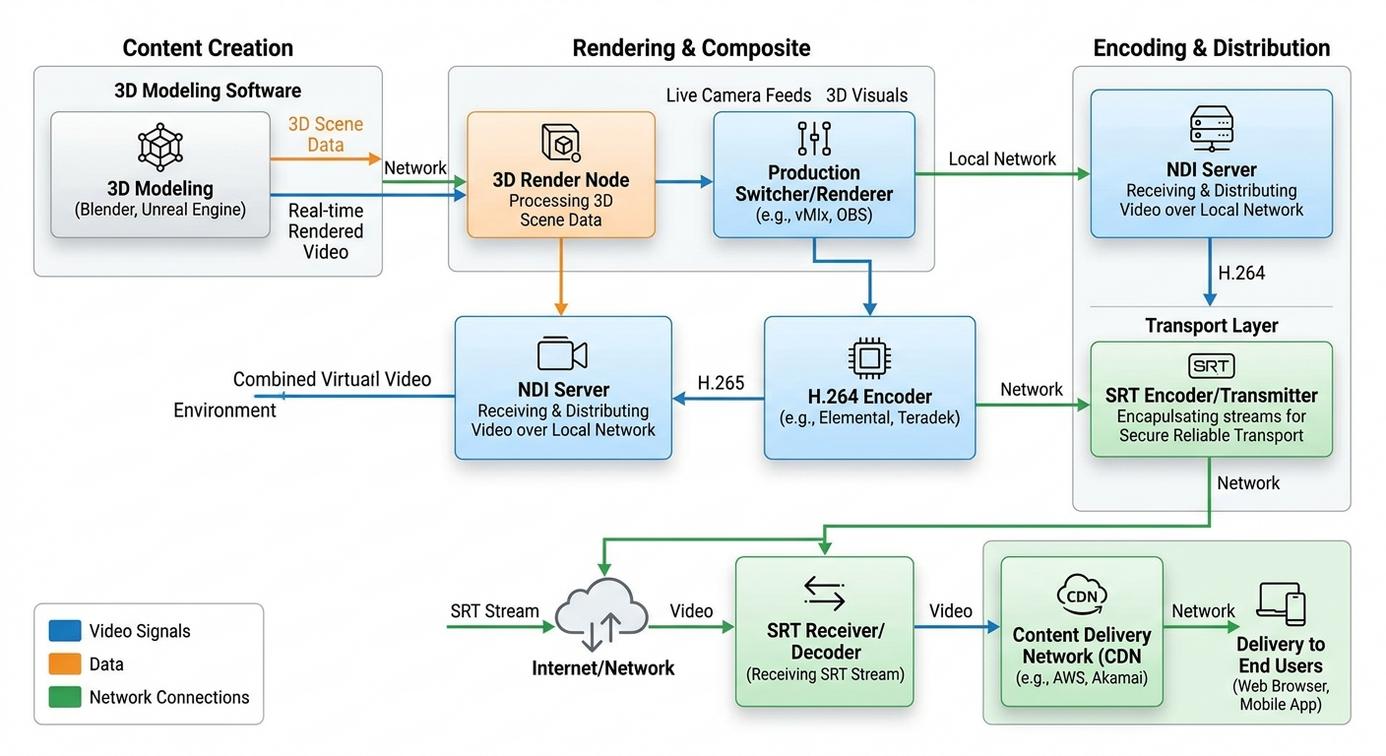
The successful integration of 3D models requires a robust technology stack. Tools such as NDI (Network Device Interface) and protocols like SRT (Secure Reliable Transport) are essential for seamless data transmission with minimal latency, ensuring the models are rendered smoothly in live productions. Combine these protocols with encoding standards like H.264 and H.265 to optimize compression efficiency and maintain quality.
Setting Up a Multi-Camera Production Environment
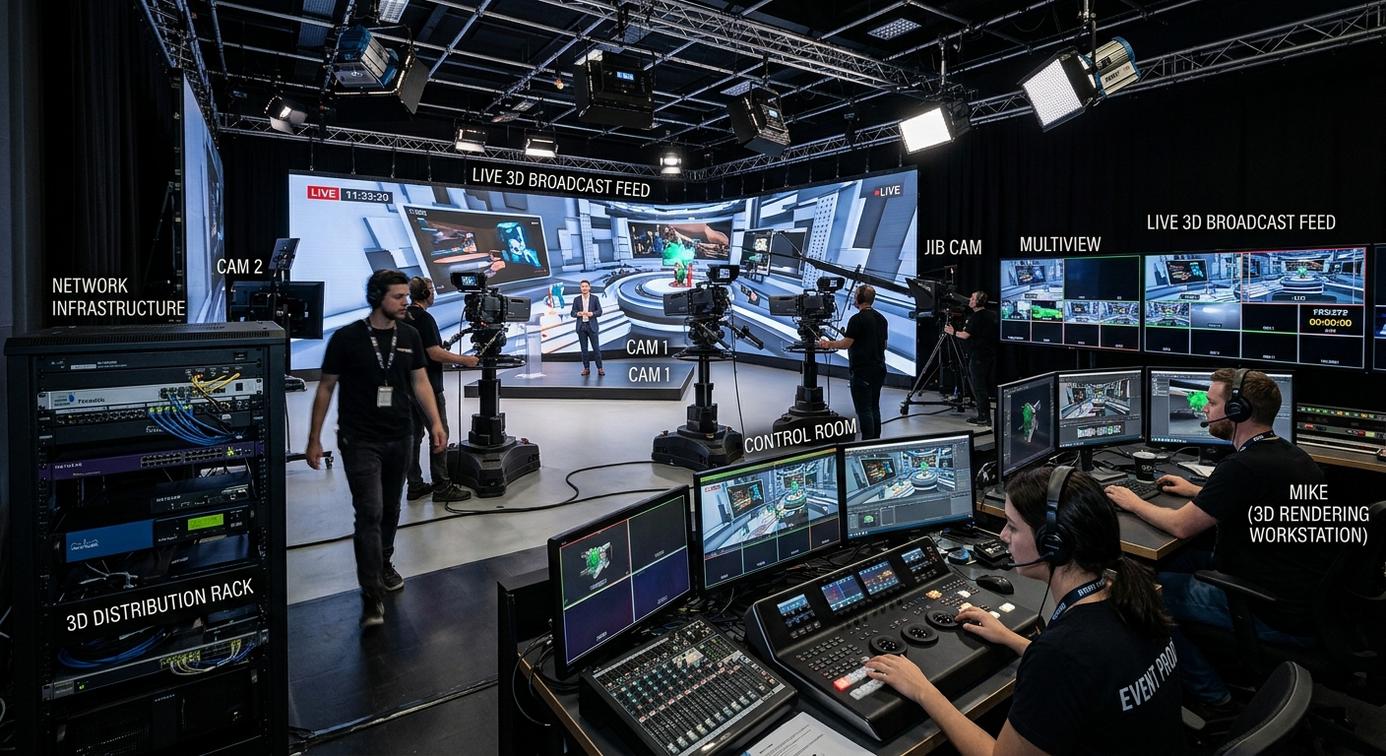
Incorporating 3D models into multi-camera setups requires precise signal routing and synchronization. SDI (Serial Digital Interface) and HDMI switching systems facilitate the integration of 3D content across various inputs. Proper configuration of video switchers and routers ensures that signals remain synchronized, maintaining a coherent output for both physical and virtual audiences.
Technical Considerations for Network Infrastructure
To support large-scale events, your network infrastructure must be designed to handle high data throughput while minimizing latency. Utilize enterprise-grade networking equipment, such as managed switches and robust firewalls, to prioritize and secure 3D data streams. Ensure adequate bandwidth allocation and consider Quality of Service (QoS) protocols to prevent packet loss during peak loads.
Cloud-Based vs. On-Premise Solutions
The decision between cloud-based and on-premise streaming solutions often hinges on factors such as scalability, cost, and control over content delivery. Cloud solutions offer flexible scalability for variable audience sizes, while on-premise setups deliver greater control and potentially lower latency for high-stakes productions. Assessing the demands of your specific use case can guide your choice in platform.
Scalability and Redundancy in Streaming Infrastructure
For enterprise-level virtual events, scalability and redundancy are critical to avoid technical failures. Implementing redundant network paths and failover strategies ensures continued operation in the event of hardware or signal failures. Utilize load balancing and mirrored streaming servers to handle large audience loads efficiently without compromising on service quality.
By following these guidelines, enterprises can effectively integrate 3D models into their virtual event productions, ensuring engaging and visually appealing presentations that resonate with audiences. Spring Forest Studio stands ready to assist with expert B2B streaming solutions tailored to the unique demands of corporate clients.
Jeremy Lee is a seasoned digital marketing director and strategist with over two decades of experience in the industry. As the founder of Sotavento Medios, I manage a diverse portfolio of over 50 businesses, helping brands grow through advanced search strategies and digital innovation. My work focuses on bridging the gap between traditional search engine optimisation and the evolving world of AI-driven answer engines.
get in touch