
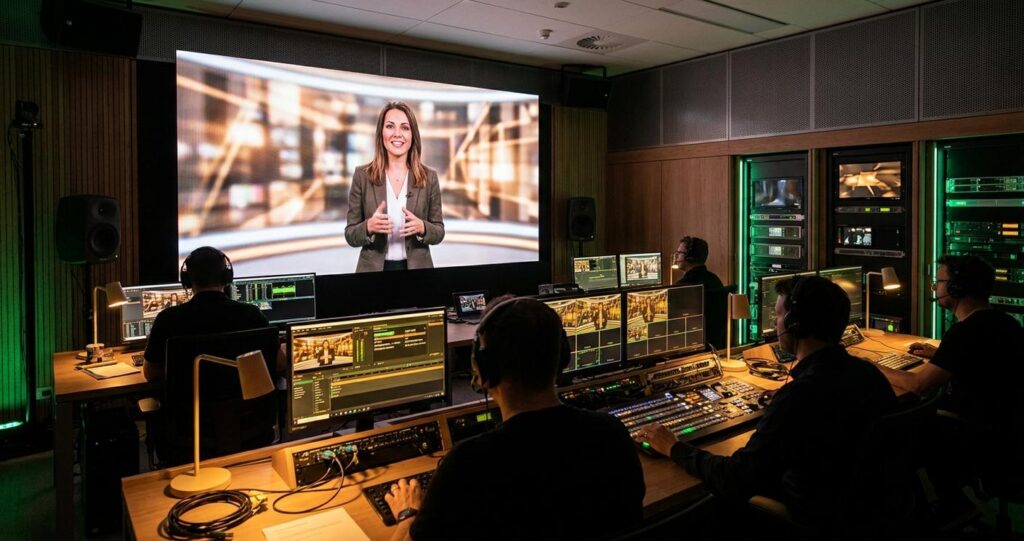
In the evolving landscape of B2B event streaming and hybrid production, the pursuit of immersive, broadcast-quality experiences is paramount. While technical infrastructure, robust streaming protocols, and seamless multi-camera integration form the backbone of any enterprise-grade event, the subtle nuances of visual storytelling often dictate audience engagement. One such critical element, historically confined to traditional cinematography but now increasingly vital in virtual studio environments, is Depth of Field (DoF).
For Spring Forest Studio, delivering professional B2B event streaming and hybrid production services means pushing the boundaries of technical artistry. The cinematic virtual studio, a sophisticated amalgamation of real-time graphics engines, advanced camera tracking, and enterprise-grade streaming infrastructure, presents unique opportunities to leverage DoF. This advanced technical analysis will explore the foundational principles of DoF, its technical implementation within real-time virtual production pipelines, and its profound impact on creating visually compelling, focused, and immersive virtual environments for corporate event planners, AV professionals, and IT directors alike. Understanding the meticulous control of DoF is not merely an aesthetic choice; it is a technical imperative for guiding viewer attention and elevating the production value of high-stakes B2B broadcasts.
Fundamentals of Depth of Field in Traditional Cinematography and its Virtual Analogs
Depth of Field, in conventional optics, refers to the range of distances in front of and behind the focal plane where objects appear acceptably sharp. This optical phenomenon is influenced by three primary factors: aperture size, focal length of the lens, and the sensor (or film) size. A larger aperture (smaller f-number), a longer focal length, or a larger sensor size typically results in a shallower DoF, effectively isolating the subject from its foreground and background.
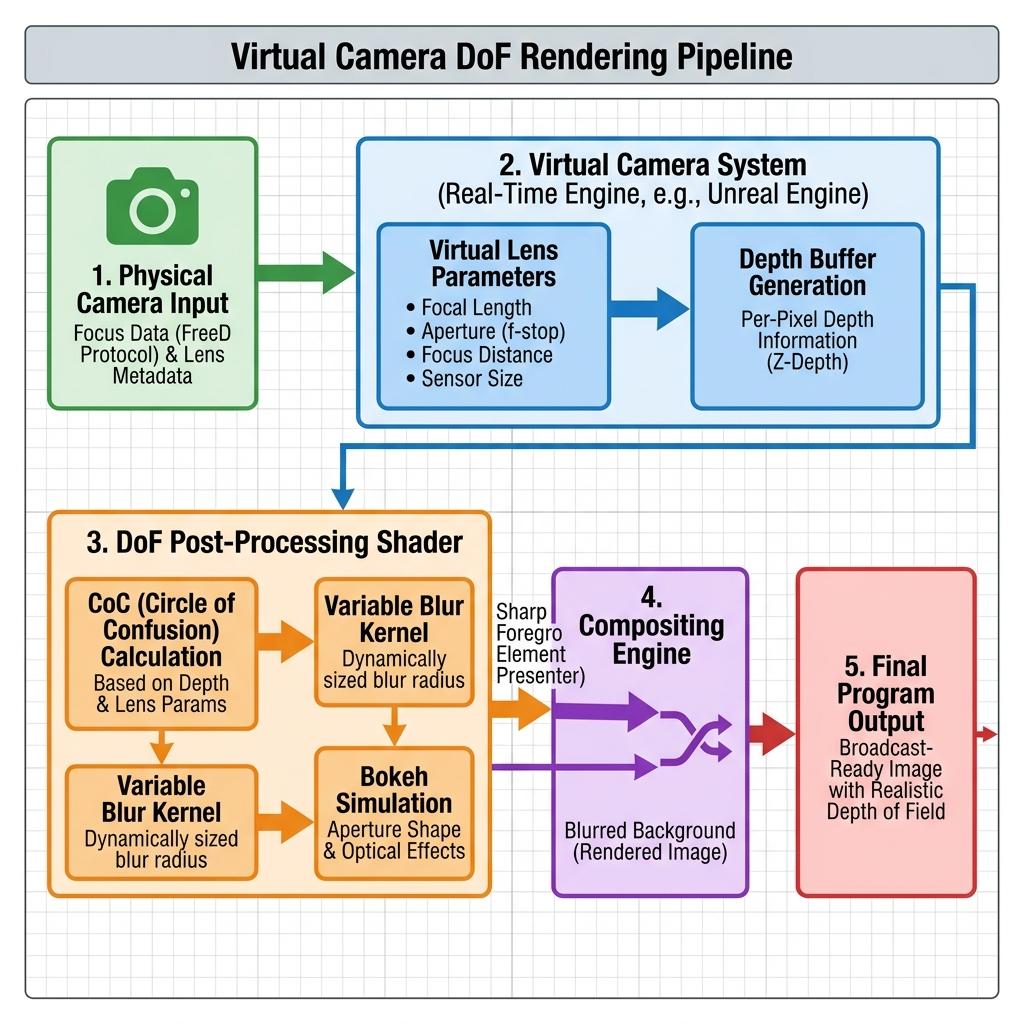
Translating this optical principle into a virtual studio environment, where the camera and its “lens” are entirely digital constructs within a real-time 3D engine like Unreal Engine or Unity, introduces a layer of technical complexity. Virtual cameras in these engines simulate the parameters of physical cameras, including focal length, aperture, and sensor size. However, the simulation of DoF is computationally intensive and relies on sophisticated rendering techniques. The virtual aperture directly influences the Circle of Confusion (CoC), which determines the degree of blur. In a virtual lens model, the aperture is often represented as a geometrically defined shape, such as a hexagon or an octagon, influencing the bokeh characteristics.
The core challenge lies in rendering out-of-focus areas without incurring prohibitive computational costs or introducing visual artifacts. Modern game engines and virtual production platforms employ post-processing effects, often leveraging depth buffers and image-space calculations, to simulate DoF. The depth buffer, a per-pixel recording of distance from the camera, is crucial for identifying which pixels should be blurred and to what extent. This data is then fed into a DoF shader, which applies a convolution filter or approximates a bokeh effect based on the CoC calculation. Accurate DoF simulation requires precise depth information, particularly for complex scenes with varying distances and intricate geometries, which is a common characteristic of detailed virtual sets.
The effective management of virtual lens parameters, coupled with efficient shader optimization, is critical for maintaining real-time frame rates required in live B2B streaming. Without precise control, the simulated DoF can appear artificial, detracting from the desired cinematic aesthetic and failing to achieve the desired psychological impact of directing viewer focus. Achieving physically accurate bokeh, especially for highlights in out-of-focus areas, requires advanced rendering techniques that often push the limits of GPU processing capabilities for enterprise-grade virtual production systems.
Technical Implementation of Depth of Field in Real-time Virtual Production Workflows
Implementing effective Depth of Field in real-time virtual production involves a multi-faceted technical approach, integrating advanced rendering techniques with robust hardware acceleration. The primary methods revolve around post-processing effects, often executed within the rendering pipeline of the chosen real-time engine. This pipeline typically involves a depth pass, where the scene’s depth information is rendered to a texture, followed by a color pass. The depth texture is then utilized by a DoF shader during a subsequent post-process pass.
One common technique is the use of Circle of Confusion (CoC) calculations. For each pixel, the shader determines its distance from the camera and the current focal plane. Based on these distances and the virtual aperture settings, a CoC value is calculated. Pixels with larger CoC values are blurred more aggressively. Modern implementations often employ a variable-sized blur kernel, adapting its radius based on the calculated CoC. Techniques like Gather-based DoF or separable filters can be used for performance optimization, reducing the number of texture samples required. Physically-based rendering (PBR) pipelines further enhance DoF realism by accurately simulating light interaction and reflections within the virtual environment, providing more believable out-of-focus elements, especially for specular highlights.
GPU acceleration is indispensable for real-time DoF. High-performance GPUs, such as NVIDIA RTX series cards with dedicated RT Cores and Tensor Cores, significantly expedite the complex calculations involved in DoF rendering. Ray tracing capabilities, while traditionally used for global illumination and reflections, can also contribute to more accurate DoF, particularly for highly refractive or reflective surfaces that interact with the blur effect. The computational load escalates with higher resolutions (e.g., 4K/UHD for enterprise events) and higher frame rates (e.g., 60 frames per second), necessitating enterprise-grade graphics workstations with ample VRAM and processing power.
Integration with camera tracking systems is paramount for dynamic DoF. Systems like Mo-Sys, Stype, and Ncam provide real-time positional and rotational data (x, y, z, pan, tilt, roll, zoom, focus, iris) of the physical broadcast camera. This FreeD protocol data is ingested by the real-time engine, allowing the virtual camera to precisely mirror the physical camera’s movements and, critically, its focal distance. When the physical camera operator adjusts focus, the virtual camera’s focal plane updates in real-time, driving the DoF effect in the virtual set. This synchronization ensures that the presenter, who is physically present, remains in sharp focus while the virtual background reacts realistically, maintaining the illusion of a cohesive environment. Latency optimization between the tracking system, real-time engine, and the final program feed is crucial to avoid any noticeable lag that could disrupt the live viewing experience.
Enhancing Visual Storytelling and Audience Immersion with Controlled Depth of Field
Beyond the technical mechanics, the deliberate application of Depth of Field in cinematic virtual studios serves a profound artistic and narrative purpose, directly impacting audience engagement in B2B event streaming. Controlled DoF is a powerful visual tool for guiding viewer attention, creating a clear hierarchy of visual elements within the frame, and enhancing the overall immersion in a virtual presentation.
In a typical B2B keynote address or product launch, the presenter is the primary focus. By employing a shallow DoF, the presenter, often composited seamlessly into the virtual set via chroma keying, stands out sharply, while the virtual background elements (e.g., corporate logos, data visualizations, architectural features of the virtual studio) are rendered with a pleasing, controlled blur. This technique effectively isolates the subject, minimizing distractions and ensuring the audience’s gaze is directed where it needs to be. For hybrid events, where a physical audience might be present alongside a virtual one, this visual separation reinforces the presenter’s presence and importance, regardless of the viewing medium.
Furthermore, DoF can be dynamically adjusted to support specific storytelling beats. During a product demonstration within a virtual studio, for instance, the DoF could transition from focusing on the presenter to precisely focusing on a virtual product model as it is introduced, then back to the presenter for commentary. This dynamic racking of focus, a common cinematic technique, adds a layer of professionalism and visual sophistication that elevates the production beyond a static presentation. It implies a conscious creative decision, enhancing the perceived quality and technical capability of the event production. This level of control requires highly responsive virtual camera systems and precise synchronization with the physical camera operator’s focus pulls.
The psychological impact of well-executed DoF is significant. A shallow DoF often conveys a sense of intimacy and professionalism, mirroring the high-production value found in traditional broadcast and film. It allows for the creation of a more believable and expansive virtual space, even if the physical production volume is small. By strategically blurring elements, the virtual set can appear larger and more detailed than its rendered polygons might otherwise suggest. This contributes to a heightened sense of presence for the virtual audience, making the experience feel more akin to a live, in-person event, rather than a flat, two-dimensional webcast. Adherence to broadcast standards for visual quality, including colorimetry (e.g., Rec. 709 or Rec. 2020 for HDR), resolution, and frame rate, ensures that these sophisticated DoF effects are delivered with optimal fidelity to the end-user.
Advanced DoF Techniques, Infrastructure, and Scalability for Enterprise Streaming
As B2B event streaming demands continue to evolve, so too do the advanced techniques and underlying infrastructure required to deliver cutting-edge cinematic virtual studios with sophisticated Depth of Field. Beyond basic post-processing DoF, advanced rendering methods are being explored, such as volumetric DoF, which accurately simulates light scattering and occlusion within blurred regions, offering an even greater sense of realism. Programmable shaders provide granular control over DoF characteristics, allowing for bespoke bokeh shapes, anisotropic blurring, and complex lens aberration simulations that mimic specific high-end cinema lenses.
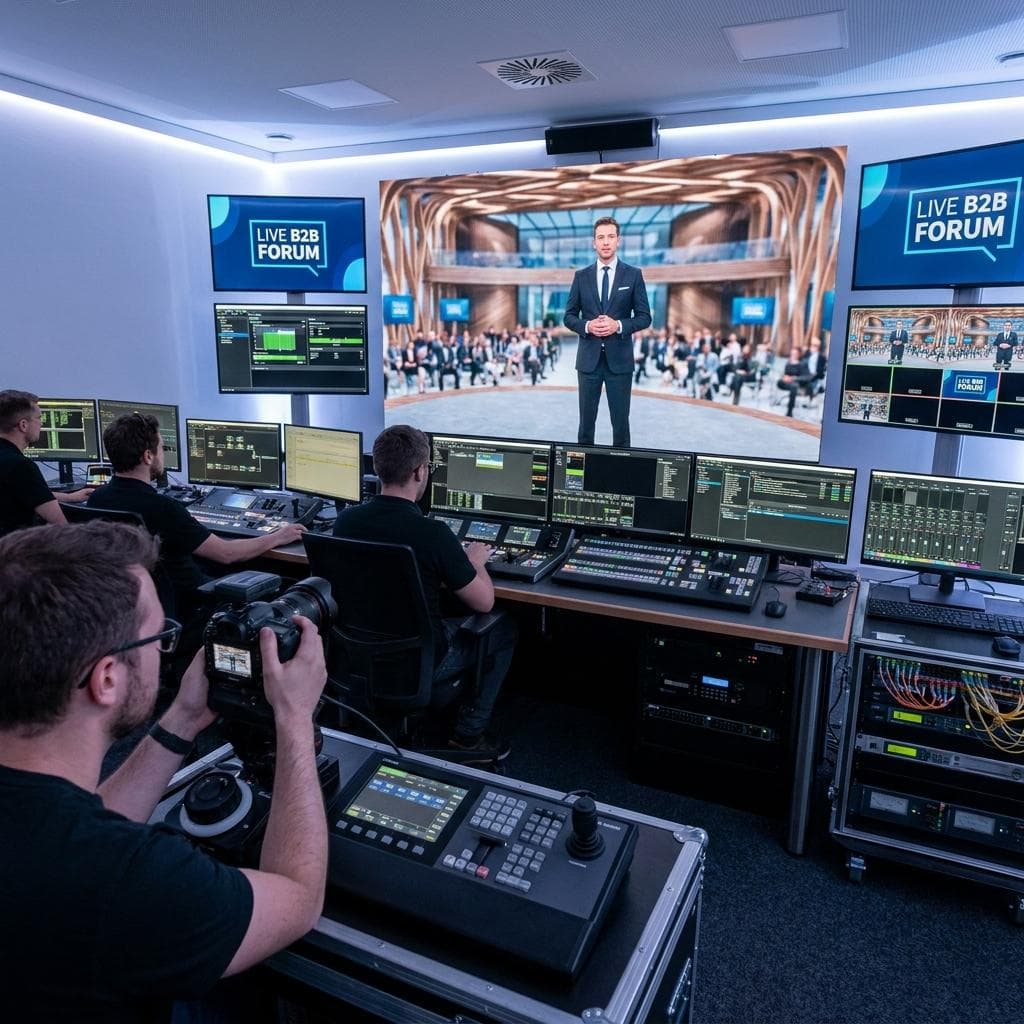
The infrastructure underpinning these advanced DoF implementations is substantial. High-performance workstations, often equipped with multiple enterprise-grade GPUs (e.g., NVIDIA Quadro RTX series), are essential to handle the real-time rendering demands of complex virtual sets at 4K/UHD resolution and 60p frame rates, especially when incorporating ray-traced elements and advanced DoF algorithms. These systems require robust cooling, high-wattage power supplies, and high-speed NVMe storage for rapid asset loading. The internal network infrastructure must support multi-gigabit throughput, often employing 10GbE or 25GbE switches and fiber optic cabling, to facilitate the low-latency transport of uncompressed or lightly compressed video streams (e.g., NDI|HX, SMPTE ST 2110) from the rendering engine to the video switcher, encoding systems, and multiview monitoring solutions.
Integrating these virtual studio outputs with enterprise streaming platforms and broadcast workflows requires adherence to industry standards. For instance, the output from the real-time engine, featuring the rendered DoF, is often transported as an NDI (Network Device Interface) stream or via SDI (Serial Digital Interface) over coaxial cable or fiber (SMPTE ST 2110 for IP-based broadcast). These feeds are then ingested by a professional video switcher (e.g., Ross Video, Grass Valley, Blackmagic Design ATEM series) alongside other live camera feeds and graphics. Encoding for streaming typically utilizes H.264 or H.265 codecs, with bitrate management carefully optimized for the target platform and audience bandwidth, ensuring that the visual fidelity of the DoF is maintained through the encoding and delivery pipeline. Protocols like SRT (Secure Reliable Transport) and RTMP/RTMPS are used for resilient, low-latency, and secure distribution to Content Delivery Networks (CDNs) or direct integration with enterprise communication platforms like Microsoft Teams, Zoom Events, or Webex for hybrid event scenarios.
Scalability considerations for large corporate events are paramount. A single virtual studio setup might suffice for a keynote, but multi-presenter panels or concurrent breakout sessions require a scalable architecture. This can involve multiple redundant real-time engine workstations, each rendering specific virtual environments or camera angles, all feeding into a central production switcher. Cloud-based rendering solutions are emerging as a viable option for bursting capacity, allowing for temporary scaling of GPU resources without significant on-premise investment. Redundancy and failover strategies are critical, extending to the DoF rendering pipeline itself. This includes redundant GPUs, hot-swappable power supplies, and automated failover to secondary rendering instances to ensure uninterrupted delivery of the high-quality, DoF-enhanced program feed, even in the event of a component failure. Quality of Service (QoS) implementation on the network ensures priority for video traffic, guaranteeing consistent latency and preventing packet loss that could degrade the visual integrity of the sophisticated DoF effects. The precision required for rendering and transmitting cinematic DoF necessitates meticulous attention to every component in the end-to-end streaming infrastructure.
In conclusion, the strategic deployment of Depth of Field within cinematic virtual studios represents a significant technical advancement for B2B event streaming and hybrid production. It transforms a static digital background into a dynamic, immersive environment that actively contributes to visual storytelling. From the meticulous calibration of virtual lens parameters and the optimized execution of DoF shaders on high-performance GPUs, to the seamless integration with camera tracking systems and enterprise-grade streaming infrastructure, every technical decision contributes to the cinematic outcome. Spring Forest Studio possesses the deep technical expertise and practical experience to design, implement, and operate these advanced virtual production workflows, ensuring that your corporate events not only deliver critical information but also captivate your audience with unparalleled visual quality and immersion. Embracing the power of controlled DoF is not just about aesthetics; it is about engineering a superior, more engaging, and ultimately more impactful B2B streaming experience.

Jeremy Lee is a seasoned digital marketing director and strategist with over two decades of experience in the industry. As the founder of Sotavento Medios, I manage a diverse portfolio of over 50 businesses, helping brands grow through advanced search strategies and digital innovation. My work focuses on bridging the gap between traditional search engine optimisation and the evolving world of AI-driven answer engines.
get in touch