
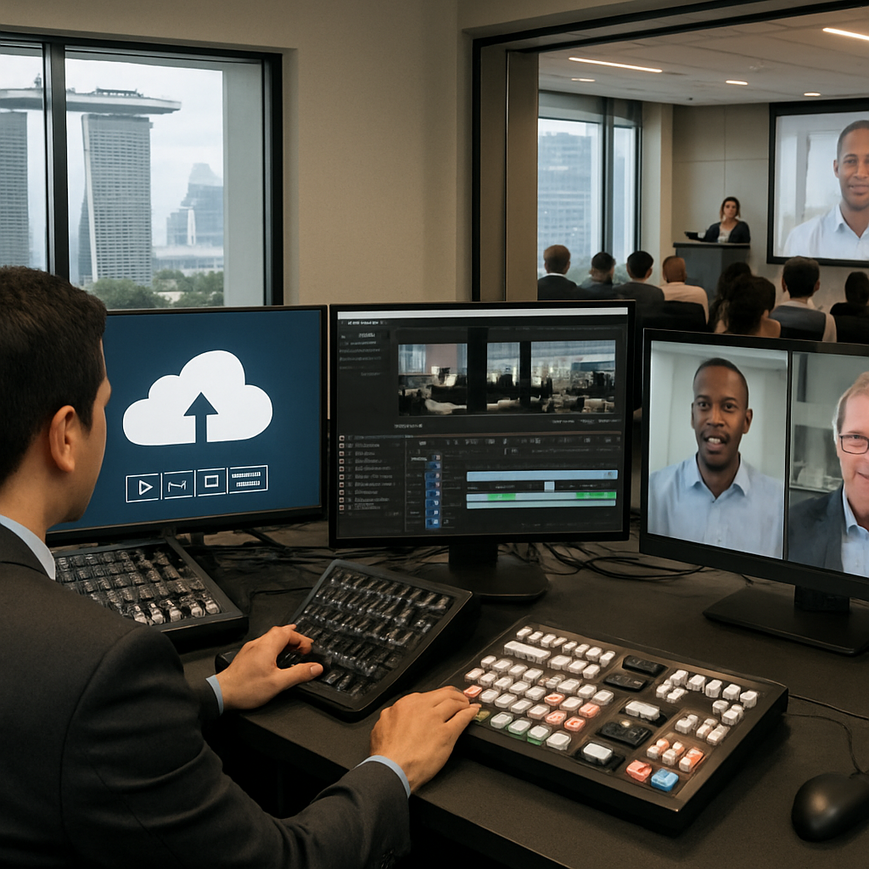
For Singapore businesses planning webinars, hybrid conferences, product launches, town halls, or live-streamed training sessions, platform flexibility is no longer a nice extra. It is now a practical requirement. Audiences join from office desktops, mobile phones on the MRT, home Wi-Fi networks, and event venues with very different technical conditions. At the same time, organisers often need to switch between platforms, adapt to different audience sizes, support multiple languages, and keep content secure. Cloud-based production helps make that possible by moving much of the event workflow into online systems that can be accessed, scaled, and adjusted more easily than traditional on-site setups.
In simple terms, cloud-based production uses internet-connected tools to manage tasks such as video switching, graphics, encoding, routing, storage, collaboration, and distribution. Instead of relying entirely on a single physical control room, teams can coordinate from different locations and direct content to multiple platforms at once. For Singapore, where many organisations operate across regional offices, work with international stakeholders, and expect high standards for reliability, this model offers a practical way to deliver events that are more adaptable without sacrificing professionalism.
The key advantage is flexibility. A cloud-based workflow can support different event formats, adjust to changing audience needs, and reduce dependence on fixed infrastructure. That matters in a market like Singapore, where businesses often need to serve local participants, regional teams in Southeast Asia, and global viewers simultaneously. When production is built to flex, organisers can respond faster to schedule changes, platform requirements, and audience behaviour, while maintaining a consistent brand experience.
What cloud-based production means in practice
Cloud-based production refers to the use of remote servers and internet-based software to handle parts of the live or recorded production process. In a conventional setup, many functions happen inside a physical control room using dedicated hardware. In a cloud-based workflow, some or all of those functions move to cloud platforms that can be accessed by authorised users from different locations. This can include live switching, remote guest contribution, subtitle insertion, graphics playback, media review, and distribution to streaming destinations.
For event teams, the main appeal is not just convenience. It is the ability to redesign the workflow around the event rather than forcing the event to fit a rigid technical arrangement. If a panel discussion needs remote speakers from different countries, cloud-based contribution tools can bring those speakers into the production pipeline without requiring everyone to be in the same venue. If a client wants the same programme sent to a webinar platform, a private portal, and a social channel, cloud routing and encoding can support that more efficiently.
In Singapore, this is especially useful for organisations that manage regional audiences or host cross-border meetings. A headquarters in Singapore may need production support for viewers in Malaysia, Indonesia, Hong Kong, or beyond. Cloud-based production helps teams coordinate these deliveries with fewer physical constraints, while still requiring disciplined planning, stable connectivity, and careful governance.
Why platform flexibility matters for Singapore event organisers
Platform flexibility means an event can move between platforms, support more than one distribution channel, or adapt the viewer experience without rebuilding the entire production. This is important because audience needs change rapidly. Some stakeholders prefer a secure password-protected webcast, others want to watch on a familiar meeting platform, and some require recordings for later viewing. The production system should support those differences rather than creating friction.
Singapore’s business environment places a premium on efficiency and reliability. Organisations often work with regional leadership teams, partners, government-linked entities, and multinational brands. These groups may have different compliance expectations, content approval steps, and technical preferences. A cloud-based production model can help teams tailor the delivery method while keeping the content pipeline organised and auditable.
There is also a practical local consideration: hybrid events often need to serve both in-room and remote attendees smoothly. In a city where venue schedules can be tight and event timelines are compressed, production teams benefit from systems that can scale up or down without major reconfiguration. Cloud workflows support this by making it easier to replicate output across destinations, update assets quickly, and involve remote specialists when needed.
Multiple delivery points without rebuilding the workflow
A major reason organisations adopt cloud-based production is that it can send the same programme to multiple destinations. One event might stream live to a registration portal, a corporate intranet, and a backup platform at the same time. Another might require a live session, followed by on-demand access and edited highlight clips. Cloud systems make these handoffs more manageable because content can be processed centrally and then distributed according to audience or business needs.
This is useful for Singapore-based teams that support both internal and external audiences. For example, an internal leadership address may need a secure stream for staff, a separate recording for compliance review, and an edited version for regional offices. Rather than treating these as separate events, cloud-based production allows one source workflow to feed several endpoints.
Adaptable formats for different audience preferences
Different audiences consume content differently. Some prefer a polished webcast with graphics and moderated Q and A. Others want a straightforward meeting-style experience with minimal overlays. Cloud-based production allows teams to design one master workflow and then create different viewing outputs depending on the target audience. This can improve accessibility and reduce the need for duplicate production efforts.
For Singapore audiences, this flexibility is especially relevant when events include bilingual or multilingual elements. While language services such as live interpretation still require specialist planning, cloud production can support alternate audio feeds, caption workflows, and separate distribution channels more easily than some fixed setups. The result is a more inclusive experience without asking the technical team to manage every variation manually on-site.
How cloud production improves operational resilience and collaboration
Platform flexibility is closely linked to resilience. If a production depends entirely on one physical location, one control system, or one person in the room, it becomes vulnerable to disruption. Cloud-based production spreads responsibilities across systems and people, which can improve continuity when unexpected issues arise. That does not eliminate risk, but it gives teams more options for recovery.
In practice, this is helpful in Singapore where event teams may coordinate with overseas presenters, agency partners, translators, and technical operators. Cloud collaboration tools allow producers, directors, and graphics operators to work from different places while sharing the same production environment. That can reduce travel time, widen access to specialised talent, and make it easier to scale the team according to event complexity.
Remote collaboration for distributed teams
Remote collaboration is one of the clearest strengths of cloud production. A producer can oversee the show from one location, a graphics operator can work from another, and a technical director can monitor the output remotely. Guest speakers can join from home or office, provided their connection is stable and the contribution workflow has been tested. This structure is particularly relevant for Singapore companies that work with regional colleagues in different time zones.
It also supports a more efficient planning process. Drafts of graphics, cues, scripts, and run sheets can be shared and updated in a central environment, reducing version-control problems. For busy Singapore teams handling multiple stakeholder approvals, that can save time and reduce miscommunication. The production becomes less tied to one physical workstation and more focused on coordinated execution.
Business continuity and contingency planning
One of the strongest reasons to adopt cloud-based production is contingency planning. If a venue experiences a local equipment issue, if a speaker cannot travel, or if a schedule changes late, the cloud workflow can sometimes absorb the adjustment faster than a traditional setup. Teams can switch inputs, reroute output, or bring in remote guests without dismantling the entire event architecture.
That flexibility is important for Singapore organisations that place a high value on reliability and professionalism. A well-designed cloud production setup should always include backup plans, clear communication channels, and pre-event testing. It should not be treated as a shortcut. When used properly, however, it gives the event team more ways to protect the experience for viewers and presenters alike.
Security, compliance, and quality control in the Singapore context
Flexibility only works if it is built on trustworthy systems. For Singapore businesses, security and governance are central concerns, especially when events involve confidential corporate updates, financial information, health-related content, or personal data. Cloud-based production can be secure, but it must be configured properly. Access control, authenticated logins, role-based permissions, encrypted transfer where appropriate, and careful vendor management are all important parts of the process.
Organisations should also consider data protection obligations under Singapore law, including the Personal Data Protection Act. If attendee information, recordings, or participant chat logs are collected, the production workflow should reflect the organisation’s data handling rules. This means knowing where data is stored, who can access it, how long it is retained, and how it is shared. A cloud platform is only as trustworthy as the governance around it.
Quality control is another practical issue. Cloud tools can support flexible delivery, but they do not replace production discipline. Audio levels still need checking. Lighting still matters. Speaker internet quality still needs testing. If the event is hybrid, the in-room and online experiences should be monitored separately so that problems can be corrected quickly. Teams that use cloud production well treat it as an enabler, not a substitute for professional planning.
Checking vendors and workflows before the event
Before committing to a cloud-based workflow, organisers should ask practical questions. Where are the servers or delivery points located? What redundancy is available? How are permissions managed? What happens if a contributor loses connection? Is there a backup path for the stream? These are not technical questions for the IT team alone. They are central to event reliability.
For Singapore clients, vendor due diligence should also cover support hours, response times, and compatibility with corporate security requirements. Some organisations may need internal approval from IT, risk, legal, or communications teams before a platform can be used. Planning for these checks early prevents last-minute delays and reduces the chance of avoidable disruptions on event day.
Practical use cases for Singapore businesses
Cloud-based production is not limited to large conferences. It can support a wide range of business events across Singapore’s corporate and institutional sectors. A financial services company may use it for quarterly briefings with staff and investors. A healthcare organisation may use it for continuing education sessions or internal training. A professional services firm may use it for regional town halls, client seminars, or product demonstrations. Education and public-sector teams can also benefit from the ability to create secure, repeatable digital formats.
One of the most useful local applications is hybrid event management. A company may host a leadership forum at a Singapore hotel venue while executives in other countries join remotely. Cloud production makes it easier to blend the live room with the virtual audience, manage presenter transitions, and deliver the same message consistently. For organisations with lean internal teams, this can significantly reduce operational burden.
Another strong use case is content repurposing. A live event can be recorded, edited, and distributed later as a replay, training asset, or marketing clip. Because the production assets already live in a cloud workflow, post-event turnaround can be faster and more organised. This is especially valuable for Singapore businesses that need to extend the value of one event across multiple channels and markets.
Accessibility and audience reach
Accessibility should be part of platform flexibility from the start. Cloud-based production can support captioning, language workflows, transcript generation, and different content versions for different audiences. These features help make events more usable for viewers with different needs and preferences. They also support wider content reach because on-demand versions can be reviewed later by people who could not attend live.
For Singapore organisations, this can matter in a multilingual and highly connected environment. A more accessible production often improves audience satisfaction and content retention. It also signals professionalism, which is important when the event reflects the organisation’s brand or public reputation.
How to plan a flexible cloud-based production strategy
Good cloud-based production starts with clear objectives. The team should define who the audience is, which platforms are required, what level of interactivity is needed, and what content must be protected or archived. Once those requirements are clear, the production design can be matched to the business goal rather than overbuilt or underprepared. This approach keeps the workflow flexible without making it unnecessarily complex.
The next step is testing. Cloud production depends on connectivity, device compatibility, and well-defined roles. Pre-event rehearsals should include contributors, moderators, interpreters if relevant, and technical operators. Teams should test video, audio, backup access, and the handoff between live and recorded content. For Singapore events, it is also wise to consider the realities of local connectivity conditions at the venue and for remote guests joining from home or office.
Finally, the team should document the workflow. A clear run sheet, escalation path, contact list, and recovery plan make cloud production easier to manage under pressure. Flexibility should never mean confusion. When the system is properly structured, the event team can adapt quickly while keeping the audience experience consistent and professional.
For Singapore organisations, cloud-based production is most valuable when it is used to solve real operational problems: reaching different audiences, supporting hybrid participation, reducing dependence on fixed infrastructure, and improving resilience. It works best when combined with careful planning, security awareness, and strong production discipline. If your event needs to travel across platforms, support remote contributors, or scale across markets, cloud workflows can provide a practical and dependable foundation. The best results come from choosing a setup that matches the event objective, testing it properly, and keeping both the audience experience and governance requirements firmly in view.
General information only. If your event involves sensitive content, regulated data, or complex accessibility requirements, consult the relevant internal stakeholders, legal or compliance teams, and qualified production professionals before implementation.
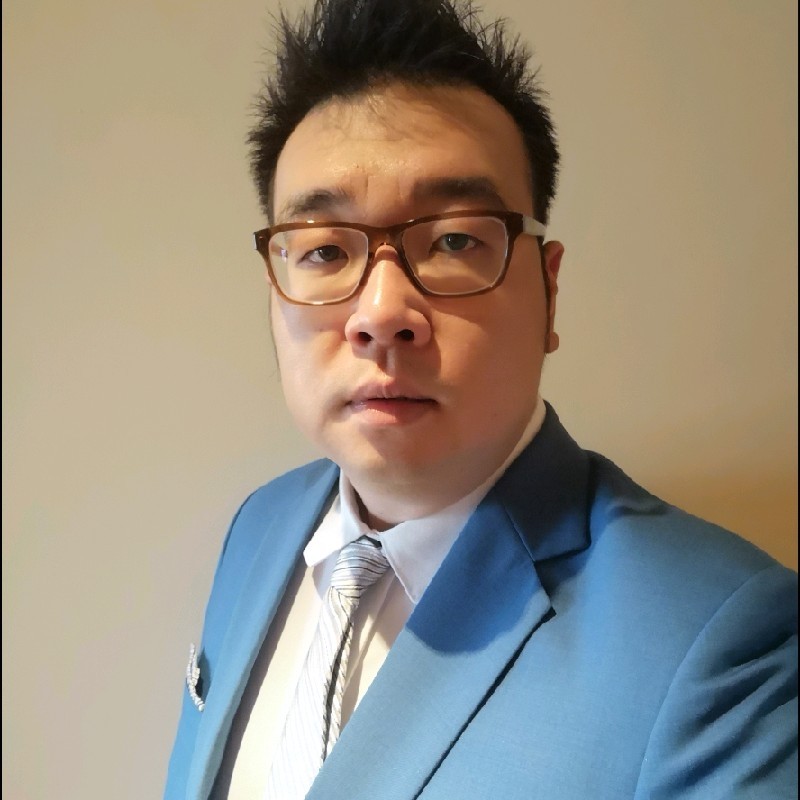
Jeremy Lee is a seasoned digital marketing director and strategist with over two decades of experience in the industry. As the founder of Sotavento Medios, I manage a diverse portfolio of over 50 businesses, helping brands grow through advanced search strategies and digital innovation. My work focuses on bridging the gap between traditional search engine optimisation and the evolving world of AI-driven answer engines.
get in touch