
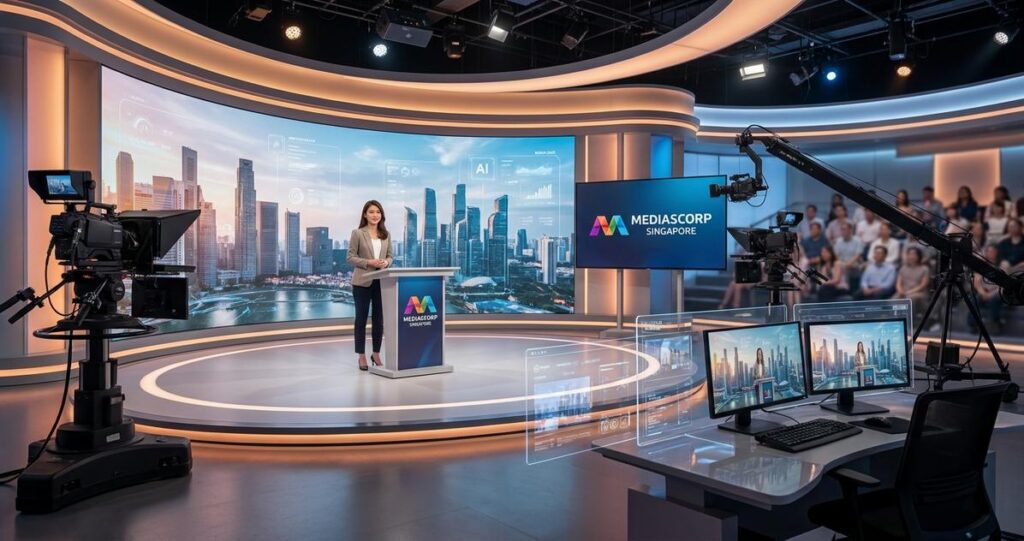
Virtual sets have already changed how studios, brands, educators, and event producers create immersive content, but artificial intelligence is set to reshape that process even further. For readers in Singapore, this matters because the country’s media, corporate communications, education, and event industries increasingly rely on hybrid production, remote collaboration, and fast turnaround content. Artificial intelligence, or AI, refers to computer systems that perform tasks usually associated with human intelligence, such as recognising patterns, generating images, analysing scenes, and automating repetitive decisions. In virtual set generation, AI can help create backgrounds, adapt lighting, simulate camera movement, and streamline production workflows, making high-quality production more accessible and efficient.
The real question is not whether AI will affect virtual sets, but how it will change the way sets are conceived, built, and operated. In Singapore, where production teams often work with limited physical space, tight schedules, multilingual audiences, and high expectations for polished output, AI-supported tools can offer practical advantages. At the same time, the technology also raises important questions about accuracy, creative control, intellectual property, and the need for human oversight. A responsible approach requires understanding both the opportunities and the limits of AI in virtual production.
What AI Means for Virtual Set Generation
Virtual set generation refers to the creation of computer-generated environments used in studio productions, live streams, conferences, broadcasts, and corporate videos. These environments can look like realistic rooms, cityscapes, abstract brand spaces, or fully customised digital worlds. Traditionally, building these sets required 3D artists, motion graphics teams, technical directors, and considerable manual labour. AI is now changing this process by supporting asset creation, scene design, automation, and real-time adaptation.
In practical terms, AI can analyse reference images, learn visual styles, and generate components such as walls, furniture, textures, lighting variations, and visual motifs. It can also assist with compositing, which is the process of combining live footage with digital backgrounds, and with tracking, which ensures that digital elements stay aligned with camera movement. For Singapore-based production teams, this could mean faster pre-production for livestreams, trade shows, town halls, product launches, and educational broadcasts.
Generative AI and Scene Creation
Generative AI is a type of AI that creates new content, such as images, video frames, textures, or 3D concepts, based on patterns learned from training data. In virtual set generation, it may be used to produce mood boards, concept art, or base environment designs. These outputs can speed up early-stage ideation, especially when stakeholders need to review multiple options quickly.
However, generative AI output is not automatically production-ready. A generated set concept may look visually impressive, but it still needs technical refinement to ensure correct scale, perspective, brand consistency, and broadcast suitability. Human designers remain essential for checking whether the scene works for camera placement, presenter movement, graphic overlays, and real-world production constraints.
Real-Time Adaptation and Intelligent Automation
One of the most promising uses of AI is real-time adaptation. This means the system can respond instantly to changing inputs, such as presenter position, camera angle, or changes in programme content. AI can help adjust virtual lighting, reposition elements, or switch between visual themes without requiring a full manual rebuild of the scene. In live events, this can reduce operational complexity and improve consistency.
Automation also matters in repetitive production tasks. AI can assist with colour matching, background segmentation, facial detection, object recognition, and cue management. Background segmentation is the process of separating a person from the background, while cue management refers to timing visual changes in line with scripts or live cues. These functions are particularly useful in Singapore’s event environment, where productions often move quickly and require reliable execution across different venues and formats.
Why AI Matters for Singapore’s Virtual Production Landscape
Singapore is well positioned to benefit from AI-enabled virtual production because its media and event sectors are built around efficiency, technical quality, and adaptability. Many organisations operate across compact spaces and need to maximise production value without relying on large physical sets. AI can support that goal by reducing some of the manual work involved in creating and modifying virtual environments.
For businesses, this is useful when producing multilingual webinars, regional town halls, investor presentations, training programmes, or product launches. A virtual set can be reused, re-skinned, or localised with less time than a physical set. AI may further streamline localisation by helping generate alternate visual themes for different audiences, while maintaining brand identity and production quality.
Singapore’s position as a regional hub also means production teams frequently serve audiences across Asia. That creates demand for flexible content pipelines that can scale from a local webcast to a regional hybrid event. AI-supported virtual set workflows can help teams respond faster to changing requirements, especially when content needs to be updated close to event day.
Supporting Hybrid Events and Corporate Communications
Hybrid events combine in-person and online participation, and they have become a practical format for many organisations. Virtual sets help create a polished studio look even when the actual production space is modest. AI can enhance these environments by enabling quicker scene variations for different speakers, agenda segments, or languages.
For example, a corporate webcast in Singapore may need one visual identity for keynote sessions, another for panel discussions, and a third for product demonstrations. AI can help generate and manage these variations efficiently. This is especially helpful when production teams need to maintain professionalism across multiple touchpoints, from rehearsal to livestream to post-event recordings.
Space Efficiency and Production Agility
Physical set construction takes space, materials, and time. In Singapore, where studio and event space can be expensive and scheduling can be tight, virtual sets are often a practical alternative. AI strengthens this advantage by reducing the effort needed to test different environment styles, iterate on visual concepts, and adjust designs after client feedback.
This does not eliminate the need for skilled production crews. Instead, it changes the nature of their work. Teams can spend less time on repetitive setup and more time on narrative design, visual quality control, and audience experience. That shift can improve both workflow efficiency and creative output.
The Technical Building Blocks Behind AI-Driven Virtual Sets
To understand the future of AI in virtual set generation, it helps to know the main technical components involved. These systems depend on data, computer graphics, and production software working together. The AI does not replace every part of the pipeline, but it can improve several stages, from concept generation to on-air execution.
Computer Vision and Scene Understanding
Computer vision is a branch of AI that allows machines to interpret visual information from images or video. In virtual production, it can detect people, objects, camera positions, and movement patterns. This is useful for virtual set alignment, because the system can help keep digital elements consistent with live footage.
For example, if a presenter moves across the studio floor, computer vision can help the system maintain proper positioning of virtual graphics or set pieces. This is especially important in augmented reality, where digital elements appear to exist within the physical camera frame. Accurate detection and tracking are crucial for believable visuals.
3D Asset Generation and Procedural Design
AI can assist with 3D asset generation, which is the creation of digital objects used inside virtual environments. These assets may include furniture, architectural features, lighting props, or branded visual elements. Procedural design refers to a method where software creates content based on rules and parameters rather than hand-building every element manually.
Procedural tools are already widely used in digital production, and AI adds another layer of flexibility. A designer can prompt the system to generate a sleek corporate environment, a futuristic news studio, or a warm educational setting, then refine the output for actual use. The key point is that AI can accelerate exploration, but production teams still need to validate proportions, perspective, and technical compatibility.
Motion Tracking and Camera Intelligence
Motion tracking allows digital systems to follow camera movement and keep virtual elements anchored correctly within a scene. AI can improve tracking by identifying reference points more reliably and by adapting to changing light or partial occlusion, which occurs when an object temporarily blocks part of the view. Better tracking leads to more stable and convincing virtual sets.
Camera intelligence may also support shot planning. AI tools can analyse how a scene will look from different angles and suggest framing options that improve visual composition. For event producers, this can reduce trial-and-error during rehearsal and help crews move more quickly into live production.
Benefits, Risks, and the Need for Human Oversight
AI offers clear benefits in speed, flexibility, and scalability, but it also introduces risks that production teams must manage carefully. Virtual set generation affects brand identity, audience trust, and in some cases, compliance requirements. That means decisions cannot be left entirely to automation.
One major benefit is efficiency. AI can shorten concept development, reduce repetitive setup work, and help teams explore more visual options in less time. Another benefit is accessibility. Smaller teams may be able to produce high-end visual environments that would otherwise require larger budgets. A third benefit is consistency, especially when the same virtual set must be reused across multiple sessions or markets.
The main risks are equally important. AI-generated visuals may contain errors, inconsistent branding, unrealistic geometry, or copyright-related concerns if training data or source material is not properly managed. There is also the risk of overreliance on automation, where teams assume the output is correct without verifying technical details. In broadcast and event production, that can lead to visible mistakes on air.
Brand Accuracy and Creative Control
In Singapore’s corporate environment, brand accuracy matters. Companies expect their visual identity to remain consistent across all channels, including live events and streamed content. AI-generated environments can sometimes drift away from approved colours, layouts, or stylistic rules. Human review is essential to maintain fidelity to brand guidelines.
Creative control is also important. AI can suggest layouts and visual treatments, but it cannot fully understand the strategic reasons behind a creative brief. Producers, designers, and technical directors still need to decide whether a concept supports the message, audience, and tone of the event.
Data Governance and Intellectual Property
Singapore organisations should also pay attention to data governance and intellectual property. AI tools may process uploaded assets, reference images, or design files, so teams should understand where data is stored, how it is used, and whether vendor terms allow for commercial production. For productions involving confidential launches or internal communications, data handling policies are especially important.
Intellectual property issues can arise when AI-generated outputs resemble existing works too closely or incorporate unlicensed material. A careful workflow should include approval steps, source checks, and documentation of asset ownership. These are not abstract concerns, they are practical production safeguards.
How Future Workflows May Evolve in Singapore
In the future, AI is likely to become part of a broader virtual production workflow rather than a stand-alone solution. Producers may begin by describing the desired set in natural language, then use AI to generate initial concepts, preview scenes, and build alternative layouts. Human designers will refine the output, technical teams will test it against camera systems, and production leads will approve the final look.
This workflow can be especially useful in Singapore, where many events involve multiple stakeholders and limited production windows. A faster concept-to-screen process can support more frequent content updates, more customised audience experiences, and better use of studio resources. It may also help organisations localise content for regional audiences without rebuilding every set from scratch.
As AI tools improve, they may support more intelligent scene adaptation, better realism in lighting and shadows, and more seamless interaction between physical and digital elements. Still, the core principles of production will remain the same. Good virtual sets depend on clear communication, accurate technical setup, and a strong understanding of audience needs.
Practical Examples for Singapore Teams
A financial institution hosting a market update can use AI to generate a clean, data-focused virtual studio with branded motion graphics. An education provider can use AI-assisted design to create a digital classroom that feels engaging for online learners. A trade association can adapt one core virtual environment into different versions for keynote speeches, panel sessions, and sponsor segments. In each case, AI reduces the manual burden, but the final result still depends on expert review and production discipline.
For Singapore businesses and event organisers, the most effective approach is to treat AI as a productivity multiplier. It works best when paired with skilled operators, realistic creative expectations, and proper governance. The technology can speed up virtual set generation, but it cannot replace the judgment required to ensure the output is usable, accurate, and aligned with the intended message.
Anyone considering AI-driven virtual production should start by identifying where the technology adds value, such as concept development, scene variations, or live adaptation. Then, they should build review processes that protect brand standards, technical quality, and data security. That balanced approach will help organisations take advantage of AI while preserving the professionalism that audiences in Singapore expect.
Content intended for general awareness only. For decisions involving production data, intellectual property, or commercial deployment of AI tools, organisations should consult qualified professionals and review vendor terms, internal governance policies, and applicable Singapore requirements.

Jeremy Lee is a seasoned digital marketing director and strategist with over two decades of experience in the industry. As the founder of Sotavento Medios, I manage a diverse portfolio of over 50 businesses, helping brands grow through advanced search strategies and digital innovation. My work focuses on bridging the gap between traditional search engine optimisation and the evolving world of AI-driven answer engines.
get in touch