
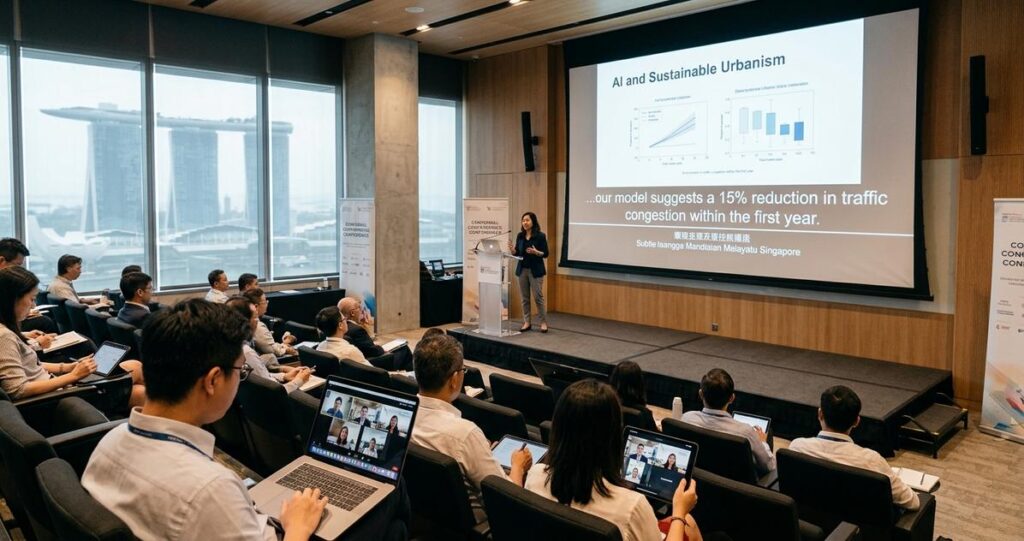
Hybrid events have become a practical way for organisations in Singapore to reach people who are in the room and people joining remotely across the region. For business conferences, investor briefings, training programmes, government forums, and product launches, the audience often includes attendees from different countries, different levels of English fluency, and different professional backgrounds. That is where translation matters. A hybrid event may already be accessible in format, but if the language is not accessible, the event still excludes part of the audience. Artificial intelligence has changed the way event teams handle this challenge, especially when the goal is to communicate quickly across multiple languages without losing the pace of a live programme.
For Singapore-based organisers, the question is not whether AI can translate event content. The more relevant question is how to use it responsibly, accurately, and in a way that supports the goals of the event. Singapore operates in a multilingual environment, and many regional events hosted here involve English as the working language while also serving audiences that may prefer Mandarin, Bahasa Indonesia, Malay, Thai, Vietnamese, Japanese, Korean, or other languages. AI tools can help bridge that gap, but they work best when they are treated as part of a broader production workflow, not as a replacement for human expertise. In hybrid settings, the standard for quality is high because live communication has to be clear, timely, and trustworthy.
Understanding the role of AI in translation for hybrid events helps planners make better decisions about accessibility, cost, audience experience, and operational risk. It also helps prevent one common mistake, assuming that machine translation alone is enough for a professional regional event. In practice, the strongest results usually come from a blended model, where AI supports translation speed and scale, while human reviewers, interpreters, and technical producers safeguard meaning, tone, and context.
Why translation is a core requirement in hybrid events
Hybrid events combine an in-person venue with a virtual audience. That structure expands reach, but it also creates language complexity. An audience in Singapore may include local attendees, regional partners, overseas investors, and remote staff joining from different countries. If the event covers technical, commercial, legal, or policy topics, translation is not simply a convenience. It is part of comprehension, engagement, and risk management.
Traditional live interpretation remains valuable, especially for high-stakes meetings and sensitive content. However, hybrid events often involve more content streams than a single interpreter team can comfortably handle. A keynote may need subtitles, a panel may need real-time captions, and post-event recordings may need translated transcripts for on-demand viewing. AI can support all of these needs in ways that are faster and more scalable than manual-only workflows.
In Singapore, where events frequently serve the wider Asia-Pacific region, language access also affects commercial outcomes. A product launch can lose momentum if regional distributors cannot follow the message. A training event can underperform if participants misunderstand key procedures. A policy briefing can fail to reach the intended audience if translations are delayed or overly literal. Good translation supports the purpose of the event, whether that purpose is education, engagement, persuasion, or compliance.
What translation means in a live event setting
In event production, translation may refer to several different services. These include live interpretation, which is spoken translation delivered in real time, subtitles or captions, which appear on screen as text, and post-production translation, which is used for recordings, transcripts, and edited content. Each format has different requirements. Live spoken interpretation demands quick comprehension and delivery. Captions need speed and readability. Post-event translation can prioritise polish and accuracy because it is not bound by live timing.
AI contributes differently in each case. In live captioning, it can generate near real-time text that improves accessibility for remote viewers. In post-production, it can create first-pass transcripts that human reviewers refine. In multilingual content management, it can help teams prepare bilingual agenda notes, speaker bios, and audience handouts. The best use depends on the event’s objectives, the sensitivity of the subject matter, and the language combinations involved.
How AI translation works in hybrid event workflows
AI translation systems used in events usually combine automatic speech recognition, machine translation, and in some cases text-to-speech or subtitle generation. Automatic speech recognition converts spoken words into text. Machine translation then converts that text into another language. In a hybrid event, this can happen in a live setting or in a delayed workflow after the session ends. When the system is trained well and used with proper oversight, it can reduce turnaround time and make multilingual access more practical.
For event teams, the key advantage is scale. A single live session can generate a transcript, translated captions, and reusable content for follow-up emails or online libraries. This is particularly useful for Singapore organisations that run regional events across different markets and time zones. Instead of producing separate language assets from scratch every time, teams can use AI to accelerate the baseline workflow and reserve human effort for quality control.
That said, AI does not understand meaning the way a trained interpreter does. It processes patterns in language, not intent, and that difference matters. A technical term, idiom, brand phrase, or industry-specific acronym can be translated accurately in one context and incorrectly in another. In a hybrid event, errors can be amplified because they are seen or heard by large audiences immediately. That is why event producers should think in terms of workflow design rather than tool selection alone.
Where AI performs well
AI translation tends to perform best when the source speech is clear, the vocabulary is predictable, and the content is repetitive. Examples include standard opening remarks, session transitions, housekeeping announcements, basic product descriptions, and prepared presentations with moderate terminology complexity. It is also useful when the goal is to generate draft subtitles or transcripts that can be reviewed later.
AI is especially useful for organisations that need multilingual access at speed and at scale. For example, a Singapore company hosting a regional town hall may need rapid captions for remote employees and translated recordings for teams in different markets. AI can help deliver those assets in a practical time frame. It also supports accessibility for attendees who are hard of hearing or who find live speech difficult to follow, though accessibility standards still require careful implementation and monitoring.
Where human review remains essential
AI struggles more with nuance, ambiguity, and subject-specific language. This is important in events that involve finance, healthcare, law, public policy, engineering, or crisis communication. In these settings, a small translation error can change meaning significantly. Human review is especially important for names, titles, regulatory terms, product claims, and statements that may carry legal or reputational implications.
Human oversight also matters for tone. A phrase that sounds natural in one language may sound too stiff, too casual, or even misleading in another. In regional events, tone is not a minor issue. Audience members often notice when a translated message feels off, and that can affect trust in the organiser. For that reason, AI is most effective when it supports professionals rather than replacing them.
Practical benefits for Singapore-based event organisers
Singapore is a strong hub for regional corporate events because of its connectivity, infrastructure, and multilingual environment. AI translation fits naturally into this context because it helps organisers manage language access more efficiently. It can reduce the time needed to prepare multilingual materials, assist with rapid captioning for livestreams, and support post-event repurposing for different regional markets. These capabilities are useful for MICE events, internal corporate meetings, education forums, and public-sector engagements.
Another benefit is consistency. Large events often involve multiple speakers, session formats, and content assets. AI can help maintain consistent terminology across captions, transcripts, and translated summaries, especially when a glossary is built into the workflow. For organisations with recurring events, this can improve brand coherence and reduce duplication of effort.
There is also a strong operational advantage. Hybrid event schedules are often tight, and regional audiences may join across different time zones. AI can help event teams prepare translated materials faster after a live session, which means on-demand content becomes available sooner. This is particularly useful when an event has follow-up actions, such as sales conversations, training quizzes, or policy briefings that need to be understood quickly by regional teams.
Examples of practical use in Singapore
A financial services company in Singapore may host a hybrid briefing for stakeholders across Southeast Asia. The live session is conducted in English, but the company wants accurate captions, a Mandarin transcript for internal teams, and concise translated summaries for regional offices. AI can generate the first draft quickly, while human reviewers ensure the financial terminology is correct.
A healthcare technology firm may organise a product demonstration for clinicians and administrators from different markets. The content may include technical vocabulary and compliance-related language. AI can help generate captions for the online audience, but a subject matter expert should review the key terms before the recording is published. That approach protects accuracy while keeping production efficient.
A university or training provider in Singapore may run a hybrid workshop for participants from the region. AI translation can support live captions and post-session notes, improving access for participants who prefer to revisit the material in another language. For educational content, this can improve retention and reduce misunderstandings, especially when the session includes specialised terminology.
Risks, limitations, and quality control
AI translation is useful, but it is not error-proof. The most common risks include mistranslation of technical terms, missed context, inaccurate punctuation in captions, speaker overlap, accents, background noise, and poor handling of names or abbreviations. In live settings, these errors can appear quickly and may be difficult to correct on the spot. That is why production planning matters as much as the software itself.
Another risk is overreliance on automation. If organisers assume the system will handle everything accurately, they may skip critical review steps. That can create problems in regulatory briefings, investor communications, or training sessions where precision is essential. It can also damage audience confidence if the translated content repeatedly feels awkward or incorrect.
Event teams in Singapore should also consider data handling. Some translation tools process audio and text through cloud-based systems, which means the organiser needs to understand how the content is stored, transmitted, and retained. This is especially important when the event includes confidential business information or personal data. A good workflow should align with the organisation’s internal governance policies and applicable data protection requirements.
How to improve translation quality
There are several practical steps that improve AI translation outcomes. First, provide a clean source script whenever possible, especially for opening remarks, sponsor messages, and key announcements. Second, use a custom glossary for product names, industry terms, and speaker titles. Third, test microphones, acoustics, and network stability before the live session begins, because poor audio directly affects transcription quality. Fourth, assign a human moderator or language reviewer to watch for obvious errors during the event.
It is also wise to decide in advance which parts of the event must be human-translated or human-interpreted. High-stakes sessions deserve a more conservative approach. Less sensitive content, such as event housekeeping or general informational updates, may be suitable for AI-assisted translation with lighter review. This tiered strategy is often the most practical way to balance cost, speed, and accuracy.
Choosing the right translation model for different event types
Not every event needs the same level of translation support. The right model depends on audience size, topic sensitivity, language diversity, and the expected consequence of errors. For board-level meetings, regulatory presentations, and medical or legal content, a human-led interpretation model with AI support for transcripts and captions may be the safest choice. For marketing webinars, product launches, and general corporate updates, AI-assisted translation may be appropriate if review processes are in place.
A blended model often works best for regional hybrid events. In this model, AI handles the repetitive and time-sensitive tasks, while human professionals focus on the segments where context and nuance matter most. For Singapore organisers managing cross-border events, this approach is often more scalable than relying only on live interpreters or only on automation. It also makes it easier to repurpose content after the event, which improves return on effort.
When selecting tools and vendors, organisers should ask practical questions. Does the system support the target languages needed by the audience? Can it handle domain-specific terminology? How are captions displayed on mobile devices, web platforms, and in-room screens? What is the fallback plan if the AI output becomes unreliable during the event? Clear answers to these questions help teams make safer decisions and avoid last-minute compromises.
What Singapore organisers should prioritise
For events in Singapore, priorities should include language fit, accuracy, reliability, and governance. Because many regional audiences connect through Singapore-hosted events, the translation experience reflects directly on the organiser’s professionalism. Strong planning includes pre-event script preparation, glossary building, live monitoring, speaker coaching, and post-event review. These steps are not optional extras, they are part of a responsible production standard.
Organisers should also keep accessibility in mind. Captions support more than multilingual audiences. They help viewers in noisy environments, people joining on mute, and attendees who need text reinforcement to follow the session. Well-executed AI translation can therefore improve inclusivity, but only if the captions are legible, well-timed, and reviewed for accuracy.
For Singapore businesses that serve regional markets, the most effective mindset is to treat AI translation as an enabler of communication, not as a shortcut around professional standards. When used carefully, it can help hybrid events reach more people, support better understanding, and extend the life of event content beyond the live session. The result is a more inclusive and operationally efficient event experience.
For organisations planning hybrid events with regional audiences, the practical next step is to map each content segment to the right translation method. Use human expertise where accuracy is mission-critical. Use AI where speed and scale matter, but pair it with review and quality control. Build the workflow before the event, test it under realistic conditions, and prepare a fallback plan. That approach helps Singapore-based organisers deliver multilingual events that feel polished, accessible, and professionally managed.
Disclaimer: This article provides general information about event translation and AI-assisted workflows. It is not legal, technical, or professional interpretation advice. For events involving regulated, confidential, or high-stakes content, work with qualified language professionals and event production specialists to determine the appropriate setup.
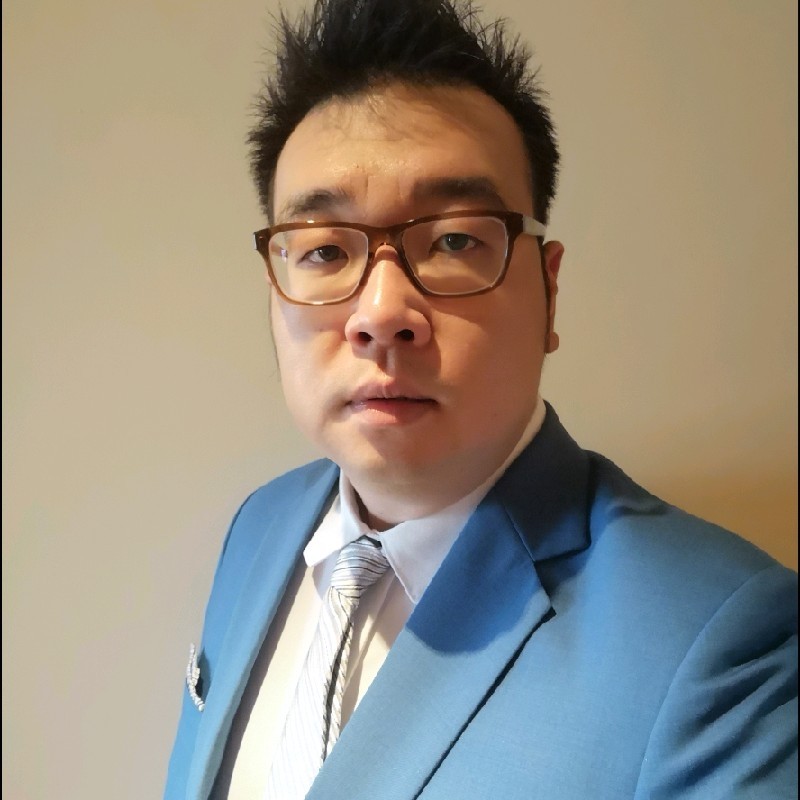
Jeremy Lee is a seasoned digital marketing director and strategist with over two decades of experience in the industry. As the founder of Sotavento Medios, I manage a diverse portfolio of over 50 businesses, helping brands grow through advanced search strategies and digital innovation. My work focuses on bridging the gap between traditional search engine optimisation and the evolving world of AI-driven answer engines.
get in touch