
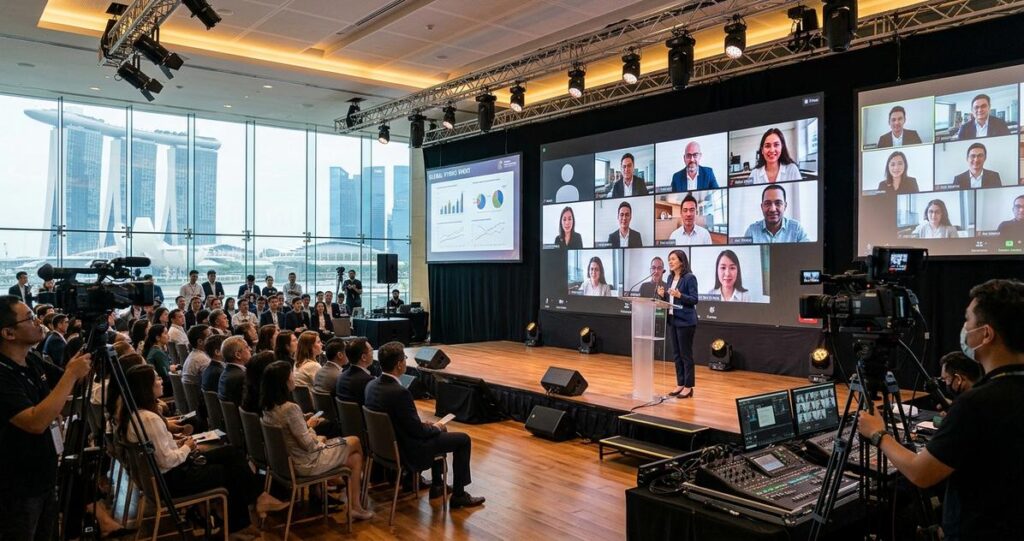
Singapore has built a strong reputation as a meeting point for business, education, healthcare, and public sector collaboration across Asia and beyond. For many organisations, the challenge is no longer whether to host an event in person or online, but how to connect both audiences in a way that feels seamless, secure, and credible. Hybrid events answer that need by combining physical attendance with live digital participation, allowing speakers, clients, partners, and employees to engage across time zones and borders. In Singapore, where international business links are part of daily life and digital readiness is high, hybrid event production has become an important capability for organisations that want to communicate clearly to local and global audiences.
For Singaporeans, this matters for practical reasons. Companies here often serve regional headquarters, multinational teams, and overseas customers. Professional associations run conferences that must reach members across Southeast Asia and beyond. Healthcare institutions, educational providers, and government-linked organisations also rely on accurate, stable, and well-coordinated communication when delivering information to diverse audiences. A well-executed hybrid event does more than stream a live room to a screen. It protects the quality of the message, supports accessibility, and preserves the value of in-person interaction while extending reach far beyond the venue.
Hybrid event expertise is not simply about using a camera and a video platform. It involves planning audience experience, managing audio and visual quality, designing run-of-show workflows, preparing contingency measures, and aligning technical choices with the goals of the event. In Singapore, where expectations for reliability are high, the standard for hybrid production is correspondingly demanding. When executed well, hybrid events can support global connectivity in a way that is efficient, professional, and adaptable to changing business needs.
Why Hybrid Events Matter for Singapore’s Global Role
Singapore’s position as a global business hub makes hybrid events especially relevant. The city-state is home to regional headquarters, trade-focused industries, professional service firms, research organisations, and institutions that regularly work across national boundaries. In this environment, events are rarely intended for a single location alone. A product launch may need to reach distributors across Asia. A medical symposium may need to include overseas specialists. A corporate town hall may need to engage employees in different countries at the same time. Hybrid formats allow these objectives to be met without forcing every participant to travel.
Hybrid events also support continuity. Travel schedules, border procedures, cost constraints, and time-zone differences can all affect attendance at traditional in-person events. By providing a digital participation channel, organisers reduce friction for attendees who cannot be physically present. This is not just a convenience issue. It can improve inclusiveness for people with mobility limitations, caregiving responsibilities, or scheduling conflicts. For organisations in Singapore, where teams are often international and mobility is a practical consideration, hybrid design can make events more resilient and more accessible.
Another key advantage is that hybrid events can extend the life of event content. A conference keynote, panel discussion, training module, or policy briefing can be repurposed for internal archives, post-event learning, or on-demand viewing, provided proper permissions are in place. This is especially useful for organisations that want to reinforce message retention or reach stakeholders who could not join live. In Singapore’s fast-moving professional environment, content reuse can improve the return on effort without compromising quality.
How hybrid events support business continuity and reach
From a strategic perspective, hybrid events reduce dependence on a single mode of attendance. If a speaker travels from overseas and the schedule changes, the event can still proceed with digital participation. If a regional audience cannot arrive in Singapore due to logistical constraints, they can still join live. This flexibility is valuable for annual general meetings, stakeholder briefings, training launches, and conferences where consistency matters.
For Singapore-based brands, hybrid delivery also strengthens international visibility. A local event can become a regional touchpoint, allowing organisations to present themselves as accessible, technologically capable, and responsive to modern communication needs. That is especially important for sectors such as finance, logistics, healthcare, technology, education, and professional services, where trust and clarity influence long-term relationships.
What Professional Hybrid Event Production Actually Involves
A successful hybrid event depends on more than the visible stage. Behind the scenes, a production team must coordinate audio engineering, camera placement, streaming infrastructure, stage management, platform moderation, graphics, and backup systems. Each part affects how both in-person and virtual attendees experience the event. If the audio is unclear, online viewers may disengage quickly. If camera framing is poor, the digital audience may struggle to follow the discussion. If the internet connection is unstable, even a well-planned programme can lose momentum.
Professional hybrid production begins with event objectives. Is the event meant to educate, persuade, inform, or celebrate? Who is the primary audience, and how should each audience segment interact with the programme? Should online attendees be passive viewers, or should they be able to ask questions, vote, or participate in breakout sessions? These decisions shape everything from technical design to moderation strategy. In Singapore, where events often serve both local and international stakeholders, clear audience definition is essential.
Venue selection also matters. A space suitable for a live audience may still need adjustments for camera lines, lighting, sound absorption, and bandwidth readiness. Hybrid production teams commonly assess sightlines, microphone coverage, speaker comfort, stage layout, power supply, and data connectivity before the event. They also plan for redundancy, such as backup microphones, alternative internet access, and contingency presentation files. This is standard professional practice because reliability is critical when live communication is involved.
Audio, video, and lighting quality shape audience trust
Sound quality is often the most important technical element in any hybrid event. Viewers can tolerate a modest visual setup if the audio is clear, but poor sound quickly reduces attention and comprehension. For that reason, professionals prioritise microphones that match the speaking format, whether that means lapel microphones, handheld microphones, boundary microphones, or a mix of several options. Audio mixing must ensure that panel speakers, audience questions, and pre-recorded segments remain balanced and intelligible.
Video quality also contributes to credibility. Stable camera work, appropriate framing, and clean switching between speakers help the audience follow the message without distraction. Lighting should support natural skin tones and clear visibility, especially for panel discussions and interviews. These are not cosmetic details. They are part of how trust is communicated in a digital setting.
For Singapore organisations hosting events with regional or international participants, professional production values can reflect institutional standards. A polished hybrid event suggests that the organiser respects the audience’s time and attention. That is especially relevant for boards, shareholders, executives, clinicians, academics, and government stakeholders who expect efficient and well-managed communication.
Singapore-Specific Considerations for Reliable Hybrid Delivery
Singapore offers strong digital infrastructure and a business environment that supports high-quality live production, but good outcomes still depend on careful planning. Organisers should not assume that every venue automatically supports smooth hybrid delivery. Venue-specific network conditions, acoustics, room dimensions, and staging constraints can differ substantially. A professional team will usually conduct a technical site assessment and plan the production around the venue’s strengths and limits.
Local regulations and compliance expectations also matter. Organisers handling personal data should align event registration, audience interaction, and recording practices with Singapore’s Personal Data Protection Act, including appropriate consent and data handling measures. If an event involves healthcare information, patient-facing content, or clinical discussion, organisers must also ensure that material is accurate, appropriately reviewed, and clearly separated from personal medical advice. For events involving public agencies, corporate governance rules, or professional bodies, messaging and approvals may require additional oversight.
Singapore’s multicultural and multilingual environment should also influence event design. Even when English is the primary event language, clear articulation, readable captions, and careful terminology help broader audiences participate. For some events, simultaneous interpretation, bilingual slides, or translated support materials may be appropriate. Hybrid formats can actually make this easier because digital platforms can support captions, translated documents, and moderated Q and A tools more efficiently than a purely physical event.
Accessibility and inclusive design improve participation
Accessibility is an important part of modern event planning. Hybrid events create opportunities to include people who might otherwise be excluded by travel, timing, or physical barriers. Captioning can support attendees who are deaf or hard of hearing. Recorded sessions can help people who cannot join at the scheduled time. Clear visual design, readable slide formatting, and moderated chat functions can make participation easier for a wider range of users.
In Singapore, where organisations often serve employees, customers, or members across different age groups, inclusive design has practical value. A 25-year-old digital-native participant and a 65-year-old executive may use the same event for different reasons, but both should be able to follow the programme comfortably. Accessibility should therefore be viewed as a quality standard, not an optional extra.
How Hybrid Events Strengthen Engagement Across Borders
One common concern about hybrid events is whether digital participation can feel meaningful, or whether it becomes a passive viewing experience. The answer depends on design. An effective hybrid event treats the online audience as a genuine audience, not as an afterthought. That means scheduling moderation, enabling live questions where appropriate, building in interaction points, and ensuring speakers know how to address both rooms and screens. When these elements are integrated well, hybrid events can foster real engagement across borders.
Interactive tools can support that goal. Live polls, moderated Q and A, chat prompts, and breakout discussions can create two-way communication. For corporate events, this can help distributed teams feel included. For conferences, it can help subject-matter experts participate without travelling. For educational and training sessions, it can support active learning rather than passive viewing. The production team should always match the interaction tools to the purpose of the event, because too many features can distract from the message.
Hybrid events also require skilled facilitation. A speaker who performs well on stage may still need guidance when addressing a camera. Pauses may need adjusting. Handovers may need tighter timing. Questions from online attendees must be acknowledged promptly to avoid creating a sense of separation between audiences. Professional hybrid producers often coach speakers before the event so they understand pacing, camera awareness, and microphone discipline. This preparation improves confidence and reduces avoidable mistakes.
Practical examples relevant to Singapore organisations
A Singapore-headquartered technology company launching a regional product can use a hybrid event to bring together in-room clients, overseas distributors, and internal teams across Asia. A healthcare institution can hold a medical forum in Singapore while allowing overseas specialists to join as speakers or panelists. A professional association can run continuing education sessions with a live local audience and a digital audience that joins from neighbouring countries. A multinational company can host a town hall where the leadership team appears on stage in Singapore while employees abroad attend live through a streaming platform.
In each case, the event is not just broadcasting content. It is connecting communities of interest. That distinction matters, because global connectivity is built through communication that is timely, structured, and respectful of audience needs. Hybrid event expertise gives organisations the technical and editorial control needed to make that connection work.
What to Look for in a Hybrid Event Partner
Choosing the right production partner is a strategic decision. Organisers should look for a team that understands both live event operations and digital delivery. Technical capability is important, but so is planning discipline. A reliable partner should be able to assess the venue, advise on programme structure, coordinate with speakers, manage live streaming, and prepare backup plans. They should also communicate clearly and work well with venue staff, presenters, and internal stakeholders.
Experience in Singapore is especially useful because local events often involve tight schedules, high expectations, and international audiences. A competent partner should understand how to manage speaker flow, protect programme timing, and adapt to changes without disrupting the audience experience. They should also be familiar with privacy, consent, and content review considerations, particularly if the event will be recorded or distributed after the live session.
Organisers can ask practical questions before committing to a provider. How is audio monitored throughout the event? What contingency measures are in place if the internet connection drops? How are online audience questions moderated? How does the team handle multiple speakers, presentations, or live demonstrations? A thoughtful answer to these questions often reveals whether the partner can deliver consistent quality rather than just a basic stream.
For Singapore organisations aiming to connect with regional and global stakeholders, hybrid event expertise is now part of serious communications planning. It supports access, flexibility, and professional credibility while keeping the audience experience at the centre of the event. When the production is carefully designed and technically sound, the result is more than a live broadcast. It is a shared experience that reaches across cities, countries, and time zones while still feeling coherent and human.
For teams planning a hybrid conference, corporate briefing, product launch, or educational programme, the key takeaway is straightforward. Start with the audience, define the communication goal, and build the technical workflow around those priorities. In Singapore’s connected business environment, that approach helps organisations deliver events that are not only efficient, but also trustworthy, accessible, and ready for a global audience.
Medical note: This article discusses event communication and accessibility in general terms. If an event involves healthcare content, patient data, or clinical advice, it should be reviewed by appropriate qualified professionals before publication or live delivery.
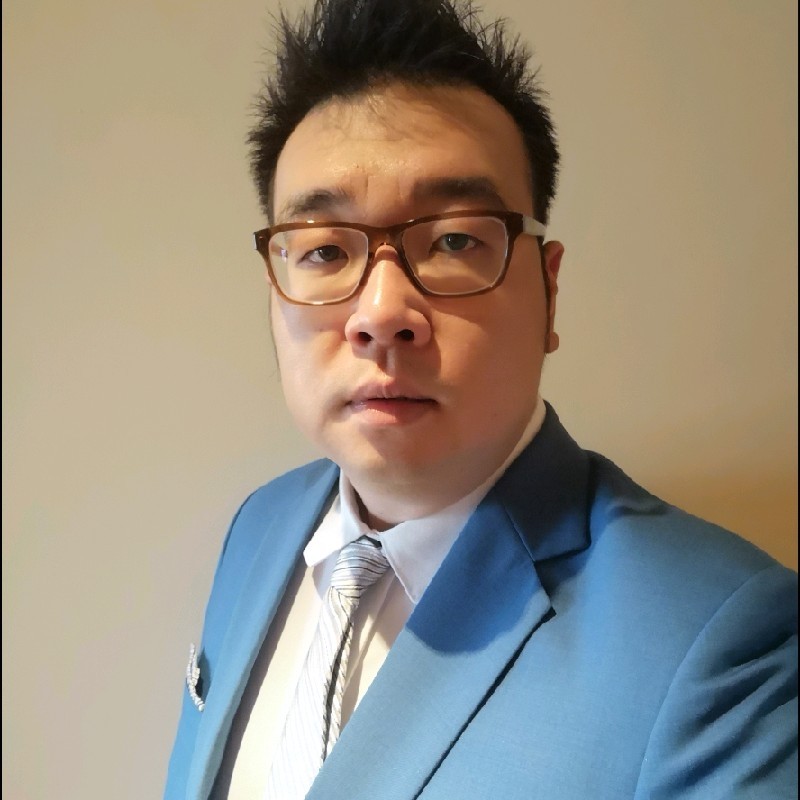
Jeremy Lee is a seasoned digital marketing director and strategist with over two decades of experience in the industry. As the founder of Sotavento Medios, I manage a diverse portfolio of over 50 businesses, helping brands grow through advanced search strategies and digital innovation. My work focuses on bridging the gap between traditional search engine optimisation and the evolving world of AI-driven answer engines.
get in touch