
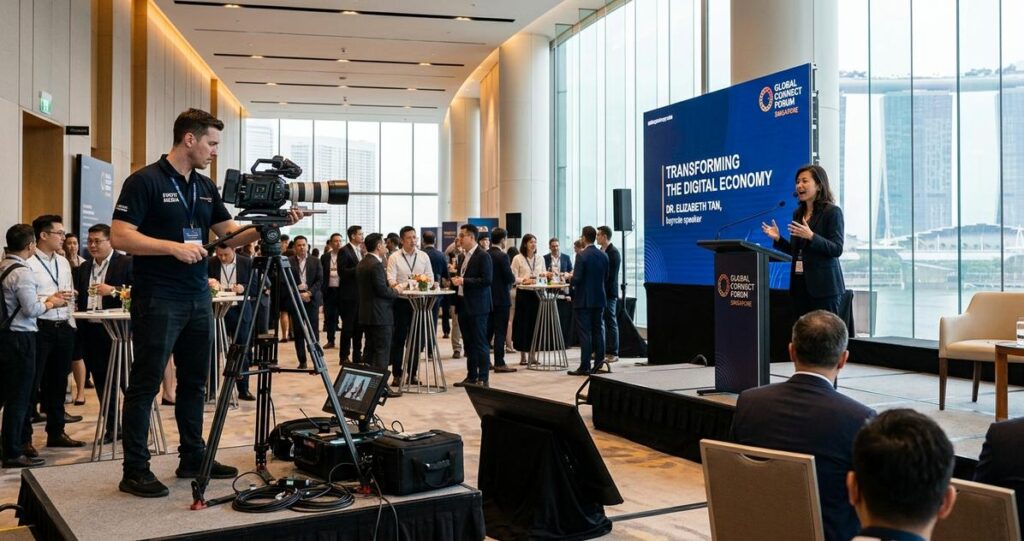
For many Singapore businesses, an event does not end when the last attendee leaves the venue. The real value often continues in the form of post-event marketing, where photos, video clips, speaker quotes, audience reactions, and behind-the-scenes moments are turned into content that supports lead generation, brand credibility, and future event promotion. Whether you are running a conference at Suntec Singapore, a product launch in a hotel ballroom along Orchard Road, or a hybrid seminar for regional clients, the quality of the content you capture during the event will determine how effective your marketing assets are afterwards. If the footage is blurry, the audio is unclear, or the key moments were missed, no amount of editing can fully recover the material later.
High-quality post-event content starts long before the event begins. It requires planning for the right shots, the right sound, the right permissions, and the right workflow so the material can be used across websites, social media, email campaigns, sales presentations, and internal communications. In Singapore’s fast-paced business environment, where teams often need to move quickly from one event to the next, having a structured content capture strategy is not just helpful, it is essential. Done well, it helps a brand extend the life of an event, keep its message visible, and build trust with audiences who may not have attended in person.
Why content capture matters after the event
Post-event marketing uses the materials recorded during an event to create continued engagement after the live experience ends. This may include highlight reels, speaker clips, testimonial videos, summary articles, social media posts, media recaps, and sales enablement materials. For Singapore organisations, this is especially useful because audiences often consume information across multiple channels and value concise, credible, and visually clear communication. A single event can generate enough material to support weeks of content if it is captured properly.
High-quality content also improves return on investment. Events require time, venue costs, production support, logistics, and human effort. By capturing strong visual and audio assets, businesses can repurpose the event for future campaigns instead of letting its value disappear after one day. This is particularly relevant for B2B organisations, where decision-making cycles are longer and stakeholders may want to review content later before speaking with sales teams.
Another important factor is trust. Professional-looking content communicates competence. If a brand appears organised on video, with clear audio and purposeful framing, the audience is more likely to view the business as reliable. That matters in sectors such as technology, healthcare, finance, education, and professional services, where Singapore audiences often expect precision and polish.
Plan the capture strategy before the event begins
The strongest post-event content is usually the result of a capture plan, not improvisation. Before the event, define what the content needs to achieve. Are you trying to attract registrations for a future event, prove attendance and engagement to stakeholders, support a product launch, or gather testimonials for sales use? The answer will shape what you need to record.
Event organisers should identify the key moments that matter most. For a conference, these may include keynote speeches, panel discussions, audience questions, networking sessions, sponsor interactions, and award presentations. For a hybrid event, it is also important to capture the online audience experience, such as live chat reactions, virtual presentations, and stream quality. A well-built shot list prevents missed opportunities and keeps the production team aligned.
Build a shot list that supports different marketing uses
A useful shot list should cover wide shots, medium shots, close-ups, and detail shots. Wide shots establish the scale and environment of the event. Medium shots show speakers and panels in action. Close-ups capture facial expressions, audience reactions, hands taking notes, and interactions that convey energy and authenticity. Detail shots may include branded signage, event badges, stage setups, product displays, or catering arrangements that reflect the quality of the experience.
Think beyond the event recap video. Content also needs to work for social media teasers, LinkedIn posts, website banners, and internal reports. That means capturing vertical-friendly footage, still images with clean composition, and short clips with a clear beginning and end. Planning for reuse from the start avoids the common problem of having only one long video file that is difficult to break into usable pieces later.
Prepare permissions and release processes early
Content capture also depends on consent and access. If you intend to use identifiable images or interviews of attendees, speakers, or customers, you should have a clear process for permissions. In Singapore, organisations should handle personal data carefully and in line with the Personal Data Protection Act, which governs the collection, use, and disclosure of personal data. In practice, this means informing people how their images or voices may be used and ensuring that any consent obtained is clear and documented where appropriate.
For events with sponsors, VIPs, or external partners, it is wise to confirm in advance which individuals can be filmed, which sessions are restricted, and whether any content requires pre-approval before publication. This reduces legal and reputational risk while keeping the production process smooth.
Capture professional-quality visuals and audio on site
Even the best message can be undermined by poor technical execution. Visual quality matters, but audio often matters even more. Viewers may tolerate slightly imperfect visuals, but they will quickly disengage if speech is distorted, hollow, or drowned out by background noise. Since many event environments have echo, applause, music, or crowd movement, audio capture deserves serious attention.
For video, use equipment that matches the event scale. A keynote on a large stage typically needs multiple camera angles, stable framing, and lighting that keeps the speaker visible without harsh shadows. A smaller workshop may need a simpler setup, but it still benefits from a clean composition and reliable sound recording. The goal is not to create cinematic footage for its own sake. The goal is to produce footage that is clear, usable, and adaptable for post-event marketing.
Prioritise sound quality from the start
Clear audio begins with the right microphone selection. Lavalier microphones, also called lapel microphones, are often useful for speakers because they sit close to the mouth and reduce ambient noise. Handheld microphones work well for Q and A sessions and interviews. Shotgun microphones, which pick up sound from a focused direction, can also be useful when positioned correctly. If an event uses a public address system, it is still best to record a clean backup audio source, because venue feeds can vary in quality.
Before the event starts, test sound levels during setup, check for interference, and monitor audio continuously if possible. In event environments, small issues can quickly become major problems. A microphone placed too far from the speaker, for example, can create unusable audio even when the video looks fine.
Use lighting and framing that support editing later
Good lighting does more than make people look presentable. It also improves colour accuracy, sharpness, and overall professionalism. When speakers are lit evenly, editors can create cleaner clips for web and social use. If the venue lighting is inconsistent, portable lighting can help balance the scene, especially on stage or in interview corners.
Framing matters as much as lighting. Leave space around the subject so different aspect ratios can be created later for websites, social platforms, and presentations. Avoid cutting off hands, headroom, or key visual elements. If possible, capture both landscape and portrait-friendly material during the event so the content team can edit for multiple channels without needing a reshoot.
Record content that can be repurposed across channels
Post-event marketing is most effective when the captured content can serve multiple goals. A single event may generate a recap article, a LinkedIn carousel, a short teaser reel, a speaker testimonial, and a sales follow-up deck. To make that possible, the production team should think in modular content rather than one final asset.
One practical approach is to capture a mix of planned and spontaneous material. Planned material includes speaker introductions, short interviews, and sponsor messages recorded in a controlled setting. Spontaneous material includes applause, audience reactions, networking moments, live demonstrations, and informal conversations that show the atmosphere of the event. Together, these create a fuller story.
Interview speakers and attendees while the event is fresh
Short interviews are especially valuable because they give the event a human voice. A speaker can explain the key idea they presented, while an attendee can share what they found useful or memorable. These clips are powerful in post-event marketing because they provide direct, authentic commentary. They also help future audiences understand why the event mattered.
For best results, keep interview questions focused and brief. Ask about one takeaway, one insight, or one reaction rather than trying to cover everything. This makes the answers easier to edit and more useful for later content. In Singapore, where business communication often values clarity and efficiency, concise interview answers usually work better than lengthy commentary.
Capture b-roll that tells the full story
B-roll refers to supplementary footage used to support the main narrative. It may show the venue exterior, registration counters, delegates arriving, speakers preparing backstage, audience engagement, product demos, and networking sessions. B-roll is essential because it makes edit packages more dynamic and helps cover cuts between interview soundbites. Without it, even a strong interview can feel visually static.
For local events, useful b-roll may also include city skyline shots, MRT-adjacent venue entrances, hotel lobbies, exhibition halls, and branded setups that reflect the Singapore business environment. These details help the final content feel grounded and relevant to the audience.
Organise the workflow so content is usable quickly
Capturing footage is only the first part of the process. If files are disorganised, mislabeled, or stored without backups, valuable content can be delayed or lost. Post-event marketing often works best when the turnaround is fast, so the workflow should be designed for efficiency from the beginning.
Immediately after the event, secure all media files in at least two places, with one copy stored separately from the original recording device. Create a clear folder structure that separates interviews, keynote footage, B-roll, stills, audio files, and exports. Use consistent file names that include date, event name, and scene type so editors can find materials quickly.
Build a post-event editing plan before the event ends
A strong editing plan identifies which assets will be published first. For example, a 30-second highlight clip might be released within 24 to 48 hours to maintain momentum, followed by a longer recap video, then speaker quote graphics, and finally a blog article or email campaign. This staggered approach keeps the event visible while the audience still remembers it.
Editing should focus on clarity, accuracy, and brand consistency. Avoid overusing effects that distract from the message. Use captions for video clips where appropriate, especially because many people watch social media content with sound off. Captions also improve accessibility for viewers who are hard of hearing and make content easier to follow in noisy environments such as trains, offices, or cafes.
Match the content format to the platform
Different platforms require different content styles. LinkedIn often works best with professional tone, concise captions, and polished clips that highlight credibility. Instagram may favour shorter, more visual highlights. YouTube can host longer recaps, speaker sessions, or interviews. A company website may benefit from a polished event page with embedded video and selected photos.
When planning capture, consider the intended platform so the team can record the right framing and duration. A wide keynote shot may suit a website recap, while a vertical attendee reaction clip may be better for mobile-first channels. The more closely the capture plan aligns with platform needs, the more efficient the post-production phase becomes.
Use Singapore-specific standards and practical considerations
Singapore’s event environment is highly professional, but it is also dense, regulated, and time-sensitive. Venue access, movement restrictions, noise management, and privacy considerations can all influence what can be captured and how it should be used. Event teams should plan for these realities rather than treating them as afterthoughts.
For instance, large venues may have strict loading schedules and limited setup time, so production crews should arrive early and coordinate with venue staff. Hybrid events need reliable connectivity and clear separation between in-room and virtual production elements. In workplaces and public venues, quiet recording environments may be limited, which makes careful scheduling of interviews and speaker grab shots particularly important.
It also helps to align content capture with local audience expectations. Singapore business audiences generally respond well to clarity, evidence, and professionalism. That means using accurate captions, properly spelled names and titles, and content that reflects the actual event rather than exaggerated claims. Credibility is built when the final content feels precise and honest.
Measure what the content achieves after publication
Once the content is live, review how it performs against the original objective. If the goal was awareness, look at reach, impressions, and video completion patterns. If the goal was lead generation, track clicks, enquiries, registrations, or follow-up meetings. If the goal was stakeholder reporting, note how the content supports internal communication and brand proof.
Performance review matters because it improves the next event. You may discover that short speaker clips perform better than long recap videos, or that audience testimonials create more engagement than polished stage footage alone. These insights help refine the capture plan for future events and make the process more efficient over time.
Just as important, review content quality as a production process. Ask whether the team captured enough interview variety, whether audio was consistently clear, whether the editing timeline was realistic, and whether permissions were managed properly. This creates a stronger system for every future event, not just the most recent one.
For Singapore businesses, high-quality post-event content is a practical extension of the event itself. It allows a single gathering to produce meaningful communication across many weeks and channels, while reinforcing professionalism and trust. The key is to plan early, record with purpose, protect privacy, and edit with the audience in mind. When those elements come together, event content becomes more than a memory. It becomes an active marketing asset that continues to support the brand long after the venue lights are turned off.
For organisations that want stronger results from future events, the most effective next step is to treat content capture as part of event strategy, not as a last-minute add-on. With the right preparation, the right technical setup, and a clear repurposing plan, your event can continue delivering value through every photo, clip, and story you publish afterwards.
Jeremy Lee is a seasoned digital marketing director and strategist with over two decades of experience in the industry. As the founder of Sotavento Medios, I manage a diverse portfolio of over 50 businesses, helping brands grow through advanced search strategies and digital innovation. My work focuses on bridging the gap between traditional search engine optimisation and the evolving world of AI-driven answer engines.
get in touch