
Introduction to XR Complexity in B2B Streaming
The rapid evolution of Extended Reality (XR) in corporate broadcasting has positioned the role of the Technical Director as a pivotal element in managing the inherent complexity of such productions. XR combines augmented reality (AR), virtual reality (VR), and mixed reality (MR) to create immersive experiences that integrate seamlessly into the professional streaming domain. In B2B events, the challenge is not just to create visually stunning content, but to ensure it integrates effectively with enterprise streaming infrastructure and protocols like RTMP (Real-Time Messaging Protocol) and SRT (Secure Reliable Transport).
Understanding the Technical Director’s Role in XR Productions
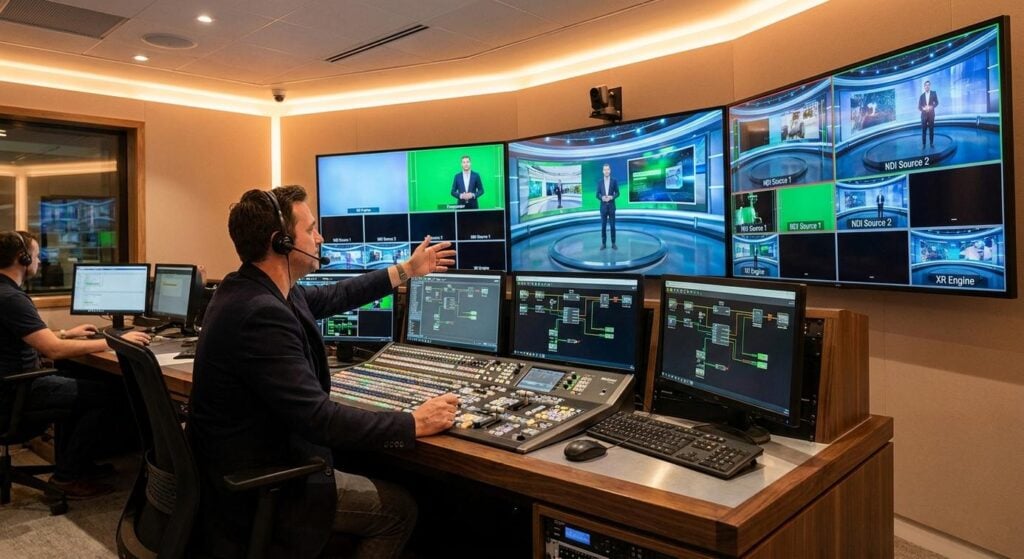
The Technical Director (TD) is the linchpin in XR productions, interfacing across multiple technologies and production workflows. Their primary responsibility is to design and manage the multi-camera production setups and switching systems that are essential for XR environments. This includes overseeing audio and video signal flow, routing architectures, and ensuring high quality of service.
Multi-Camera Systems and Switching
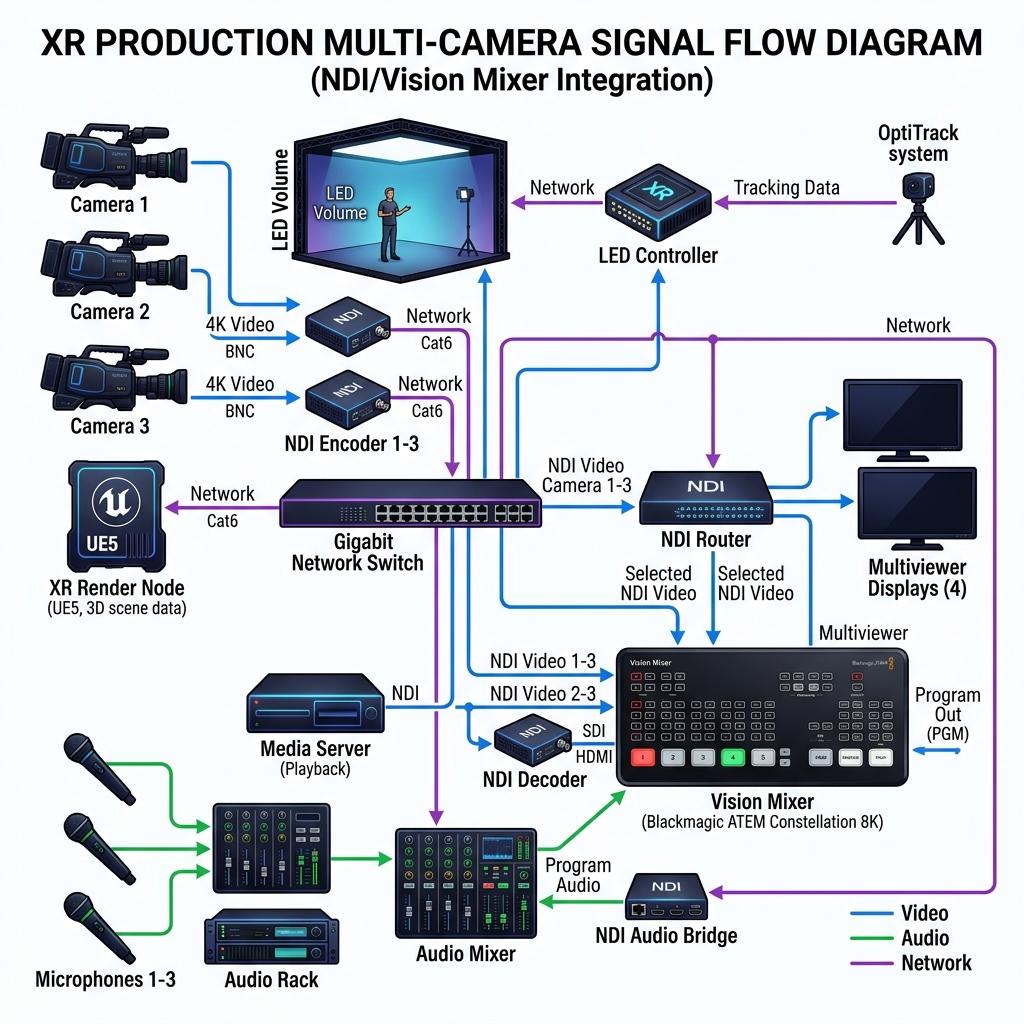
Managing multiple camera feeds is vital in XR settings, where different perspectives need seamless integration. The use of NDI (Network Device Interface) standards enables low-latency video transmission over IP networks, facilitating robust and flexible multi-camera operations.
Technical insights into NDI signal routing help TDs maintain pristine video quality while adhering to broadcast standards (SMPTE). A precise camera switching system ensures a cohesive viewer experience, demanding proficiency in handling equipment like vision mixers and switchers.
Challenges in Network Infrastructure for XR Streaming
Establishing a reliable network infrastructure is fundamental to XR streaming. TDs must oversee bandwidth allocation, manage latency, and implement redundancy to prevent disruptions. Here, understanding protocols like SRT and RTMP becomes paramount for efficient signal transport.
Hybrid Production Setups
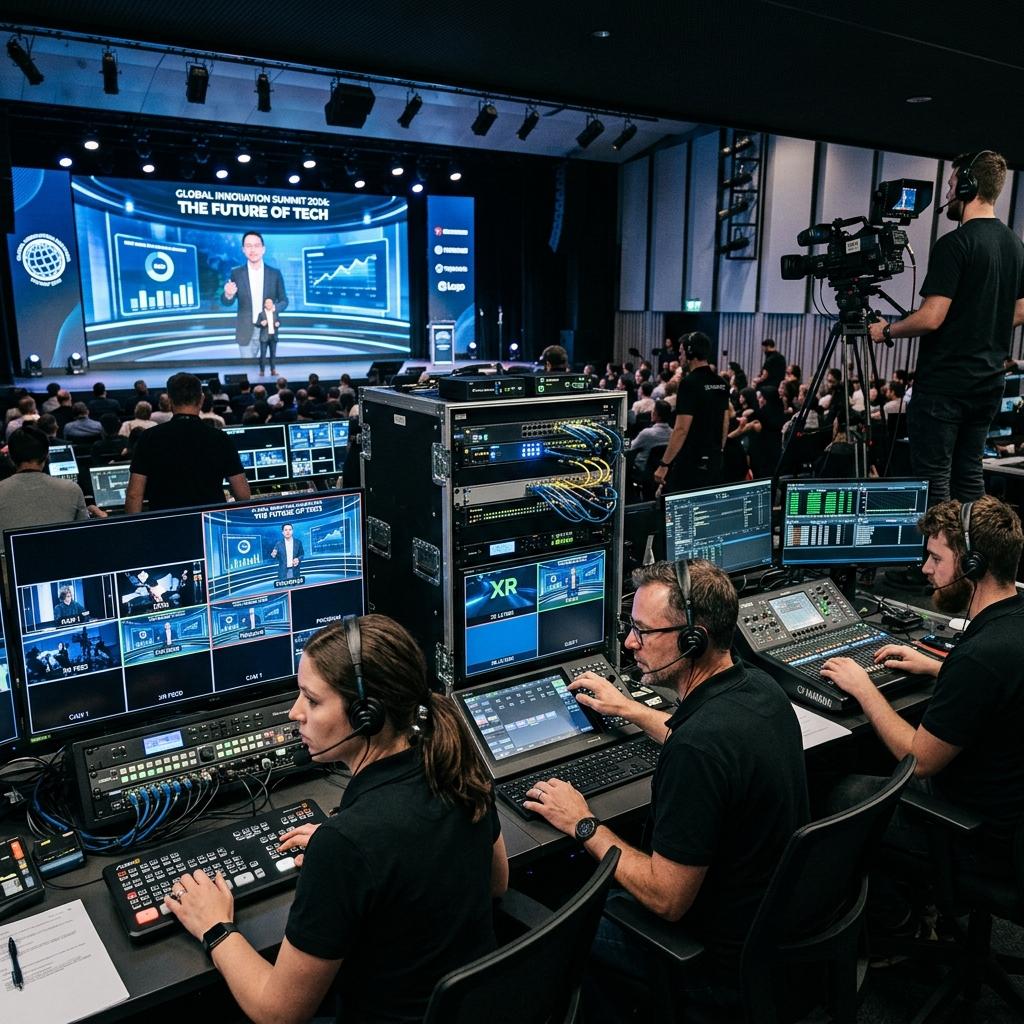
Integrating XR into hybrid events, where physical and virtual audiences coexist, poses additional challenges. TDs must ensure seamless transition and consistent quality across all platforms, requiring sophisticated network topologies and switching architectures.
Enterprise Solutions for Optimal Streaming
Implementing cloud-based vs on-premise streaming solutions affects scalability and flexibility in XR. Technical Directors weigh the options, considering aspects like secure access, data integrity, and latency.
Signal Flow and Encoding Standards
Signal flow must adhere to stringent encoding standards (H.264/H.265) to ensure high resolution and efficient bandwidth usage. Managing bitrate, latency, and encoding settings becomes crucial in maintaining quality across various enterprise platforms such as Microsoft Teams and Zoom.
Technical Recommendations for XR Event Success
For enterprise-level XR success, TDs should implement a multi-faceted technical approach, starting with network design. Critical insights include leveraging VLANs (Virtual Local Area Networks) to segment traffic and using QoS (Quality of Service) protocols to prioritize XR data streams. Emphasizing failover strategies and redundancy is critical to minimize downtime.
Real-World Implementation and Scalability
Real-world scenarios highlight the necessity for hybrid streaming platforms capable of scaling to large corporate audiences. Effective use of cloud services can facilitate rapid deployment and scaling, enhancing the overall reliability of XR productions.
Conclusion: Elevating XR with Technical Mastery
The complex environment of XR demands expertise and precision, positioning the Technical Director as a strategic cornerstone. Combining technical acumen with creative vision allows TDs to transform complex technical landscapes into seamless, immersive experiences.
Jeremy Lee is a seasoned digital marketing director and strategist with over two decades of experience in the industry. As the founder of Sotavento Medios, I manage a diverse portfolio of over 50 businesses, helping brands grow through advanced search strategies and digital innovation. My work focuses on bridging the gap between traditional search engine optimisation and the evolving world of AI-driven answer engines.
get in touch