
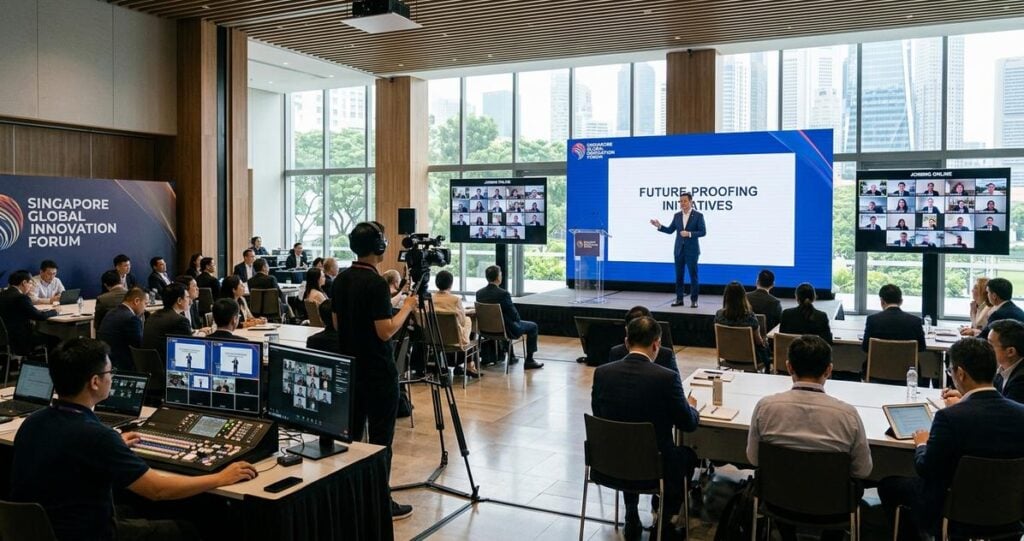
For many Singapore businesses, Zoom has become the default choice for online meetings, webinars, and internal briefings. It is convenient, familiar, and easy to launch with a few clicks. That convenience is exactly why many teams assume it is also suitable for high-stakes B2B events, such as product launches, investor presentations, leadership town halls, regional partner meetings, and hybrid conferences with clients joining from multiple locations. In practice, however, standard Zoom is a general-purpose communications platform, not a full event production environment. When the stakes are high, the difference between a functional video call and a professionally executed event becomes impossible to ignore.
In Singapore, where business audiences are often time-sensitive, detail-oriented, and accustomed to high service standards, the cost of a technical failure is not just inconvenience. A glitch in audio, a poorly managed panel, unstable audience participation, or a weak backup plan can affect brand perception, stakeholder confidence, and the effectiveness of the entire programme. For organisers planning events for regional clients, board members, investors, or media, understanding where standard Zoom helps and where it falls short is essential. The goal is not to dismiss Zoom. It is to use it appropriately, and to recognise when a more robust hybrid production setup is necessary.
Why Standard Zoom Works Well for Everyday Communication
Standard Zoom remains useful because it is accessible, widely adopted, and simple to deploy. For routine internal meetings, one-to-one discussions, training sessions, or small group briefings, it provides enough functionality to connect participants quickly without requiring specialised technical support. It also supports familiar features such as screen sharing, chat, breakout rooms, and basic recording, which make it practical for everyday collaboration.
For Singapore teams managing distributed staff, including colleagues working across office locations, home offices, and regional branches, this ease of use matters. The learning curve is low, and most participants already know how to join a meeting. For casual or moderately important sessions, that simplicity is often enough. The challenge begins when the event requires polished presentation quality, multi-layered control, audience engagement at scale, or strong resilience against technical and operational risk.
Where Standard Zoom Starts to Fall Short in High-Stakes Events
High-stakes B2B events require more than connectivity. They require deliberate planning around audio quality, visual consistency, participant control, content transitions, timing, moderation, and contingency management. Standard Zoom offers some of these functions, but not at the level of precision needed for complex event delivery. Its design prioritises general communication, which means it can become limiting when the event must function like a broadcast, a conference, and a stakeholder presentation at the same time.
Audio quality and speaker clarity
Audio is often more important than video in a business event. Viewers may tolerate modest video quality, but unclear sound quickly undermines credibility and comprehension. Standard Zoom relies heavily on each speaker’s microphone, internet stability, and environment. In a typical meeting, that may be acceptable. In a high-stakes event, it can be risky. Background noise, room echo, low microphone gain, or inconsistent speaker volume can distract participants and make a polished event feel unprepared.
In Singapore, where many presentations involve regional teams, executive speakers, and clients joining from different offices or home environments, audio inconsistency is common if no dedicated technical workflow is in place. A hybrid production setup normally uses audio mixing, microphones selected for the room, and active monitoring so that all voices remain intelligible and balanced. Standard Zoom alone does not provide that level of control.
Visual presentation limitations
Standard Zoom is not built to deliver a fully branded broadcast experience. It allows screen sharing and speaker views, but it offers limited control over professional scene composition, multi-camera switching, lower-third name graphics, animated transitions, or polished overlays. For an investor day, product demonstration, or executive panel, visual presentation matters because it affects how the audience perceives the organisation’s professionalism.
In many high-stakes B2B events, the visual experience should reinforce the message, not distract from it. Standard Zoom can show content, but it is not designed to manage a complex visual narrative. When slides, live speakers, remote panellists, video clips, and brand assets must be combined smoothly, the limitations become apparent. A dedicated production workflow can stage these elements more cleanly and reduce the likelihood of awkward transitions or layout changes that weaken the event.
Limited control over participant experience
Zoom is practical for meetings because participants can speak, type in chat, and react quickly. In a high-stakes event, however, too much participant freedom can become a liability. Unmuted microphones, unexpected screen-sharing, off-topic chat, or accidental interruptions can disrupt the flow of a formal programme. Moderators can manage some of these issues manually, but standard Zoom does not provide the same level of structured audience control as a purpose-built virtual event environment.
This matters in Singapore corporate settings where events are often tightly scheduled and audience expectations are high. Whether the event is held for clients in Raffles Place, partners in one-north, or regional stakeholders connecting from abroad, the organiser needs predictable control over who speaks, when questions appear, and how audience interaction is handled. Without that control, the event can drift from a polished presentation into a loosely managed call.
Operational Risks That Matter More When the Stakes Are High
The limitations of standard Zoom are not only about features. They are also about operational resilience. High-stakes B2B events need redundancy, rehearsal, and technical monitoring because the cost of failure is higher than in ordinary meetings. Standard Zoom can work well if conditions are ideal, but business events rarely have the luxury of ideal conditions.
Internet instability and local connectivity issues
Zoom depends on the stability of each user’s internet connection, local device performance, and home or office network conditions. In Singapore, connectivity is generally strong, but that does not eliminate risk. Individual speakers may still face issues with Wi-Fi congestion, VPN interference, outdated devices, or audio device conflicts. When an event depends on a single keynote speaker or senior leader, even a brief interruption can be disruptive.
Professional hybrid production usually includes mitigation steps such as pre-event testing, wired internet for key presenters, backup devices, support staff on standby, and clearly defined escalation procedures. Standard Zoom itself does not remove these risks. It simply exposes them in real time.
Lack of built-in production redundancy
High-stakes events should plan for equipment failures, login issues, speaker delays, and unexpected interruptions. Standard Zoom offers only limited resilience if the primary presenter loses connection or if a co-host needs to take over quickly while maintaining programme continuity. A broadcast-style production often includes a separate control workflow, backup audio paths, rehearsed cue management, and recorded content that can be rolled in if a live feed fails.
That difference is especially important for events involving senior management, media, or external clients. If a keynote ends abruptly or a panel discussion is interrupted without a smooth recovery plan, the audience may interpret the issue as a sign of poor preparation. In business contexts, perception often matters as much as content.
Recording is not the same as production archiving
Zoom recording is useful, but it is not a full archival strategy. A simple recording captures what happened in the meeting window, not necessarily the best version of the event. It may not preserve clean separate audio tracks, branded intros, switchable camera angles, or edited highlight segments that are useful for post-event marketing or internal distribution. For companies that want to repurpose event content for sales teams, LinkedIn posts, client follow-up, or training, standard Zoom recording may not be sufficient.
In Singapore’s competitive B2B environment, content often needs to work harder after the live event ends. A professional production approach creates more usable assets, better sound quality, and cleaner footage for future campaigns. Standard Zoom can document the event, but it does not usually create a polished library of content.
Why Stakeholder Confidence Depends on More Than Convenience
High-stakes B2B events are not judged only by whether they “ran.” They are judged by whether they reflected the organisation’s standards. Investors expect clarity and control. Clients expect confidence and professionalism. Internal leadership teams expect efficient delivery and strong alignment with business goals. When an event looks and sounds improvised, the message can lose impact even if the content is strong.
This is especially relevant in Singapore, where business culture often places a premium on reliability, responsiveness, and well-executed communication. A product launch for a regional audience, a healthcare or financial services webinar, or a multinational town hall may involve speakers and attendees across multiple time zones. In such settings, the event platform is part of the brand experience. Standard Zoom can support the conversation, but it cannot always shape that experience at the level required for important commercial or executive events.
There is also a trust factor. When clients or partners join a carefully produced event, they are seeing how the organisation handles complexity. Smooth transitions, clear audio, strong moderation, and technical composure send a message that the business is organised and dependable. If those elements are missing, the audience may question whether the same level of care is present in the company’s products, services, or operations.
What a More Robust Hybrid Event Setup Adds
Moving beyond standard Zoom does not mean abandoning Zoom entirely. In many cases, Zoom remains a useful distribution layer, while the production layer sits behind it. A professional hybrid event setup can use Zoom as one channel for remote attendance, while adding dedicated production tools and workflows to elevate quality and reduce risk.
Dedicated audio and video control
A hybrid production team can manage microphones, camera switching, lighting, and speaker routing separately from the participant interface. This produces cleaner sound and a more consistent visual experience. It also allows the organiser to present different event formats, such as keynote plus Q and A, multi-speaker panels, interview-style discussions, and pre-recorded segments. The result is a more seamless audience experience.
Improved moderation and audience management
Professional event support can separate audience interaction from the live programme. Questions can be moderated before they appear, speakers can be cued in advance, and transitions can be controlled centrally. This makes it easier to keep the event on schedule and maintain a formal tone. For B2B audiences, that structure often improves comprehension and engagement.
Better contingency planning
A proper event plan includes rehearsal, technical checks, backup presenters where appropriate, and contingency procedures for connectivity issues. For Singapore-based businesses running events with regional reach, this is not excessive caution. It is standard risk management. When the event carries strategic importance, the production setup should be built to survive predictable problems, not merely assume they will not happen.
How Singapore Businesses Can Decide When Zoom Is Enough
Not every event requires a full production team. The practical question is whether the event’s importance, audience size, complexity, and reputational risk justify a more advanced setup. Standard Zoom is usually suitable when the session is internal, informal, low complexity, and not highly dependent on flawless delivery. It becomes less suitable when the event is public-facing, executive-level, commercial in nature, or designed to influence perception, decisions, or revenue.
A useful rule is to assess four factors. First, how much is at stake if something goes wrong. Second, how many participants or stakeholders are involved. Third, how much the event relies on smooth audiovisual execution. Fourth, whether the content will be reused afterward as marketing, sales, or training material. The more important the event, the less forgiving standard Zoom becomes.
For Singapore organisations that host client seminars, investor briefings, regional town halls, and product demonstrations, the answer is often not to replace Zoom entirely, but to surround it with professional support. That approach preserves familiarity for attendees while improving quality, stability, and control behind the scenes.
Standard Zoom is an efficient tool for communication, but high-stakes B2B events demand more than convenience. They require precision, resilience, and a presentation standard that aligns with business objectives. If an event is meant to persuade, reassure, or impress, the platform must support those goals instead of limiting them. For Singapore businesses, the most practical approach is to treat Zoom as one part of the event stack, not the whole solution. When the message matters, the production matters too.
General information only: This article is intended for business and event-planning education, not medical advice. For event-specific planning, technical requirements, or risk assessment, consult experienced hybrid event professionals and confirm platform capabilities before the programme goes live.
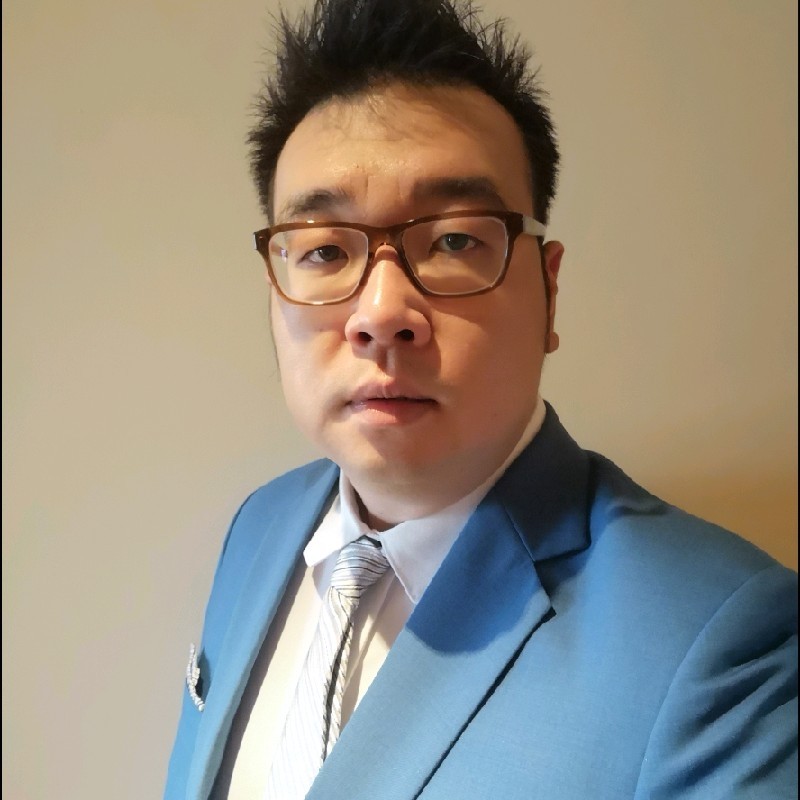
Jeremy Lee is a seasoned digital marketing director and strategist with over two decades of experience in the industry. As the founder of Sotavento Medios, I manage a diverse portfolio of over 50 businesses, helping brands grow through advanced search strategies and digital innovation. My work focuses on bridging the gap between traditional search engine optimisation and the evolving world of AI-driven answer engines.
get in touch