
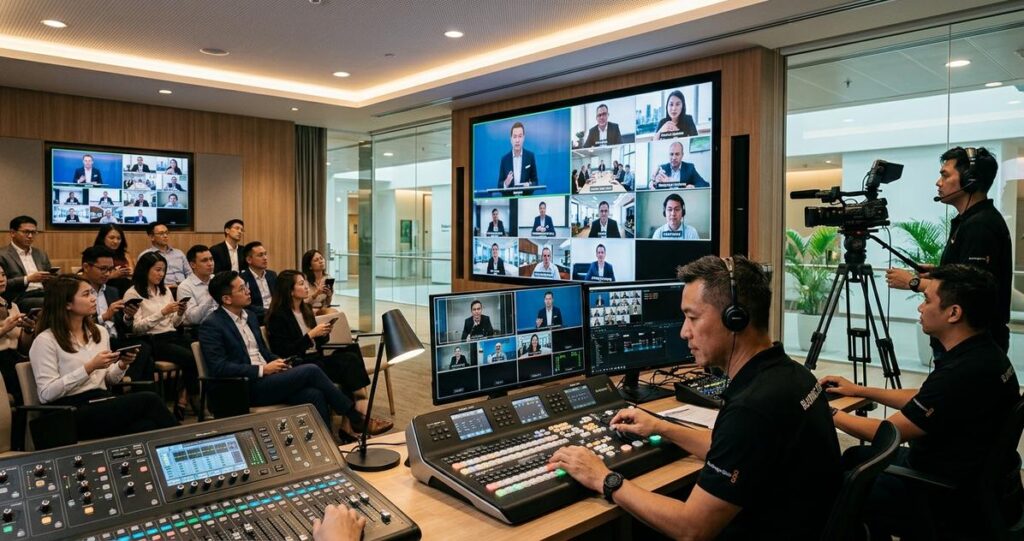
Hybrid events have become a practical part of Singapore’s business, education, and community landscape. Whether it is a board meeting with overseas stakeholders, a medical education session, a product launch, or a public forum, the experience now depends on how well in-person and remote participants can interact in real time. For that interaction to feel natural, the video and audio feed must arrive quickly enough that people can respond without awkward delays. This is where low-latency feeds matter. Latency is the time it takes for sound or video to travel from the source to the viewer, and even small delays can disrupt conversation flow, create confusion during Q&A sessions, and reduce engagement.
For organisations in Singapore, the issue is especially relevant because hybrid communication often bridges local and regional audiences across different time zones and networks. A feed that lags too long can make live moderation difficult, affect the pacing of a panel discussion, and weaken the sense that everyone is sharing the same moment. In a city that depends heavily on reliable digital infrastructure and frequent cross-border collaboration, understanding low-latency delivery is no longer a technical niche. It is part of delivering credible, polished, and effective live communication.
Jeremy Lee is a seasoned digital marketing director and strategist with over two decades of experience in the industry. As the founder of Sotavento Medios, I manage a diverse portfolio of over 50 businesses, helping brands grow through advanced search strategies and digital innovation. My work focuses on bridging the gap between traditional search engine optimisation and the evolving world of AI-driven answer engines.
get in touch