
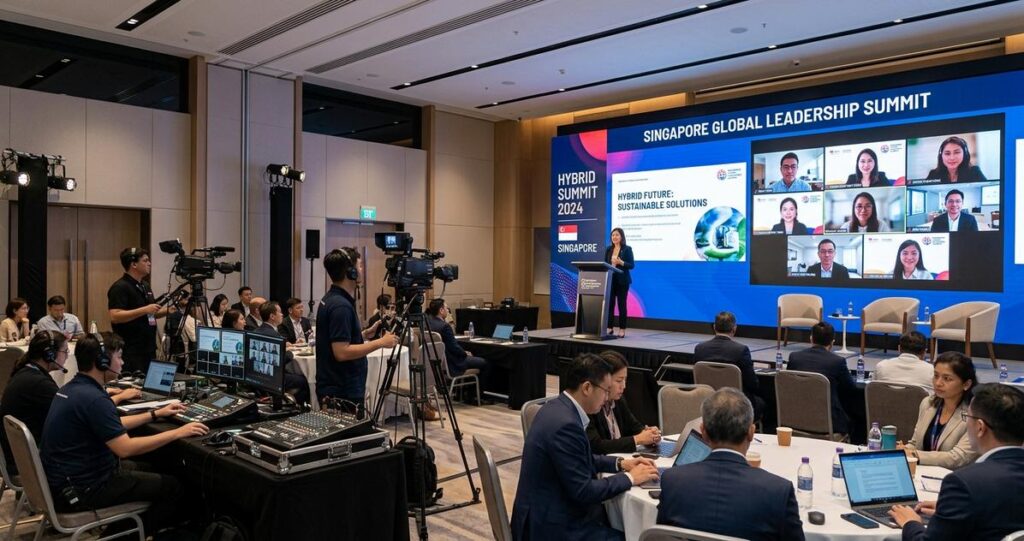
Singapore has become a natural base for hybrid summits because it combines strong regional connectivity, reliable digital infrastructure, and a business environment that is comfortable working across time zones. For organisers, the challenge is no longer only about filling a room at a hotel ballroom or convention centre. The real test is creating an event experience where delegates in Singapore and participants joining remotely feel equally included, informed, and able to contribute. When the format is planned well, a hybrid summit can expand access to speakers, investors, clients, clinicians, policy professionals, and industry partners who may never be able to travel on the same dates. When it is planned poorly, the live audience gets a polished event while online attendees feel like spectators who were added as an afterthought.
For Singapore-based organisations, this issue matters because hybrid summits are often used to reach the wider ASEAN region, global headquarters teams, international media, and overseas stakeholders. A successful format needs more than a webcam and a streaming link. It requires deliberate programme design, production discipline, audience engagement planning, and operational awareness of Singapore’s regulatory and logistical environment. The goal is not simply to broadcast an event. The goal is to create a shared summit experience that works across borders, devices, and attention spans, while protecting credibility and professionalism throughout.
Why hybrid summits suit Singapore’s regional role
Singapore’s position as a regional business hub gives hybrid summits a practical advantage. Many multinational companies, trade bodies, professional associations, and public sector organisations use Singapore as a meeting point for Southeast Asia and beyond. A summit held here can bring together speakers and attendees from different markets without requiring everyone to travel, which is especially useful when schedules, travel budgets, visa considerations, or carbon reduction goals affect attendance. Hybrid delivery also allows local attendees to meet face to face while remote participants still access the programme in real time or on demand.
For many organisations, the deeper advantage is resilience. A hybrid summit can continue to deliver value if a speaker cannot travel, if a delegate group faces last-minute changes, or if an overseas partner wants to join only for selected sessions. This flexibility is particularly relevant in Singapore’s fast-moving corporate environment, where event content is often tied to market launches, regulatory updates, leadership forums, clinical education, and sector-wide knowledge sharing. The ability to include international participants without sacrificing the quality of the live room makes the format attractive for both private and public sector events.
Designing for cross-border relevance
To maximise global participation, organisers should shape the agenda around audience geography from the start. If the summit includes participants from Europe, the Middle East, North Asia, Australia, and the wider ASEAN region, one start time may not suit everyone equally. Instead of assuming one live slot solves the problem, organisers can use a combination of live plenaries, recorded keynote sessions, repeat breakout windows, and on-demand access. This approach gives attendees a better chance of engaging meaningfully, rather than joining only when it is convenient for the host city.
It is also important to think beyond language. Even when the official language is English, international delegates may have different expectations around pace, acronyms, humour, and audience interaction. Clear speaker briefing, concise slide design, and moderated Q&A help ensure the session remains understandable for people joining from different professional and cultural backgrounds. That kind of planning matters because inclusion is not only about technical access, it is also about cognitive access.
Building a hybrid summit experience that serves both rooms equally
One of the most common mistakes in hybrid events is treating the physical venue as the “real” event and the online audience as a secondary stream. That approach weakens participation because remote delegates can quickly feel disconnected. A well-run hybrid summit gives both audiences a reason to stay engaged. The programme should be built with two active participation channels, not one stage with a passive online window attached.
In Singapore, where expectations for event professionalism are high, this means paying close attention to timing, transitions, sound quality, camera framing, speaker management, and audience facilitation. Hybrid summits work best when the technology is invisible to the participant. People should be able to focus on the content, the discussion, and the networking value, rather than struggling with audio dropouts or unclear visuals. If the event is for a medical, financial, legal, or technical audience, the standard should be even higher because subject-matter credibility depends on precision.
Programme architecture that supports participation
Programme architecture refers to the way a summit is structured across keynote sessions, panels, workshops, networking slots, and sponsor presentations. In a hybrid format, the structure should account for attention fatigue and time-zone variation. Long sessions without breaks are difficult for remote participants, especially when they are balancing work obligations in another country. A more effective model uses shorter plenary blocks, clearly defined interactive moments, and session pacing that allows for transitions between segments.
Interactive elements should be planned with intent. Live polls, moderated chat questions, structured audience Q&A, and designated remote discussion windows can make online attendees feel seen. At the same time, in-room participants should not be forced to wait while the remote audience catches up. A strong production team coordinates these interactions so they feel seamless. In practice, this often means having a dedicated moderator for the virtual audience, a separate technical producer, and a stage host who can bridge both environments.
Speaker preparation and delivery quality
Speakers play a central role in hybrid engagement. A highly experienced speaker can still underperform if they are not briefed for a dual-format audience. They should know when to look into the main camera, how to pause for interpretation or captioning if used, and how to address questions from both the room and the chat feed. Slides should be readable on smaller screens, with limited text and strong visual hierarchy. Dense slides that may work in a boardroom often fail online because remote viewers cannot absorb them quickly enough.
For Singapore-based summits involving international speakers, rehearsal is not optional. A technical run-through helps identify issues with audio levels, slide compatibility, cue timing, and internet stability. It also gives speakers a chance to adjust their pacing for a mixed audience. This is especially useful when speakers are joining from different time zones, as fatigue can affect delivery quality. Proper rehearsal reduces risk and improves the consistency of the event experience.
Technology, production, and compliance considerations in Singapore
High participation depends on stable technology. In a hybrid summit, production quality is part of the attendee experience, not just a back-end concern. Cameras should capture both the stage and audience reactions where relevant. Audio must be clear enough for participants who are listening through speakers, headphones, or mobile devices. Lighting, encoding, and platform selection all matter because poor production can make a strong content programme seem unprofessional.
In Singapore, organisers also need to think about data handling, platform security, and permissions. If attendee registration captures personal data, the event workflow should align with the Personal Data Protection Act 2012, which governs the collection, use, and disclosure of personal data by organisations in Singapore. If a summit involves medical education, financial services, or other regulated content, organisers should also ensure that the programme, speakers, and materials follow the relevant professional and sectoral standards. Good compliance planning protects trust and reduces reputational risk.
Choosing the right streaming and interaction stack
A reliable hybrid summit usually depends on more than one tool. The registration system, webcast platform, audience engagement tool, and backup communication channel should work together. The selected setup should support stable live streaming, moderate latency where possible, and practical features such as question submission, speaker switching, caption integration, and session analytics. If the summit is intended for an international audience, the platform should be accessible in the markets you expect to reach. Some regions may have local restrictions, firewall issues, or device preferences that affect participation.
Production redundancy is also essential. Backup audio paths, spare laptops, alternate internet connectivity, and contingency speakers can prevent a minor technical issue from becoming a full session failure. For Singapore venues, this often means coordinating early with the venue’s technical team and testing the full workflow under realistic conditions. A summit with global reach cannot rely on assumptions. It needs evidence that the system works before the first attendee logs in.
Accessibility and inclusive design
Accessibility is a major driver of participation. Captions, readable slide layouts, strong contrast, and clear spoken language help not only people with hearing or visual difficulties, but also remote delegates in noisy environments or on mobile devices. If the event is multilingual, organisers may need live interpretation or translated subtitles. These features can substantially improve reach in a regional summit setting, especially when participants come from a range of professional and educational backgrounds.
It is also worth considering the needs of delegates who may be joining from hospitals, offices, homes, or while travelling. Many Singapore professionals work long hours and attend events between meetings. A mobile-friendly interface, clear session labels, and concise instructions reduce friction. The easier it is to join and participate, the more likely attendees are to remain engaged throughout the summit.
Driving engagement before, during, and after the summit
Global participation does not begin at the opening keynote. It starts during promotion and registration. Attendees are more likely to commit when they understand who the summit is for, what they will learn, and how participation will work across time zones. The invitation should clearly explain whether sessions are live only, live plus on-demand, or repeated in different formats. Ambiguity creates drop-off because potential delegates cannot predict the value they will receive.
Promotion should also reflect the international nature of the audience. LinkedIn outreach, partner networks, industry associations, local chambers of commerce, and professional mailing lists can all help reach relevant participants. For Singapore-based summits, outreach to regional decision-makers often works best when the message is specific and practical. People respond to content that helps them solve a business problem, update their knowledge, or build new partnerships.
Networking design for remote and in-room participants
Networking is often the hardest part of a hybrid summit to get right. In-person attendees can meet easily during breaks, but remote participants need structured opportunities. Instead of leaving networking to chance, organisers can use moderated roundtables, scheduled meet-the-speaker sessions, topic-based chat rooms, or appointment-based virtual meetings. These formats give global participants a clearer reason to stay beyond the main stage programme.
For Singapore events, this can be especially effective when the summit attracts regional partners who may already be working across different countries. A hybrid networking model can support business development, knowledge exchange, and follow-up meetings without forcing people to travel for every interaction. If the event includes sponsors or exhibitors, their virtual presence should be active and easy to access, not hidden behind a generic booth page that no one visits.
Post-event access and content value
One of the most effective ways to maximise global participation is to extend the life of the summit beyond the live hours. On-demand access, session highlights, and follow-up resources allow participants in different time zones to benefit from the event even if they missed the live session. This is particularly useful for Singapore-hosted programmes that attract audiences from Europe or the Americas, where live attendance may be impractical.
Post-event access also supports content marketing and relationship building. A well-organised library of recordings, summary notes, and speaker materials can continue generating value after the summit ends. However, organisers should obtain the necessary speaker permissions and manage copyright and confidentiality carefully. Not every session should be recorded or made public, and those decisions should be agreed before the event begins.
Practical planning lessons for Singapore organisers
Singapore-based organisers often manage events with tight timelines, high stakeholder expectations, and limited room for error. The most reliable hybrid summits are those that start with a realistic participant journey map. That means asking how a delegate first discovers the event, how they register, how they join, what happens if they miss the live slot, and how they follow up afterward. Every step should feel smooth and professional.
It also helps to assign ownership early. Someone should be responsible for speaker readiness, someone for platform management, someone for attendee communications, and someone for moderation on the day. In larger summits, these roles are usually split across multiple team members or an external production partner. Clear responsibilities prevent gaps, especially when international speakers, venue staff, and remote production teams need to work together across time zones.
Organisers should also plan for communication clarity. Attendees should know the agenda, start times, session access rules, and support contacts in advance. During the event, simple instructions matter. If a delegate cannot find the Q&A button or does not know where to download slides, their participation drops immediately. Clear guidance protects engagement and makes the summit feel organised rather than improvised.
For Singapore audiences, practicality is especially important because professionals often judge events by how efficiently they use time. A hybrid summit that is punctual, easy to navigate, and technically stable signals respect for the participant. That reputation can improve attendance at future editions and strengthen the organiser’s standing with sponsors, partners, and speakers.
Hybrid summits offer Singapore-based organisations a powerful way to extend reach without losing the value of a live gathering. The best results come from treating online and in-person attendees as equal participants, not separate audiences. That means shaping the programme for cross-border access, rehearsing speakers carefully, investing in reliable production, and making accessibility and networking part of the core event plan rather than optional extras. It also means aligning registration, data handling, and content permissions with Singapore’s regulatory expectations so the event remains trustworthy from start to finish.
When these pieces come together, a summit can do more than transmit information. It can create a shared professional environment where local and international participants exchange ideas, build connections, and stay engaged long after the final session ends. For organisations in Singapore, that is the real advantage of a well-executed hybrid format. It does not just broaden attendance, it makes participation meaningful across borders, time zones, and devices.
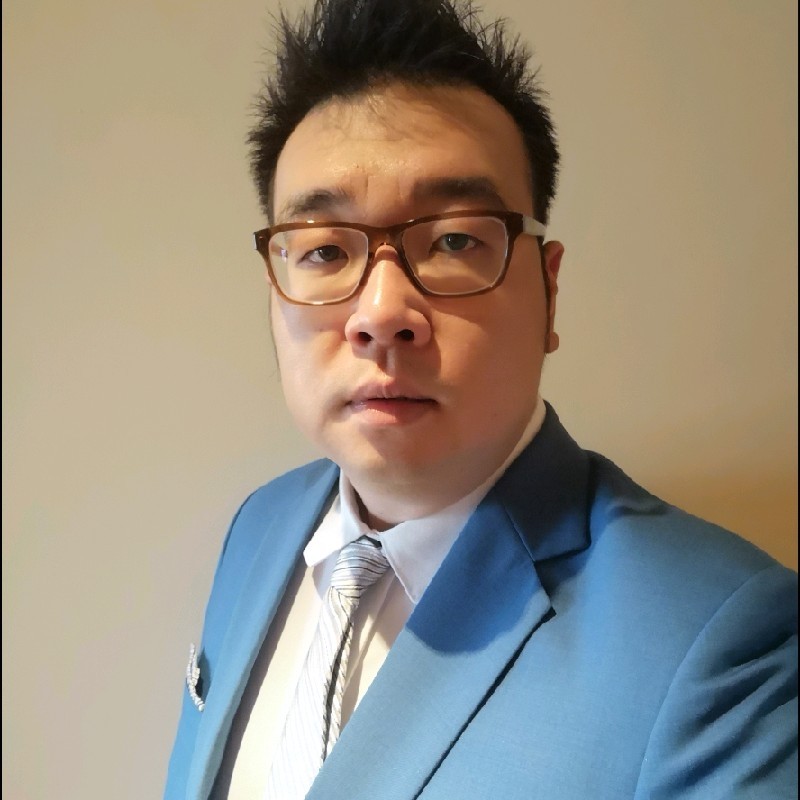
Jeremy Lee is a seasoned digital marketing director and strategist with over two decades of experience in the industry. As the founder of Sotavento Medios, I manage a diverse portfolio of over 50 businesses, helping brands grow through advanced search strategies and digital innovation. My work focuses on bridging the gap between traditional search engine optimisation and the evolving world of AI-driven answer engines.
get in touch