
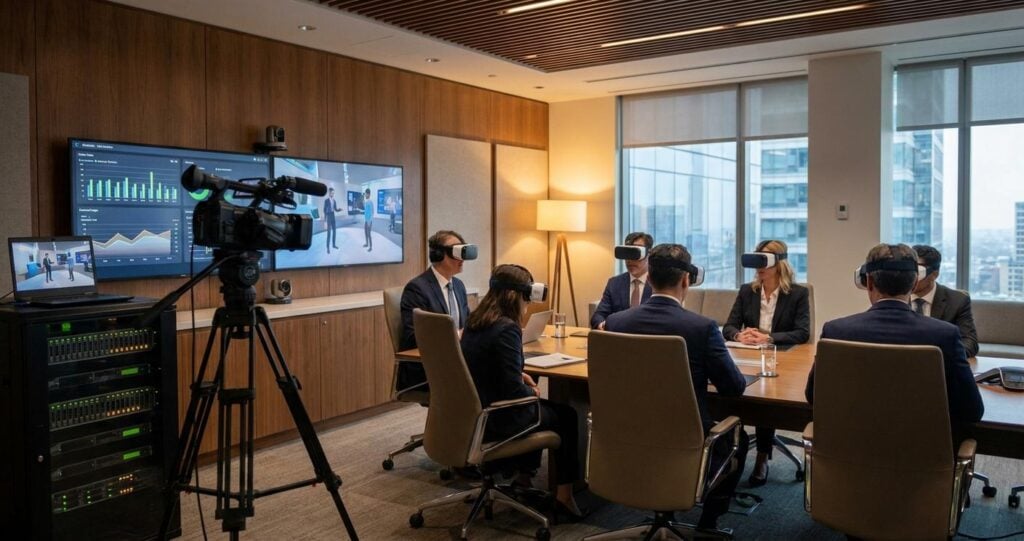
Introduction to Executive Training in XR Environments
The integration of Extended Reality (XR) into corporate environments presents unique opportunities and challenges for B2B event streaming and hybrid production. As enterprises increasingly leverage XR technologies for immersive training experiences, the ability to effectively train executives becomes a pivotal component of success. This article delves into the technical facets required to facilitate such training, focusing on the production and streaming infrastructure necessary to support XR environments within corporate settings.
Understanding the Tech Infrastructure for XR
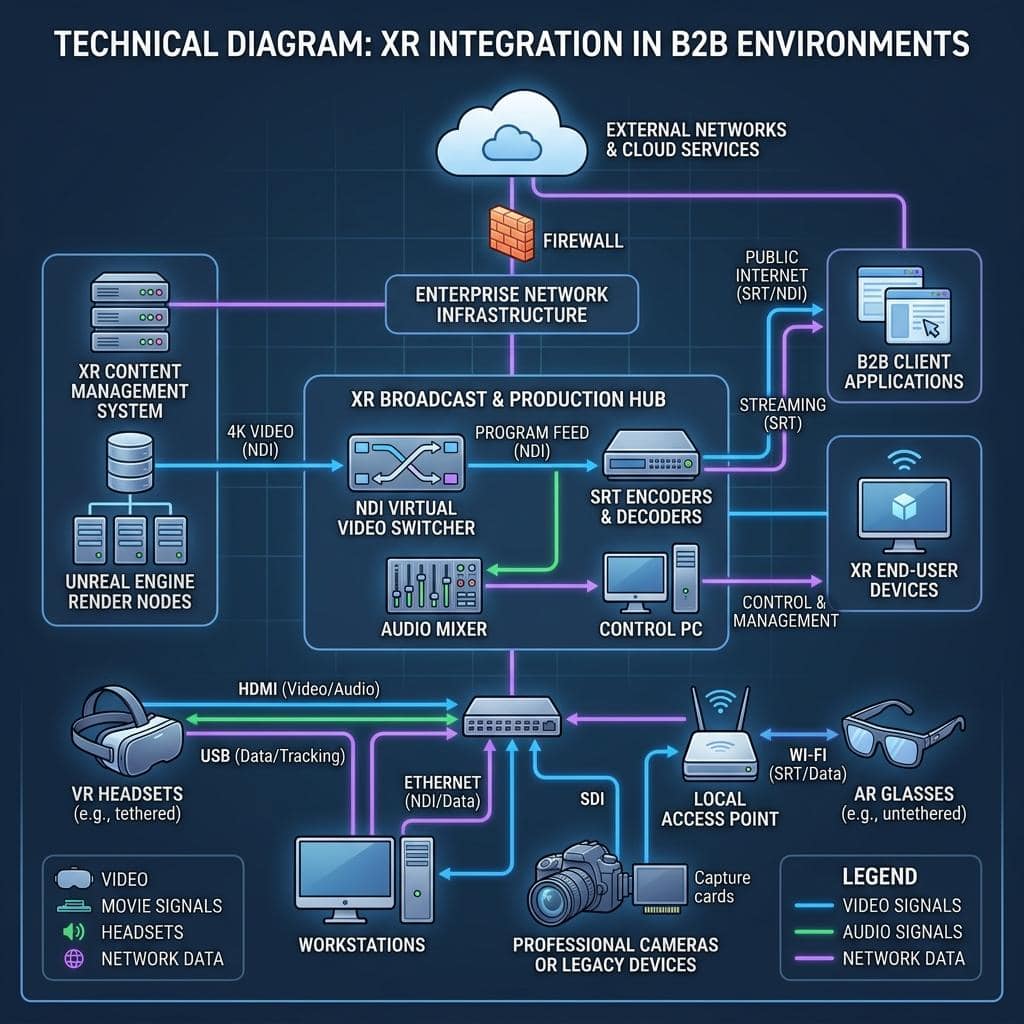
Establishing a robust infrastructure to support XR environments involves understanding both physical and digital architecture. Corporate settings require secure, reliable streaming protocols such as RTMP (Real-Time Messaging Protocol) and SRT (Secure Reliable Transport) to manage high-definition, low-latency video delivery.
Network Requirements
Designing a network that supports XR training involves optimizing bandwidth management and implementing high-performance routing architectures. This ensures seamless integration of signal flow between XR devices and enterprise networks. An emphasis on Quality of Service (QoS) and redundancy strategies, including failover mechanisms, is crucial to maintain uninterrupted streaming experiences.
Multi-Camera Production Setups
For immersive training sessions, integrating multi-camera setups is essential. Utilizing NDI (Network Device Interface) allows for efficient video switching and signal routing, offering a versatile solution for XR environments. This technology enables simplicity in video transport over IP networks, allowing for flexible camera positioning and real-time monitoring.
Production Infrastructure for Hybrid XR Environments
Hybrid events require the ability to cater to both physical attendees and virtual participants. The infrastructure must include components that facilitate 4K/UHD video production, low-latency streaming, and real-time interactivity.
Systems Integration
Integration with platforms like Microsoft Teams, Zoom, or Webex provides an additional layer of connectivity, enhancing communication between physical and virtual audiences. Implementing H.264 and H.265 encoding standards ensures efficient video compression, crucial for bandwidth management.
Audio and Video Signal Flow
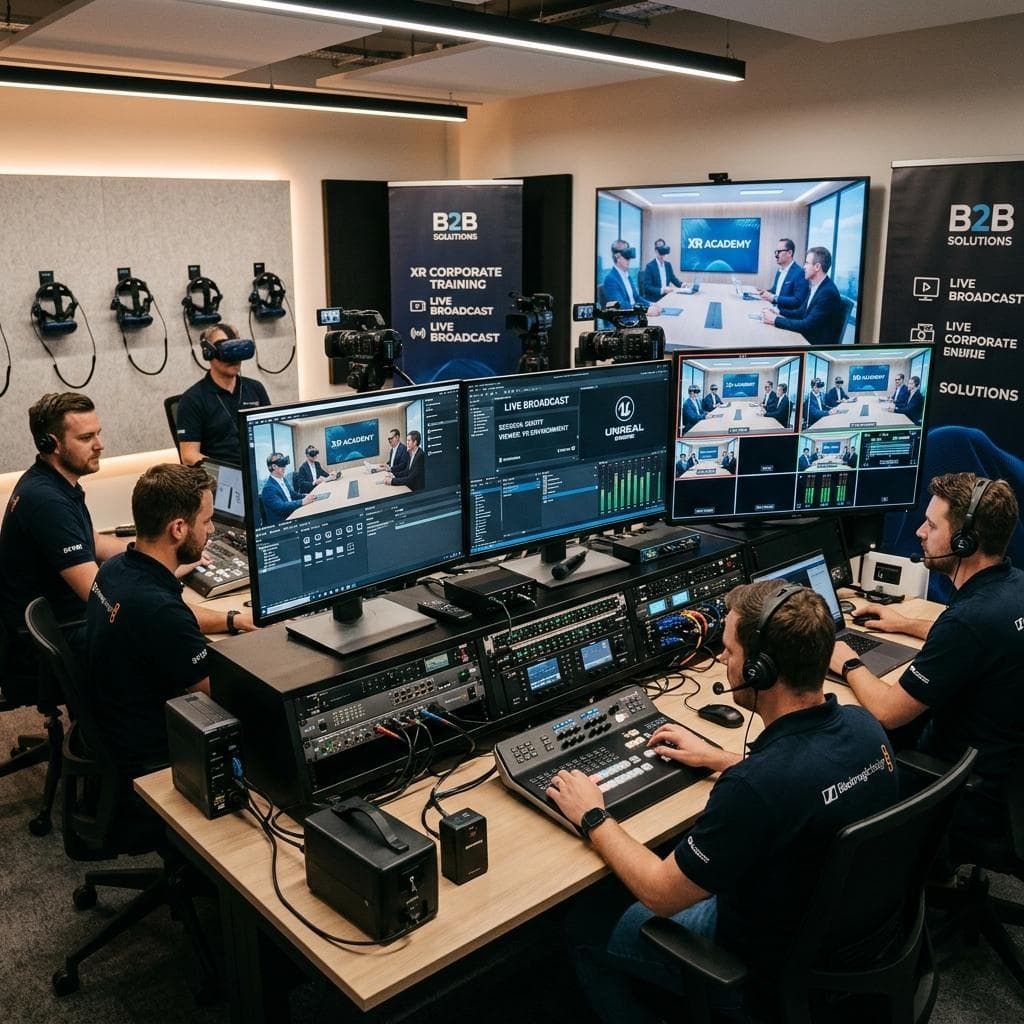
In an XR environment, precise audio/video signal routing is paramount. Utilizing SDI for robust digital video connections and HDMI 2.1 for high-definition displays ensures quality output. Talkback systems facilitate real-time communication between participants, enhancing the immersive experience.
Scalability and Implementation Considerations
As enterprise events scale, deploying cloud-based versus on-premise solutions becomes a strategic decision. Cloud-based solutions offer scalability and flexibility, while on-premise setups may provide better control and customization.
Redundancy and Failover
Implementing redundancy strategies can mitigate risks associated with network failures. Utilizing SMPTE (Society of Motion Picture and Television Engineers) standards ensures compatibility and reliability across various equipment and technologies.
Practical Production Scenarios
Real-world applications include training sessions where executives interact with virtual environments to simulate decision-making scenarios. These scenarios highlight the effectiveness of XR as a training tool, driven by comprehensive technical setups that ensure quality and reliability.
Conclusion and Recommendations
Successfully training executives in XR environments hinges on robust technical infrastructures that support seamless streaming and immersive experiences. Enterprises should prioritize implementing high-quality streaming protocols, comprehensive network architecture, and advanced production technologies to maximize the potential of XR in corporate settings.

Jeremy Lee is a seasoned digital marketing director and strategist with over two decades of experience in the industry. As the founder of Sotavento Medios, I manage a diverse portfolio of over 50 businesses, helping brands grow through advanced search strategies and digital innovation. My work focuses on bridging the gap between traditional search engine optimisation and the evolving world of AI-driven answer engines.
get in touch