
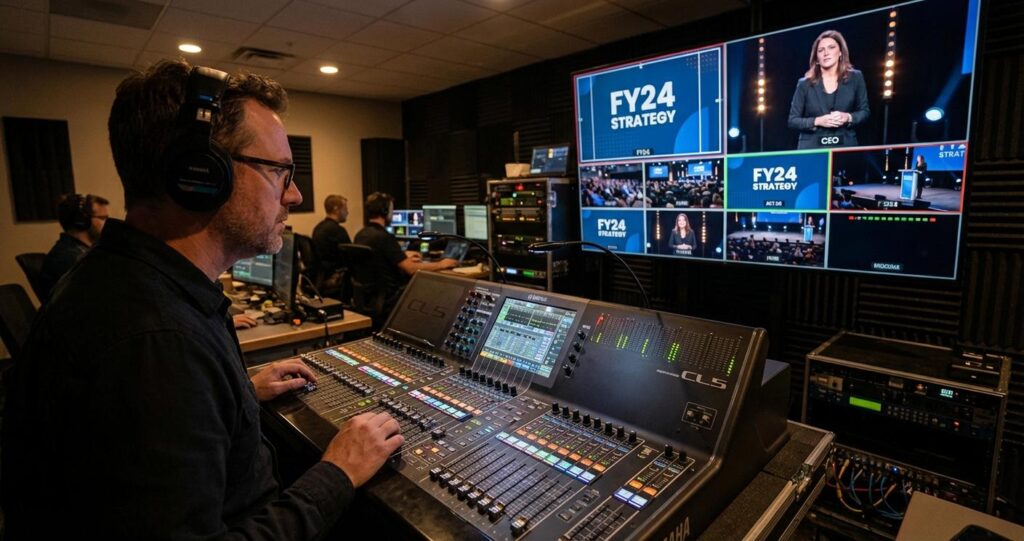
The Unseen ROI: Correlating Audio Signal Integrity with Corporate Message Retention
In the domain of B2B event streaming and hybrid productions, visual fidelity often commands the majority of the technical focus. We meticulously specify 4K/UHD camera sensors, 10-bit color depth, and low-latency video transport. However, a critical vector of information delivery, the audio chain, is frequently relegated to a secondary consideration. This represents a significant strategic oversight. For corporate event planners, IT directors, and production managers, the primary objective of any live-streamed town hall, product launch, or investor briefing is message retention. The technical reality is that the integrity of the audio signal path has a greater and more direct impact on cognitive load, listener fatigue, and ultimate message comprehension than any incremental improvement in video resolution. This article provides a deep technical analysis of the audio production and streaming workflow, demonstrating how engineering for high-fidelity audio is not a luxury, but a core component of a successful B2B communication strategy.
Deconstructing Audio Fidelity: From Psychoacoustics to Production Physics
Understanding the impact of audio quality begins with the physics of sound and the psychoacoustics of human perception. The effectiveness of a corporate message hinges on its intelligibility, which is a measurable engineering parameter directly influenced by the audio signal chain from the microphone capsule to the end-user’s device.
Frequency Response and its Direct Link to Speech Intelligibility
Human speech occupies a broad frequency spectrum. While traditional telephony systems operate on a severely limited bandwidth (approximately 300 Hz to 3.4 kHz) to conserve resources, this compression discards critical harmonics and sibilance that contribute to clarity. The fundamental frequencies of a male voice can be as low as 85 Hz, with crucial consonant sounds like ‘s’ and ‘t’ extending well above 6 kHz. When an audio chain fails to reproduce this full range, the brain must work harder to interpret the message, increasing cognitive load and reducing retention. Professional audio for B2B streaming must capture and preserve a minimum frequency response of 80 Hz to 15 kHz. This requires professional condenser microphones, preamplifiers with a flat response curve, and audio codecs like AAC-LC (Advanced Audio Coding – Low Complexity) or Opus, configured to a sufficient bitrate to encode this entire spectrum accurately.
Signal-to-Noise Ratio (SNR) and its Role in Combating Listener Fatigue
Signal-to-Noise Ratio (SNR) is the measure of the desired audio signal (the speaker’s voice) relative to the unwanted background noise floor. In a corporate event environment, the noise floor is a complex mix of HVAC systems, audience murmur, and electronic hum from lighting rigs and power distribution. A low SNR forces the listener to strain to isolate the primary message from the noise. This sustained effort leads directly to listener fatigue. Achieving a high SNR is an engineering task that starts with proper gain staging. Every component in the chain, from the microphone preamp to the final encoder input, must be optimized to pass the signal at its ideal level, far above the inherent electronic noise of the component itself. Using digital audio transport protocols like Dante or AES67 helps maintain a high SNR by keeping the signal in the digital domain, immune to the analog noise and interference common in long cable runs within a production venue.
Total Harmonic Distortion (THD) as a Subconscious Barrier to Engagement
Total Harmonic Distortion (THD) refers to the unwanted harmonics added to a signal by electronic components. While high-end audio interfaces and digital mixers boast THD figures below 0.005%, lower-grade equipment or improperly driven components can introduce significant distortion. This distortion is often not perceived as overt “fuzz” but as a subtle harshness or lack of clarity. Subconsciously, the brain recognizes this unnatural sound, and it can create a sense of unease or irritation, disengaging the listener from the content. Ensuring every component, especially Analog-to-Digital Converters (ADCs) and Digital-to-Analog Converters (DACs), meets stringent performance specifications is critical to delivering a clean, transparent signal that allows the corporate message to be the sole focus of the listener’s attention.
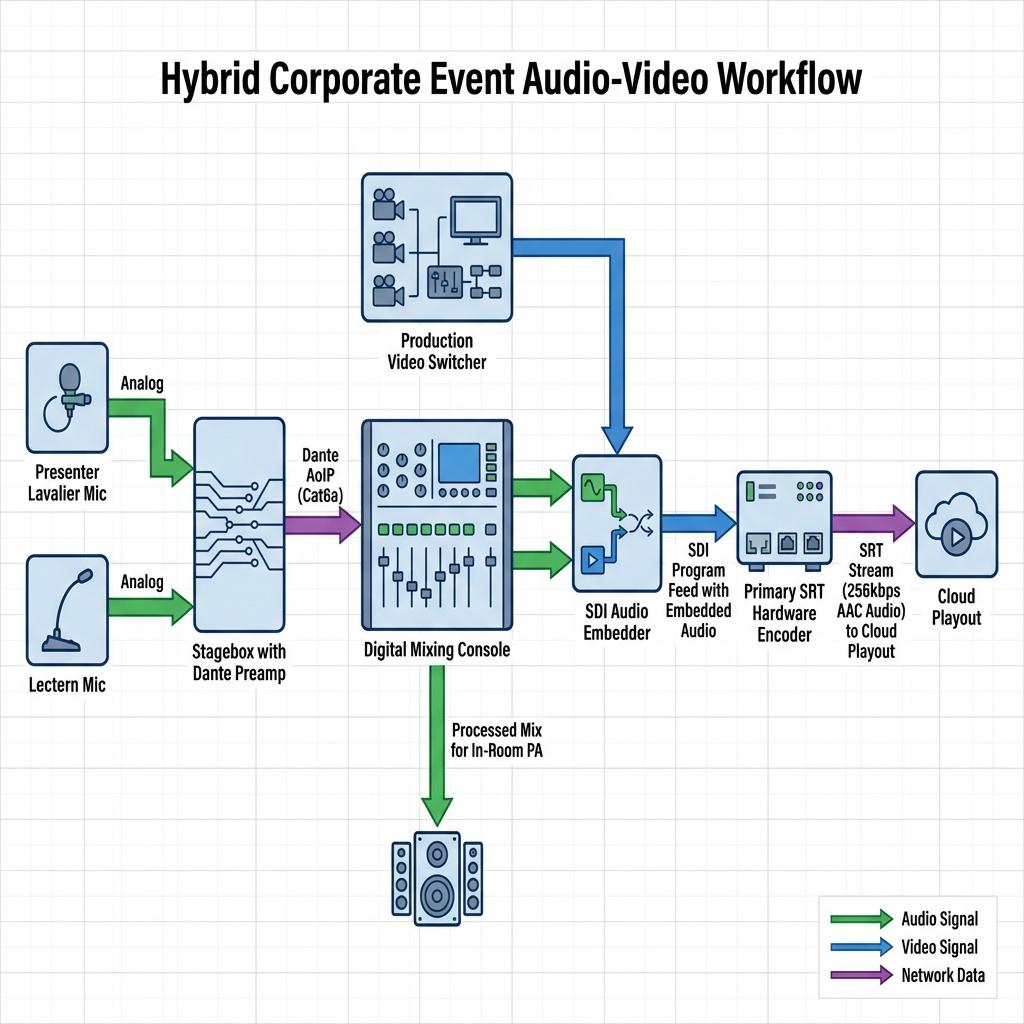
Architecting the High-Fidelity Audio Signal Chain for Hybrid Events
Delivering pristine audio to both in-person and remote audiences requires a meticulously architected signal flow. A hybrid event introduces complexity by requiring separate mixes and processing for the in-room PA system and the broadcast stream, ensuring an optimal experience for both attendee types.
Source Capture and Digital Transport: The Foundation of Quality
The audio chain begins at the transducer. For a keynote speaker, a professional wireless lavalier system like the Shure Axient or Sennheiser Digital 6000 series provides not only excellent vocal capture but also a robust RF (Radio Frequency) transport with digital encryption. The signal is then fed into a digital mixing console, such as a Yamaha CL5 or Allen & Heath Avantis. Within this ecosystem, audio is rarely transported as an analog signal. It is immediately converted to a digital format and routed using Audio-over-IP (AoIP) protocols like Dante. A single shielded Cat6a cable can carry up to 512 uncompressed, high-resolution audio channels with sub-millisecond latency, completely eliminating the signal degradation and interference risks associated with analog multicore snakes. This digital backbone is the foundation of a modern, scalable, and high-fidelity production.
Signal Processing and Mixing: Crafting the Broadcast Feed
Once inside the digital mixer, the raw audio from the microphones is processed to ensure maximum clarity and consistency. This is a multi-step process handled by the audio engineer.
- Equalization (EQ): A high-pass filter is applied to remove low-frequency rumble below 80-100 Hz. Parametric EQ is then used to subtly sculpt the sound, often cutting frequencies around 200-400 Hz to remove “mud” and adding a gentle boost in the 2-5 kHz range to enhance presence and intelligibility.
- Dynamics Processing: A compressor is used to reduce the dynamic range of the speaker’s voice, ensuring that quieter passages are audible without allowing louder moments to clip or become overwhelming. A noise gate is applied to eliminate background noise when the person is not speaking.
- Mixing and Routing: The audio engineer creates a dedicated broadcast mix that is separate from the in-room “Front of House” mix. This stream mix is often “less live,” with less ambient room sound, providing a more direct and intimate listening experience for the remote audience. This processed mix is then routed to a matrix output on the console, destined for the video production system.
Encoding and Transport Protocols: Preserving Audio Integrity Over IP Networks
The most pristine audio mix is worthless if it is compromised during encoding and network transport. The final stage of the audio journey is arguably the most critical, as it is where the signal is most vulnerable to the unpredictability of the public internet.
Audio Codec Selection: The Balance of Quality and Efficiency
The processed audio feed, typically a 24-bit/48kHz WAV signal, must be compressed into a codec suitable for streaming. The two primary professional choices are AAC-LC and Opus. AAC-LC is the de facto standard for HLS (HTTP Live Streaming) and RTMP (Real-Time Messaging Protocol) delivery, offering excellent quality at bitrates from 128 kbps to 320 kbps for a stereo feed. For applications demanding lower latency, such as interactive sessions in a hybrid event, the Opus codec, often used within WebRTC and SRT (Secure Reliable Transport) frameworks, provides superior quality at lower bitrates and is designed to be more resilient to network fluctuations.
Transport Protocol Analysis: Why SRT is Superior for Mission-Critical Audio
RTMP, the legacy protocol, is TCP-based and can suffer from significant latency increases and stream failure during periods of network congestion. SRT, in contrast, is a UDP-based protocol with an intelligent ARQ (Automatic Repeat Request) error-correction mechanism. If an audio packet is lost in transit, SRT can re-request it from the sender before the playout buffer runs dry. This capability is paramount for audio, as even a momentary packet loss can result in an audible glitch or dropout, shattering the listener’s focus. SRT’s ability to recover from packet loss while maintaining low, stable latency makes it the superior choice for transporting high-value corporate audio streams where every syllable counts.
Implementing Redundancy for a Zero-Failure Audio Environment
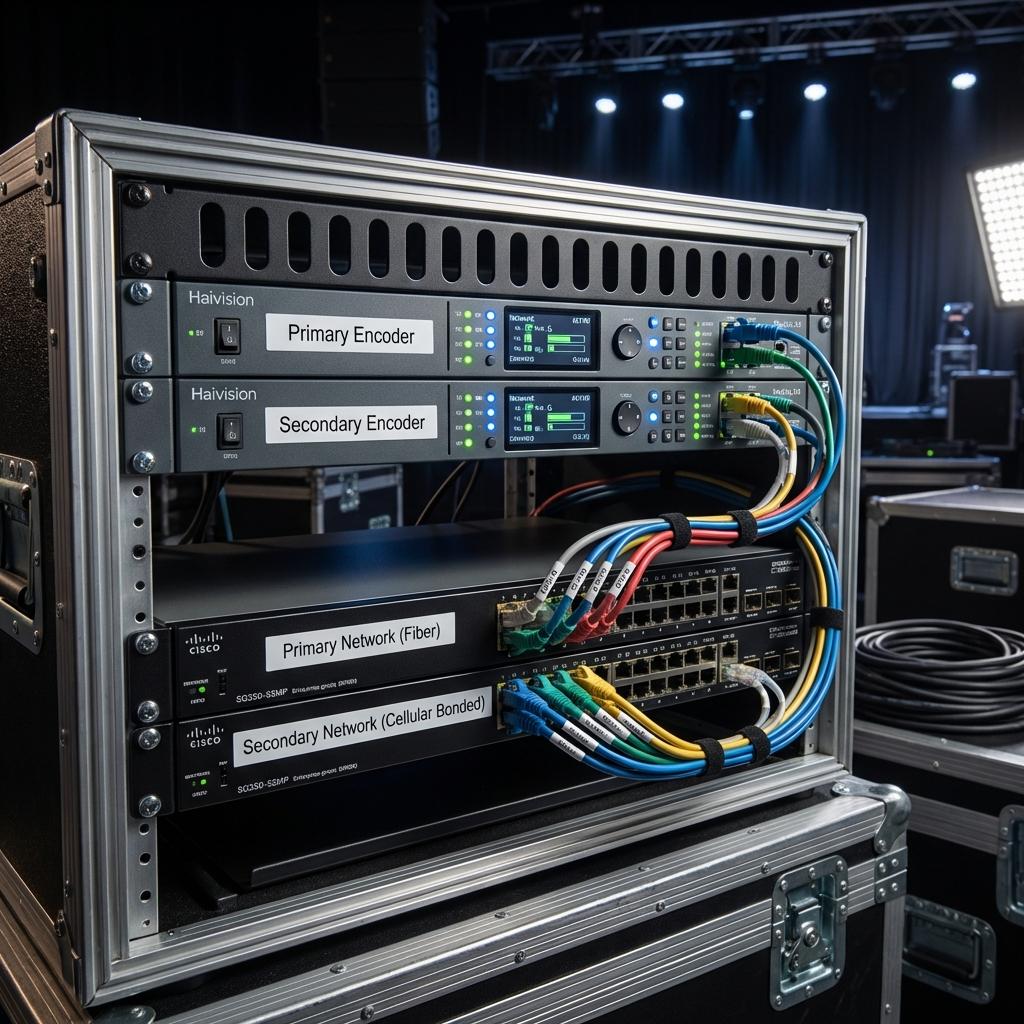
For any Tier 1 corporate event, audio redundancy is non-negotiable. A robust strategy involves a fully redundant signal path. This includes a secondary microphone for the primary speaker, a backup audio console or a split feed, and two separate hardware encoders (e.g., Haivision Makito X4, AJA HELO Plus). These encoders should be fed into separate network switches and connected to diverse internet providers (e.g., one fiber, one dedicated cellular bonding unit like a Teradek Bond). This ensures that a failure of any single component, from the microphone cable to the ISP, does not result in a loss of audio for the remote audience. This level of resilience is the hallmark of a professional B2B streaming operation.
Integration, Measurement, and Proving the ROI
The final step is to integrate this high-quality audio into the chosen enterprise platforms and establish metrics to demonstrate its value to corporate stakeholders.
Advanced Integration with Enterprise UC Platforms
Feeding a professional audio mix into platforms like Microsoft Teams, Zoom, or Webex requires more than a simple USB interface. To maintain signal integrity, video production switchers can output the final program feed, with audio embedded in the SDI or NDI (Network Device Interface) signal. This NDI stream can be used as a virtual camera and microphone source in Teams or Zoom, bypassing the platform’s consumer-grade audio processing. This ensures the remote participants on the UC platform hear the same professionally mixed and processed audio as the primary streaming audience, creating a seamless hybrid experience.
Monitoring with Objective Quality Metrics like LUFS
Professional audio is not just about clarity; it is also about consistency. Audio loudness is measured in LUFS (Loudness Units Full Scale), an international standard (EBU R 128) that reflects perceived loudness. The broadcast mix must be monitored and maintained at a consistent LUFS target, typically between -14 and -18 LUFS, to prevent viewers from having to adjust their volume during the event. Real-time monitoring tools can also track network health metrics like jitter, packet loss, and SRT latency, providing engineers with the data needed to preemptively address issues before they impact the listener.
Ultimately, engineering for high-fidelity audio is about risk mitigation and value enhancement. Poor audio increases the risk of the core message being misunderstood, ignored, or forgotten. By architecting a robust, redundant, and high-resolution audio chain from source to CDN, we directly support the primary business goal of corporate events: effective communication. For enterprise decision-makers, investing in a professional audio strategy is a direct investment in the retention and impact of their most critical messages.

Jeremy Lee is a seasoned digital marketing director and strategist with over two decades of experience in the industry. As the founder of Sotavento Medios, I manage a diverse portfolio of over 50 businesses, helping brands grow through advanced search strategies and digital innovation. My work focuses on bridging the gap between traditional search engine optimisation and the evolving world of AI-driven answer engines.
get in touch