
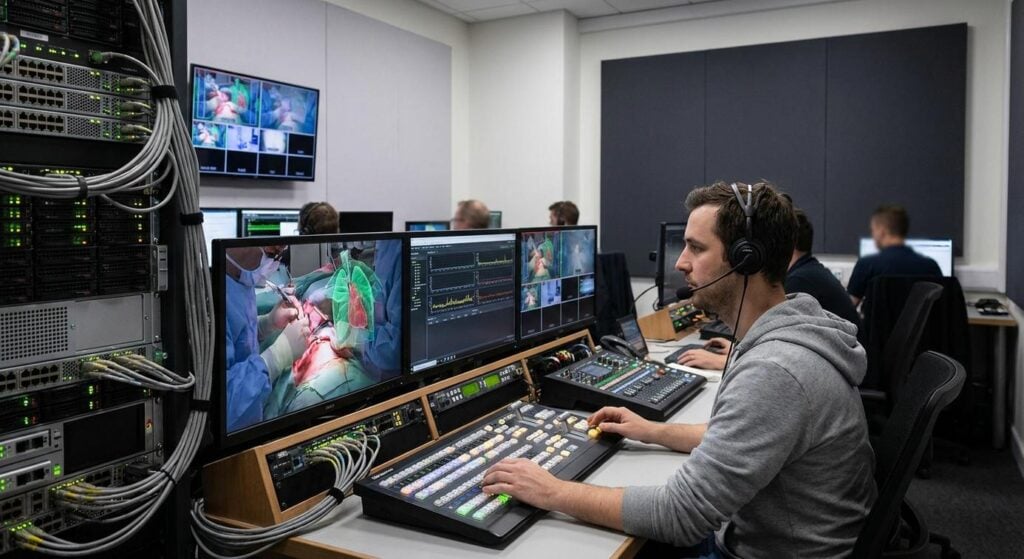
The landscape of medical education and surgical training is undergoing a profound transformation, driven by advancements in Extended Reality (XR) technologies and high-fidelity live streaming. For corporate event planners, AV professionals, and IT directors within the enterprise sector, understanding the intricate technical demands of streaming high-definition XR surgical procedures is paramount. This is not merely about transmitting video; it is about orchestrating a complex, ultra-low-latency, multi-data-stream production that delivers immersive, interactive, and clinically accurate experiences to a distributed professional audience. Spring Forest Studio specializes in navigating these advanced technical challenges, offering enterprise-grade solutions for B2B event streaming and hybrid production that push the boundaries of medical simulation and training.
Traditional surgical training relies heavily on physical presence and observation. However, the integration of Augmented Reality (AR), Virtual Reality (VR), and Mixed Reality (MR) within the operating theater, combined with robust live streaming infrastructure, opens new avenues for global education, peer collaboration, and remote proctoring. This article will delve into the advanced technical methodologies, infrastructure requirements, and professional workflows essential for delivering high-definition XR surgery streams with the fidelity, security, and reliability demanded by the medical and enterprise sectors.
Advanced Data Acquisition and Capture for Immersive XR Surgical Environments
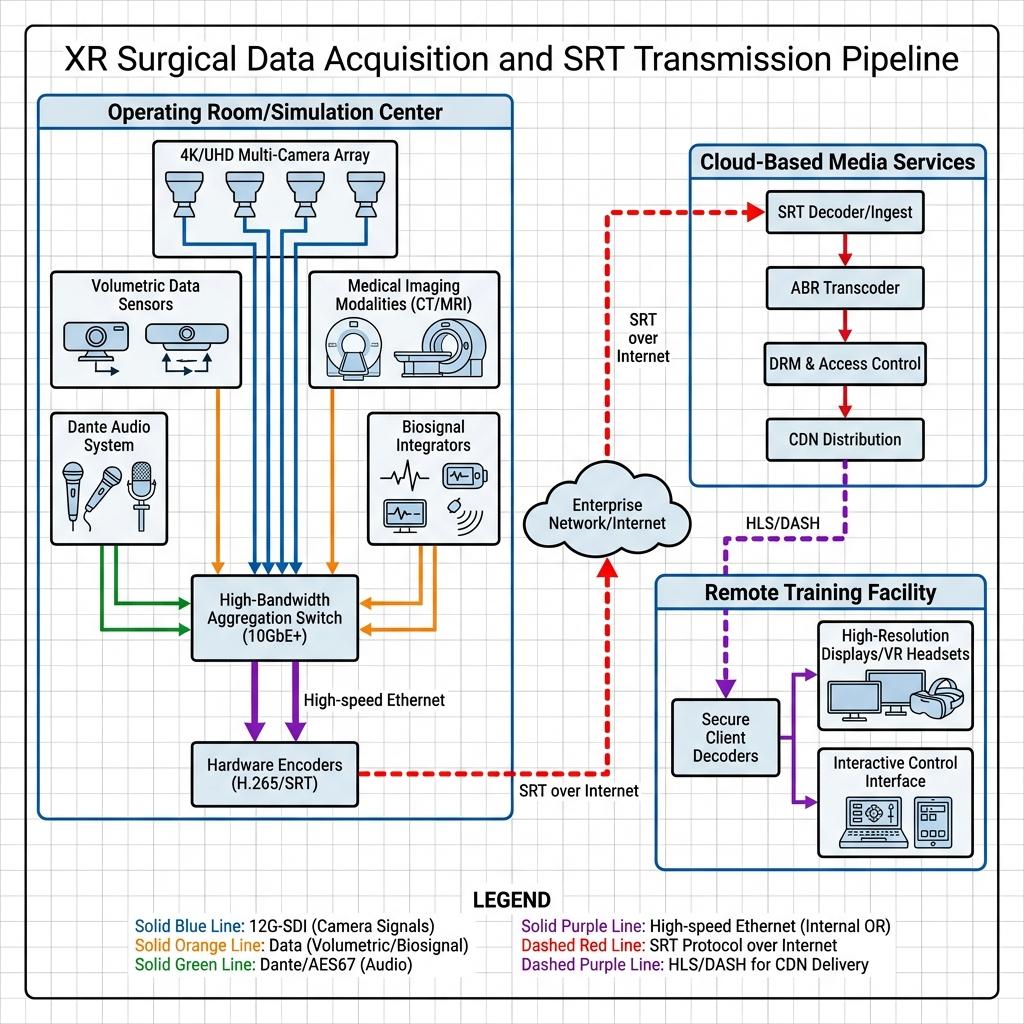
The foundation of high-definition XR surgery streaming lies in sophisticated data acquisition. Capturing the complexity of a surgical procedure within an XR context requires more than standard video cameras; it necessitates a multi-modal sensor array and a robust signal aggregation architecture. Professional production setups typically deploy multiple 4K/UHD (Ultra High Definition) cameras, often with high frame rates (e.g., 60fps or higher) to minimize motion blur and enhance spatial awareness within the XR environment. These cameras are strategically positioned to capture various perspectives: overhead, surgeon’s view (often via head-mounted or instrument-mounted micro-cameras), and wide-angle views of the surgical field and operating room.
Multi-Camera Arrays and High-Fidelity Signal Paths
For pristine visual fidelity, cameras are interconnected using professional video interfaces such as 3G-SDI, 6G-SDI, or 12G-SDI, capable of transmitting uncompressed or lightly compressed video signals over coaxial cable. For 4K/UHD at 60p, 12G-SDI is often preferred for single-cable runs, though quad-link 3G-SDI can also be employed. Alternatively, HDMI 2.1 interfaces can be used for shorter runs or specific camera types. Emerging IP-based video transport standards like SMPTE ST 2110 or NDI (Network Device Interface) are increasingly critical, allowing for flexible routing and scaling over standard Ethernet networks, reducing cabling complexity and increasing interoperability within the production ecosystem. SMPTE ST 2110, in particular, enables the transport of uncompressed video, audio, and ancillary data as separate IP flows, which is crucial for precise synchronization in XR applications.
Integrating Volumetric Data, Biosignals, and Haptics
Beyond traditional video, XR surgery streaming often incorporates volumetric data from depth-sensing cameras (e.g., Intel RealSense, Microsoft Azure Kinect), medical imaging modalities (CT, MRI), and even real-time biosignals from patient monitoring equipment. Haptic feedback devices used in robotic surgery or training simulators also generate data streams that must be synchronized with visual and audio feeds. The aggregation of these diverse data types requires specialized capture cards and processing units capable of time-stamping and synchronizing multiple asynchronous inputs. The combined data throughput can be immense, necessitating a high-bandwidth, low-latency internal network, typically 10 Gigabit Ethernet (10GbE) or higher, to handle the uncompressed or lightly compressed feeds before encoding.
Robust signal routing matrices, often based on SDI or increasingly IP-based solutions like those leveraging NDI or SMPTE ST 2110, are essential for directing these multi-channel signals to various destinations: program monitors, ISO recorders for post-production analysis, and primary encoders for live streaming. Audio capture is equally critical, utilizing professional microphones with dedicated audio mixers (e.g., Dante or AES67-enabled systems) to ensure clear communication between surgical teams and remote participants, with talkback systems facilitating interactive Q&A sessions.
Enterprise-Grade Encoding and Protocol Selection for High-Fidelity XR Streaming
Once captured, the high-volume, multi-modal data from an XR surgical environment must be efficiently encoded and transmitted with minimal latency and maximum fidelity. This is where professional streaming protocols and advanced encoding standards become critical. The choice of encoder and streaming protocol directly impacts the quality, reliability, and interactivity of the remote learning experience.
Advanced Video Codecs and Bitrate Management
For high-definition XR content, the primary video codecs employed are H.264 (AVC) and H.265 (HEVC). H.265 offers superior compression efficiency, delivering comparable quality to H.264 at roughly half the bitrate, which is advantageous for bandwidth-constrained scenarios or achieving higher resolutions (4K/UHD) at manageable bitrates. Emerging codecs like AV1 are also gaining traction for their open-source nature and even greater compression. For XR, maintaining high spatial and temporal quality is paramount, requiring target bitrates ranging from 20 Mbps to 80 Mbps or higher for 4K60p streams, depending on the complexity of the visual content and desired level of detail. Adaptive Bitrate (ABR) encoding is essential, creating multiple renditions (e.g., 1080p, 720p, 480p) to accommodate varying network conditions and device capabilities of remote viewers, ensuring a consistent viewing experience.
Streaming Protocols for Low Latency and Reliability
The selection of streaming protocol is a cornerstone of enterprise XR surgical streaming. While RTMP (Real-Time Messaging Protocol) remains widely used due to its broad compatibility with content delivery networks (CDNs) and streaming platforms, its inherent latency (typically 5-15 seconds) can be a significant drawback for highly interactive XR training scenarios. For ultra-low latency requirements, particularly where real-time feedback or control is necessary, SRT (Secure Reliable Transport) protocol is the industry standard. SRT, developed by Haivision, provides secure, low-latency, and reliable video transport over unpredictable networks, leveraging UDP for speed and adding error recovery mechanisms (ARQ – Automatic Repeat Request) to mitigate packet loss and jitter. This makes SRT ideal for transmitting high-definition XR surgical streams between the operating room and remote training centers or cloud processing units, often achieving sub-second latency.
Other protocols such as RIST (Reliable Internet Stream Transport) offer similar benefits to SRT, focusing on robust transmission over challenging networks. For internal facility distribution or between production nodes, NDI|HX provides a high-quality, low-latency IP video stream suitable for local area networks. When distributing to a global audience via CDNs, protocols like HLS (HTTP Live Streaming) and DASH (Dynamic Adaptive Streaming over HTTP) are commonly used for their scalability and compatibility with ABR, albeit with higher inherent latency compared to SRT. A hybrid approach, using SRT for ingest and primary transport to a cloud transcoder, followed by HLS/DASH for global distribution, represents a common and effective enterprise strategy.
Hybrid Production Workflows for Immersive Medical Training
The ability to integrate physical and virtual participants seamlessly into an XR surgical training session defines a truly effective hybrid production workflow. This involves sophisticated video switching, audio management, and integration with enterprise collaboration platforms, all while maintaining the high technical standards required for medical education.
Multi-Feed Switching and Program Management
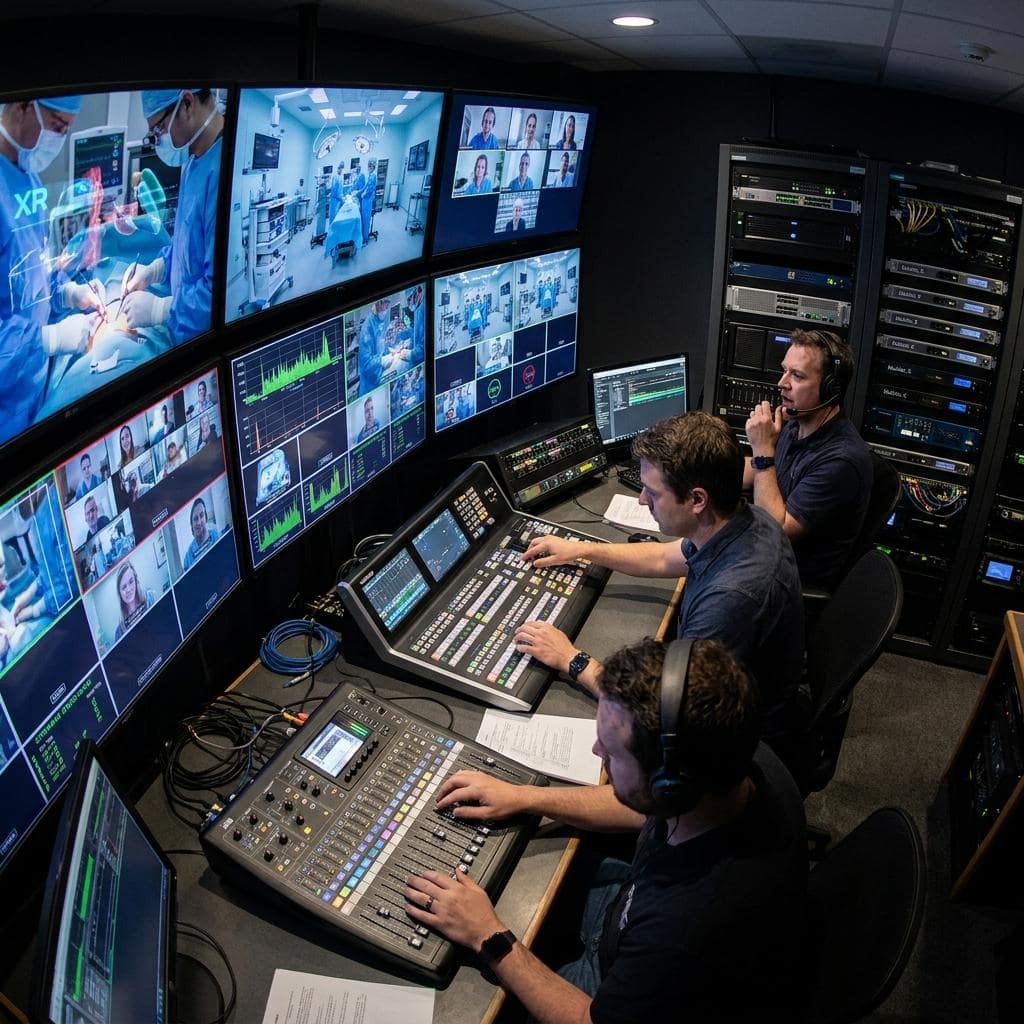
A professional production control room for XR surgical streaming requires a robust video switcher capable of handling numerous incoming feeds: multiple camera angles of the surgical procedure, feeds from AR/VR overlays showing anatomical models or diagnostic information, presentation slides, and remote participant video windows. Broadcast-grade switchers from manufacturers like Ross Video, Grass Valley, or Blackmagic Design offer the necessary input density, multi-layer keying capabilities, and customizable multiview monitoring. The program feed, which is the primary output stream, must be carefully composed to provide maximum instructional value, dynamically switching between live surgery, XR overlays, and presenter views. This requires a skilled technical director to manage transitions smoothly, often guided by real-time input from medical instructors or surgeons.
Integrated Audio and Talkback Systems
Clear, uncompromised audio is as vital as high-definition video. Professional audio mixers (e.g., Yamaha, Behringer, Midas) are integrated to manage multiple audio sources: surgeon and assistant microphones, ambient operating room audio, instructor commentary, and audio from remote participants. Dante or AES67 networks are increasingly used for audio over IP, simplifying cabling and offering flexible routing. Critical to interactive training is a robust talkback system, allowing remote trainees or proctors to communicate directly with the surgical team or instructors in real-time. This often involves dedicated intercom systems from companies like Clear-Com or Riedel, integrated into the overall production audio matrix, ensuring two-way, low-latency communication.
Platform Integration and Interactive Elements
For hybrid events, seamless integration with enterprise communication platforms like Microsoft Teams, Zoom, or Webex is essential. These platforms facilitate interactive Q&A sessions, breakout rooms, and polls for remote participants. However, the raw, high-fidelity XR surgical stream is often ingested into a dedicated enterprise streaming platform (e.g., Brightcove, Vimeo Enterprise, or a custom-built solution) which then distributes to the general audience, while specific interactive elements might be managed via the collaboration platform. The technical challenge lies in managing multiple concurrent feeds, ensuring proper synchronization, and maintaining quality of service (QoS) across all platforms. Furthermore, data streams from XR environments can be leveraged to power interactive elements within the training platform, allowing remote users to manipulate virtual models or review case studies in parallel with the live stream.
Network Infrastructure and Cloud Integration for Scalable XR Delivery
The sheer data volume and low-latency requirements of high-definition XR surgical streaming place immense demands on network infrastructure. Enterprise clients must design and implement robust, redundant network architectures to ensure uninterrupted, high-quality delivery.
High-Bandwidth, Low-Latency Network Design
At the source, within the operating room or simulation center, a dedicated 10 Gigabit Ethernet (10GbE) or even 25/40/100 Gigabit Ethernet backbone is often necessary to handle the aggregation of multiple uncompressed or lightly compressed video, audio, and XR data streams. This local network must be optimized for low latency and minimal jitter. Quality of Service (QoS) protocols should be configured on network switches and routers to prioritize critical streaming traffic over other network activities. For external transmission, a robust internet connection with symmetrical bandwidth is paramount. For 4K60p SRT streams, dedicated fiber optic links with guaranteed bandwidth of 50-100 Mbps upload are often required per stream, alongside redundancy measures such as diverse network paths and bonding multiple internet connections.
Cloud-Based vs. On-Premise Solutions and Redundancy
Enterprise streaming solutions typically leverage a hybrid model, combining on-premise encoders and local processing with cloud-based services for global distribution and scalability. On-premise hardware encoders (e.g., Elemental Live, Haivision Makito X) provide immediate processing and local control, often favored for critical, high-fidelity source feeds. Cloud-based transcoders and media services (e.g., AWS Elemental MediaLive, Google Cloud Media CDN, Azure Media Services) offer unparalleled scalability, allowing for dynamic adjustment of resources based on audience size and geographic distribution. They are crucial for ABR ladder generation, DRM implementation, and global content delivery. Redundancy is built into every layer: dual encoders, redundant network paths, failover strategies for cloud services, and backup power supplies ensure continuous operation in the event of a component failure. Geo-redundant CDN deployment ensures content availability even if a regional data center experiences issues.
CDN Integration and Edge Delivery
For global reach and optimal performance, integration with a professional Content Delivery Network (CDN) is non-negotiable. CDNs cache content at edge locations geographically closer to viewers, significantly reducing latency and server load. For live streaming, the CDN ingest point must be robust and support the chosen streaming protocols (e.g., RTMP, SRT, HLS/DASH). Advanced CDN features like intelligent routing, DDoS protection, and real-time analytics are critical for enterprise-grade XR surgical streaming, ensuring secure, high-quality delivery to a diverse global audience while providing granular insights into viewer engagement and technical performance.
Quality Assurance, Security, and Compliance in Medical XR Streaming
Maintaining the highest standards of quality, security, and regulatory compliance is non-negotiable when streaming sensitive medical procedures, especially in an XR context. Any compromise could have severe repercussions for patient privacy, data integrity, and the credibility of the training.
Latency Optimization and Quality Monitoring
For XR surgery, latency is a critical performance metric. Minimizing end-to-end latency, from camera capture to viewer display, is essential for truly interactive and immersive experiences. This involves optimizing every link in the chain: ultra-low latency encoders, SRT transport, efficient cloud transcoding, and CDN edge delivery. Latency budgets are often measured in milliseconds, aiming for sub-second glass-to-glass delay for critical interactions. Continuous, real-time quality monitoring tools are deployed throughout the workflow, tracking key metrics such as video bitrate, frame rate, resolution, audio levels, packet loss, and network jitter. Professional monitoring solutions (e.g., Telestream IQ, Video Flow) provide alerts for deviations from defined thresholds, enabling proactive troubleshooting and maintenance of broadcast-grade quality.
Data Security, Encryption, and Access Control
The transmission of medical data, even for training purposes, falls under stringent regulatory frameworks such as HIPAA (Health Insurance Portability and Accountability Act) in the United States and GDPR (General Data Protection Regulation) in Europe. Therefore, robust security measures are paramount. All streaming data must be encrypted end-to-end, utilizing protocols like SRTP (Secure Real-Time Transport Protocol) for SRT streams, and TLS/SSL for HTTP-based protocols. Digital Rights Management (DRM) solutions are often implemented to control access and prevent unauthorized content distribution. Furthermore, strong authentication mechanisms, such as Single Sign-On (SSO) and multi-factor authentication, are essential for restricting access to authorized medical professionals and trainees. Secure cloud storage for recorded content, with strict access policies and audit trails, is also a critical component of the overall security posture.
Regulatory Compliance and Ethical Considerations
Beyond technical security, enterprise XR surgical streaming operations must adhere strictly to medical regulatory compliance. This includes obtaining proper consents for recording and streaming surgical procedures, ensuring patient anonymity where required, and maintaining strict data governance policies. The ethical implications of using real patient data, even anonymized, in training scenarios necessitate careful consideration and adherence to institutional review board (IRB) guidelines. Spring Forest Studio works closely with clients to design streaming solutions that not only meet the highest technical specifications but also comply with all relevant legal, ethical, and industry standards, providing peace of mind for sensitive medical applications. This holistic approach ensures that the transformative potential of XR surgery streaming can be realized responsibly and effectively for global medical education.
Jeremy Lee is a seasoned digital marketing director and strategist with over two decades of experience in the industry. As the founder of Sotavento Medios, I manage a diverse portfolio of over 50 businesses, helping brands grow through advanced search strategies and digital innovation. My work focuses on bridging the gap between traditional search engine optimisation and the evolving world of AI-driven answer engines.
get in touch