
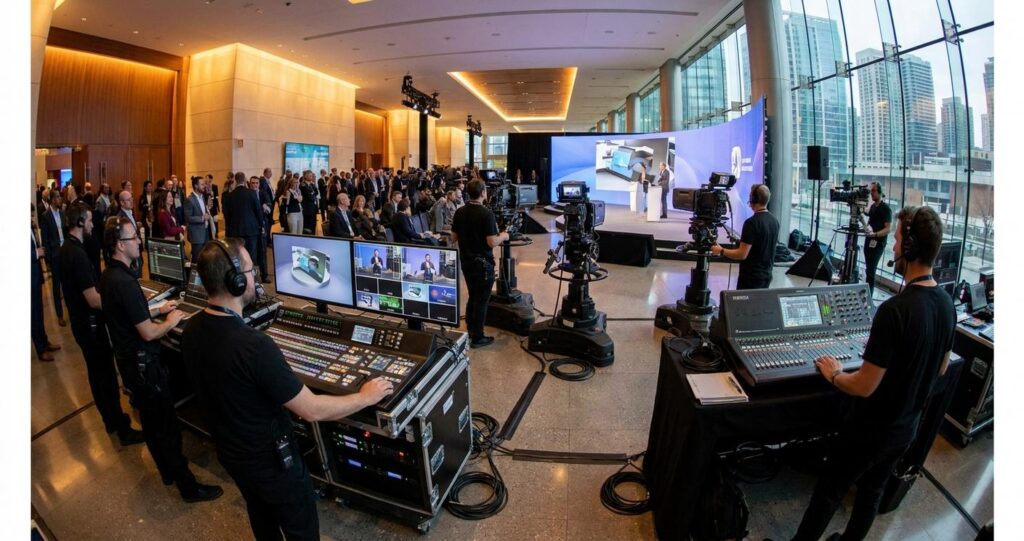
In the rapidly evolving landscape of B2B event streaming, crafting an immersive 3D streaming experience demands meticulous planning and execution. Unlike traditional video content, 3D streaming involves intricate technical setups and sophisticated production workflows to truly engage audiences—be they physically present, or participating virtually.
Understanding the Technical Foundations of 3D Streaming
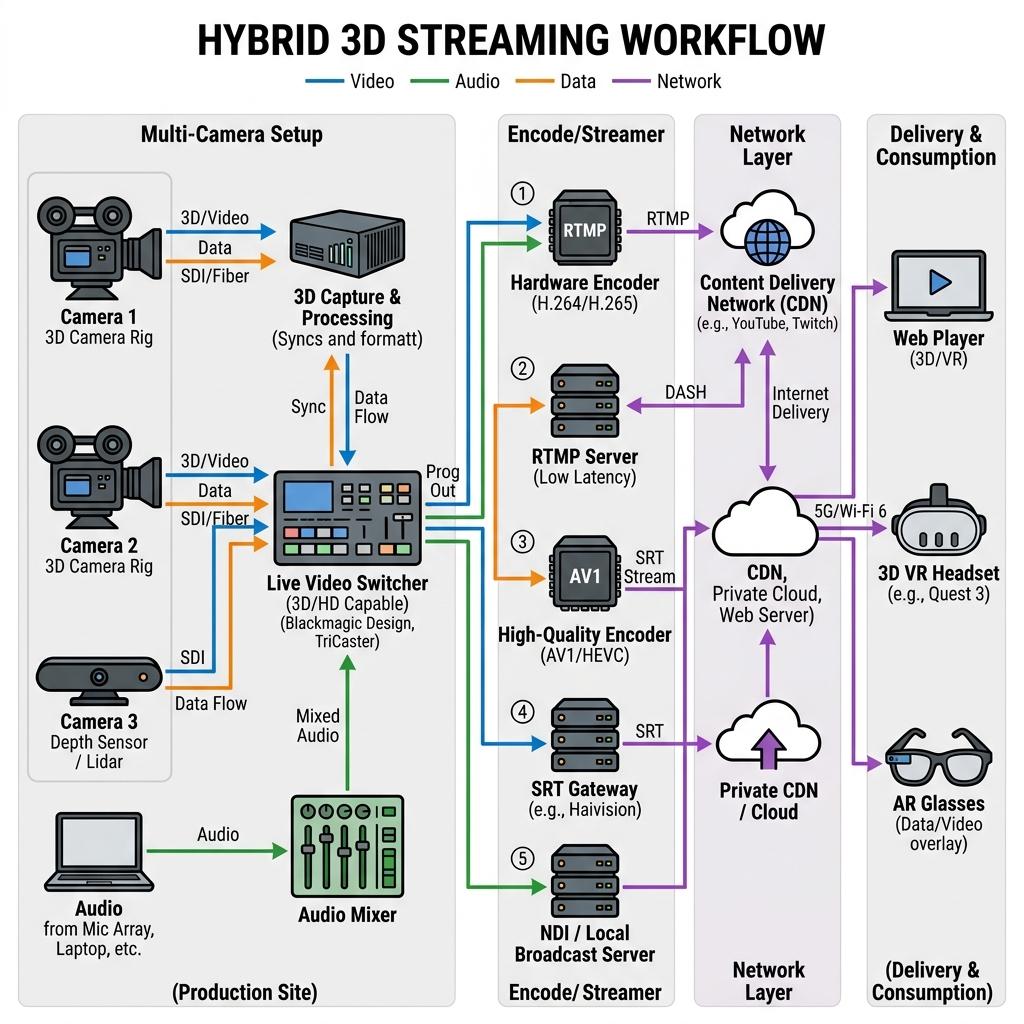
At the heart of creating an immersive 3D streaming experience are the fundamental streaming protocols and standards that define the quality and reliability of the broadcast. For enterprise-level applications, employing protocols like RTMP (Real-Time Messaging Protocol) for low-latency streaming, SRT (Secure Reliable Transport) for secure transmissions, and leveraging NDI (Network Device Interface) for broadcasting over local networks ensures a robust foundation. These protocols support the stream’s infrastructure demands and facilitate real-time high-definition delivery.
Building the Production Pipeline for 3D Streaming
Creating a seamless 3D streaming flow involves a well-coordinated production pipeline. This starts with capturing content using multi-camera setups capable of delivering 4K/UHD resolution necessary for high-quality 3D visuals. Operational efficiency is maximized through automated video switching systems capable of handling multiple inputs and employing advanced H.264/H.265 encoding for optimal compression without compromising on image clarity.
Audio and Video Signal Flow
A critical aspect of a successful 3D streaming production involves an integrated audio and video signal flow system. Utilizing professional-grade equipment like SDI (Serial Digital Interface) and HDMI 2.1 for signal routing ensures minimal latency and high-fidelity audio-visual sync. Implementing precise audio mixing and effective use of talkback systems enhances operational coordination among crew members.
Infrastructure for Hybrid 3D Events
Hybrid events that cater to both physical and virtual audiences require reliable streaming infrastructure capable of scaling with demand. Enterprise clients often benefit from cloud-based streaming solutions offering flexibility in distribution and scalability in delivery. Network topology plays an essential role in facilitating redundancy and failover mechanisms to ensure uninterrupted service.
Network and Hardware Requirements
Deploying a successful hybrid 3D streaming setup requires robust network architecture. A minimum of 50 Mbps dedicated internet bandwidth may be necessary to ensure uninterrupted streaming quality. Additionally, the integration of enterprise platforms like Microsoft Teams, Zoom, and Webex demands interoperability and secure connectivity facilitated by VPNs.
Implementation and Best Practices for Enterprise Clients
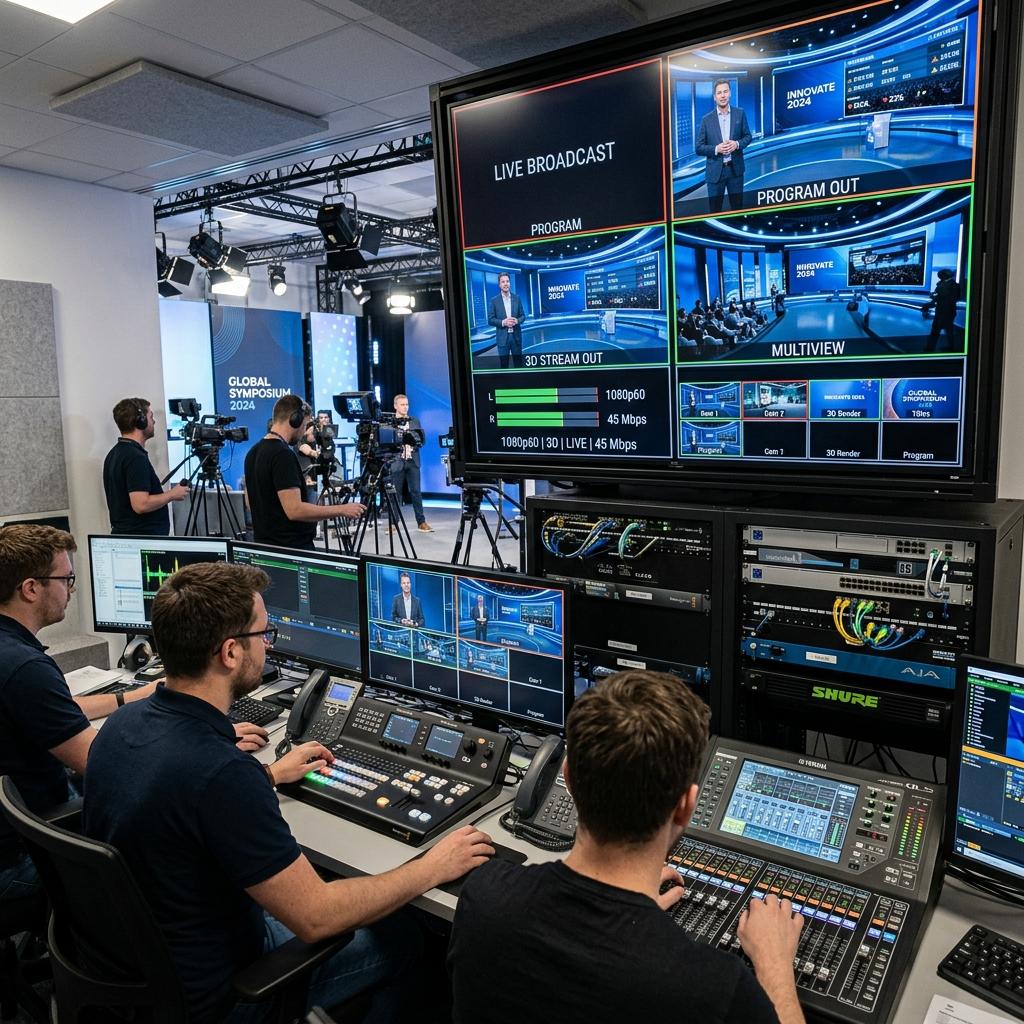
To achieve the desired immersive 3D streaming outcomes, enterprise clients should prioritize the following elements:
- Investing in state-of-the-art production equipment capable of supporting extensive streaming demands.
- Establishing a production team proficient in managing and navigating complex streaming workflows.
- Implementing strict compliance with industry standards such as SMPTE (Society of Motion Picture and Television Engineers) and ISO standards to ensure compatibility and reliability.
- Employing comprehensive quality control measures and rigorous pre-event testing to mitigate probable technical challenges.
Conclusion: Navigating the Future of 3D Streaming
Enterprises embarking on the journey of 3D streaming for B2B events need to adopt a comprehensive approach that involves cutting-edge technology, proficient personnel, and a strategic vision. With technical decisions rooted in established standards and real-world applications, businesses can create impactful experiences that captivate and resonate with their audiences.
Jeremy Lee is a seasoned digital marketing director and strategist with over two decades of experience in the industry. As the founder of Sotavento Medios, I manage a diverse portfolio of over 50 businesses, helping brands grow through advanced search strategies and digital innovation. My work focuses on bridging the gap between traditional search engine optimisation and the evolving world of AI-driven answer engines.
get in touch