
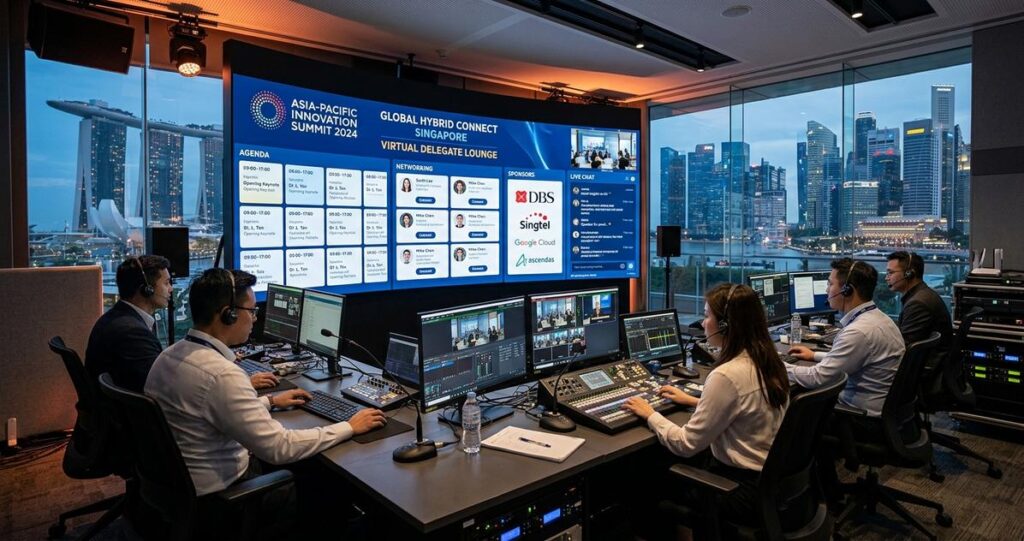
Hybrid events have changed how people in Singapore connect, learn, and do business. A conference is no longer limited to the people seated in a ballroom at Marina Bay Sands or the convention halls at Suntec. It now extends to audiences joining from offices in Raffles Place, co-working spaces in the CBD, homes in Tampines, and even overseas time zones. In that setting, the virtual delegate lounge has become more than a simple waiting page. It has evolved into a structured digital environment that supports networking, content access, sponsor engagement, and attendee experience before, during, and after the live programme.
For many Singapore-based organisations, the main concern is not whether to stream an event, but how to make remote delegates feel equally included and informed. That is especially important in a market where professional events are often expected to be efficient, polished, and highly interactive. A strong virtual delegate lounge helps bridge the gap between physical and digital attendance. It gives participants a central place to enter the event, review schedules, ask questions, exchange contacts, and access resources without confusion. When designed well, it supports the practical needs of busy delegates while reinforcing the credibility of the organiser and the sponsor brands involved.
The evolution of this space reflects broader changes in event production, user expectations, and digital infrastructure. It also reflects Singapore’s specific environment, where internet connectivity is strong, professional audiences are accustomed to seamless digital platforms, and organisations increasingly expect measurable outcomes from every event touchpoint. Understanding how the virtual delegate lounge has developed, and what makes it effective now, is useful for event planners, marketing teams, and business leaders who want to create a more meaningful hybrid experience.
From basic livestream access to a structured delegate environment
In the early phase of virtual and hybrid events, the online experience was often limited to a livestream link, a chat box, and perhaps a downloadable programme. That approach solved a basic access problem, but it did not fully address attendee engagement. Remote participants could watch, but they had little reason to stay active, explore the agenda, or interact with one another. In practice, this created a passive experience that did not reflect the networking value that many delegates expected from a conference, trade event, or corporate briefing.
The virtual delegate lounge emerged as a response to that limitation. Instead of treating online attendance as a one-way broadcast, event organisers began building a digital entry point that mirrored the functions of an onsite reception area. The lounge became a place where delegates could orient themselves, check session details, access speaker bios, and move between content areas. This was especially useful in hybrid formats, where onsite and online attendees need a shared sense of timing and participation.
Over time, the concept matured from a static webpage into an interactive event hub. Modern platforms can support agenda navigation, resource libraries, direct messaging, networking tools, sponsor booths, and session reminders. For Singapore audiences, this evolution fits local expectations of efficiency and clarity. Professionals here are used to digital services that are straightforward, fast, and organised, whether they are using banking apps, government portals, or workplace collaboration tools. A virtual delegate lounge that feels cluttered or difficult to use can quickly reduce engagement.
What a virtual delegate lounge does in a hybrid format
The function of a virtual delegate lounge is to give remote attendees a clear and coherent place to experience the event. It acts as the digital front door, and it should do more than display branding. At its best, it supports the full delegate journey, from arrival to post-event follow-up.
Orientation and wayfinding
One of the most important roles of the lounge is helping people understand where they are and what happens next. This means displaying the agenda, session times, speaker profiles, breakout options, and instructions for live participation. For hybrid events in Singapore, this is particularly important when local and overseas participants are joining across multiple time zones. Clear time formatting, session labels, and platform instructions reduce friction and help delegates move confidently through the programme.
Networking and interaction
Networking is one of the main reasons many people attend events, so hybrid formats need to support it intentionally. A virtual delegate lounge can offer attendee lists, chat features, meeting requests, or themed discussion rooms. These tools are not meant to replace face-to-face conversations, but they do help remote delegates participate in professional exchange. In a business environment like Singapore, where relationship-building is a major part of conferences, trade shows, and association events, structured networking features can make the digital experience feel more complete.
Content access and continuity
The lounge also helps maintain continuity across the event lifecycle. Delegates may want to revisit slides, speaker handouts, session recordings, or reference material after the live presentation ends. A well-organised content area reduces the risk that attendees miss important information. It also supports better knowledge retention, which matters for events focused on training, compliance, healthcare education, finance, technology, and public sector briefings.
Why hybrid formats changed expectations for delegate engagement
Hybrid events changed the standard for what participants expect from an event platform. Before hybrid became common, virtual attendance was often seen as a convenience option. Now, remote attendees expect a usable experience that feels intentional. They want access to the same core information, the same professional tone, and as much interaction as the format allows. That shift has made the virtual delegate lounge a central part of event strategy rather than a supporting feature.
In Singapore, this matters because many events serve highly time-sensitive audiences. Executives, procurement teams, public servants, educators, healthcare professionals, and technology specialists often join events with limited time. If the lounge is well built, they can quickly find the sessions that matter, locate supporting documents, and join conversations without searching through multiple tabs or emails. If it is poorly designed, they may disengage quickly, even if the content itself is strong.
Hybrid formats also require organisers to think carefully about equity of access. Onsite delegates often have natural opportunities for spontaneous interaction, while virtual delegates need digital structures to recreate similar opportunities. The lounge helps reduce that gap. It can offer moderated Q and A, live polling, breakout rooms, and follow-up messaging. These features are not just technical additions. They help build a more balanced event experience.
User experience design matters more than decoration
Early virtual lounges sometimes focused too heavily on appearance, with branded backgrounds, animations, or decorative elements that looked impressive but did not improve usability. Today, the emphasis is different. User experience, often called UX, refers to how easily a person can use a digital platform. In a delegate lounge, good UX means that participants can understand the layout quickly, complete actions without confusion, and return to the event whenever needed.
For Singapore event audiences, simplicity is a major strength. A clean structure, readable typography, clear buttons, concise instructions, and mobile-friendly design usually perform better than overly complex layouts. Many attendees join from smartphones or laptops while commuting, between meetings, or during working hours. The platform should accommodate these realities without requiring technical support for basic tasks.
Design features that now define effective virtual delegate lounges
The most effective virtual delegate lounges share a number of practical features. These features are not valuable because they are trendy, but because they help delegates participate more effectively. Event teams should think in terms of function, clarity, and accessibility.
Personalised agenda views
Personalised schedules allow delegates to identify relevant sessions quickly. This matters when a hybrid programme includes parallel tracks, keynote talks, sponsor presentations, and workshop sessions. In a Singapore context, where business events often run on tight schedules, a personalised agenda helps reduce decision fatigue and improves attendance at the sessions most likely to be useful.
Integrated speaker and sponsor information
Delegates often want to know who is presenting, what expertise they bring, and how sessions relate to organisational goals. Speaker bios, session abstracts, and sponsor profiles help build trust and context. The lounge can also support sponsor visibility in a way that feels relevant rather than intrusive. When sponsor content is organised around audience interests, it is more likely to be viewed as part of the event experience rather than as advertising alone.
Accessible content libraries
Accessibility in this context means that content is easy to find, read, and use. A content library should have logical categories, downloadable resources, and clear labelling. It should avoid forcing users to click through too many layers. For delegates in Singapore who may be juggling work obligations, this kind of efficiency is especially important. If a presentation file, white paper, or recording is hard to locate, people may simply move on.
Moderated engagement tools
Live chat, polls, question submission forms, and moderated discussion spaces can deepen engagement when they are used with clear rules and active facilitation. These tools work best when the host team sets expectations early. For example, organisers may explain when questions will be answered, how networking requests are handled, and what kind of language is appropriate in public channels. Moderation is important for professionalism and for maintaining a respectful environment.
Singapore-specific considerations for virtual delegate lounges
Singapore is a practical and highly connected event market, but strong digital infrastructure does not automatically guarantee a good delegate experience. Event organisers still need to design with local context in mind. Different audiences in Singapore have different technical comfort levels, language preferences, and expectations for service quality. A lounge that works for one audience may not work equally well for another.
Language clarity is one consideration. English is widely used in business settings, but many events also involve regional participants from across Asia. Clear wording, minimal jargon, and intuitive navigation support broader comprehension. When events are multilingual, organisers should plan carefully for translated interface elements, subtitle support, or multilingual help resources where needed.
Device compatibility is another practical issue. Many delegates will access the lounge from mobile devices, especially if they are between appointments or commuting on public transport. The platform should therefore be tested across screen sizes and common browsers. If buttons, document links, or meeting features do not function properly on a phone, a significant part of the audience may be affected.
Privacy and data handling also matter. Singapore organisations often handle business contact details, session registrations, and networking preferences through event platforms. Organisers should ensure that personal data is collected and used in a way that aligns with Singapore’s data protection requirements, including the Personal Data Protection Act. Delegates should understand what information is collected, why it is collected, and how it will be used. That transparency builds trust and supports responsible event practice.
Operational readiness is part of the experience
Even a strong platform needs reliable event operations behind it. That includes rehearsal time, moderator training, speaker onboarding, and clear escalation procedures if something fails during the event. In Singapore, where professional standards are generally high, delegates notice when support is responsive and when instructions are precise. A virtual delegate lounge should therefore be supported by a well-prepared event team, not treated as a standalone piece of software.
Examples from real event management practice show that small operational details make a difference. If a delegate enters the lounge and immediately sees a clear welcome message, a live help option, and a simple path to the opening session, confidence rises. If they face a blank screen, unclear menus, or missing meeting instructions, the entire experience can feel less professional. This is why content design and operational design must work together.
How the role of the lounge will continue to develop
The next stage in the evolution of the virtual delegate lounge is likely to focus on even more seamless integration. Event technology is moving toward fewer clicks, better personalisation, and richer post-event continuity. That may include stronger CRM integration, more relevant content recommendations, improved analytics for organisers, and more sophisticated networking tools. However, the basic principles are unlikely to change. Delegates still want clarity, relevance, and easy access to the event they came for.
For Singapore organisations, this means the most effective strategy is not chasing every new feature. It is choosing the features that genuinely improve attendee experience and fit the event objective. A hybrid medical conference, a corporate town hall, a government forum, and a trade show will all use virtual lounges differently. The design should reflect the purpose of the event, the needs of the audience, and the level of interaction required.
Spring Forest Studio and other professional event production teams in Singapore often see that the best results come from planning the virtual delegate lounge as part of the overall event architecture. That includes registration, livestream production, speaker coordination, branding, accessibility, technical support, and follow-up communications. When these parts are integrated well, the lounge becomes a natural extension of the live event rather than a disconnected online add-on.
The virtual delegate lounge has evolved from a simple access point into a core hybrid engagement environment. It supports orientation, interaction, content access, and sponsor visibility while helping remote participants feel part of the event. For Singapore-based organisers, the challenge is to keep the experience efficient, professional, and easy to use. The most successful lounges are not the most elaborate. They are the ones that help delegates move through the event without confusion, access what matters to them quickly, and leave with a sense that their time was respected. For organisations planning hybrid events, that is the standard worth aiming for.
General information only: This article is intended for event planning awareness and does not replace legal, technical, or professional advice for specific platforms, data handling practices, or event requirements.

Jeremy Lee is a seasoned digital marketing director and strategist with over two decades of experience in the industry. As the founder of Sotavento Medios, I manage a diverse portfolio of over 50 businesses, helping brands grow through advanced search strategies and digital innovation. My work focuses on bridging the gap between traditional search engine optimisation and the evolving world of AI-driven answer engines.
get in touch