
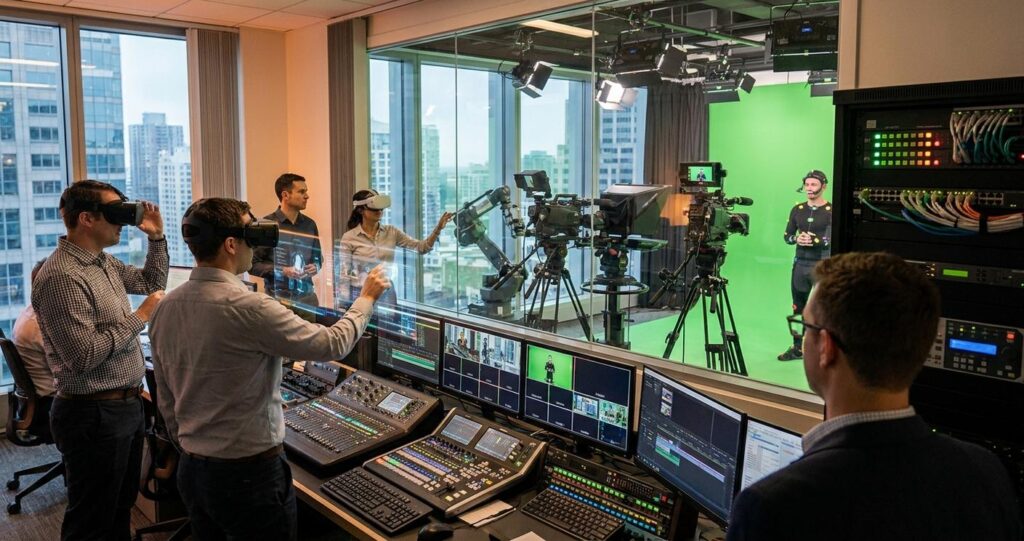
Understanding Virtual Reality and Extended Reality in B2B Environments
In the rapidly evolving landscape of B2B event streaming and hybrid production services, understanding the nuances between Virtual Reality (VR) and Extended Reality (XR) is essential. These technologies not only redefine user engagement but also configure the technological backbone needed for an immersive, scalable, and reliable enterprise experience. As businesses aim to integrate these advancements into their corporate events, the need for comprehensive infrastructure utilizing industry standards like RTMP (Real-Time Messaging Protocol), SRT (Secure Reliable Transport), and NDI (Network Device Interface) becomes crucial.
Technical Composition of Virtual Reality and Extended Reality
The core distinction between VR and XR lies in their technical execution. VR constructs a completely virtual environment using 3D modeling and high-frame-rate rendering. This requires robust encoding standards like H.264 and H.265 to achieve minimal latency and optimal bandwidth usage. Extended Reality, encompassing VR, Augmented Reality (AR), and Mixed Reality (MR), demands even more expansive infrastructure. XR integrates real-world and virtual elements, relying on live capture as well as real-time rendering technologies.
Network and Streaming Protocols
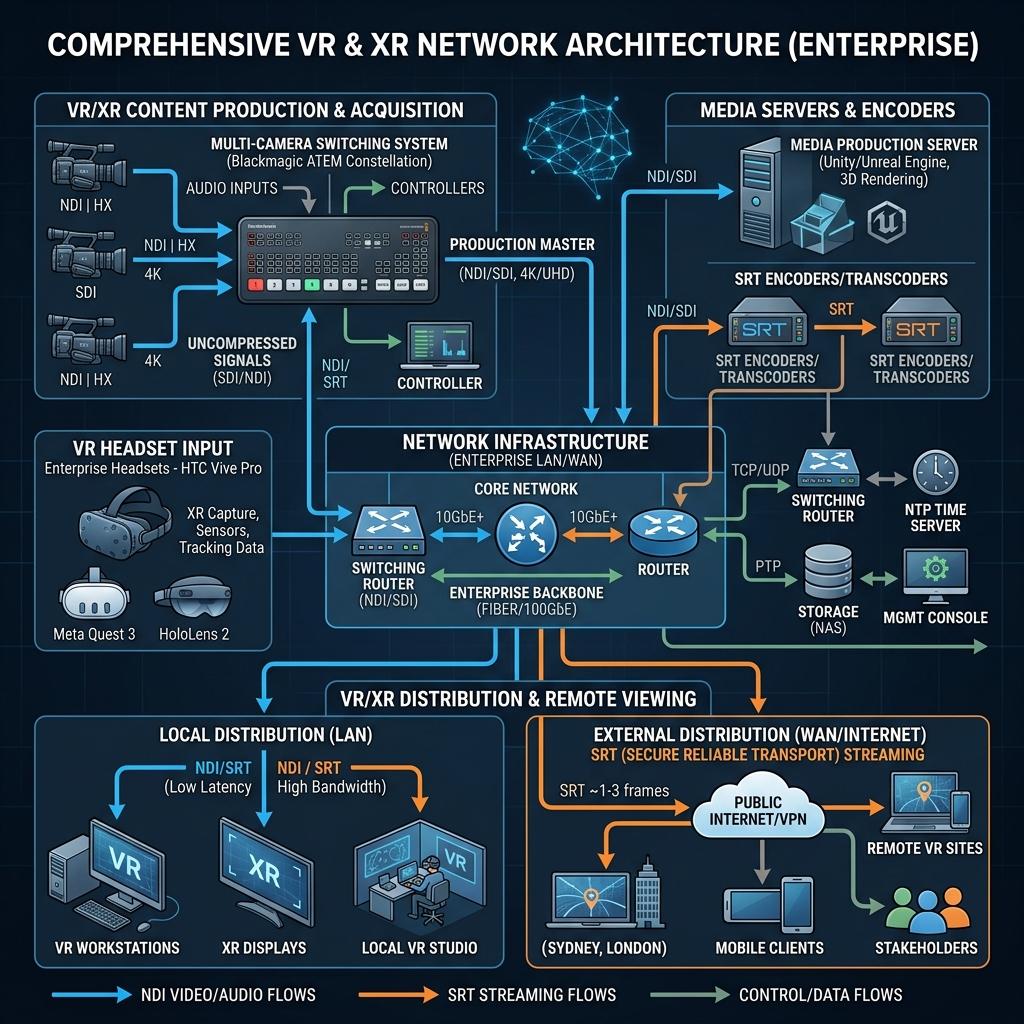
Integrating VR and XR within enterprise environments involves rigorous streaming protocol deployment. Utilization of SRT and NDI supports real-time high-definition video and audio transmission across corporate networks. These protocols enable efficient signal routing, crucial for transitioning between multiple camera sources and ensuring a seamless experience within hybrid event setups.
Infrastructure Requirements for Effective Implementation
The deployment of VR and XR technologies mandates a detailed network and hardware assessment. For VR, enterprise environments must ensure high-speed SDI (Serial Digital Interface) connections and robust machine capabilities for rendering complex virtual environments. In XR, the challenge extends to integrating on-premise solutions with cloud-based architecture, providing scalability without compromising performance.
Multi-Camera Production Setups
Implementing XR in business settings often involves sophisticated multi-camera setups, requiring reliable switching systems like those compliant with SMPTE (Society of Motion Picture and Television Engineers) and B2B routers that manage audio/video signals effectively. These systems must harmonize with existing AV infrastructure to support enhanced reality features seamlessly.
Enterprise Streaming Protocols and Encoding Standards
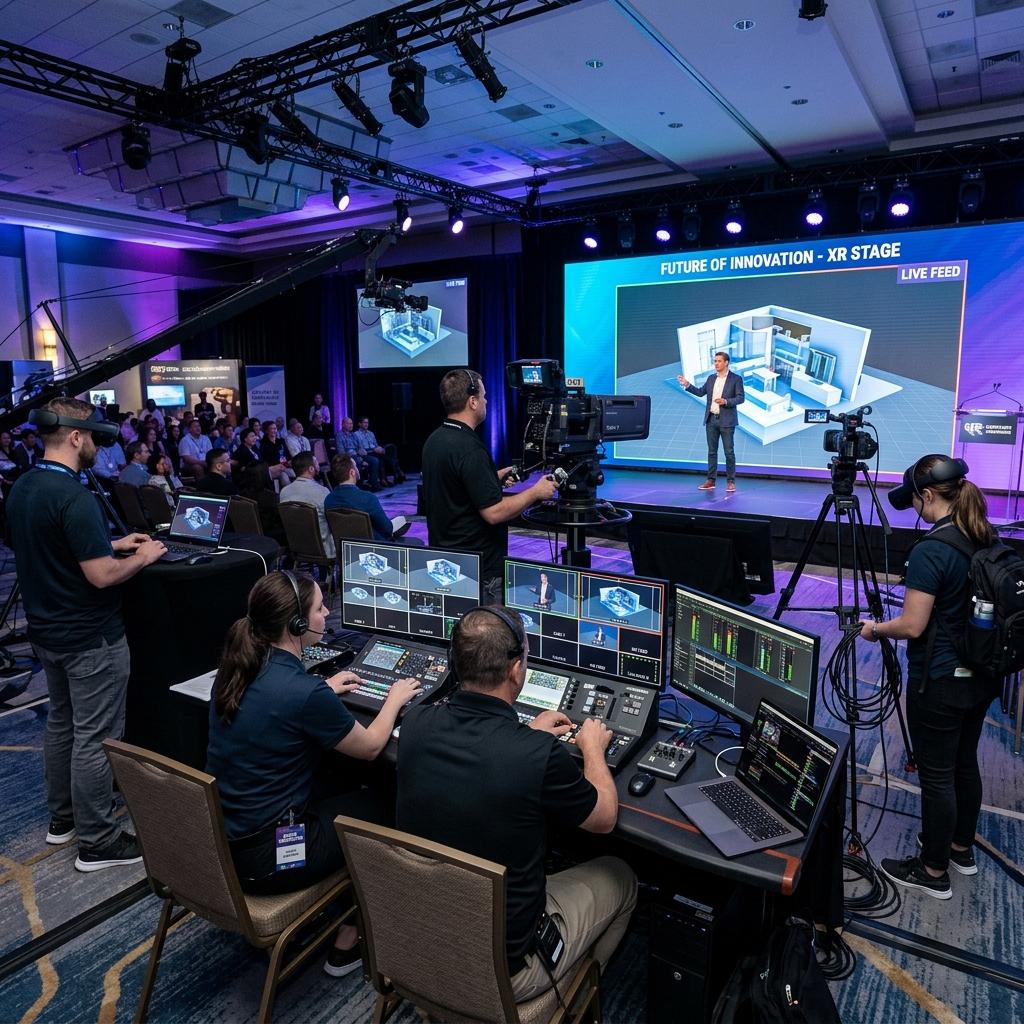
For VR and XR technologies, achieving enterprise-grade streaming necessitates adherence to defined encoding standards and bitrate management strategies. Protocols such as RTMP and RTMPS are employed for secure media streaming across platforms like Microsoft Teams, ensuring that corporate communications remain confidential yet accessible. Implementing robust encoding standards facilitates high bitrate and resolution management necessary for immersive viewing experiences.
Quality Control and Redundancy
Maintaining quality of service is paramount in VR/XR implementation. Implementing redundancy and failover mechanisms ensures uninterrupted streaming even if primary nodes experience downtime. Utilizing ISO standards for quality assessment provides a benchmark for achieving uniformly high standards across all streaming activities.
Actionable Recommendations for Enterprise Integration
For businesses considering VR and XR integration, focusing on a cohesive infrastructure strategy is vital. Enterprises should leverage mixed deployment strategies combining on-premise and cloud solutions to address scalability needs without sacrificing control. Collaboration with industry professionals when setting up multi-view monitoring systems and program feeds enables smoother integration processes.
Moreover, leveraging tools such as H.264/H.265 encoding for bandwidth optimization and utilizing talkback systems for real-time communication can drastically enhance interactive corporate sessions. Systems design should focus on modular approaches that allow scalability as technology evolves and enterprise requirements shift.
Adopting the latest network protocols, thorough testing phases before full implementation, and engaging with expert AV professionals ensure that enterprise goals align with current technology landscapes.

Jeremy Lee is a seasoned digital marketing director and strategist with over two decades of experience in the industry. As the founder of Sotavento Medios, I manage a diverse portfolio of over 50 businesses, helping brands grow through advanced search strategies and digital innovation. My work focuses on bridging the gap between traditional search engine optimisation and the evolving world of AI-driven answer engines.
get in touch