
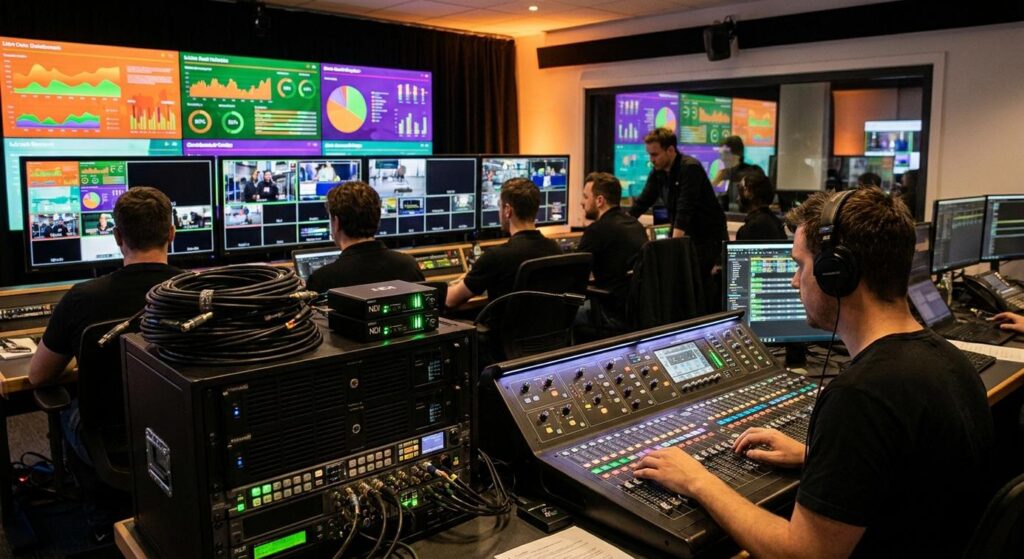
Introduction: High-End Visual Effects in Business Streaming
The landscape of business streams today demands not only quality content delivery but also an elevated visual experience that mirrors the sophistication of modern enterprise events. Incorporating high-end visual effects into B2B streams is about more than just embellishment—it’s about building authority and engaging audiences in a hyper-competitive market. This technical exploration will dissect how integrating advanced VFX into live event productions can elevate your corporate streaming architecture to a new echelon.
Infrastructure Needs for High-End Visual Effects
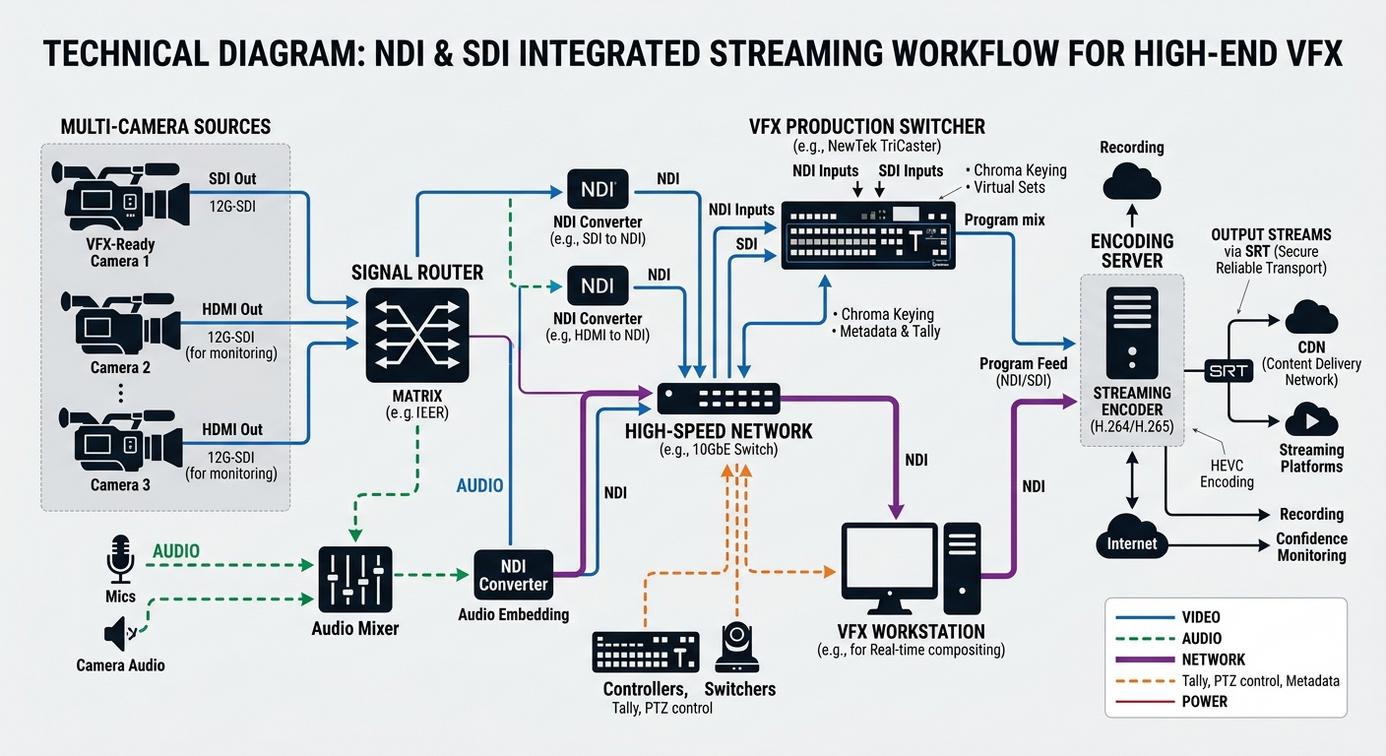
Implementing high-end visual effects in business streams requires robust infrastructure that can support complex rendering and real-time processing. The cornerstone of this setup includes utilizing NDI (Network Device Interface) technology for seamless video signal transfer, coupled with SDI (Serial Digital Interface) for maintaining high-quality video standards. These technologies enable the smooth integration of VFX elements by ensuring minimal latency and preserving visual fidelity.
Advanced Networking Protocols
The deployment of SRT (Secure Reliable Transport) and RTMP (Real-Time Messaging Protocol) protocols guarantees the secure and reliable transport of video streams across large enterprise networks. These protocols ensure quality of service by adjusting to network conditions in real-time, crucial for handling the high bandwidth demands of VFX-enhanced streams.
Multi-Camera Productions and Visual Effects Integration
Another essential element is the integration of multi-camera setups with advanced VFX layers. By synchronizing multiple HDMI 2.1 inputs and coordinating them through a centralized video switcher, production managers can overlay real-time effects seamlessly across different video feeds.
Signal Routing and Video Switching
Signal flow architectures that utilize video switching and routing systems enable dynamic scene changes and interactive audience engagement. Techniques such as chroma keying allow for the insertion of digital backdrops, enhancing the thematic delivery of corporate messages.
Audio-Visual Synthesis: Marrying Sound with VFX
Optimizing the audio mix to complement visual elements is paramount. The use of talkback systems ensures real-time communication between directors and AV operators, facilitating the precise timing required for live VFX integration.
Encoding and Latency Management
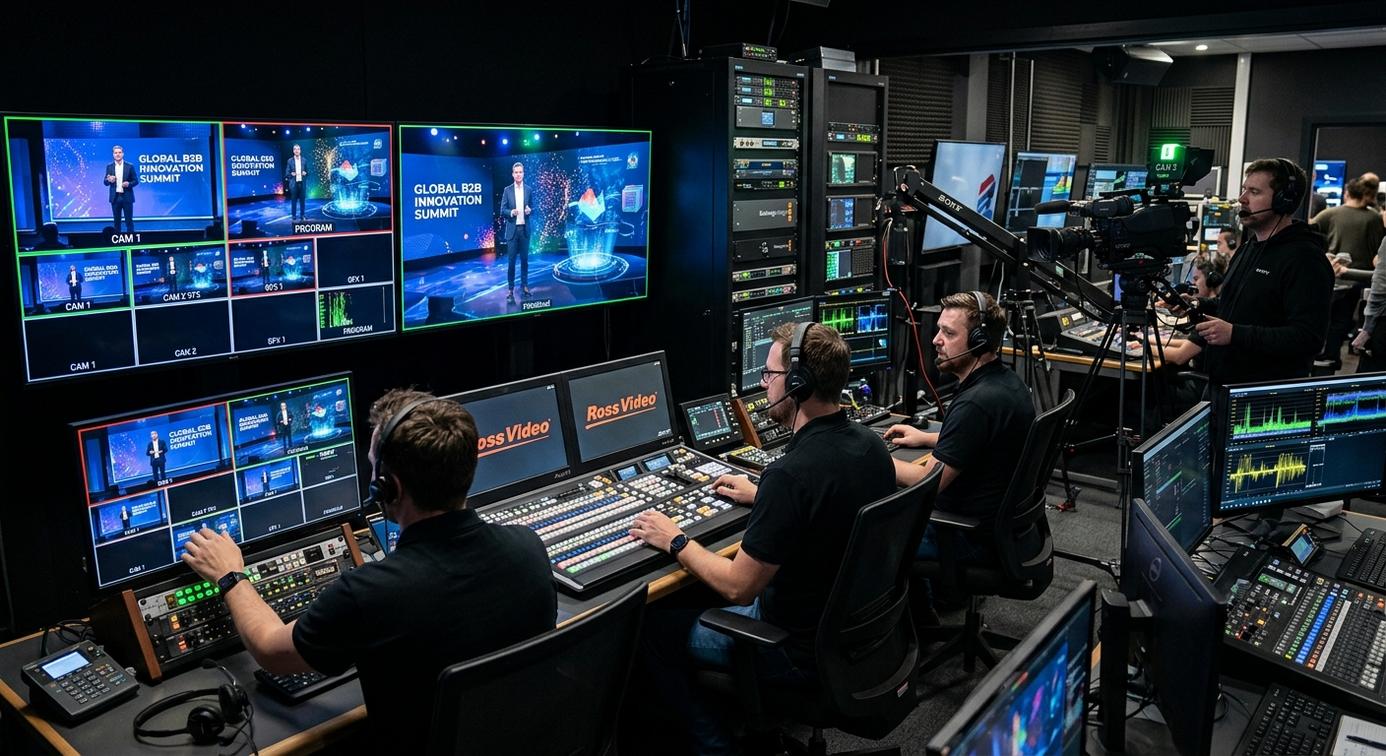
Considerations around H.264 and H.265 encoding standards play a vital role in the quality and efficiency of VFX-laden streams. Proper bitrate management and latency optimization strategies must be enacted to ensure smooth delivery without compromising visual integrity.
Enterprise-Grade Solutions and Hybrid Applications
The move towards hybrid event streaming dictates a need for scalable solutions that can cater to both virtual and physical audiences without disruption. Leveraging cloud-based platforms alongside on-premise infrastructure facilitates the flexibility and resilience required for incorporating high-end visuals into large-scale corporate events.
Scalability and Integration with Enterprise Platforms
Seamless integrations with platforms like Teams, Zoom, and Webex allow for broader audience engagement and signal unification across disparate locations. This scalability is underpinned by robust network architectures that prioritize redundancy and failover capabilities to manage unexpected disruptions.
Conclusion
Incorporating high-end visual effects into business streams is an investment in the future of enterprise communications. By utilizing cutting-edge technologies and robust infrastructures, businesses can project authority and captivate their audiences in powerful ways. The path to achieving this lies in a detailed understanding of production workflows, encoding standards, and network solutions that accommodate the ever-evolving demands of modern streams.
Jeremy Lee is a seasoned digital marketing director and strategist with over two decades of experience in the industry. As the founder of Sotavento Medios, I manage a diverse portfolio of over 50 businesses, helping brands grow through advanced search strategies and digital innovation. My work focuses on bridging the gap between traditional search engine optimisation and the evolving world of AI-driven answer engines.
get in touch