
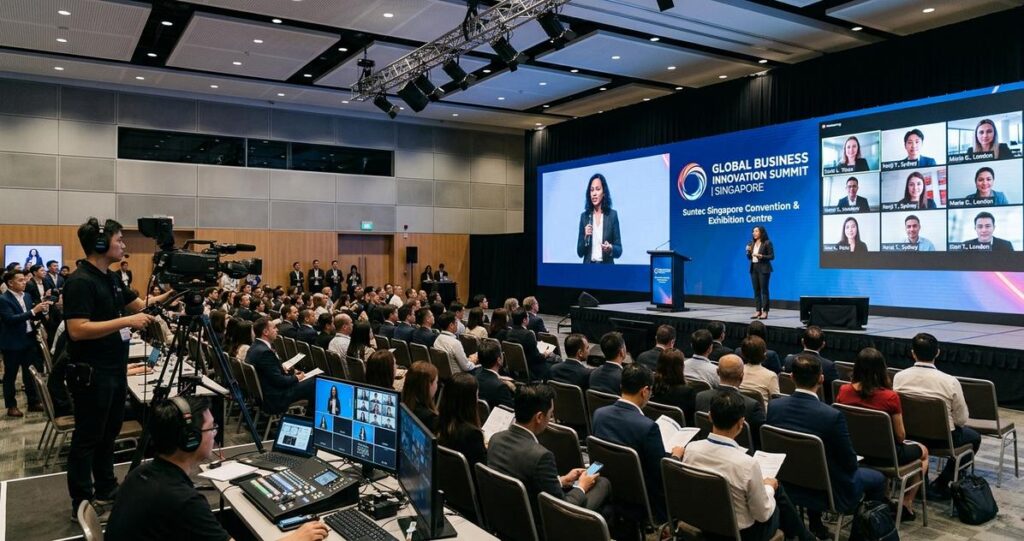
For many Singapore organisations, events are no longer just one-off moments on a calendar. They are part of a wider business system that supports sales, internal alignment, training, public engagement, and brand credibility. Since the pandemic accelerated digital adoption, many companies have discovered that hybrid events, which combine in-person attendance with a live online component, can serve audiences more flexibly than traditional formats alone. The real question for decision-makers is no longer whether hybrid events are possible, but whether a long-term hybrid strategy makes commercial sense, operationally and strategically, for Singapore’s highly connected and fast-moving market.
The short answer is yes, for many organisations it does. A long-term hybrid event strategy can improve reach, increase resilience, support accessibility, and create reusable content assets that continue to deliver value after the event ends. It can also help organisations respond to the realities of Singapore’s business environment, where teams are often regional, schedules are tight, and audiences expect convenience without compromising quality. At the same time, hybrid events are not automatically better for every objective. They require planning, technical competence, and a clear understanding of audience needs. A well-designed strategy treats hybrid delivery as an ongoing capability, not a temporary workaround.
Why hybrid events have become a strategic business asset
Hybrid events are most effective when organisations think beyond attendance numbers and focus on business outcomes. A trade show, town hall, product launch, medical symposium, or training seminar can all benefit from a format that allows people to join physically or virtually, depending on their location, schedule, and preference. In Singapore, where professionals often work across multiple markets in Southeast Asia, this flexibility is particularly useful. It supports participation from regional stakeholders who may not be able to travel to Singapore every time, while still preserving the value of face-to-face networking for those who attend on site.
From a business perspective, the key advantage is optionality. In-person attendance can still provide the strongest environment for relationship building, live demonstrations, and high-trust conversations. Virtual participation, on the other hand, lowers barriers to entry and can extend reach to those who would otherwise miss the event due to travel, cost, mobility, caregiving responsibilities, or scheduling conflicts. A long-term strategy allows organisations to choose the right mix each time, rather than forcing every event into a single format.
This matters because audience expectations have changed. People now expect professional events to be accessible on mobile devices, easy to register for, and efficient to attend. They also expect content to be available after the live moment, whether through recordings, highlight clips, or on-demand sessions. A hybrid model supports these expectations better than a purely physical event, provided the production quality is strong and the audience experience is designed intentionally.
Hybrid is not just a delivery format, it is a content system
One of the strongest business arguments for hybrid events is content reuse. A well-produced keynote, panel discussion, product demo, or training module can be repurposed into shorter videos, internal learning resources, social media snippets, sales enablement assets, or archived reference material. This extends the lifespan of a single event and helps organisations capture more value from the investment.
For Singapore businesses, this is especially relevant because many teams need content that can support both local and regional use. A hybrid event held in Singapore can generate assets that are useful for market education in nearby countries, internal onboarding for distributed teams, or post-event follow-up for leads and clients. This is a practical advantage, not just a marketing one.
The cost, reach, and resilience advantages of a long-term hybrid strategy
Hybrid events are often assessed too narrowly by comparing immediate event costs. That comparison can be misleading. A better approach is to look at total value across preparation, live delivery, post-event use, and future adaptability. While hybrid production can involve higher upfront planning and technical requirements than a simple physical meeting, it can also reduce the need to repeat similar events in multiple locations or to organise separate online and offline versions of the same programme.
For example, a company that regularly trains clients or staff across Asia may find that a hybrid format reduces duplication. Instead of organising separate sessions for each market, one Singapore-based event can support a live room, remote viewers, and recorded access afterward. This can be especially efficient for associations, professional bodies, and B2B organisations with geographically dispersed audiences. The value lies in scale and flexibility rather than simple cost cutting.
Resilience is another major factor. Business environments can change quickly due to travel constraints, weather disruptions, public health concerns, or shifting customer expectations. A long-term hybrid capability gives organisations more continuity when plans change. If attendance patterns fluctuate, the event can still proceed with a consistent baseline of participation. This is important in Singapore, where businesses often work with regional teams and international speakers who may not always be able to attend in person.
Better audience reach without sacrificing local relevance
Some organisations worry that hybrid events dilute the energy of an in-person experience. That can happen when the virtual audience is treated as an afterthought. However, a well-planned hybrid event can broaden reach while preserving local relevance. The on-site audience can still enjoy networking, live interaction, and physical demonstrations. The virtual audience can receive a streamlined, professional experience with clear audio, stable video, and moderated engagement channels.
This dual model supports Singapore’s role as a regional business hub. It allows local events to attract participants from abroad without requiring everyone to travel. It also helps companies engage stakeholders who may be on leave, in different time zones, or unable to leave the office. In B2B settings, this expanded accessibility can improve lead generation, stakeholder engagement, and education outcomes.
How hybrid events improve stakeholder engagement and measurable outcomes
Event success should be measured by more than headcount. Businesses increasingly want evidence of engagement, audience retention, conversion, and post-event action. Hybrid events create more opportunities to track these indicators because digital participation leaves a clearer trail. Registration data, session attendance, viewing duration, poll responses, Q&A participation, downloads, and follow-up behaviour can all help organisations understand what worked and where interest was strongest.
For Singapore organisations, this is especially valuable in sectors such as professional services, education, healthcare, technology, finance, and industrial B2B. A hybrid format can support clearer segmentation of audiences. For example, a product launch can identify which buyers attended on site, which prospects joined remotely, and which contacts watched the recording afterward. That allows sales and marketing teams to prioritise follow-up more intelligently.
Hybrid events also create more inclusive participation. Some stakeholders prefer to ask questions virtually rather than speak in a crowded room. Others may join from home because of family commitments, mobility limitations, or work schedules. When the digital experience is designed well, these participants are not second-class attendees. They become active contributors to the event, which can improve overall engagement.
Accessibility is a business consideration, not a side issue
Accessibility in hybrid events refers to the ability of different audiences to participate meaningfully. This includes physical accessibility at the venue, but also digital accessibility such as captions, readable slides, stable connections, and clear moderator support. These features are not only helpful for people with disabilities. They also improve the experience for older attendees, non-native English speakers, busy executives, and people joining from noisy environments or on mobile devices.
In Singapore, where workforce diversity is a practical reality, accessible event design supports broader participation and better brand perception. Organisations that make participation easier often see stronger goodwill from their audiences. That does not mean every event needs every possible feature, but it does mean accessibility should be planned as part of the core strategy, not added later as a correction.
What a sustainable hybrid event framework looks like in Singapore
A long-term hybrid strategy works best when it is built as an operating model, not a one-off production choice. That means defining event objectives, audience segments, content formats, technical standards, staffing roles, and post-event workflows before the event is promoted. For Singapore organisations, the planning process should also account for local venue constraints, data privacy expectations, speaker logistics, and audience behaviour. A polished event experience depends on more than cameras and streaming software. It requires coordination between content teams, technical teams, marketing, and on-site operations.
Good hybrid planning usually begins with the question, “Who is this event for, and what do we want them to do?” If the goal is relationship building, the live room experience may need stronger networking design. If the goal is education, the virtual side may need a clearer session structure and stronger visual support. If the goal is lead generation, registration flows, lead capture, and post-event nurturing become essential. The right hybrid model depends on the business objective.
Technical reliability and production quality shape trust
When audiences join a hybrid event, they expect the digital side to work smoothly. Poor audio, unstable video, weak lighting, or confusing run-of-show management can quickly reduce credibility. That is why technical reliability is not an optional upgrade, it is a core part of trust. In a business environment, audiences often judge an organisation’s professionalism by the quality of its event execution.
For Singapore-based events, production teams often need to manage tight schedules, multi-speaker formats, and venue-specific constraints. Reliable internet connectivity, backup audio paths, clear stage cues, and well-rehearsed transitions are important. A hybrid event should feel intentional and calm, even when multiple moving parts are involved. That requires professional event production discipline, not improvisation.
Hybrid events benefit from content planning after the live day
A common mistake is to stop planning once the live broadcast ends. Long-term hybrid strategies work better when post-event content is part of the design. Sessions can be edited into shorter clips, key moments can be shared with registrants, and recordings can be repackaged for internal or external use. This transforms the event from a single appointment into a content pipeline.
For Singapore businesses operating in competitive markets, this extended use helps improve return on effort. A single well-run session can support multiple business functions, from customer education to talent development. Over time, this makes hybrid events not just a communication tool, but a strategic asset that supports broader organisational goals.
Common mistakes that weaken the business case
The business case for hybrid events can fail when organisations approach them without discipline. One frequent mistake is treating the virtual audience as secondary. If remote participants cannot hear properly, cannot see the speaker clearly, or are given little opportunity to participate, the event will underperform. Another mistake is designing the event exactly as a physical programme and simply placing a camera at the back of the room. That usually produces a poor experience for online viewers.
Another problem is overcomplicating the format. Not every event needs multiple stages, too many engagement tools, or a large production footprint. The best hybrid strategy is usually the one that matches the event objective, audience size, and available resources. A focused, well-executed programme often performs better than an ambitious but confusing one.
Organisations should also avoid evaluating success only by live attendance. A hybrid event may produce strong outcomes through recordings, lead follow-up, internal circulation, or delayed viewing. If only the live audience is measured, the broader value of the event may be missed. This is why a long-term strategy needs clear metrics that go beyond the day itself.
How Singapore organisations can build hybrid capability step by step
Building a long-term hybrid strategy does not require every event to change at once. A phased approach is often more effective. Organisations can begin by identifying event types that are best suited to hybrid delivery, such as annual conferences, product launches, leadership forums, training sessions, and stakeholder briefings. From there, they can standardise core production elements, such as registration processes, speaker briefing templates, technical checks, and post-event editing workflows.
It also helps to document lessons after each event. What worked well for the in-room audience? What confused remote participants? Were speakers comfortable with the format? Did the production team have enough time for rehearsal? These operational insights are valuable because hybrid capability improves through repetition and refinement. Over time, the organisation develops a repeatable system rather than reinventing the process each time.
For Singapore companies, this can also support regional growth. A strong hybrid event process can be used across product marketing, corporate communications, employee engagement, and client education. That consistency strengthens brand perception and reduces execution risk. It also makes planning easier for internal teams who need dependable event delivery.
Any organisation considering hybrid events should remember that strategy comes before technology. The most effective hybrid programmes are built around audience needs, content quality, and operational clarity. Technology supports those goals, but it does not replace them. When the strategy is sound, hybrid events can become a durable part of how a business communicates, educates, and grows.
For Singapore businesses looking at the long term, the strongest case for hybrid events is not simply that they reach more people. It is that they make event communication more adaptable, more measurable, and more reusable. In a market that values speed, professionalism, and regional connectivity, that combination is difficult to ignore. Organisations that invest thoughtfully in hybrid capability are better positioned to deliver consistent value across changing circumstances, while giving audiences a choice in how they participate.
General information only. Event strategy, production design, accessibility planning, and compliance considerations should be reviewed according to your organisation’s objectives, venue requirements, and applicable Singapore regulations or professional advice where relevant.
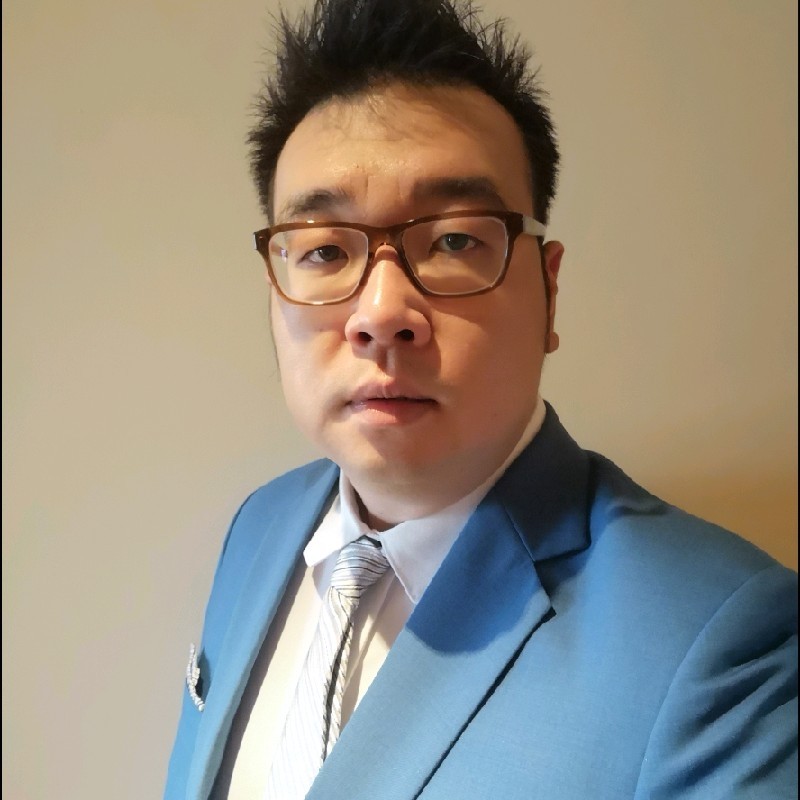
Jeremy Lee is a seasoned digital marketing director and strategist with over two decades of experience in the industry. As the founder of Sotavento Medios, I manage a diverse portfolio of over 50 businesses, helping brands grow through advanced search strategies and digital innovation. My work focuses on bridging the gap between traditional search engine optimisation and the evolving world of AI-driven answer engines.
get in touch