
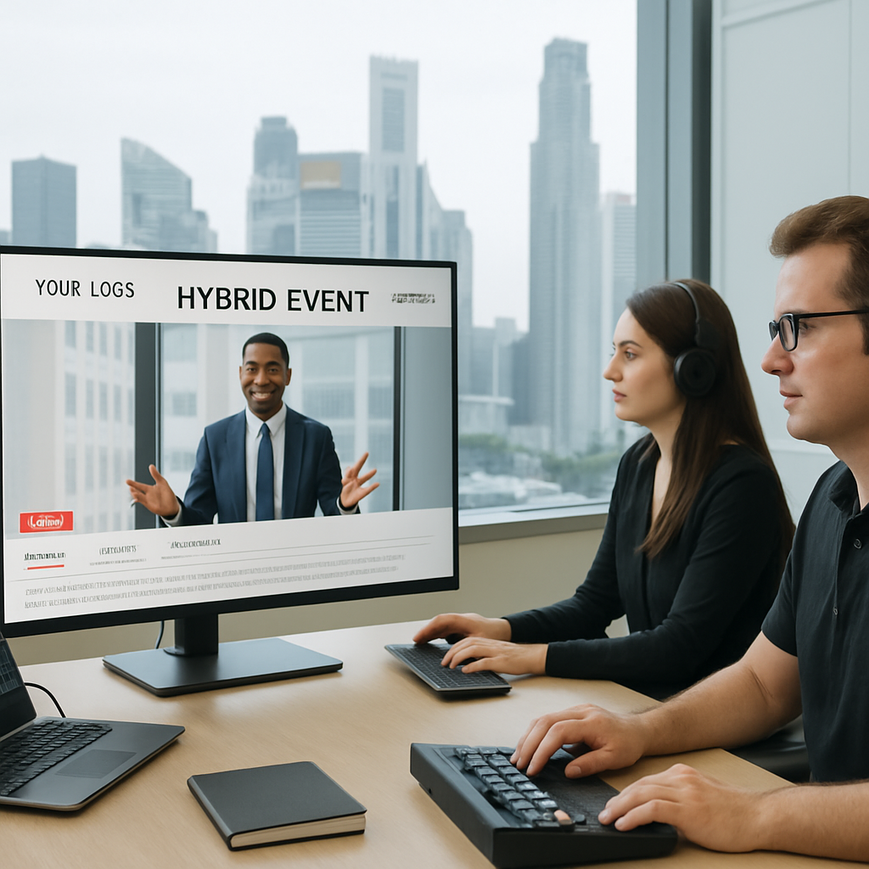
For many organisations in Singapore, livestreaming and hybrid events are no longer experimental. They are now part of how businesses run town halls, product launches, medical education sessions, investor briefings, training programmes, and community events. As expectations rise, the question is no longer whether to stream, but how to deliver a viewing experience that feels secure, reliable, and easy to use for the intended audience. This is where the choice between a standard platform and a custom viewer portal becomes important.
A standard streaming platform can be convenient for general use, especially when the audience is broad and the event does not require specialised controls. However, when the event involves sensitive content, registration-based access, branded communication, or a need for detailed audience management, a custom viewer portal often provides a stronger fit. For Singapore-based organisations that must balance professionalism, privacy, and operational efficiency, a customised approach can offer practical advantages without adding unnecessary complexity for viewers.
The best choice depends on the purpose of the event, the profile of the audience, and the level of control required by the organiser. Understanding the differences helps decision-makers choose a solution that supports both user experience and organisational goals.
What a custom viewer portal actually does
A custom viewer portal is a dedicated web interface built for a specific event, programme, or organisation. Instead of sending viewers to a generic third-party page, the organiser controls the design, branding, access flow, and functional features of the viewing environment. The portal can sit on a branded domain or subdomain, integrate with registration systems, and display only the tools and information needed for that event.
By contrast, a standard platform usually gives organisers a pre-built interface with fixed layouts and limited control over branding, access rules, and supporting content. Standard platforms are useful because they are familiar and fast to deploy. However, they may not fully reflect the organiser’s requirements, especially when the audience expects a polished, secure, and seamless experience.
In practical terms, a custom portal is not only about appearance. It also shapes how viewers enter the event, how they authenticate, where they find supporting materials, and how the organiser monitors engagement. For many B2B events in Singapore, that level of control can make a meaningful difference.
Brand consistency matters for trust
Brand consistency is more than visual style. In business communication, it helps viewers confirm that they are in the right place and interacting with the correct organisation. A custom portal allows the organiser to use corporate colours, logos, event-specific messaging, and clear navigation that reflects the organisation’s identity.
This is particularly relevant in Singapore, where many events involve clients, regulators, partners, or internal stakeholders who expect professionalism. A branded portal can reduce confusion, support recall, and create a more coherent event journey. It also allows the organisation to align the viewer experience with other touchpoints, such as email invitations, event registration pages, and post-event follow-up.
For example, a financial services company running a closed-door briefing may prefer a portal that visually matches its corporate website and uses a secure login flow. A healthcare institution organising continuing education content may want a portal that clearly identifies the programme and provides easy access to reference materials. In both cases, the portal reinforces credibility.
Security and access control are stronger in a custom environment
One of the most important benefits of a custom viewer portal is the ability to manage access more precisely. Standard platforms often rely on broad access links or general platform-level permissions. While that may be sufficient for open events, it can be less suitable for restricted sessions, confidential briefings, or invitation-only programmes.
A custom portal can support controlled access through unique login credentials, one-time access links, registration checks, or authenticated user accounts. It can also limit what each user sees, depending on their role or ticket type. This is useful when an organisation wants to distinguish between speakers, attendees, staff, and internal administrators.
In Singapore, where many businesses operate under strict confidentiality requirements and data governance expectations, access control is not just a technical feature. It is part of responsible event management. While no digital platform can remove all risk, careful configuration can reduce the chance of unintended access and improve accountability.
Why private events often need tighter controls
Private events often include material that should not be shared freely, such as internal strategy updates, unreleased product information, research findings, or member-only educational content. A custom portal supports a more controlled viewing environment by keeping the event behind a deliberate access layer rather than a public-facing platform page.
This matters because access control is not only about who can watch. It is also about who can receive reminders, download materials, submit questions, or view recordings after the live session. A custom portal can separate these permissions more cleanly, which reduces administrative confusion and supports better governance.
For organisations working across Singapore and regional markets, a custom portal also helps manage different audience groups without forcing all users into the same experience. That can be especially helpful for multilingual stakeholders, cross-border teams, and segmented customer bases.
Viewer experience becomes more focused and easier to manage
A viewer portal can improve the audience experience by reducing distractions. Standard platforms often include many features that are not necessary for a specific event, such as unrelated recommendations, public-facing community functions, or generic menus. These may be helpful in consumer settings, but they can dilute the focus of a corporate or educational session.
A custom portal lets the organiser shape the journey from login to playback. The viewer can see the agenda, speaker details, downloadable resources, live stream, and support contact points in one place. If the event includes multiple tracks or sessions, the portal can help users move between them without confusion. This is especially valuable when people are joining from office desktops, home laptops, or mobile devices during busy schedules in Singapore.
Simple design also helps reduce support issues. When the interface is built for a single purpose, viewers are less likely to get lost, click the wrong link, or miss important instructions. That lowers the burden on event teams during live sessions.
Mobile-friendly design supports Singapore viewing habits
Many viewers in Singapore use mobile devices throughout the day, including during commutes, lunch breaks, or between meetings. A custom portal can be designed with responsive layouts so that essential functions remain accessible on smaller screens. This includes login fields, stream windows, captions, agenda links, and contact details.
Responsive design is important because poor mobile usability can lead to drop-off, confusion, and avoidable technical support calls. A standard platform may still work on mobile, but the organiser has limited control over how it behaves across devices. A custom portal gives more flexibility to prioritise the elements that matter most to the intended audience.
For Singapore audiences who expect efficient digital services, a cleaner mobile experience can improve attendance completion and overall satisfaction. It also supports accessibility, which should be considered at the planning stage rather than added later as an afterthought.
Better integration with registration, analytics, and post-event workflows
Another major advantage of a custom viewer portal is integration. Many events do not end when the livestream stops. Organisers may need to send reminders, verify attendance, provide certificates, share recordings, and collect feedback. A custom portal can connect these steps into one flow, which improves administrative efficiency and keeps the audience experience consistent.
For instance, if a viewer registers through an event form, the portal can recognise that user on login and present the correct content automatically. After the event, the same portal can direct them to session recordings, supporting documents, or feedback forms. This reduces manual effort and creates a more professional experience.
Analytics can also be more meaningful in a custom environment. Organisers may want to understand session entry points, drop-off timing, content engagement, and replay behaviour. These data points help teams evaluate event performance and improve future planning. The key is to collect and use data responsibly, with clear notice and appropriate consent where required.
Useful for compliance-minded organisations
In Singapore, organisations operating in regulated sectors or handling personal data should pay attention to governance, consent, and retention practices. A custom portal can support those requirements more effectively because it is built around the organiser’s processes rather than forcing the organiser to adapt to a generic platform structure.
For example, a portal can be configured to display privacy notices, restrict downloads, control replay availability, or separate public information from internal documents. It can also support record-keeping and access logs, which may be useful for operational oversight. While the exact setup depends on the organisation’s policies and legal obligations, the flexibility of a custom portal generally makes compliance workflows easier to implement.
This does not mean a standard platform is automatically non-compliant. Rather, a custom portal often gives the organiser more room to align the event experience with internal governance standards and contractual requirements.
Custom portals support a stronger long-term event strategy
Some organisers initially choose standard platforms because they appear faster or cheaper. That can work for one-off public sessions. However, when events become recurring, when audiences expect a higher-quality experience, or when the organisation wants stronger ownership of the digital event environment, a custom portal often becomes the more strategic option.
Long-term value comes from consistency, scalability, and reuse. A custom portal can be adapted across events, campaigns, and audience segments. The same design framework can support town halls, member briefings, training libraries, product education hubs, or conference portals. Over time, this reduces repeated setup work and helps standardise how the organisation presents itself online.
There is also a strategic branding advantage. When viewers return to the same familiar portal for future events, they are more likely to associate that experience with professionalism and reliability. That can be especially useful for B2B organisations that compete on trust and service quality rather than price alone.
When a standard platform may still be enough
A standard platform remains suitable in some situations. If the event is open to the public, short, low-risk, and unlikely to require custom branding or gated access, the built-in features of a standard platform may be perfectly adequate. The simpler setup may also help teams with limited budgets or tight timelines.
The decision should be based on event needs, not on habit. If the audience is broad and the content is not sensitive, convenience may outweigh customisation. If the event is high-value, confidential, recurring, or tied closely to brand reputation, a custom portal usually offers more control and a better overall experience.
Many Singapore organisations use a hybrid approach. They may rely on standard tools for simple broadcasts, but move to a custom portal for premium events, internal communications, customer education, or long-term content libraries. That approach allows them to match the platform to the purpose.
How to decide whether a custom portal is the right fit
Choosing between a custom viewer portal and a standard platform starts with a clear event brief. Organisers should ask a few practical questions. Is the audience public or restricted? Does the event involve confidential information? Do viewers need different access levels? Will the portal be used repeatedly? Does the organisation want the experience to reflect its own brand rather than the platform’s default style?
If the answer to several of these questions is yes, a custom portal becomes more attractive. It can improve access control, audience experience, branding, and workflow integration. It can also help the organiser present a more polished and trustworthy digital presence to Singapore-based stakeholders who value efficiency and professionalism.
Before commissioning a portal, organisations should also clarify the operational side. That includes testing on common devices, planning for technical support, setting up fallback procedures for live streams, and deciding how recordings and resources will be shared after the event. Good technology works best when supported by good event planning.
For Singapore organisations planning B2B livestreams, hybrid conferences, training events, or private briefings, a custom viewer portal can offer a practical combination of control, usability, and brand alignment that standard platforms may not fully deliver. It is not the right answer for every event, but when privacy, professionalism, and audience experience matter, the advantages are substantial. The most effective choice is the one that supports the event’s purpose while respecting the viewer’s time and expectations. If your organisation regularly hosts important digital events, it is worth assessing whether a custom portal can create a more reliable and cohesive experience for your audience.
Note: This article provides general information for event planning and digital communication. It is not medical advice. For legal, regulatory, or data protection requirements, organisations should seek guidance from qualified professionals familiar with their specific situation.

Jeremy Lee is a seasoned digital marketing director and strategist with over two decades of experience in the industry. As the founder of Sotavento Medios, I manage a diverse portfolio of over 50 businesses, helping brands grow through advanced search strategies and digital innovation. My work focuses on bridging the gap between traditional search engine optimisation and the evolving world of AI-driven answer engines.
get in touch