
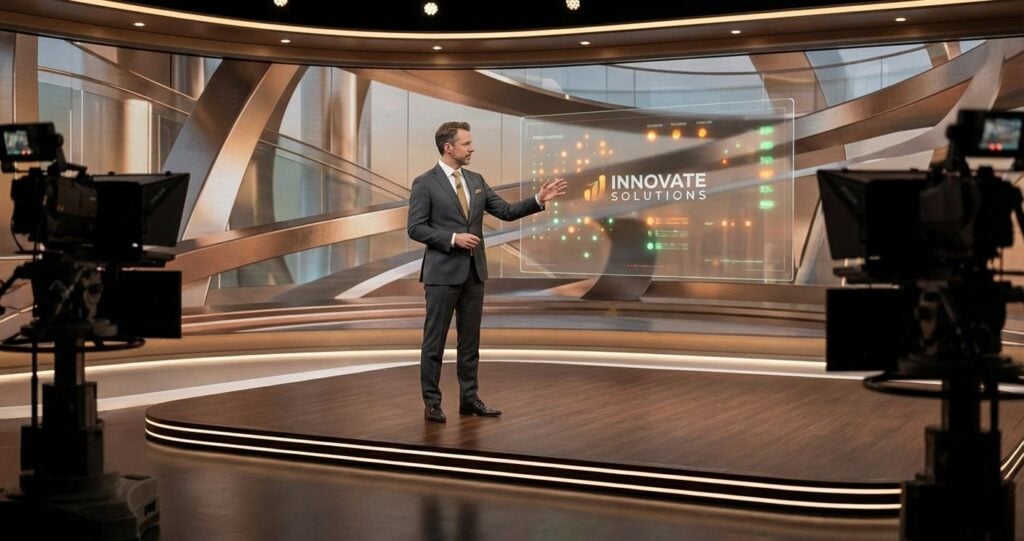
In the evolving landscape of B2B event streaming and hybrid production, the integration of 3D virtual environments presents both unprecedented opportunities and significant technical hurdles. For corporate event planners, AV professionals, and IT directors, the promise of immersive, engaging experiences clashes with the complex realities of ensuring seamless presenter performance within these sophisticated digital constructs. Unlike traditional broadcast or even standard virtual event formats, 3D virtual environments demand a specialized technical approach to presenter integration, requiring meticulous attention to real-time rendering, low-latency signal transport, and robust feedback mechanisms. Spring Forest Studio, with its deep expertise in enterprise-grade streaming infrastructure and hybrid production technology, addresses these intricate challenges head-on. This article will provide an advanced technical analysis of the systems, protocols, and workflows essential for empowering presenters to excel within high-fidelity 3D virtual event spaces, transforming potential obstacles into opportunities for truly captivating corporate communication. We will delve into the underlying technical architecture, explore sophisticated control and feedback systems, detail critical network infrastructure considerations, and outline advanced production workflows that guarantee professional-grade execution for your most vital B2B engagements.
The Technical Architecture of 3D Virtual Environments for Presenters
The foundation of a successful 3D virtual environment for live presenters lies in its robust technical architecture, encompassing everything from real-time rendering engines to precision chroma keying. Each component must function in perfect synchronicity to create an illusion of presence and immersion.
Real-Time Rendering and Asset Integration
The core of any high-fidelity 3D virtual environment is a powerful real-time rendering engine, typically built upon platforms such as Unreal Engine or Unity. These engines are responsible for generating photorealistic virtual sets, integrating animated graphics, and compositing live video feeds in real-time, often at resolutions up to 4K/UHD and frame rates of 50p or 60p. The technical demands on GPU processing power are immense, requiring enterprise-grade NVIDIA Quadro or AMD Radeon Pro graphics cards configured in multi-GPU arrays. Asset integration involves a meticulous pipeline, where 3D models, textures, lighting data, and animations are optimized for real-time performance. This optimization includes stringent polygon count management, efficient texture mapping (e.g., PBR materials), and level-of-detail (LOD) implementation to maintain high frame rates. In a typical workflow, CAD files or architectural renderings are transformed into game-engine-ready assets, often involving UV unwrapping, baking ambient occlusion, and creating physically based rendering (PBR) texture sets for realistic surface properties. The precise calibration of virtual cameras within the engine to match physical camera lens characteristics is also paramount for seamless perspective matching.
Low-Latency Video and Audio Ingest
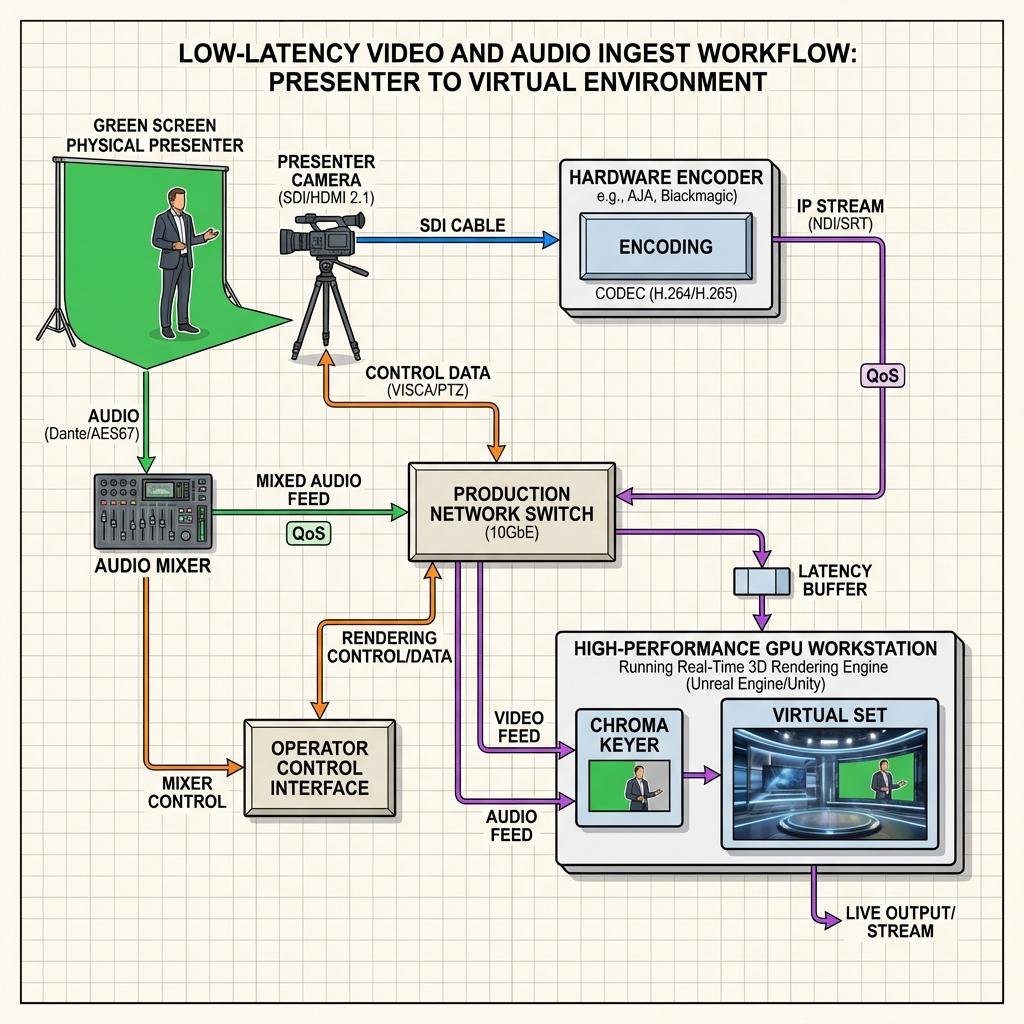
Integrating the presenter’s live video and audio feeds into the 3D virtual environment demands extremely low-latency, high-bandwidth signal transport. Industry-standard protocols are critical for maintaining broadcast quality and ensuring real-time interaction. For local ingest within a production control room, uncompressed or lightly compressed video over IP solutions such as NDI (Network Device Interface) or SMPTE ST 2110 are often employed. NDI|HX offers a more compressed option suitable for certain network topologies, delivering streams at up to 250 Mbps for 4K. Full NDI, however, can reach upwards of 200 Mbps for HD and 800+ Mbps for 4K. For geographically distributed presenters or contributions from remote studios, Secure Reliable Transport (SRT) is the preferred protocol. SRT provides robust stream integrity over unpredictable networks with configurable latency buffers, offering superior quality compared to older protocols like RTMP (Real-Time Messaging Protocol), which typically incurs higher, less predictable latency. Hardware encoders and decoders from manufacturers like AJA Video Systems, Blackmagic Design, or Haivision are deployed to convert SDI (Serial Digital Interface) or HDMI 2.1 baseband signals into IP streams and vice-versa, configured for specific encoding profiles (e.g., H.264/AVC, H.265/HEVC) and bitrate management schemes. Audio is typically embedded within these video streams or transported separately using AES67 or Dante for multichannel, high-fidelity sound, ensuring precise synchronization.
Chroma Keying and Virtual Set Integration
The seamless integration of a live presenter into a 3D virtual environment hinges on advanced chroma keying techniques. This process involves isolating the presenter from a uniformly colored background, typically green or blue, and compositing them into the virtual set. Professional-grade chroma keyers, such as those found in Ross Xpression, Vizrt engines, vMix, NewTek TriCaster, or dedicated hardware like Blackmagic Ultimatte, employ sophisticated algorithms for color difference keying, spill suppression, and edge refinement. Precision lighting of the green screen is critical to achieve an even key, minimizing shadows and hot spots which can degrade the key quality. Technical specifications include maintaining a luminance delta of less than 5 IRE units across the green screen surface. Garbage matting is also essential to mask out any non-green screen elements within the shot. The virtual set itself must be designed with appropriate lighting and shadow characteristics that match the physical lighting on the presenter to ensure photorealistic blending. Furthermore, camera tracking data, often provided by optical or inertial systems, must be precisely fed into the rendering engine to ensure that the virtual camera movements perfectly synchronize with the physical camera, maintaining correct parallax and perspective. This level of detail transforms a simple overlay into an immersive experience.
Interactive Control and Presenter Feedback Mechanisms
Beyond simply placing a presenter into a virtual space, empowering them requires sophisticated interactive control and robust feedback systems. These elements are crucial for maintaining presenter confidence, facilitating dynamic content delivery, and ensuring a natural, engaging performance.
Bidirectional Communication and Talkback Systems
Effective communication between the presenter, production crew, and director is paramount in any live production, and especially so in a 3D virtual environment. Professional talkback systems, such as Clear-Com FreeSpeak II, RTS intercoms, or IP-based solutions like Unity Intercom, provide low-latency, full-duplex communication. These systems are integrated into the overall production workflow, allowing the director to provide real-time cues, timing adjustments, and technical instructions directly to the presenter’s in-ear monitor (IEM). The audio signal flow for talkback must be meticulously managed to prevent feedback loops and ensure clarity, often employing dedicated audio mixers with N-1 (mix-minus) feeds for each participant. In a distributed hybrid production, secure VPN connections and dedicated network bandwidth are allocated for these critical audio channels to maintain consistent quality and minimal latency, typically below 100 milliseconds for natural conversation. This dedicated communication channel ensures that presenters feel connected and supported, even when physically isolated.
Teleprompter Integration and Virtual Cue Management
Presenter comfort and confidence are significantly boosted by reliable teleprompter integration. In a 3D virtual environment, this can involve traditional physical teleprompters displaying the script, or more advanced virtual teleprompter overlays rendered directly within the presenter’s confidence monitor or even within the virtual environment itself. The key is synchronization: ensuring the teleprompter content, presentation slides, and any dynamic virtual elements are perfectly aligned with the pacing of the presenter’s delivery. Content management systems (CMS) are used to ingest, format, and push script updates to the teleprompter operators, who in turn control the scroll speed. For virtual cues, such as timers, upcoming segment notifications, or audience engagement prompts, these can be integrated as graphical overlays within the multiview feed or as dedicated elements within the 3D virtual space, visible only to the presenter. Precision timing protocols, such as Network Time Protocol (NTP) or SMPTE Timecode (LTC/VITC), are employed across all systems to ensure absolute synchronization, preventing timing discrepancies that could disrupt a presenter’s flow.
Multiview Monitoring and Confidence Feeds
Presenters in a 3D virtual environment require comprehensive visual feedback to perform effectively. A confidence monitor is not just a single display; it’s often a sophisticated multiview setup providing a range of critical information. This typically includes the program feed (what the audience sees), a clean feed of the presenter (without virtual elements), an adjacent view of their upcoming slides or media, a countdown timer, and potentially a live chat feed from the audience for interactive Q&A segments. These multiview layouts are generated by dedicated multiviewers from brands like Ross Video, Evertz, or Blackmagic Design, or integrated within video switchers. The latency of these confidence feeds is paramount; any significant delay can lead to disjointed performances. SDI or low-latency HDMI connections are preferred for physical monitors, with IP-based feeds optimized for minimal delay. The ability for presenters to clearly see their integration into the virtual space, confirm their positioning, and react to real-time events is non-negotiable for a professional delivery.
Network Infrastructure and Latency Management for Presenters
The technical backbone of any advanced B2B streaming operation is its network infrastructure. For 3D virtual environments, meticulous network design and rigorous latency management are absolutely critical to ensure presenters can interact naturally and seamlessly.
Dedicated Network Segments and QoS
Operating a 3D virtual environment with live presenters necessitates a highly robust and intelligently segmented network. Implementing VLANs (Virtual Local Area Networks) is a fundamental practice, creating isolated network segments for different types of traffic: video ingest, control data, rendering engine communication, talkback audio, and streaming egress. This segmentation prevents congestion and prioritizes critical data. Furthermore, Quality of Service (QoS) policies must be meticulously configured on network switches and routers (e.g., Cisco, Arista, Juniper). QoS ensures that latency-sensitive traffic, such as uncompressed video (NDI) and real-time audio (Dante, AES67, talkback), receives preferential bandwidth allocation and minimal delay. For example, NDI 4K 60p streams can require upwards of 800 Mbps, meaning a dedicated 10 Gigabit Ethernet (10GbE) or even 25GbE infrastructure is essential for core production networks. Improper network configuration or insufficient bandwidth will manifest as dropped frames, audio desynchronization, and ultimately, a compromised presenter experience and audience perception.
Edge Computing and Distributed Processing
The computational demands of real-time 3D rendering are immense. To mitigate latency and ensure responsiveness, a hybrid approach combining cloud-based rendering with edge computing or on-premise distributed processing is often employed. For presenters interacting directly with the virtual environment, local render nodes or powerful workstations equipped with multiple high-end GPUs situated close to the production control room can provide the lowest possible latency. This “edge” processing handles immediate visual feedback and interaction. For more complex, less time-critical elements or for scaling global audience access, cloud-based rendering services (e.g., AWS EC2 with GPU instances, Google Cloud GPUs) can be utilized, though their inherent latency profiles must be carefully managed with resilient internet connectivity. The architecture involves intelligently distributing rendering tasks and asset synchronization between local and remote computational resources, optimizing for both performance and cost. Precise synchronization across these distributed nodes, often using PTP (Precision Time Protocol), is critical to avoid visual artifacts or frame timing issues.
Latency Optimization Strategies
Achieving ultra-low latency throughout the entire signal chain, from presenter capture to their confidence monitor and audience display, is a cornerstone of professional 3D virtual event production. Several strategies are employed:
- Genlock and Frame Sync: All cameras, video switchers, and graphics systems must be genlocked to a master blackburst or tri-level sync signal (e.g., using AJA GEN10, Blackmagic Sync Generator) to ensure all video sources are synchronized at the pixel level. Frame synchronizers are then used on any non-genlocked inputs to align their timing, though they introduce a single frame of latency.
- Minimizing A/D and D/A Conversions: Each analog-to-digital (A/D) or digital-to-analog (D/A) conversion introduces processing delay. Maintaining signals in their native digital format (e.g., SDI, HDMI 2.1, IP) for as long as possible is crucial.
- Codec Selection and Bitrate Management: Choosing efficient, low-latency codecs like H.264/AVC with specific profile settings (e.g., ‘fast’ or ‘veryfast’ presets), or even dedicated hardware codecs, is vital. Balanced bitrate management ensures visual quality without overtaxing network bandwidth, typically using Constant Bitrate (CBR) or Capped Variable Bitrate (CVBR) encoding.
- Buffer Management: Judiciously configured buffers on network devices, encoders, and decoders can help smooth out network jitter without adding excessive latency.
- Direct Monitoring Paths: Providing presenters with direct, minimal-processing audio and video feeds for their confidence monitors reduces their perceived delay, enabling more natural interaction.
Advanced Production Workflows and Redundancy
Mastering presenter challenges in a 3D virtual environment extends to the sophisticated workflows and redundancy measures that define enterprise-grade live production. These elements ensure dynamic content delivery and operational resilience.
Multi-Camera Tracking and Virtual Camera Control
To fully leverage the immersive potential of a 3D virtual environment, dynamic camera movements are essential. This is achieved through advanced camera tracking systems, which can be optical (e.g., using markers recognized by sensors) or inertial (using gyroscopes and accelerometers on the camera rig). Systems from companies like Stype, Mo-Sys, or Ncam precisely track the physical camera’s position, rotation, and lens parameters (zoom, focus). This real-time data is then fed into the rendering engine, enabling the virtual camera within the 3D scene to mirror the physical camera’s movements with sub-frame accuracy. This allows for complex dolly shots, jib moves, and even freehand camera work to be replicated within the virtual world, providing a much more engaging experience than static shots. PTZ (Pan-Tilt-Zoom) cameras, such as those from Panasonic, Sony, or Birddog, are also frequently integrated, with their control data (serial or IP-based) synchronized with the virtual environment to ensure their movements translate accurately into the 3D space, providing flexible shot composition without requiring large physical camera crews.
Real-Time Content Injection and Data Visualization
A truly dynamic 3D virtual environment allows for the real-time injection of external content, extending beyond just the presenter’s video feed. This includes integrating live graphics, lower thirds, data visualizations, and pre-rendered media directly into the virtual scene. Broadcast graphics engines, such as Vizrt, Ross Xpression, or ChyronHego, are employed to create sophisticated animated graphics that are then brought into the 3D rendering engine via NDI, SDI with key/fill, or dedicated data protocols. For corporate events, this is crucial for displaying real-time financial data, poll results, audience questions, or interactive product demonstrations within the virtual space. The workflow requires robust data integration pipelines, often leveraging APIs and middleware to pull information from enterprise databases or web services and feed it into the graphics engine for immediate visualization. This capability transforms a static presentation into an interactive, data-rich experience, enhancing audience engagement and reinforcing key messages.
Failover and Redundancy Architectures
In B2B event streaming, especially for high-stakes corporate presentations, the mantra is “failure is not an option.” Robust failover and redundancy architectures are non-negotiable. This begins at the network layer with redundant network paths, dual-homed servers, and automatic failover protocols (e.g., VRRP – Virtual Router Redundancy Protocol). For video and audio signals, this involves creating parallel signal paths:
- Source Redundancy: Dual cameras, redundant microphones, and backup playback servers.
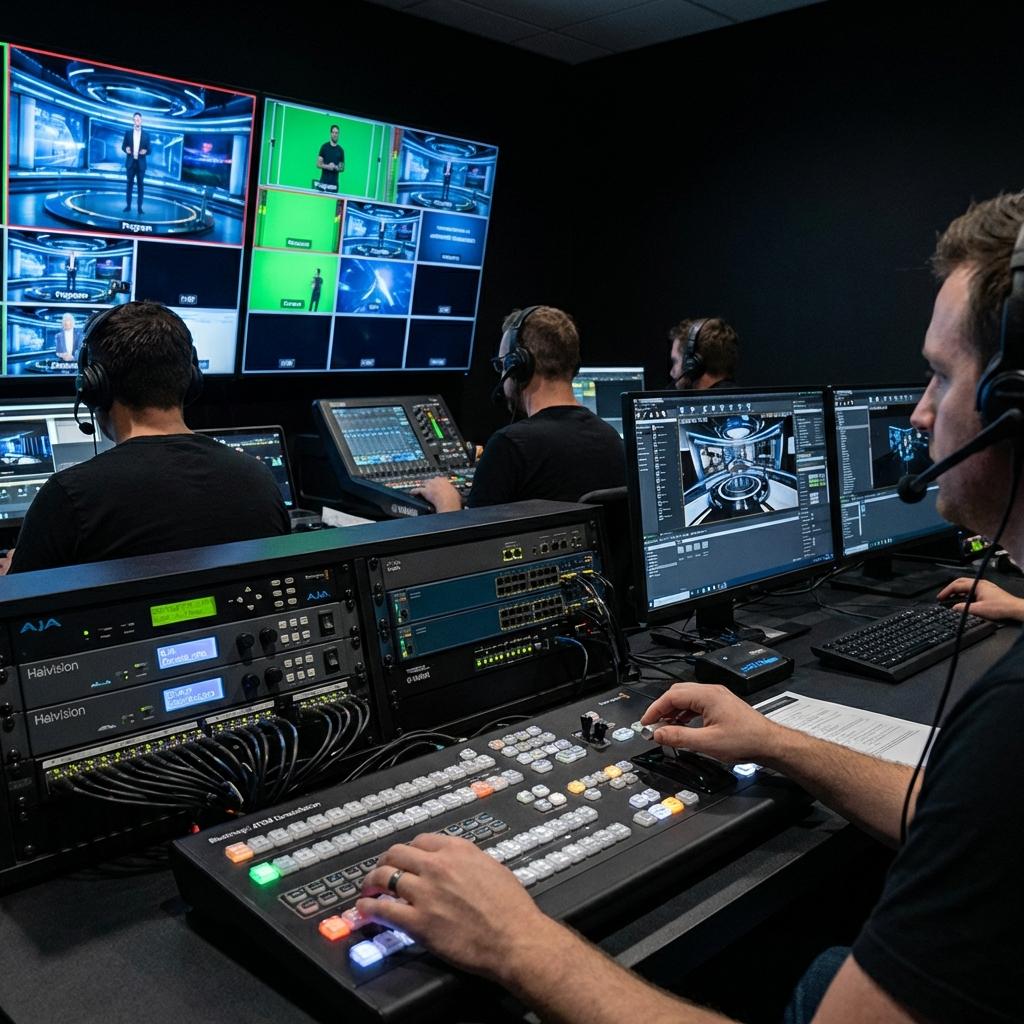
- Processing Redundancy: Hot-standby video switchers (e.g., Grass Valley Kahuna, Sony XVS, Blackmagic ATEM Constellation), redundant rendering engines (primary and secondary Unreal Engine instances running simultaneously), and backup encoders. Automated monitoring systems continuously check signal integrity and can trigger seamless switching to backup paths in milliseconds.
- Power Redundancy: Uninterruptible Power Supplies (UPS) and generator backups for all critical production equipment.
- Cloud vs. On-Premise Redundancy: A hybrid approach might involve on-premise primary rendering with cloud-based secondary rendering for disaster recovery, ensuring the event can continue even in the event of a local hardware failure.
This multi-layered approach to redundancy ensures maximum uptime and eliminates single points of failure, providing peace of mind for event organizers and guaranteeing an uninterrupted, high-quality experience for the audience.
Conclusion
Navigating the complexities of integrating presenters into a 3D virtual environment for B2B events requires an unparalleled depth of technical knowledge and a meticulously engineered production framework. From the intricacies of real-time rendering and low-latency signal transport using protocols like NDI and SRT, to the implementation of advanced talkback systems and comprehensive multiview monitoring, every technical detail contributes to the presenter’s ability to deliver an impactful, engaging performance. Meticulous network design with QoS, strategic latency optimization, and robust multi-camera tracking workflows are not merely enhancements, but fundamental requirements for enterprise-grade virtual and hybrid productions. Furthermore, the imperative for failover and redundancy architectures cannot be overstated, safeguarding against disruptions and upholding the highest standards of professional delivery. Spring Forest Studio stands as your expert partner, possessing the technical acumen and practical experience to design, implement, and manage these sophisticated solutions. We empower your presenters to confidently command their virtual stage, transforming your corporate events into immersive, memorable experiences that resonate with your target audience and reinforce your brand’s leadership in the digital age.

Jeremy Lee is a seasoned digital marketing director and strategist with over two decades of experience in the industry. As the founder of Sotavento Medios, I manage a diverse portfolio of over 50 businesses, helping brands grow through advanced search strategies and digital innovation. My work focuses on bridging the gap between traditional search engine optimisation and the evolving world of AI-driven answer engines.
get in touch