
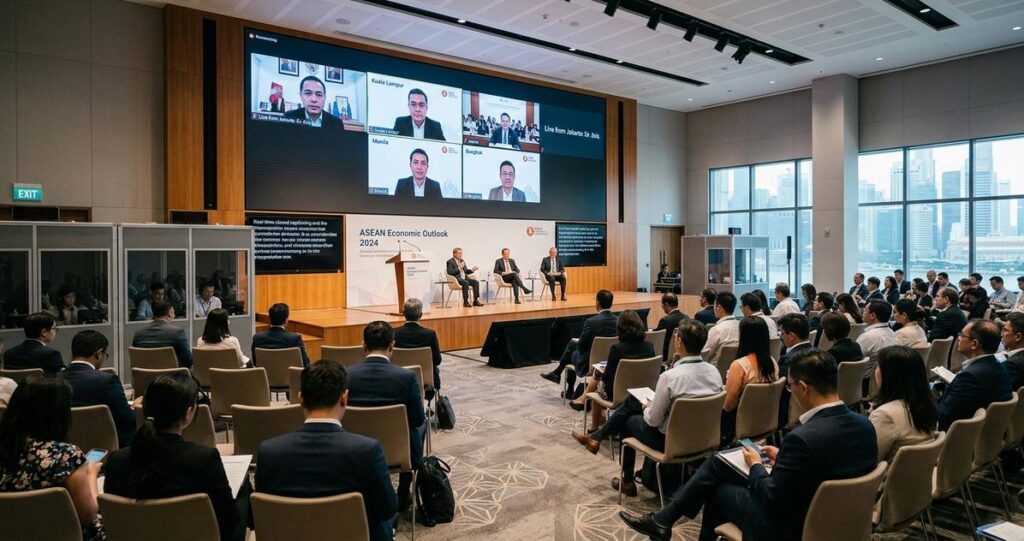
Singapore sits at the meeting point of many cultures, business norms, and communication styles, which makes regional hybrid event planning both exciting and complex. A hybrid event, where some participants attend in person and others join online, can connect audiences across borders more efficiently than a fully physical programme, but success depends on more than stable internet and good cameras. Cultural nuance matters because it shapes how people greet one another, when they speak, how directly they give feedback, what they expect from hosts, and how comfortable they feel participating in public. For organisers in Singapore planning events for Southeast Asian or wider Asia Pacific audiences, cultural sensitivity is not a nice extra, it is part of event quality, audience trust, and brand credibility.
In a regional hybrid setting, the challenge is rarely one single difference. It is usually the combination of language preference, hierarchy, etiquette, religion, dietary practice, time expectations, and digital behaviour. A speaker in Singapore may prefer concise, direct discussion, while attendees from another market may expect more formal introductions and more indirect disagreement. A live poll that works well for one audience may feel awkward in another if it asks people to challenge authority publicly. If organisers do not plan for these differences, the event can feel confusing, impersonal, or even disrespectful. When they do plan well, the same hybrid format becomes a bridge that allows people across the region to feel seen, included, and professionally engaged.
Why cultural nuance matters in regional hybrid events
Hybrid events already ask organisers to manage two audience experiences at the same time. Regional hybrid events add a third layer, which is cultural context. An effective plan has to support the physical venue, the virtual platform, and the social expectations of the audience. In Singapore, this matters especially because many events involve participants from different ethnic communities locally and from neighbouring countries such as Malaysia, Indonesia, Thailand, Vietnam, the Philippines, and beyond.
The first risk is misalignment in communication style. Some cultures value directness and quick decision-making, while others place greater emphasis on rapport, hierarchy, and careful phrasing. In a hybrid room, this can affect panel discussions, Q&A sessions, and networking segments. A moderator who pushes for immediate disagreement may create silence rather than engagement, not because the audience lacks interest, but because the format does not match the comfort level of the group.
The second risk is exclusion through design. If slides are only in one language, if subtitles are unavailable, or if the event schedule ignores prayer times or meal restrictions, participants can feel that the event was built for only one segment of the audience. Good hybrid planning treats inclusion as an operational requirement, not a cosmetic feature. That approach aligns well with Singapore’s multilingual, multicultural environment, where professionalism often means anticipating diverse needs in advance.
Understanding hierarchy and participation norms
In many regional business cultures, hierarchy influences whether junior staff speak openly in front of senior leaders. This matters in hybrid events because remote participants often have fewer social cues and may hesitate even more than those in the room. Organisers can reduce this barrier by using structured prompts, anonymous polling, moderated question submission, or small breakout discussions before opening the floor. These tools create safer participation without forcing anyone to break etiquette in a way that feels uncomfortable.
When planning for Singapore-based events with regional attendees, it helps to recognise that silence does not always mean disengagement. Sometimes it reflects respect, consideration, or a preference for private follow-up rather than public debate. The best moderators read the room carefully, frame questions in a way that allows different styles of response, and avoid assuming that the most vocal participant represents the whole audience.
Designing inclusive communication across cultures and platforms
Communication design is one of the most important parts of a successful hybrid event. This starts long before the event day, with invitations, registration forms, reminder emails, and pre-event instructions. If these materials are clear, culturally respectful, and easy to understand, attendees arrive with fewer barriers. If they are vague or overly localised, confusion grows quickly, especially for participants joining from other countries or time zones.
For Singapore organisers, clarity should never come at the expense of politeness, but it should remain concise enough to be usable. Use plain English where possible, avoid idioms that may not translate well, and provide key details in a consistent format. If the event serves multiple language communities, offer translated abstracts, subtitles, or bilingual signage where practical. Even when full translation is not feasible, a well-prepared glossary of key terms can improve understanding for technical or policy-heavy programmes.
Language access and interpretation planning
Language access is more than real-time translation. It includes how information is structured, how quickly speakers present ideas, and whether the virtual platform supports captions or interpreted channels. In a regional hybrid event, simultaneous interpretation may be appropriate for keynote sessions, while subtitles or translated summaries may work for smaller breakout discussions. The right choice depends on the audience profile, subject matter, and budget.
Speakers should be briefed to pause between key points, avoid reading dense text too quickly, and share slide decks in advance if live interpretation or captioning is being used. This improves comprehension for both in-person and online audiences. It also reduces the risk that one group is constantly struggling to catch up while another group moves ahead. In Singapore, where English is widely used in business, organisers still should not assume that every participant processes spoken English at the same speed or with the same level of comfort.
Digital etiquette and audience behaviour
Hybrid platforms create their own etiquette. Some audiences are comfortable switching on cameras, asking questions aloud, and using reaction icons. Others prefer to keep cameras off, submit questions privately, or speak only after being invited. Neither style is inherently better. Organisers should set expectations early so participants know how to engage without embarrassment.
For regional events, it is also useful to explain how questions will be handled. For example, attendees can be told whether questions may be submitted in writing, whether the moderator will group similar questions, and whether selected questions will be read anonymously. This is especially helpful when senior stakeholders are present, because it gives participants a socially acceptable way to raise sensitive issues. Well-designed digital etiquette supports psychological comfort, which in turn supports better engagement.
Practical event design choices that respect regional differences
Cultural nuance must be built into logistics, not just into speeches and scripts. Seating, timing, food, signage, dress guidance, and networking format all influence how comfortable people feel. In Singapore, where events often involve a mix of local and international guests, practical planning can make the difference between a polished experience and a memorable misstep.
Start with timing. Avoid assuming that one calendar or one holiday schedule fits all audiences. Regional participants may observe different public holidays, religious events, and working patterns. For in-person events, pay attention to local commute patterns and allow sufficient buffer time for participants arriving from different parts of Singapore, especially during peak traffic periods or heavy rain. For online participants, consider the time zones of the largest audience groups and structure the agenda so that key content is not placed only at the start or end in a way that disadvantages part of the region.
Food, prayer, and accessibility considerations
Food is one of the easiest places to show cultural awareness and one of the easiest places to get it wrong. In Singapore, many organisers already understand the importance of halal, vegetarian, and allergy-aware catering. For regional events, it helps to go a step further by confirming dietary categories clearly during registration and labelling food items accurately on site. Avoid assumptions based on appearance or nationality. A participant’s dietary practice should be asked respectfully and handled confidentially where needed.
Prayer space, quiet rooms, and accessible toilets are also important. These are not niche requests. They are basic inclusion measures that support participants with religious obligations, sensory needs, or physical accessibility requirements. If the event spans several hours, these facilities should be easy to find and clearly signposted. For virtual participants, breaks should be scheduled with enough frequency that people can step away without missing core content.
Accessibility also includes captioning for hearing support, readable slide design, colour contrast, and avoiding overly dense screens. These are useful for all attendees, not only those with declared needs. A well-designed hybrid event often feels easier for everyone because it reduces cognitive load and allows more people to follow the content comfortably.
Networking formats that work across cultures
Networking is often where cultural differences become most visible. Some participants are comfortable with spontaneous conversation, while others prefer structured introductions. In hybrid settings, unstructured networking can easily favour the most extroverted attendees and leave quieter participants behind. To create a fairer experience, organisers can use facilitated networking prompts, topic-based tables, timed meet-and-greet sessions, or digital matchmaking tools that connect people by professional interest.
In Singapore, where relationship-building is often practical and professional, a balanced approach works well. Offer a formal networking segment for those who appreciate structure, then provide optional informal time for those who want more open conversation. This respects different comfort levels without forcing one cultural style onto everyone.
Working with speakers, moderators, and production teams
A strong hybrid event depends on more than a good platform. The people behind it need cultural briefings, clear roles, and shared expectations. Speakers may not realise that a joke, gesture, or reference that works in one market may feel confusing or inappropriate in another. Moderators may not know when to pause, when to rephrase, or when to move on gracefully if an answer is too indirect. Production teams may not understand that camera framing, lower-third titles, and on-screen text can either support or undermine cross-cultural clarity.
Briefing documents should include audience profile, preferred language, likely sensitivities, pronunciation guidance for names, and guidance on formality. If the event involves government, healthcare, financial services, or other regulated sectors, the content should also be checked carefully for compliance with applicable industry and organisational standards. In Singapore, professionalism usually means precision, not just presentation.
Moderator technique and cross-cultural facilitation
Moderators play a central role in shaping how cultural difference is handled in real time. They need to manage pacing, draw out quieter participants, and prevent any one speaker from dominating the discussion. They also need to recognise when direct confrontation may not be the best route. In some cases, a gentle reframing such as asking for examples, inviting a follow-up in writing, or summarising contrasting views neutrally can keep the discussion productive while preserving face.
Face, in many Asian contexts, refers to social dignity and respect. Losing face can happen when someone is corrected publicly, interrupted repeatedly, or put on the spot in front of superiors. Moderators who understand this concept can avoid unnecessary tension by redirecting carefully and giving participants space to respond on their own terms. This is not about avoiding difficult questions. It is about asking them in a way that keeps the conversation constructive.
Technical production choices with cultural impact
Even technical decisions have cultural implications. The visual style of a hybrid event should match the seriousness of the subject matter and the expectations of the audience. Overly flashy transitions, loud sound effects, or cluttered graphics may distract from content and feel unprofessional in certain contexts. On the other hand, a clean, well-paced broadcast with clear branding, readable text, and smooth handoffs helps participants from different backgrounds focus on the message rather than the medium.
Camera angles also matter. For panel discussions, ensure remote viewers can see who is speaking clearly, especially when names and roles are important. For multilingual events, on-screen identification should be accurate and consistent. If interpretation is available, the production team should test audio paths thoroughly so viewers can easily select the correct channel. These details seem small, but they shape whether participants feel that the event respects their time and attention.
How Singapore event planners can turn cultural awareness into a repeatable process
The most reliable way to manage cultural nuance is to make it part of the planning workflow. This means collecting audience information early, aligning stakeholders on event goals, and creating a checklist that covers communication, catering, accessibility, moderation, and technical delivery. It also means reviewing each event after it ends, not only for attendance or satisfaction, but for inclusion gaps. Which questions were asked? Who participated most? Were any groups underrepresented in the discussion? Did the agenda unintentionally favour one market over another?
For Singapore-based organisations, this process works best when event planners, client teams, speakers, and production partners communicate early. Hybrid events often fail when cultural planning is left until the final week. By contrast, when organisers discuss audience composition, language needs, etiquette expectations, and venue logistics from the beginning, the event feels more coherent and respectful. That kind of planning also protects the brand because participants are more likely to remember the experience as thoughtful and professionally run.
There is no single template that fits every regional hybrid event. A medical conference, a corporate town hall, a product launch, and a policy forum each require different levels of formality, translation support, and audience interaction. Still, the underlying principles remain stable. Respect the audience’s communication norms. Build access into the format. Brief speakers and moderators properly. Test the technology with the human experience in mind. When those pieces come together, hybrid events can do more than connect screens and rooms. They can connect people across cultures in a way that feels natural, credible, and professionally managed.
For organisers in Singapore, the takeaway is practical. Cultural sensitivity is not separate from event strategy, it is part of it. If your hybrid event must reach regional audiences, plan for language, hierarchy, timing, food, accessibility, and digital behaviour from the start. That approach creates better engagement in the moment and stronger trust after the event ends. If the topic is sensitive, technical, or high stakes, consider working with experienced event production partners and content reviewers who understand both the regional context and the operational demands of hybrid delivery.
General information only, not individual advice. If your event involves regulated sectors, public health topics, legal issues, or safety-critical information, content should be reviewed by qualified professionals before publication or live delivery.
Jeremy Lee is a seasoned digital marketing director and strategist with over two decades of experience in the industry. As the founder of Sotavento Medios, I manage a diverse portfolio of over 50 businesses, helping brands grow through advanced search strategies and digital innovation. My work focuses on bridging the gap between traditional search engine optimisation and the evolving world of AI-driven answer engines.
get in touch