
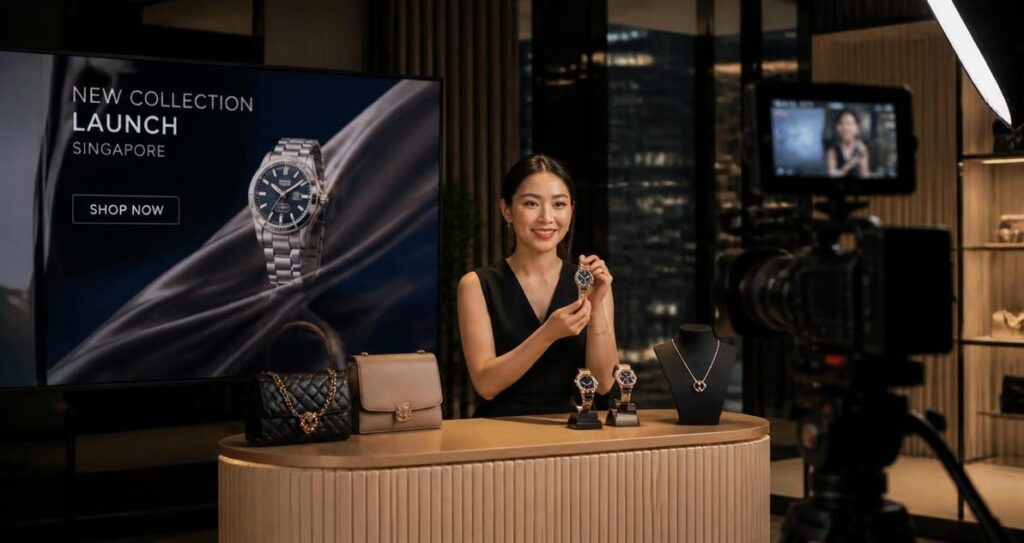
Luxury retail has always depended on atmosphere, anticipation, and a sense of exclusivity. In a physical boutique, the lighting, curated displays, trained staff, and tactile product experience all work together to shape how a client feels about a collection or launch. When that experience moves online, the challenge is not simply to stream a presentation, but to recreate the emotional value of luxury in a digital format that still feels refined, controlled, and memorable. For Singapore-based brands, this matters even more because local consumers are highly connected, mobile-first, and accustomed to premium service across both physical and digital touchpoints. An immersive online product launch can support that expectation, whether the audience is in Orchard, Marina Bay, Sentosa, or joining from regional markets through a hybrid format.
For luxury brands, the goal is not to make an online launch look busy. It is to make it feel intentional. Every visual cue, camera angle, transition, and interactive element needs to reinforce brand identity and product value. That means planning for quality, not novelty, and building a launch structure that respects the craftsmanship of the product while keeping the audience engaged. In Singapore, where audiences are sophisticated and brand-conscious, the standard for digital presentation is high. Viewers can quickly recognise when a launch feels polished versus when it feels improvised, and that difference directly affects how the brand is perceived.
A strong online product launch also has practical business benefits. It can expand reach beyond a single venue, reduce dependence on physical attendance, and support regional engagement across Southeast Asia. For luxury retail in Singapore, this is especially relevant because the city is a natural hub for international customers, media, partners, and private clients. When done well, an immersive launch can combine cinematic storytelling, live interaction, and high production values to create an event that feels both exclusive and accessible in the right measure.
Why immersive online launches matter in luxury retail
Luxury retail depends on emotional connection as much as product specifications. A watch, handbag, jewellery piece, fragrance, or fashion collection is rarely purchased only for its functional purpose. Clients are also buying design, heritage, status, and the feeling of owning something carefully made. An immersive online launch helps communicate those values when in-person attendance is limited or when the brand wants to amplify a launch beyond a flagship store.
In Singapore, this approach fits the way many consumers research and compare premium products. They often move between websites, social channels, online appointments, and physical stores before making a purchase decision. A launch that is visually rich, easy to navigate, and thoughtfully paced can support that journey. It can introduce the collection, explain materials or craftsmanship, and leave room for live questions or private consultations. The result is not just visibility, but stronger consideration.
Immersive launches also help luxury brands maintain control over the message. A polished digital production gives the brand a structured narrative, which is important when product details, heritage stories, and creative direction must be communicated accurately. This is particularly useful for launches with global timing constraints, where Singapore may be one stop in a coordinated regional or international rollout. Instead of relying solely on static imagery or a generic livestream, brands can create a layered presentation that combines motion graphics, live-hosted segments, video inserts, and interactive moments.
What makes an online launch feel premium
A premium launch is usually defined by consistency, not complexity. Clear framing, balanced lighting, crisp audio, and a stable stream are basic expectations, not extras. From there, the brand can layer in cinematic product close-ups, subtle animations, curated soundtrack choices, and a presenter who speaks with authority and warmth. These details matter because luxury clients notice friction quickly. If audio is uneven, the camera is shaky, or the interface feels cluttered, the perceived value of the product can be undermined.
For Singapore audiences, premium also means efficient. People tend to appreciate well-organised content that respects their time. A launch should guide viewers through a deliberate sequence, such as brand story, product reveal, feature explanation, live questions, and next-step actions. The smoother the structure, the easier it is for viewers to stay attentive without feeling overwhelmed.
Designing the digital experience around the brand story
Luxury product launches work best when the digital format is built around storytelling rather than a simple camera feed. The presentation should answer a few key questions. What does the product represent? What is the design inspiration? Which materials, techniques, or heritage elements matter most? Why does this launch deserve attention now? These are not marketing slogans. They are the foundation of how luxury value is communicated.
A compelling story often begins before the live event starts. Brands can use teaser videos, invitation microsites, countdown assets, and private registration pages to establish tone. The design language should match the product category. A heritage watch brand may use minimal typography, dark tones, and precision-focused visuals. A couture label may choose softer lighting, fabric movement, and editorial styling. What matters is that the entire journey feels cohesive from the first invitation to the post-event follow-up.
Singapore’s luxury market is shaped by international tastes, but local context still matters. Brands hosting launches here often cater to a diverse audience that may include Singaporean clients, expatriates, regional buyers, and media representatives. That means the digital experience should be understandable to a broad audience without losing sophistication. Clear English presentation is usually essential, and if the event targets multilingual audiences, subtitles or dual-language support can improve accessibility and comprehension.
Visual direction and set design for online luxury events
Set design in an online launch is not decorative filler. It functions as a visual extension of the brand. The backdrop, table styling, props, and spatial composition should all support the product story. Minimalist layouts often work well because they reduce visual noise and keep attention on the item being introduced. However, minimal does not mean plain. Texture, depth, and subtle brand cues can make the frame feel elegant and purposeful.
In Singapore, where many brand activations are held in hotels, studios, showrooms, and event spaces with varying acoustic and lighting conditions, the physical environment needs technical planning. A location may look impressive in person, but if the echo is poor or the ambient light shifts during the stream, the production quality can suffer. A professional event production team will test these variables in advance and build a setup that supports both live and recorded elements.
Camera language and product presentation
Luxury products require detail. A single wide shot is rarely enough. Viewers need close-ups that reveal texture, finishing, movement, and craftsmanship. Multi-camera coverage can help show the product from different perspectives without breaking the rhythm of the presentation. For example, one camera may capture the host or designer, another may focus on the product table, and a third may provide a close-up for delicate details.
Product handling should also be rehearsed carefully. In luxury retail, the way an item is lifted, rotated, or placed on screen affects how the audience perceives its value. Sloppy handling can weaken the launch. Deliberate motion, clean framing, and well-timed cutaways help maintain a sense of prestige. This is especially important for high-value items such as fine jewellery, timepieces, leather goods, and limited-edition fashion pieces.
Technology, interactivity, and production quality
Technology should support the experience, not dominate it. For an immersive launch, brands often combine live streaming with pre-recorded segments, interactive chat, product hotspots, appointment links, and RSVP tracking. The exact mix depends on the objective of the event. If the goal is broad awareness, the stream may prioritise storytelling and visual impact. If the goal is conversion, the event may include stronger calls to action, such as private viewing requests, consultation bookings, or e-commerce links.
Reliable infrastructure is essential. A luxury launch cannot afford unstable audio, delayed video, or poor image compression. In Singapore, where audiences expect a high standard of digital service, technical failure can damage trust quickly. That is why professional streaming workflows matter. Backup connectivity, redundant audio capture, camera checks, and real-time monitoring should be part of the production plan. Good technical preparation is invisible when everything works, but it becomes obvious the moment something fails.
Interactivity should be curated. A live Q and A can be valuable, but it should be moderated so that the conversation stays relevant to the collection. Polls, clickable product details, or controlled chat features can keep viewers engaged without making the event feel casual. For luxury brands, the interaction should feel refined and selective, not crowded or noisy. Private appointments, concierge follow-up, and invitation-only breakout sessions can preserve exclusivity while still encouraging engagement.
Hybrid formats for Singapore and regional reach
Hybrid launches are especially practical in Singapore because the city connects local clients with regional decision-makers and international guests. A small in-person audience can create atmosphere and live energy, while a streamed component allows wider participation. This model is useful when a brand wants to preserve a sense of occasion without limiting access to those physically present. It also gives the brand more flexibility in how it segments its audience, for example by hosting a private media session, followed by a broader client showcase.
For brands working across Southeast Asia, the hybrid format can also support staggered time zones and localised messaging. Singapore often serves as a regional launch point because of its strong infrastructure, business environment, and established retail sector. A well-produced hybrid launch can therefore serve multiple market objectives at once, from brand elevation to lead generation and client relationship building.
Planning the customer journey before and after the event
An immersive launch should not begin and end with the live stream. The customer journey starts with invitation design and continues through registration, reminder communications, live attendance, and post-event follow-up. If any of these stages feels disconnected, the experience becomes weaker. Luxury clients expect continuity. They should feel that the same level of care shown in the product design is also reflected in the communications around the event.
Pre-event communication can include private previews, behind-the-scenes content, or an RSVP process that confirms interest while maintaining exclusivity. During the event, the brand should make it easy for viewers to understand what to do next, whether that means requesting more information, booking an appointment, or exploring a product page. After the event, timely follow-up matters. A well-structured thank-you message, event replay, or personal outreach from a sales advisor can extend engagement and support conversion.
In Singapore’s retail environment, where customers often value convenience and responsiveness, this follow-up stage is not optional. It is part of the luxury experience. A responsive concierge-style approach, supported by efficient digital tools, can help turn event interest into meaningful relationships. The goal is to create a seamless journey that feels attentive without becoming intrusive.
Measuring success without reducing luxury to a single metric
Luxury launches should be evaluated using a balanced set of indicators. Live attendance, watch time, replay views, consultation requests, and qualified leads all provide useful signals. However, luxury brands should avoid judging success only by volume. A smaller audience can still be highly valuable if it includes the right clients, editors, partners, or collectors. Quality of engagement often matters more than raw numbers.
Brands can also assess whether the event strengthened perception of craftsmanship, exclusivity, and brand clarity. These are harder to quantify, but they are central to luxury retail. Feedback from sales teams, client advisors, and event stakeholders can help determine whether the launch supported broader brand objectives. In Singapore, where premium brands compete for attention in a crowded market, clarity of positioning is often as important as immediate sales activity.
Practical considerations for Singapore-based luxury brands
Singapore’s business environment offers strong advantages for digital and hybrid launches, but it also sets a high standard for execution. Venue selection, network reliability, production timing, and audience management all matter. Depending on the setup, brands may need to consider local venue rules, equipment access, guest flow, and data handling practices. If the launch captures personal information through registration or consultation forms, brands should also handle that information responsibly and in line with Singapore’s Personal Data Protection Act, which governs how personal data is collected, used, and disclosed.
Accessibility should also be part of the planning process. Clear typography, readable captions, stable video, and thoughtful pacing help more viewers follow the content comfortably. For audiences joining from mobile devices, which is common in Singapore, the stream and event landing page should load efficiently and display properly on smaller screens. A beautiful launch means little if it is difficult to access.
For luxury retail brands, working with a production partner experienced in streaming and hybrid events can reduce risk and improve consistency. The right team understands that a product launch is not just an online broadcast, it is a brand moment. Every technical and creative decision should support that objective. When production, storytelling, and customer experience are aligned, the launch feels coherent and credible.
Immersive online product launches are most effective when they respect what makes luxury compelling in the first place, craftsmanship, attention to detail, and a sense of elevated service. In Singapore, where audiences are discerning and digitally fluent, that standard matters even more. Brands that combine strong visual direction, reliable streaming, careful narration, and thoughtful follow-up can create launches that feel premium without losing authenticity. The practical takeaway is simple: treat the online launch as a carefully designed client experience, not just a marketing event. When every touchpoint is planned with precision, the brand can communicate value with confidence and leave a lasting impression that extends well beyond the live moment.

Jeremy Lee is a seasoned digital marketing director and strategist with over two decades of experience in the industry. As the founder of Sotavento Medios, I manage a diverse portfolio of over 50 businesses, helping brands grow through advanced search strategies and digital innovation. My work focuses on bridging the gap between traditional search engine optimisation and the evolving world of AI-driven answer engines.
get in touch