
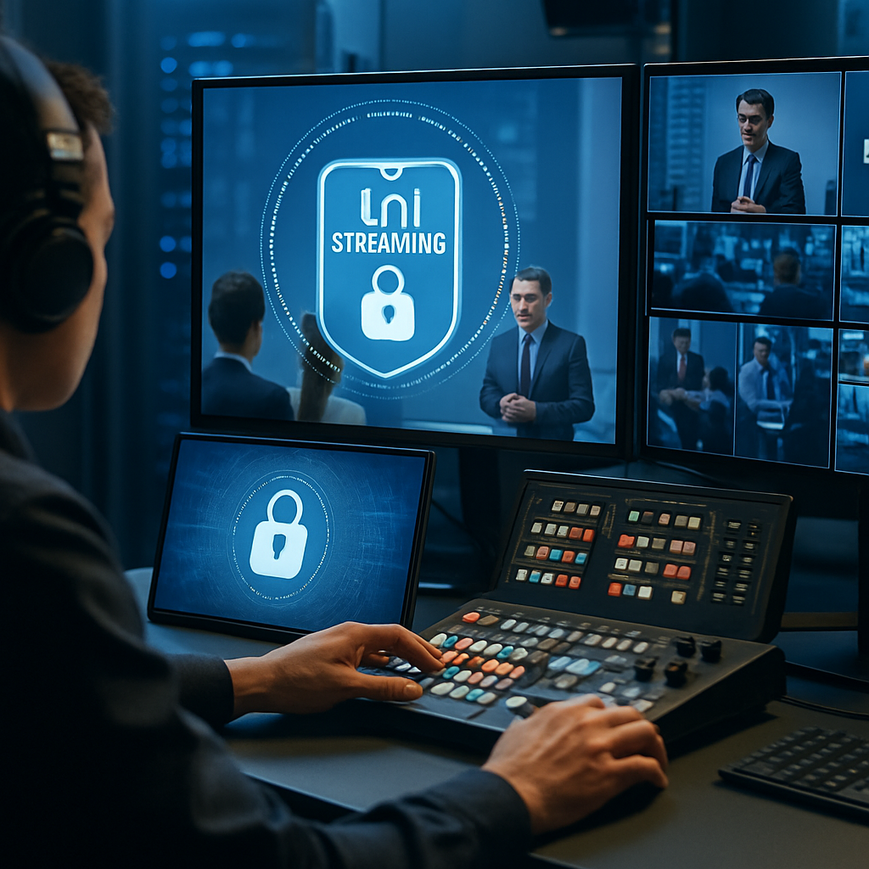
For businesses in Singapore, live streaming is no longer limited to marketing campaigns or product launches. It now supports investor briefings, internal town halls, training sessions, medical conferences, partner meetings, and hybrid events where sensitive information may be shared with staff, clients, suppliers, or regulators. That convenience also creates a serious security responsibility. If a B2B stream is left open, shared too widely, or protected only by a basic link, unauthorised viewers may gain access to confidential content, private speaker footage, commercial strategies, or personal data. In Singapore, where organisations commonly handle data under the Personal Data Protection Act and may also need to consider contractual confidentiality, industry rules, and internal governance, stream security should be treated as part of operational risk management, not just an IT detail.
Unauthorised access can happen in many ways. A meeting link may be forwarded outside the intended audience. A weak password may be guessed. A staff member may accidentally publish the wrong stream settings. A compromised account may expose the event dashboard. Even when the content is not highly sensitive, an open stream can damage trust if attendees discover that their session was accessible to outsiders. The most reliable approach is layered security, which means using several controls together so that if one layer fails, others still protect the stream. For B2B streaming, that often includes strong authentication, restricted access lists, secure delivery methods, careful platform configuration, endpoint protection, and operational discipline before, during, and after the event.
Start with access control, because the link alone is not enough
The most common security mistake in streaming is assuming that an unlisted link equals privacy. In practice, a URL can be shared, copied, pasted into chat groups, or discovered through poor access settings. For B2B streams, especially where board discussions, product roadmaps, client data, or employee information may appear on screen, access control should be based on identity, not convenience. That means you should know who is allowed to enter, how they are verified, and what happens if a link is forwarded. In Singapore, where many companies work across different locations and time zones, secure access should be designed to support legitimate viewing while preventing casual or accidental disclosure.
Use authentication instead of open links
Authentication means verifying that a viewer is who they claim to be. A password alone is better than a public link, but stronger methods are preferable for B2B events. Signed-in access through company accounts, single sign-on, or invitation-based authentication helps ensure only approved users can enter. If your audience includes clients or partners outside your organisation, you can still use verified registration, unique login credentials, or one-time access codes. The goal is to make access personal and traceable, rather than generic and easily shared.
For sensitive sessions, unique credentials per viewer are especially useful. They allow event teams to revoke access quickly if needed and to review which account used which session. This is important when you are managing investor relations, human resources briefings, or other confidential communications where attendance may need to be audited later. When possible, avoid using the same password for all participants, because one compromise can expose the full session.
Apply role-based permissions
Not every attendee needs the same level of access. Role-based permissions allow you to assign different rights to hosts, presenters, moderators, attendees, and technical support staff. For example, presenters may need screen-sharing rights, while attendees should only view and submit moderated questions. Administrative controls should be restricted to a small number of trusted personnel. This reduces the number of people who can accidentally change settings or expose the stream.
Role-based access also helps with event segmentation. If your company runs a hybrid conference in Singapore with multiple breakout rooms, each room should have separate access controls rather than one shared environment. That way, a participant registered for one workshop cannot move into another session without approval. This is particularly useful for B2B events involving different client tiers, channel partners, or internal teams with varying confidentiality requirements.
Protect the stream with technical safeguards at platform level
Secure access is only one part of the picture. The platform itself must be configured correctly so that content cannot be intercepted, copied, or exposed through misconfigured settings. A robust streaming setup should use encryption, secure session management, controlled recording permissions, and careful network design. These controls are standard good practice in enterprise environments and should be treated as a baseline for any professional B2B production.
Use encrypted transmission and secure protocols
Encryption converts data into a form that cannot be easily read by unauthorised parties while it is being transmitted. For live streaming, encrypted transport helps protect the stream from interception as it moves between the encoder, platform, and viewer. Modern platforms commonly use secure protocols and HTTPS-based delivery for web access. You should confirm that your streaming provider supports up-to-date encryption standards and that insecure transport methods are disabled. If content is highly sensitive, ask whether the platform supports additional protective measures for private broadcasting and restricted playback.
Encryption does not eliminate risk by itself, but it is a critical foundation. Without it, anyone with access to the network path could potentially observe unprotected traffic. In a B2B context, especially when teams connect from offices, home networks, hotels, or coworking spaces, encrypted delivery is essential.
Restrict recordings and downloads
Some of the greatest exposure risk happens after the live event. A recording that is saved without controls can be replayed, shared, or copied long after the intended audience has dispersed. If the session contains confidential information, the recording should be treated with the same care as the live stream. Limit who can initiate recordings, store files in secure locations, and use access permissions for playback. If downloads are unnecessary, disable them.
For some events, it may be prudent to separate the live session from the archival version. The live stream may include a confidential Q and A segment, while the archived edit removes sensitive material before wider distribution. This approach is common in corporate communications because it balances audience value with confidentiality. Any post-production process should be controlled and documented so that no one uploads an unsecured version by mistake.
Keep dashboards and admin panels private
Many stream breaches do not happen through the viewing link itself. They happen because the event dashboard, control room, or admin console is exposed to too many people. The backend should be protected with strong passwords, multi-factor authentication, and limited administrative access. Multi-factor authentication, sometimes called MFA, requires a second verification step, such as a code from a trusted device, in addition to the password. This makes account takeover much harder, even if a password is stolen.
Just as important, you should log out of all management consoles after use and avoid sharing admin credentials by email or messaging apps. If multiple vendors are supporting a Singapore event, define exactly who can change stream keys, switch sources, start recordings, or adjust access lists. This is part of good event governance and helps prevent accidental exposure during live production.
Build security into the event workflow before the stream goes live
Technology alone cannot secure a stream if the process around it is weak. Most unauthorised access incidents are made easier by human error, rushed preparation, or unclear responsibilities. A secure workflow should cover registration, invitation management, staff training, pre-event testing, and live monitoring. In Singapore, where teams often operate under tight schedules and coordinate across multiple stakeholders, a simple but disciplined process can prevent many avoidable mistakes.
Verify the audience before sending access details
One of the safest practices is to verify attendees before they receive access. For internal events, this may mean sending invitations only to corporate email addresses and requiring sign-in from approved accounts. For external B2B audiences, such as customers or partners, registration forms can help collect the information needed to approve access. Do not rely on blind mass distribution if the content is confidential or commercially sensitive. If possible, use unique invitation links tied to a specific email address.
It is also wise to review the attendee list against the purpose of the session. If a board update is intended only for senior management and selected advisers, do not open the link to a broader list of employees. If a product demo includes unreleased information, confirm that external attendees are covered by the right confidentiality terms before access is granted. Access management should match the sensitivity of the content, not just the size of the audience.
Train staff on common mistakes
Many access incidents happen because someone in the organisation shares the wrong link, forgets to lock a session, or assumes a test environment is private when it is not. Staff members involved in streaming should understand the platform controls, the escalation route for suspicious activity, and the procedure for revoking access. Training should include practical scenarios, such as what to do if an unauthorised guest appears in the waiting room, or how to respond if a password has been posted in the wrong chat group.
For Singapore organisations that rely on event agencies, broadcasters, or freelance technical crews, staff training should extend to external partners as well. A vendor may be highly skilled in production but unfamiliar with your confidentiality requirements. Written procedures help ensure everyone follows the same access standard. Clear instructions should cover account handling, device login, screen-sharing permissions, and the process for changing stream keys if a compromise is suspected.
Test access controls before the live session
Pre-event testing should not only check audio and video quality. It should also confirm that the right people can enter and the wrong people cannot. Test whether guest accounts are blocked, whether passwords work as intended, whether waiting rooms function properly, and whether moderators can remove attendees quickly if needed. Run the test using a separate account that is not on the approved list. This helps verify that your access restrictions are actually working, not just assumed to be working.
It is also useful to rehearse emergency steps. If a private session is interrupted by an unknown viewer, the team should know whether to pause the stream, lock the room, rotate credentials, or switch to an alternative backup platform. A short response plan can prevent confusion and reduce the chance that a small issue becomes a broader breach.
Manage network, devices, and people with the same level of care
Security does not end at the stream platform. The devices used to produce and monitor the event, the networks they connect to, and the people handling them all affect the overall risk. A stream can be compromised if a laptop is infected with malware, if a staff member logs in from an unsecured network, or if a shared computer keeps old credentials cached. For B2B production, secure operations should include endpoint protection, patching, and sensible device practices.
Protect the production environment
Production laptops and control computers should be dedicated where possible, kept updated, and protected with approved security software. Avoid installing unnecessary applications on devices used for live events. This reduces the attack surface, meaning the number of ways an attacker might try to compromise the system. Use device encryption, strong login passwords, and automatic screen locking. If a device is lost or stolen, encryption helps protect the data stored on it.
Network hygiene also matters. When streaming from a corporate office, use secure and managed connectivity. When staff work remotely, they should avoid public Wi-Fi for sensitive production tasks unless additional security controls are in place, such as a trusted VPN approved by the organisation. Public networks in cafes, hotels, or transit hubs may be convenient, but they are not the right choice for managing confidential live events.
Limit the number of people who can alter the stream
During a live event, too many hands on the controls can increase risk. Assign one lead producer, one backup operator, and clearly defined moderators. Everyone else should have read-only or limited permissions unless their role specifically requires more access. This makes it easier to detect abnormal activity and prevents accidental changes to access settings. In larger Singapore events with multiple vendors, this principle becomes even more important because overlapping responsibilities can create confusion.
Keep a live access log if the platform supports it. Logs can show who joined, who changed settings, and whether any access attempt failed. This information is useful for immediate troubleshooting and later review. If something looks wrong, such as a sudden burst of failed logins or an unexpected login location, the team can act quickly. While logs do not stop every threat, they provide visibility and accountability.
Plan for privacy, legal obligations, and post-event review
Security decisions should align with privacy and governance requirements. In Singapore, organisations that collect, use, or disclose personal data must pay attention to their obligations under the Personal Data Protection Act. That means if your stream involves attendee names, images, voices, or chat messages that can identify individuals, those data points should be handled carefully. You should also consider contractual confidentiality, sector-specific rules, and internal data handling policies. If your organisation is unsure how a particular stream fits into its compliance framework, the safest approach is to treat the event as a controlled data environment.
Be transparent about how access data is used
If you are collecting registration details or tracking attendance for a B2B stream, attendees should understand why the data is being collected and how it will be used. Keep notices clear and specific. Access data should be used only for legitimate event, security, or follow-up purposes. Do not retain information longer than needed, and do not repurpose it casually for unrelated marketing without an appropriate lawful basis and proper notice where required. Good data hygiene supports both compliance and trust.
Review the event after it ends
After the session, review logs, access reports, recordings, and any incident notes. Check whether there were unsuccessful login attempts, unexpected viewers, or configuration issues. If you discover a weakness, correct it before the next event. A short post-event review helps turn one stream into a better protected process for the next one. This is especially valuable for organisations that run recurring webinars, quarterly briefings, or hybrid product launches in Singapore, where the same operational pattern may be repeated many times.
A secure B2B stream is not built by one feature alone. It comes from combining identity-based access, strong platform settings, encrypted delivery, trained staff, controlled devices, and careful post-event handling. For Singapore businesses, this layered approach protects both confidentiality and credibility. If your stream contains anything you would not want publicly shared, then access control should be planned with the same seriousness as the content itself. The practical takeaway is simple: know who should watch, verify them properly, restrict what they can do, and review every event so the next one is safer than the last. For highly sensitive projects, work with an experienced production partner and your internal IT or compliance team to align streaming operations with your organisation’s security requirements.

Jeremy Lee is a seasoned digital marketing director and strategist with over two decades of experience in the industry. As the founder of Sotavento Medios, I manage a diverse portfolio of over 50 businesses, helping brands grow through advanced search strategies and digital innovation. My work focuses on bridging the gap between traditional search engine optimisation and the evolving world of AI-driven answer engines.
get in touch