
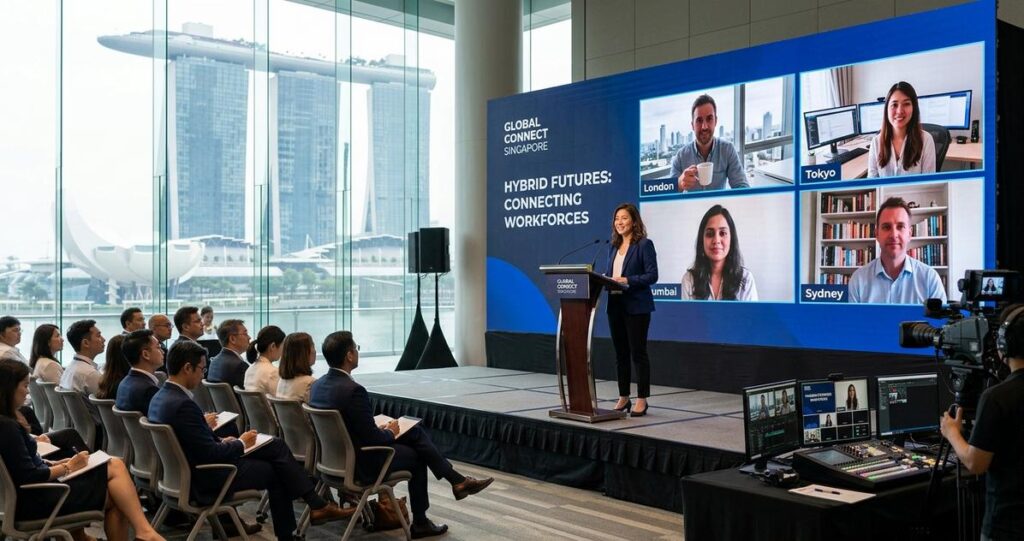
Hybrid conferences have become a practical part of business life in Singapore. They let teams, clients, and speakers join from the office, from home, or from overseas, which is especially useful in a city where schedules are packed and travel time matters. But when an event runs for a full day, virtual attendees can quickly feel drained, less focused, and more irritable than they would in a physical room. This is often called virtual fatigue or video conferencing fatigue, a broad term for tiredness, reduced attention, and mental strain that can build up during long periods of screen-based participation.
For organisers in Singapore, minimising this fatigue is not only about comfort. It affects how well participants absorb information, how long they stay engaged, and whether a conference feels professionally executed. A hybrid event is meant to improve access and flexibility, yet if the virtual experience is poorly designed, attendees may end the day feeling overloaded instead of informed. The good news is that much of this fatigue can be reduced through thoughtful programme design, better technical planning, and practical habits that support the body and mind throughout the day.
Understanding the causes helps. Virtual fatigue is usually not caused by one single factor. It may reflect prolonged screen time, reduced movement, fewer natural breaks, too much visual stimulation, eye strain, poor posture, audio effort, and the mental load of tracking slides, chats, and multiple speakers at once. In a Singapore context, where many professionals already spend their workday on laptops and phones, a conference can add several more hours of screen exposure on top of an already heavy digital routine. That is why prevention should begin before the event starts, not after participants begin to lose concentration.
Why Virtual Fatigue Happens During Long Hybrid Conferences
Virtual fatigue is best understood as a collection of physical and cognitive stressors that accumulate over time. Unlike a live audience, a remote attendee is usually seated in one place, looking at a screen, and relying on audio and video cues to follow the event. That creates less movement, fewer social signals, and more sustained visual attention. It also makes it harder for participants to naturally reset their focus through hallway conversations, walking between rooms, or changing seats, all of which happen in a physical conference.
Screen-based attention is more demanding than many organisers realise
When people watch a speaker on screen, they must process facial expressions, slides, chat messages, and notifications, sometimes all at once. This divided attention increases cognitive load, which is the amount of mental effort needed to complete a task. Over a full day, that effort can feel exhausting even if the content is useful. Eye muscles also work continuously to focus on a monitor, which can contribute to eye discomfort, dryness, and blurred vision, especially in air-conditioned rooms or home offices with low humidity.
Posture and stillness add to the strain
Many participants sit in a fixed posture for long periods, often with the neck tilted forward and shoulders rounded. This position can cause muscle tension in the neck, upper back, and lower back. If the laptop screen is too low, the problem becomes worse. A hybrid conference may seem mentally tiring first, but many people also experience physical discomfort that reinforces the sense of fatigue. In practical terms, the body and mind are affected together.
Audio effort can be surprisingly tiring
Listeners often concentrate harder when audio quality is uneven, accents are unfamiliar, or the sound has delays and dropouts. In live events, people can rely on body language and ambient cues to follow the conversation. In a virtual environment, poor sound forces the brain to fill in gaps, which raises mental effort. For Singapore events with regional speakers or cross-border panels, clear audio is essential because even a small technical issue can increase listening fatigue across the whole audience.
Designing the Programme to Protect Energy
The most effective way to reduce virtual fatigue is to design the conference around human attention, not only around the speaker schedule. A day-long hybrid event should include built-in recovery time, varied formats, and deliberate pacing. These changes help virtual participants stay engaged without feeling trapped in an endless stream of talking heads and slides.
Shorter sessions work better than long uninterrupted blocks
Long lectures are difficult to sustain online. Shorter presentations, moderated panels, case-based discussions, and interactive segments are easier to follow because they create natural resets in attention. Many organisers in Singapore now structure hybrid conferences into focused blocks with regular breaks. This does not reduce professionalism. In fact, it often improves the quality of discussion because participants are more alert and more likely to contribute meaningfully.
As a practical example, a morning block could include two 20-minute talks and one moderated Q and A session, followed by a proper break. An afternoon block might mix a keynote, a live poll, and a panel discussion. This variety keeps the virtual audience from settling into passive listening for too long.
Frequent breaks are not a luxury
Breaks allow the visual system and the nervous system to recover. They also give participants a chance to stand, stretch, hydrate, and rest their eyes. For a long hybrid conference, schedule breaks at predictable intervals rather than waiting until the audience is already fatigued. A few minutes every hour is often more useful than a single long break too late in the programme. If the event spans lunch in Singapore, do not assume that lunch alone will solve fatigue. A true reset requires enough time to step away from the screen completely.
Use interactivity carefully and purposefully
Polls, questions, and chat can make a virtual audience feel included, but too many prompts can become tiring. The goal is meaningful engagement, not constant activity. Use interaction at planned moments, such as after a key section or before a transition. Keep instructions simple and avoid making participants chase multiple tools at once. If the event uses an app, a livestream platform, and a separate Q and A system, the technical burden can quickly outweigh the benefit.
Creating a Better Virtual Experience Through Technology and Environment
Technology cannot eliminate virtual fatigue, but it can prevent unnecessary strain. For hybrid conferences, the quality of video, sound, lighting, and platform stability directly affects how easy it is for remote participants to stay alert. Good production is not just about aesthetics. It is part of attendee wellbeing and event effectiveness.
Audio quality matters more than video polish
Many people tolerate average video quality if the sound is clear, steady, and easy to understand. The reverse is not true. Poor audio creates immediate frustration and increases listening effort. Use proper microphones for speakers and panelists, test internet stability, and avoid relying on room microphones alone when possible. If a speaker is joining from another time zone, ensure their setup is tested in advance so that the event does not begin with avoidable audio problems.
For Singapore-based events, venue acoustics also matter. Large function rooms, glass surfaces, and open spaces can create echo. A professional event streaming setup should account for this with audio checks, room treatment where possible, and backup equipment. Strong production planning supports better attention and less fatigue across the day.
Visual design should reduce strain, not add to it
Slides that are crowded, text-heavy, or visually busy require more effort to process. Use clean layouts, readable fonts, adequate contrast, and concise points. When a presentation is meant for hybrid delivery, think about the remote viewer first. Small details that might be acceptable in a ballroom can become difficult on a laptop screen. The same principle applies to speaker framing and camera placement. A stable, well-lit image reduces visual effort and helps remote attendees stay oriented.
Encourage movement and ergonomic setup
Organisers can remind attendees to adjust posture, stand during breaks, and keep devices at a comfortable height. While remote participants control their own workspace, simple guidance can help them make better choices. For example, suggest that laptop users raise the screen so the top of the display is closer to eye level, and use an external keyboard if available. These small ergonomic adjustments can reduce neck and shoulder strain across a long day. In Singapore, where many professionals use compact home desks or shared office setups, practical posture advice is especially useful.
Helping Participants Manage Fatigue on the Day
Even a well-designed hybrid conference can be tiring if participants do not pace themselves. Individuals can take steps to protect their energy while still making the most of the event. These habits are simple, but they work best when they are realistic and easy to follow during a busy workday.
Plan the day before the event begins
Encourage participants to review the schedule in advance and identify the sessions that matter most. This reduces the pressure to attend every minute with full concentration. For a full-day hybrid conference, it may be more effective to commit attention to the sessions that are most relevant rather than trying to absorb everything. If the platform provides session recordings, attendees can revisit content later when they are fresher.
Protect eyes and attention during screen time
Simple habits can reduce strain. Look away from the screen regularly, blink more often, and keep water nearby. Some people find it helpful to follow a basic visual reset during breaks by focusing on distant objects or closing the eyes for a short time. These actions do not replace medical care, but they can ease everyday discomfort associated with prolonged screen use. If someone experiences persistent eye pain, significant blurred vision, or repeated headaches, they should consult a qualified eye care professional or doctor.
Use breaks properly
A break is most effective when it is a true break from the screen. Scrolling social media on a phone does not give the mind much rest. Stepping away, stretching, walking, hydrating, and eating a light snack if needed are often better choices. In Singapore, where conference venues may be inside malls, hotels, or business districts, a short walk in a quiet area can help reset attention without taking too much time.
Know when fatigue may be more than ordinary tiredness
Virtual fatigue is common, but it should not be ignored if it becomes severe or persistent. If a participant develops repeated headaches, marked dizziness, ongoing neck pain, or difficulty concentrating even after rest, the issue may involve more than screen strain. Poor sleep, dehydration, stress, uncorrected vision problems, or other health concerns can also contribute. General wellness advice is helpful, but persistent symptoms deserve professional assessment.
What Singapore Organisers Can Do to Make Hybrid Conferences More Sustainable
Singapore’s event environment places a high value on efficiency, professionalism, and reliability. That gives organisers a strong foundation for improving the hybrid experience. The best approach is to treat virtual fatigue as an operational issue, not only a personal one. When event producers, speakers, and facilitators work together, the online audience receives a smoother and more sustainable experience.
Build fatigue reduction into the run sheet
Include break timing, moderator prompts, camera transitions, and audience engagement moments in the event plan. Do not leave these decisions until the day of the conference. A thoughtful run sheet gives the production team time to keep the event steady and gives speakers a clear structure to follow. This is especially important for multi-session conferences with local and regional participants.
Brief speakers on hybrid presentation habits
Speakers often perform better when they understand the needs of a virtual audience. Encourage them to speak at a steady pace, pause between ideas, avoid reading dense text from slides, and maintain eye contact with the camera during key moments. They should also know how to handle questions clearly and avoid overextending their sessions. A speaker who understands the hybrid format can reduce fatigue for everyone in the audience.
Offer flexibility where possible
If the conference format allows it, provide access to on-demand recordings, downloadable slides, or session highlights after the live event. This helps participants manage their attention more effectively and reduces the pressure to remain fully engaged for every single moment. In a work culture like Singapore’s, where calendars are often crowded, flexibility supports better learning without forcing people into unsustainable screen habits.
For general awareness, virtual fatigue is not a diagnosis by itself. It is a practical description of discomfort and mental strain linked to prolonged screen-based participation. Most people can reduce it with better pacing, stronger event design, and healthier screen habits. In a day-long hybrid conference, that means building in breaks, improving sound and visuals, simplifying interactions, and respecting the limits of sustained attention. When organisers do this well, virtual attendees are more likely to stay focused, contribute well, and leave the event feeling that their time was used effectively.
For businesses, professional associations, and conference planners in Singapore, this is an important standard to aim for. A successful hybrid event should not only connect people across locations. It should also support concentration, comfort, and clear communication from the first session to the last. That is what makes the format sustainable for the people who attend it.

Jeremy Lee is a seasoned digital marketing director and strategist with over two decades of experience in the industry. As the founder of Sotavento Medios, I manage a diverse portfolio of over 50 businesses, helping brands grow through advanced search strategies and digital innovation. My work focuses on bridging the gap between traditional search engine optimisation and the evolving world of AI-driven answer engines.
get in touch