
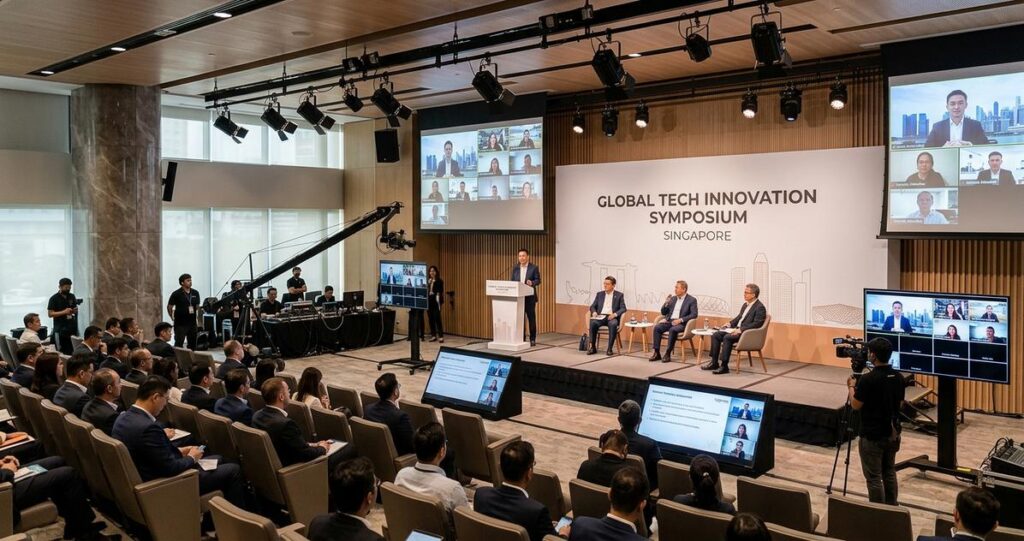
Hybrid conferences have become a practical format for many organisations in Singapore, from multinational companies and trade associations to government-linked bodies and professional societies. The model offers a useful combination of physical networking and online reach, but it also introduces a budgeting challenge. A hybrid event is not simply a live conference with a camera pointed at the stage. To deliver a smooth experience for both in-room and remote participants, you need to budget for venue, technical production, streaming infrastructure, staffing, rehearsal time, contingency planning, and post-event support. If any of these elements is underfunded, the result is often poor audio, unstable streaming, awkward speaker transitions, or an audience that feels like one group was treated as secondary. For Singapore-based organisers, where expectations for professionalism are high and event timelines are often tight, careful budgeting is not optional. It is part of the event strategy.
High-quality hybrid production does not always mean spending more everywhere. It means spending deliberately, with each dollar tied to a clear purpose. A strong budget starts with the event objective. Is the priority thought leadership, lead generation, member engagement, internal communication, or regional reach across time zones? The answer affects the scale of the production, the number of cameras needed, the complexity of switching, the level of branding required, and whether you need interactive features such as moderated Q and A, polling, or multilingual support. In Singapore, where venues, logistics, and labour costs can be significant, a well-planned budget helps you avoid last-minute trade-offs that damage the attendee experience. The goal is to create a conference that looks and sounds intentional, not improvised.
Start with the event format and define what “high-quality” means for your audience
Before assigning numbers to line items, decide what quality looks like for your specific conference. High quality does not mean the most expensive setup. It means the production supports the communication goals of the event and works reliably under real conditions. For a board-level executive briefing, quality may mean clean multi-camera coverage, crisp audio, and minimal visual clutter. For a product launch or public-facing conference, it may also include dynamic graphics, branded overlays, remote speaker integration, and strong audience engagement tools. For an internal corporate town hall, the priority may be stable streaming, clear speech intelligibility, and simple moderation.
Identify the audience experience on both sides of the screen
One common budgeting mistake is treating the in-room audience and remote audience as separate projects. In a hybrid format, both groups should receive a coherent experience. The physical audience needs the room acoustics, sightlines, lighting, stage design, and presentation flow to be considered. The online audience needs camera framing, audio quality, stream stability, and a platform that is easy to access on desktop and mobile devices. If you plan to use a single budget for both, make sure it includes enough resources for each audience path. A conference that feels polished in the ballroom but frustrating online, or vice versa, has not truly succeeded as a hybrid event.
Set the production standard early
Define the expected standard before requesting vendor quotes. This should include whether you need one camera or multiple cameras, whether you require live switching, whether slides must be integrated into the stream, and whether speakers will present in person, remotely, or in both modes. You should also decide if the event needs recording for on-demand viewing after the live session. Recording is not an afterthought in budgeting, because it affects capture workflow, storage, editing, and post-production time. In Singapore, where stakeholders often expect efficient turnaround and reusable content, a recording can add long-term value, but only if you plan for it properly from the start.
Build the budget around core production cost categories
A high-quality hybrid conference budget should be structured around major cost buckets rather than a single lump sum. This helps you see where the money is going and where savings are possible without harming the attendee experience. It also makes it easier to compare vendor proposals on an equivalent basis. In Singapore, event budgets can vary widely depending on venue choice, technical complexity, and the level of service required, so transparency in the cost structure is especially important.
Venue, power, and internet requirements
The venue is usually one of the largest cost components. Beyond room rental, you need to consider whether the venue supports the technical requirements of live production. Reliable wired internet, dedicated bandwidth, sufficient power points, rigging permissions, and appropriate loading access all affect the production setup. Some venues may charge for in-house internet upgrades or require approval for external technical teams. If the internet service is not robust enough for live streaming, a production team may need to provide bonded connectivity or backup mobile data solutions. These add cost, but they are essential risk controls for a live event.
Power distribution is another overlooked item. Cameras, switchers, encoders, monitors, microphones, lighting, and laptops all draw power. If the venue has limited access points, additional cabling or distribution units may be needed. Good planning reduces the chance of outages or overloaded circuits. In a Singapore hotel ballroom or convention venue, you should always clarify what is included in the venue package and what must be hired separately.
Audio, video, lighting, and streaming infrastructure
This is the heart of hybrid production. Audio should be treated as the top priority because poor sound is the fastest way to lose both in-room and online audiences. Budget for proper microphones, signal routing, monitoring, and an audio engineer who understands live conferencing. Video costs depend on the number of cameras, lens types, camera operators, and the switching workflow. A simple single-camera setup may be adequate for a basic webinar-style conference, but it rarely delivers the polished feel expected at a premium hybrid event. Multiple cameras allow better framing of speakers, audience shots, and panel discussions, which improves viewer engagement.
Lighting is another essential production item. Even a modest stage looks far more professional when lit correctly. Good lighting improves camera image quality, reduces shadows, and helps remote participants focus on the speaker. Streaming infrastructure includes the encoder, broadcast platform integration, graphics overlay systems, and internet redundancy. If you plan to support remote speakers, you may also need virtual meeting management software, return audio feeds, and a dedicated operator to manage speaker connections. Each of these items supports the overall reliability of the event.
Technical crew, rehearsal time, and event management
Equipment alone does not produce a successful hybrid conference. Skilled personnel are necessary to operate it. Budget for a producer, technical director, camera operators, sound engineer, streaming operator, graphics operator, and stage manager if the event is complex. For smaller conferences, some roles may be combined, but the principle remains the same: live production requires trained people. Rehearsal time should also be budgeted, because speaker checks, slide verification, microphone tests, and timing reviews reduce live-event errors. In Singapore, where executives and speakers may arrive with limited time, structured rehearsals are a practical necessity.
Event management costs should not be confused with technical production costs. Registration support, speaker coordination, audience communications, and run-of-show planning all take time and should be accounted for. If your internal team handles these tasks, there is still a real labour cost. Treating staff time as free can distort the budget and lead to under-resourcing. A realistic budget reflects the full effort required to deliver a professional event.
Plan for hidden costs that often surprise organisers
Hybrid conference budgets often run over because organisers underestimate the smaller items that accumulate. These costs may seem minor individually, but together they can materially affect the final figure. Planning for them early improves accuracy and reduces the chance of last-minute compromise. In practice, the hidden costs are often the difference between a workable production and a stressful one.
Graphic design, content preparation, and speaker support
Professionally designed slide templates, opening and closing sequences, lower thirds, agenda screens, and sponsor graphics all support the event’s visual identity. These assets may require design hours before the event and live production support during the conference. Speaker support is also important. If presenters need help formatting slides, embedding videos, or converting content for the stage screens and livestream, that work should be budgeted. A technically excellent event can still feel disorganised if the visual materials are inconsistent or if speakers are not prepared for the hybrid format.
Platform licensing, moderation, and audience engagement tools
Some organisers assume the streaming platform is a small cost, but licensing and feature requirements can change the budget materially. If you need webinar registration, branded landing pages, secure access, breakout rooms, polling, or moderated Q and A, the platform may need a higher service tier. You may also need staff to moderate questions from online attendees, manage chat behaviour, or coordinate speaker handoffs. These functions matter because hybrid conferences work best when online participants are not passive observers. A well-moderated interaction layer improves participation and helps the event feel integrated rather than split.
Recording, editing, and post-event deliverables
Many organisations in Singapore want recorded sessions for internal sharing, knowledge management, or marketing use after the live event. Recording requires storage, workflow planning, and sometimes post-event editing. If you need highlights, clipped speaker segments, or captioned versions, the budget should include post-production. Even if the live stream is the main deliverable, a clean recording can extend the life of the event and improve return on investment. That long-tail value is worth considering when you compare cost options.
Use a budgeting framework that balances quality, risk, and value
A practical budget framework does not start with the cheapest quote. It starts with the production outcomes you need, then allocates resources to the parts of the event that have the greatest impact on attendee experience and reliability. For hybrid conferences, audio, internet stability, and competent crew typically deserve priority over cosmetic extras. Once these foundations are secure, additional funds can go toward branding, advanced camera work, or richer interactivity. The sequence matters because the audience experiences the event through sound, image, and flow first, not through optional embellishments.
Separate must-have items from nice-to-have items
One of the most effective ways to control costs is to classify each budget item by necessity. Must-have items are those that directly affect event delivery, such as microphones, a stable stream, technical crew, venue access, and rehearsal time. Nice-to-have items may include extra camera angles, advanced motion graphics, or premium set design. This approach helps you protect the essential parts of the budget if you need to make cuts. It also prevents overspending on visual features while underfunding the elements that make the production dependable.
Leave room for contingency
Every live event should include a contingency allowance. Hybrid conferences carry operational risks such as last-minute speaker changes, equipment failure, venue restrictions, internet instability, and weather-related logistics. A contingency fund does not mean you expect problems. It means you are budgeting responsibly for live production realities. In Singapore, where many conferences are scheduled tightly and venues are booked well in advance, even a small disruption can be costly if there is no financial buffer. A contingency line gives the team room to respond without compromising the event.
Compare vendor proposals on scope, not just price
When reviewing vendor quotes, make sure you are comparing the same scope of work. One quote may include rehearsal, crew, graphics operation, and backup connectivity, while another may exclude these items and appear cheaper at first glance. Ask vendors to break down what is included, what is optional, and what counts as additional charges. Request clarity on overtime rates, transport, setup days, equipment substitution, and post-event deliverables. This is especially important in Singapore, where venue timing restrictions and logistics can create hidden surcharges if the scope is not carefully defined.
Make smart decisions based on Singapore-specific realities
Budgeting for a hybrid conference in Singapore requires awareness of local working conditions, venue standards, and audience expectations. Many events here are expected to run on time, present well, and reflect a professional corporate image. That puts pressure on production quality, but it also rewards careful planning. If your conference involves regional guests, overseas speakers, or high-stakes stakeholders, technical reliability becomes part of your brand reputation.
Account for venue constraints and city logistics
Singapore venues can be highly professional, but each site has its own policies for load-in, load-out, ceiling rigging, internet provisioning, and external vendor access. Some locations also have compact setup windows due to back-to-back bookings. This means production planning must happen earlier than the event date suggests. Transport and labour coordination should also be considered because setup timing affects the crew schedule and therefore the cost. If you choose a venue with limited technical flexibility, you may need to spend more on workaround solutions.
Support a multilingual and regional audience where needed
Singapore conferences often draw attendees from diverse linguistic and regional backgrounds. If your audience includes international participants, you may need live captioning, interpretation, or bilingual presentation materials. These services should be treated as production and accessibility costs, not optional extras added at the last minute. While not every conference needs them, they can make a major difference in comprehension and engagement. Accessibility also matters for viewers who rely on captions or who join in environments where audio playback is limited.
Choose a format that matches the actual business objective
Some organisers assume hybrid is always the better option, but not every event needs a full hybrid setup. If the purpose is a small internal workshop with no external reach, a simpler digital or in-person format may be more cost-effective. If the purpose is to engage a broader audience across Singapore and the region, hybrid may justify the investment because it extends participation without sacrificing face-to-face interaction. The most effective budget is one that aligns production complexity with business value. Spending more only makes sense when the added capability serves a clear goal.
When you budget carefully for a hybrid conference, you protect both the attendee experience and the organisation’s reputation. The process starts with a clear event objective, continues with a realistic breakdown of production costs, and ends with contingency planning and vendor comparison. For Singapore organisers, this approach is especially important because event standards are high and live production errors are visible immediately. The best budget is not the one that looks smallest on paper. It is the one that allows the conference to run smoothly, communicate clearly, and leave both in-room and online participants with a professional impression. If you are planning a hybrid event, treat budgeting as a strategic part of production, not a back-office task. That mindset is what turns a conference from merely functional into genuinely effective.
General information only: This article is intended for general awareness and event planning guidance. For contract, venue, technical, or regulatory decisions, consult qualified event professionals and review the latest requirements from the relevant Singapore venue, platform, or authority.
Jeremy Lee is a seasoned digital marketing director and strategist with over two decades of experience in the industry. As the founder of Sotavento Medios, I manage a diverse portfolio of over 50 businesses, helping brands grow through advanced search strategies and digital innovation. My work focuses on bridging the gap between traditional search engine optimisation and the evolving world of AI-driven answer engines.
get in touch