
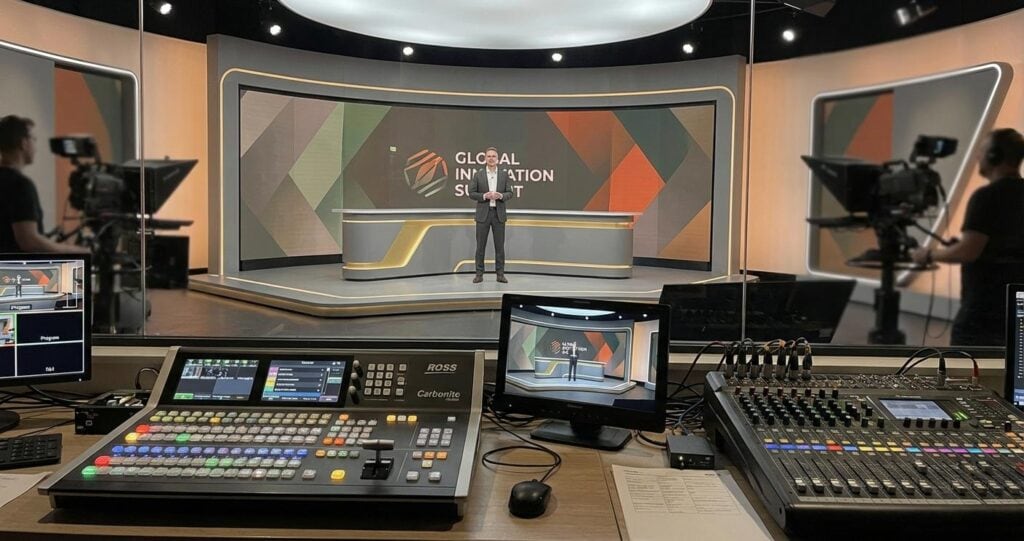
In the high-stakes realm of B2B event streaming and hybrid production, a virtual studio is far more than a mere digital backdrop; it is a critical extension of an enterprise’s brand identity and a powerful declaration of its authority. For corporate event planners, AV professionals, production managers, and IT directors, understanding the intricate technical architecture behind a compelling virtual studio is paramount. This article delves into the advanced technical considerations required to design, implement, and operate virtual studios that not only captivate but also reinforce brand messaging with precision and broadcast-grade fidelity. We move beyond rudimentary green screen setups to explore sophisticated integration of real-time graphics engines, advanced signal routing, and robust streaming infrastructure that defines enterprise-level virtual event production.
Foundational Elements of a Branded Virtual Studio Environment
The creation of a truly authoritative virtual studio begins with a meticulous technical blueprint, integrating visual design with robust production infrastructure. This involves selecting appropriate technologies for 3D environment rendering, real-time compositing, and dynamic content integration, ensuring seamless blend of virtual and physical elements.
Architectural Design and Asset Integration
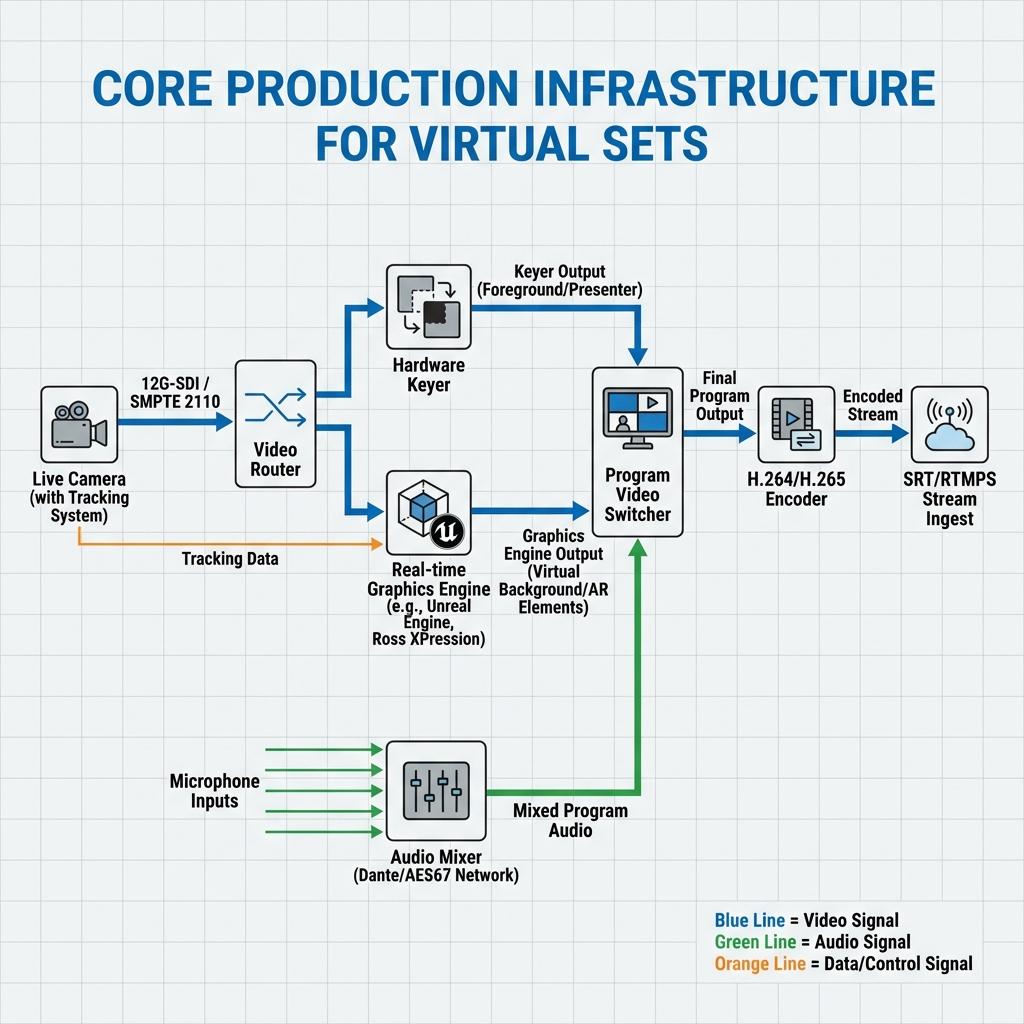
The visual architecture of a virtual studio must align directly with an organization’s brand guidelines, extending beyond simple logo placement to encompass color palettes, typographic styles, and spatial aesthetics. This necessitates the development or acquisition of high-fidelity 3D models and textures. Modern virtual sets often leverage advanced graphics engines, such as Unreal Engine or Ross XPression, which provide photorealistic rendering capabilities and intricate lighting simulation. Integration of augmented reality (AR) elements, where virtual objects interact with physical presenters and environments, requires precise camera tracking systems (e.g., Stype, Mo-Sys, or Ncam) that provide XYZ positional data and lens metadata (focus, zoom, iris) via FreeD protocol or proprietary data streams. Green screen (chroma key) environments are foundational, demanding uniform lighting at 150-200 foot-candles across the screen to achieve a clean key, minimizing spill suppression challenges during post-production or real-time compositing. Custom motion graphics, lower thirds, and on-screen data visualizations are developed in industry-standard software like Adobe After Effects or Maxon Cinema 4D, rendered for real-time playout via dedicated media servers.
Core Production Infrastructure for Virtual Sets
At the heart of a virtual studio lies a sophisticated production infrastructure. Keyers, essential for chroma keying, must operate with extremely low latency and high fidelity, distinguishing between subtle shades of green or blue. Dedicated hardware keyers, such as those found in Grass Valley K-Frame, Blackmagic ATEM Constellation, or Ross Carbonite switchers, offer superior performance compared to software-based solutions for critical live applications. Video signals, typically 1080p60 or 4K/UHD over 12G-SDI or SMPTE 2110 IP networks, are routed through a central video router (e.g., Evertz EQX, Imagine Communications Platinum). This router facilitates flexible signal distribution to graphics engines, multiview displays, and program switchers. For IP-based workflows, Network Device Interface (NDI) or Secure Reliable Transport (SRT) streams can transport video, audio, and metadata across a dedicated gigabit or 10 Gigabit Ethernet network, requiring careful bandwidth management and Quality of Service (QoS) prioritization to prevent frame drops or latency spikes. Audio routing often employs Audio-over-IP (AoIP) solutions like Dante or AES67, ensuring synchronized, high-quality audio channels from microphones, playback systems, and intercoms are seamlessly integrated into the video production switcher.
Advanced Technical Considerations for Visual Fidelity and Immersion
Achieving truly immersive and visually stunning virtual studios demands a deep dive into high-resolution workflows, precise color management, and dynamic content integration, all while maintaining synchronous operation across complex systems.
High-Resolution Content Workflows
The proliferation of 4K/UHD (3840×2160 pixels) and even 8K resolutions in displays necessitates content creation and delivery pipelines capable of handling these high data rates. For virtual studios, this means sourcing cameras with 4K output capabilities (e.g., Sony HDC series, Panasonic AK-UC4000) and ensuring all subsequent signal paths—from camera control units (CCUs), through the video switcher, to the graphics engine and final encoder—maintain the chosen resolution and frame rate, typically 59.94p or 60p. High Dynamic Range (HDR) workflows, utilizing standards like HDR10 or HLG, provide superior contrast and color depth, but require end-to-end compatibility across all hardware and software components, including display calibration. Color management, adhering to ITU-R BT.709 for SDR or BT.2020 for HDR, is crucial to ensure brand colors are rendered accurately throughout the production chain. Signal integrity is paramount, often relying on 12G-SDI for single-cable 4K transport or a fully IP-based SMPTE ST 2110 infrastructure, requiring precise packet timing (PTP – Precision Time Protocol) to prevent alignment issues between video, audio, and ancillary data streams.
Real-time Data Integration and Dynamic Content
A static virtual studio, no matter how visually appealing, offers limited engagement. Enterprise-grade virtual studios integrate real-time data feeds to drive dynamic content, such as live polling results, social media displays, or interactive financial charts. This typically involves custom API integrations with enterprise platforms (e.g., Salesforce, Tableau) or dedicated data visualization engines. For example, a JavaScript Object Notation (JSON) data stream might update a dynamically rendered virtual scoreboard or infographic within the graphics engine. This real-time interactivity requires robust scripting capabilities within the graphics platform (e.g., scripting languages like JavaScript or Python within proprietary graphics software) and a low-latency network connection to the data source. Integrating audience interaction tools, such as Q&A platforms (e.g., Slido, Mentimeter) or live chat functions, into the virtual studio display requires careful design to ensure readability, brand consistency, and real-time moderation capabilities that do not disrupt the program feed.
Optimizing Audio and Interactivity in Virtual Environments
Beyond the visual spectacle, a virtual studio’s true authority is cemented by its pristine audio quality and seamless interactivity. These elements are not afterthoughts but integral components of the overall technical design, demanding specific attention to routing, mixing, and audience engagement mechanics.
Broadcast-Grade Audio Routing and Mixing
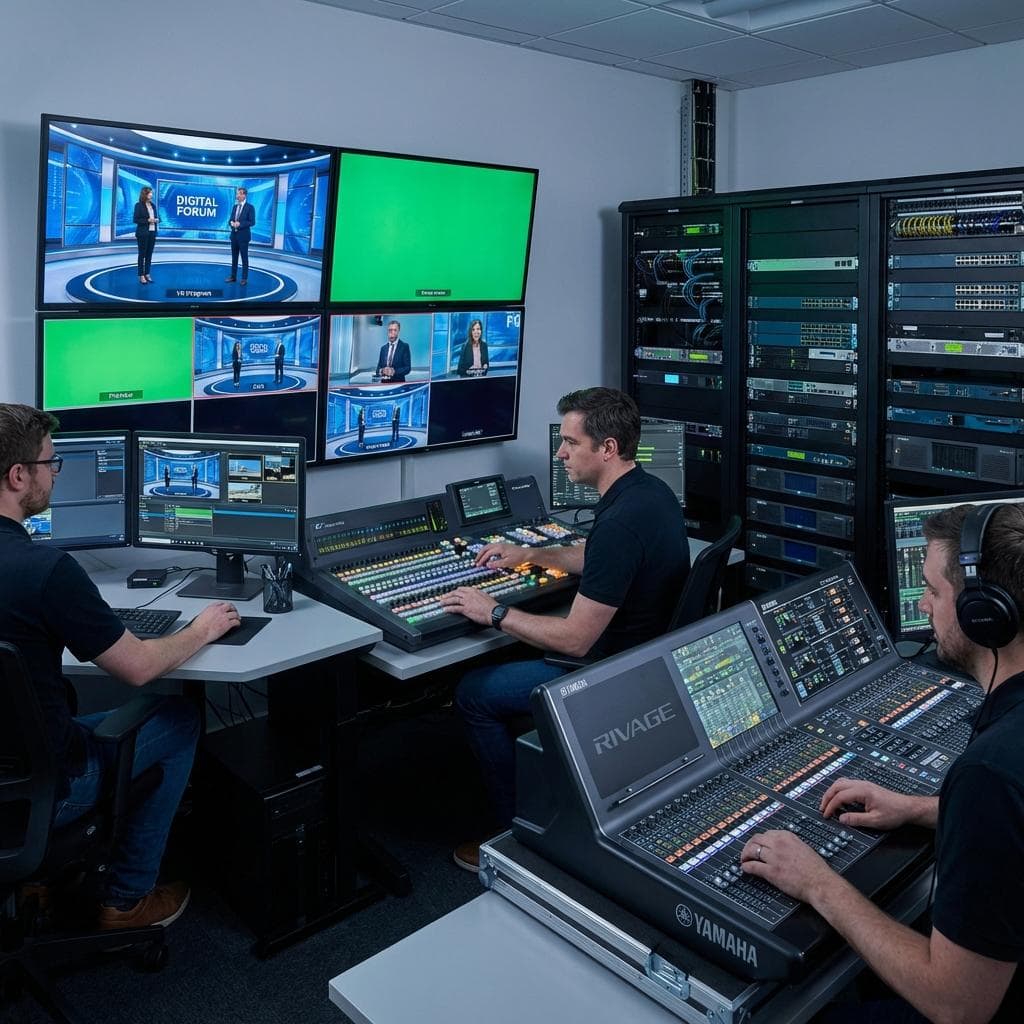
Clear, articulate audio is non-negotiable for B2B communications. In a virtual studio, this requires a professional audio infrastructure utilizing digital audio consoles (e.g., Yamaha Rivage PM series, Solid State Logic System T) that support sophisticated routing and mixing capabilities. Microphones, ranging from presenter lavaliers and headsets to stage-mounted boundary mics, are typically connected via XLR to an audio interface or stage box, then transported digitally via Dante or AES67 over a dedicated IP network to the main audio mixer. This digital transport minimizes signal degradation and allows for extensive channel counts. Advanced digital signal processing (DSP) including equalization, compression, gating, and de-essing is applied to individual channels to optimize voice clarity and eliminate ambient noise. Talkback systems (e.g., Clear-Com, RTS) are critical for seamless communication between the director, technical director, camera operators, and talent, often integrated over IP to extend communication to remote team members. Program audio, comprising presenter microphones, playback music, and video clip audio, is meticulously mixed and then embedded into the program video feed (SDI or SMPTE 2110) before encoding for streaming. Multi-channel audio monitoring, including surround sound capabilities for immersive experiences, is managed via professional audio monitors calibrated to industry standards like ITU-R BS.1770 loudness recommendations.
Audience Engagement Mechanics and Data Collection
To foster genuine connection in a virtual event, interactive elements must be technically robust and seamlessly integrated. This includes live polling, Q&A sessions, virtual networking breakout rooms, and gamification elements. From a technical perspective, these features rely on robust web-based platforms communicating via secure web sockets (WSS) or HTTPS with the central content management system. Data collected from these interactions must be captured, processed, and potentially visualized in real-time within the virtual studio environment, requiring APIs that can push data to the graphics engine for immediate display. Integration with enterprise Customer Relationship Management (CRM) or Marketing Automation Platforms (MAP) is crucial for post-event analytics, demonstrating return on investment. This necessitates secure data pipelines and compliance with data privacy regulations (e.g., GDPR, CCPA). The entire interactive ecosystem must be designed for scalability, capable of handling thousands of concurrent users without degradation in performance or latency, typically leveraging cloud-based microservices architectures and content delivery networks (CDNs) for global reach.
Network Resiliency, Security, and Global Distribution
The technical backbone of any enterprise streaming solution, particularly for virtual studios, is a resilient, secure, and globally distributed network infrastructure. Without this, even the most visually stunning production can fail to reach its intended audience effectively.
Enterprise Network Architecture for Virtual Production
Dedicated network infrastructure is critical for professional virtual studio operations. This often involves isolated VLANs (Virtual Local Area Networks) for video, audio, control data, and general internet traffic to ensure bandwidth prioritization and minimize interference. For uncompressed or minimally compressed IP video workflows (e.g., SMPTE ST 2110, high-bitrate NDI), a 10 Gigabit Ethernet (10GbE) or even 40GbE network is essential, equipped with managed switches configured for QoS, IGMP snooping, and multicast routing. Bandwidth calculations for various streaming protocols are crucial: a 1080p60 NDI|HX stream might consume 20-100 Mbps, while a full NDI stream can range from 125 Mbps to 250 Mbps per channel. SRT (Secure Reliable Transport) is increasingly preferred for its low-latency, resilient contribution over unpredictable networks, offering error correction and packet recovery. RTMP (Real-Time Messaging Protocol) and RTMPS (secure RTMP) remain widely used for last-mile delivery to CDNs. Implementing redundancy at every layer, including dual network paths, redundant power supplies for critical network devices, and failover mechanisms for encoders and streaming servers, is a standard practice to ensure continuous operation.
Cloud-Hybrid Architectures and Edge Computing
Enterprise streaming solutions often leverage a hybrid approach, combining on-premise production capabilities with cloud-based distribution. The initial program feed, typically encoded using H.264 or H.265 (HEVC) at bitrates ranging from 5 Mbps to 20 Mbps for 1080p content, is ingested by a primary streaming platform (e.g., AWS Elemental MediaLive, Azure Media Services, Vimeo Enterprise) and simultaneously sent to a redundant backup. These platforms then transcode the stream into multiple adaptive bitrate (ABR) renditions (e.g., 360p, 720p, 1080p) and distribute them via a global Content Delivery Network (CDN) like Akamai, Cloudflare, or AWS CloudFront. CDNs utilize Points of Presence (PoPs) strategically located worldwide to cache and deliver content closer to the end-user, minimizing latency and buffering. Edge computing, where processing occurs closer to the data source (e.g., local encoders or transcoders at the event venue), further reduces backhaul bandwidth requirements and improves real-time responsiveness. Security protocols such as HTTPS for web delivery, RTMPS for ingest, and digital rights management (DRM) for premium content are foundational to protect intellectual property and ensure authorized access, critical for sensitive corporate communications.
Designing and implementing virtual studios that truly reflect brand identity and authority in the B2B event space is a multifaceted technical endeavor. It demands a holistic understanding of 3D graphics engines, broadcast-grade production workflows, sophisticated audio routing, robust network infrastructure, and secure global distribution. By meticulously planning each technical component, from high-fidelity visual asset integration to resilient streaming protocols and cloud-hybrid architectures, enterprises can leverage virtual studios not just as venues, but as powerful, immersive platforms for communication and engagement. Partnering with a technically proficient team like Spring Forest Studio, with deep expertise in B2B live event streaming and enterprise production, ensures that these complex technical requirements are met with precision, delivering unparalleled virtual experiences that elevate brand presence and achieve strategic business objectives.

Jeremy Lee is a seasoned digital marketing director and strategist with over two decades of experience in the industry. As the founder of Sotavento Medios, I manage a diverse portfolio of over 50 businesses, helping brands grow through advanced search strategies and digital innovation. My work focuses on bridging the gap between traditional search engine optimisation and the evolving world of AI-driven answer engines.
get in touch