
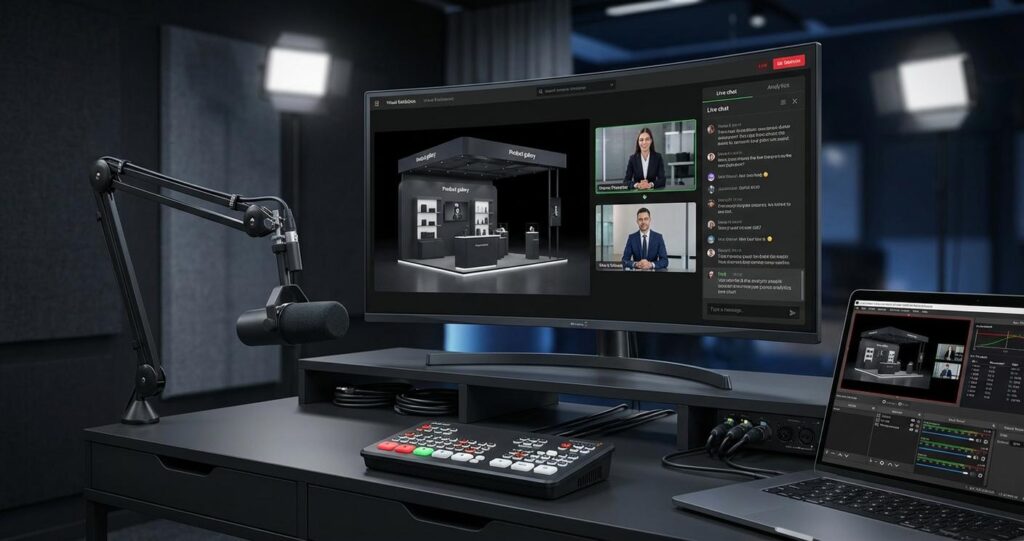
In the evolving landscape of B2B engagements, the global trade show has transcended its physical confines, necessitating robust, interactive virtual exhibition booths. For enterprise decision-makers, AV professionals, and IT directors, the imperative is clear: deploy streaming solutions that are not merely duplications of physical presence, but sophisticated digital environments engineered for deep interaction, real-time data exchange, and unparalleled global reach. Spring Forest Studio specializes in architecting these complex B2B event streaming and hybrid production ecosystems, focusing on enterprise-grade infrastructure, high-fidelity signal transport, and seamless integration with existing corporate platforms. This technical exposition delves into the intricate architecture, production workflows, and advanced protocols required to create truly interactive virtual exhibition booths that deliver measurable ROI and profound attendee engagement.
Foundation of Immersive Virtual Booths: Architectural Pillars for Enterprise-Grade Streaming
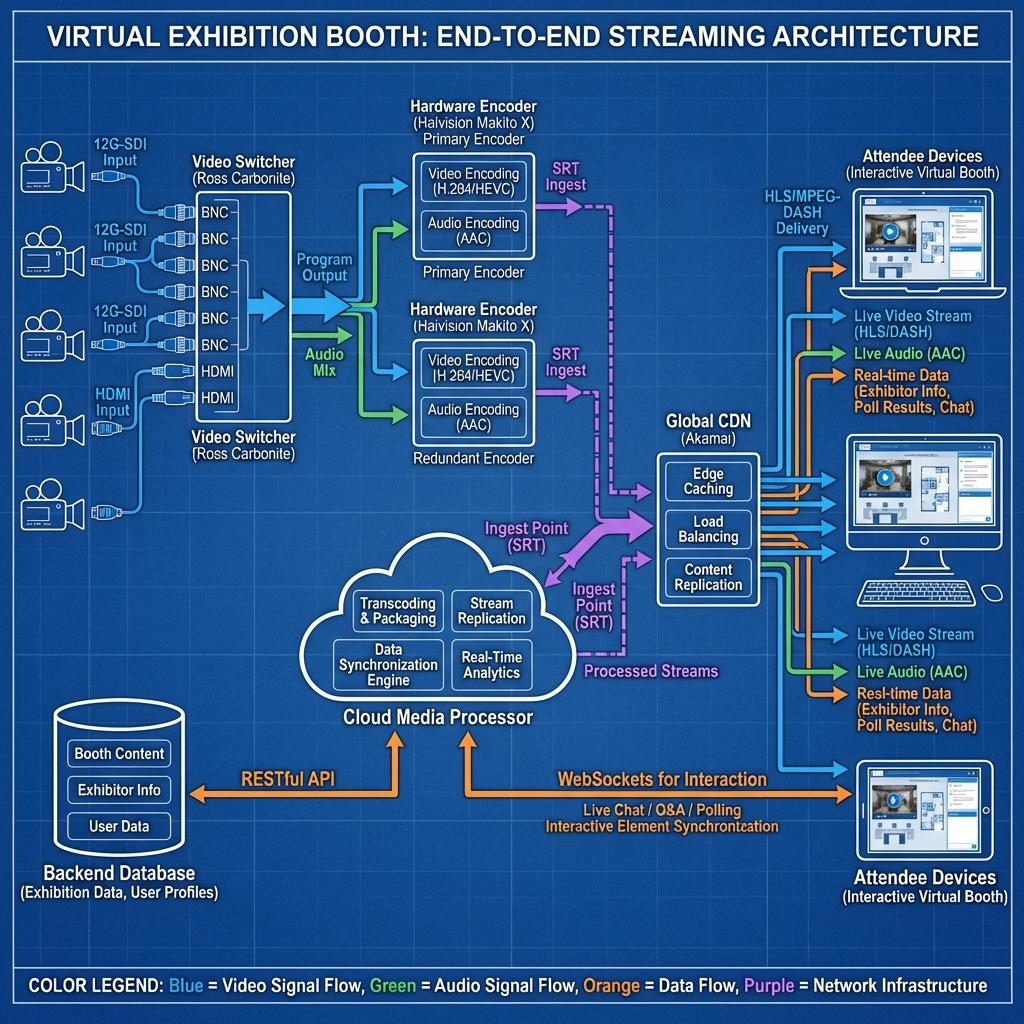
The bedrock of an effective interactive virtual exhibition booth is a meticulously engineered streaming architecture. This involves a confluence of reliable content ingest, efficient encoding, secure transport, and intelligent content delivery network (CDN) distribution. Unlike consumer-grade streaming, B2B virtual environments demand extremely low latency, high availability, and uncompromising video and audio fidelity, often supporting resolutions up to 4K Ultra High Definition (UHD) at 59.94p or 29.97p frame rates with a target bitrate of 20-50 Mbps for primary program feeds, utilizing H.264 or H.265 (HEVC) encoding profiles. The choice of streaming protocol is paramount. For contribution links from a physical production site to a cloud-based processing hub, Secure Reliable Transport (SRT) is often preferred due to its ability to maintain video quality over unstable public internet connections, minimizing packet loss and jitter while offering robust encryption. Real-Time Messaging Protocol (RTMP) and its secure variant, RTMPS, remain prevalent for ingest into many CDN platforms, but typically introduce higher latency compared to WebRTC or specialized low-latency protocols. Network Device Interface (NDI) and NDI|HX are critical for IP-based video routing within the local area network (LAN) of a production facility, facilitating multi-camera setups and seamless integration with software-defined video switchers.
Real-time Data Synchronization and API Integration
Interactive virtual booths are not passive video feeds; they are dynamic data environments. Core to their functionality is real-time data synchronization, achieved through robust Application Programming Interface (API) integrations. This enables immediate updates to product information, live polling results, attendee analytics, and scheduling changes. The backend infrastructure must support RESTful APIs or GraphQL for efficient data retrieval and submission. For low-latency data exchange, WebSockets or Server-Sent Events (SSE) are often employed to push updates from the server to client browsers without constant polling, ensuring that all interactive elements—such as live Q&A feeds, downloadable resource libraries, and appointment booking systems—reflect the most current information. Secure OAuth 2.0 or OpenID Connect protocols are essential for authenticating users and securing data transactions, adhering to enterprise security standards like ISO/IEC 27001.
High-Fidelity A/V Delivery: Protocols and Codecs
The visual and auditory experience within a virtual booth must rival, if not surpass, that of a physical presence. This necessitates stringent adherence to professional broadcast standards. Video signals from high-end professional cameras (e.g., Sony PXW-FX9, ARRI AMIRA) are typically captured via Serial Digital Interface (SDI) at resolutions up to 12G-SDI or HDMI 2.1 for 4K/UHD, before being fed into hardware encoders. These encoders, such as those from Haivision or AJA, convert the uncompressed video into highly efficient H.264 (AVC) or H.265 (HEVC) streams. For program feeds, a typical Group of Pictures (GOP) structure might be IPBB with a keyframe interval of 2-4 seconds, optimizing for both quality and low latency. Audio, often captured at 48kHz, 24-bit PCM, is typically encoded using AAC-LC at bitrates between 128 kbps and 256 kbps for stereo, embedded within the video stream. For multi-channel audio or specific immersive experiences, dedicated audio streams using protocols like Dante or AES67 over IP, synchronized via Precision Time Protocol (PTP), might be integrated. The delivery mechanism leverages adaptive bitrate (ABR) streaming using HTTP Live Streaming (HLS) or MPEG-DASH. This allows client devices to dynamically switch between multiple encoded renditions (e.g., 1080p at 6 Mbps, 720p at 3 Mbps, 480p at 1.5 Mbps) based on available bandwidth, ensuring a seamless viewing experience across diverse network conditions. Content is distributed via Tier 1 CDNs with global points of presence (PoPs) to minimize geographical latency and maximize throughput.
Interactive Element Integration and User Engagement Architectures
Beyond passive viewing, true interaction is the hallmark of a successful virtual exhibition booth. This demands sophisticated integration of live streaming, real-time communication tools, and data-driven engagement features, all orchestrated within a robust and scalable architecture. The frontend user interface, typically developed using modern web frameworks (e.g., React, Angular, Vue.js), must be highly responsive and optimized for cross-browser and cross-device compatibility, delivering an intuitive user experience on desktops, tablets, and mobile devices.
Live Streaming Integration: Multi-Camera Feeds and Program Switching
For live presentations, product demonstrations, or one-on-one executive meetings within the virtual booth, professional multi-camera production is indispensable. This setup often involves 2-4 broadcast-grade cameras (e.g., PTZ cameras like Panasonic AW-UE150 or studio cameras like Blackmagic URSA Broadcast G2) connected to a video switcher, such as a Ross Carbonite or Blackmagic ATEM Constellation. The switcher handles seamless transitions, graphics overlays (lower thirds, animated logos), and Picture-in-Picture (PiP) effects, creating a polished program feed. This program feed is then routed to a dedicated hardware encoder for streaming, often configured with a failover encoder for redundancy. For enhanced interaction, a separate return feed (multiview monitoring) or talkback system (e.g., RTS Intercom) can be established for presenters to interact with a remote production team. The encoded program stream is ingested into the virtual booth platform, enabling attendees to view live content with minimal glass-to-glass latency, ideally under 2 seconds. Integration with existing enterprise platforms like Microsoft Teams or Zoom can also facilitate internal team collaboration or direct attendee-to-exhibitor video calls, leveraging their robust conferencing APIs for seamless handoffs and session management.
Bidirectional Communication and Q&A Modules
Effective engagement relies on robust bidirectional communication. Interactive Q&A modules, built using WebSockets, allow attendees to submit questions in real time. These questions are moderated by a backend system, which can filter, prioritize, and display them on a presenter’s confidence monitor via a dedicated output from the video switcher or a separate display application. Live chat functionality, often integrated with AI-powered chatbots for immediate responses to frequently asked questions, further enhances engagement. For private one-on-one or small group meetings, integrated video conferencing tools within the booth platform—leveraging WebRTC for peer-to-peer or multipoint conferencing—allow exhibitors to conduct personalized consultations, demos, or sales discussions. These private sessions must support secure encryption (DTLS, SRTP) and maintain high audio/video quality, adapting dynamically to network conditions. User data from these interactions, including chat logs and meeting durations, is securely captured for post-event analytics and lead generation.
Gamification and Data Analytics Frameworks
To sustain attendee interest and gather valuable insights, gamification elements and comprehensive data analytics are crucial. Interactive quizzes, virtual scavenger hunts, and leaderboard challenges can be integrated, driven by an event management system API that tracks user participation and rewards. Each interaction—a document download, a video view duration, a poll response, or a booth visit—generates data points. A robust analytics framework, leveraging tools like Google Analytics 4 (GA4) or specialized event analytics platforms, ingests this data for real-time dashboards and post-event reports. Key performance indicators (KPIs) include average time spent in booth, number of unique visitors, conversion rates for content downloads, engagement rates for live sessions, and lead generation metrics. This data provides actionable insights into attendee behavior and content effectiveness, allowing exhibitors to refine their strategies for future virtual and hybrid events. Compliance with data privacy regulations such as GDPR and CCPA is paramount, requiring strict data anonymization and user consent mechanisms.
Enterprise-Grade Production Workflows and Scalability for Global Reach
Deploying interactive virtual exhibition booths for global trade shows demands a production workflow that is not only technically sophisticated but also inherently scalable, resilient, and secure. This extends from content acquisition to final delivery, encompassing robust network infrastructure and comprehensive quality assurance.
Multi-Venue Contribution and Centralized Control Rooms
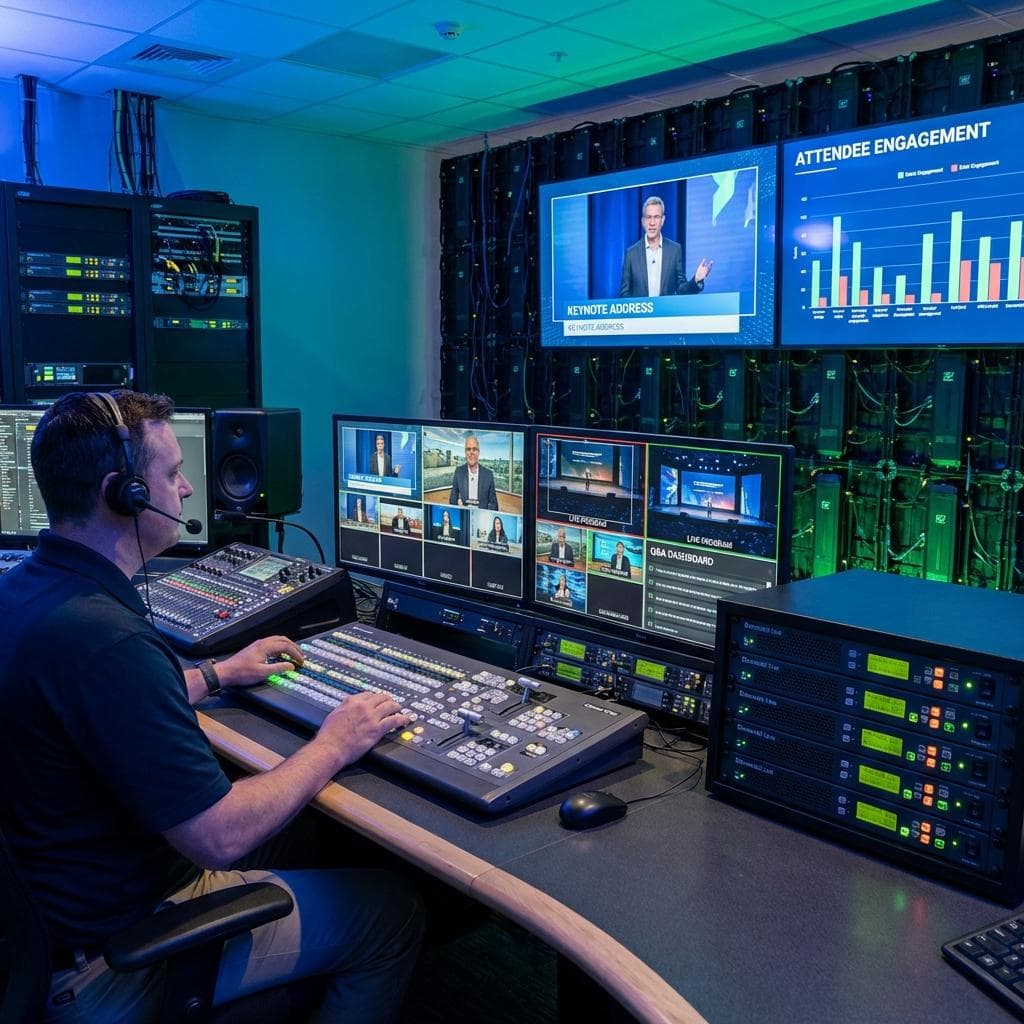
Global trade shows often involve exhibitors and presenters distributed across multiple geographical locations. This necessitates a multi-venue contribution strategy. Remote presenters can utilize professional-grade webcams (e.g., Logitech Brio, Lumina 4K) or dedicated all-in-one streaming devices (e.g., Teradek Cube, LiveU Solo) with robust internet connections for their feeds. For high-profile speakers, a dedicated remote production kit, including a professional camera (e.g., Sony ZV-E10), an audio interface (e.g., Rode AI-1), and a hardware encoder, can be shipped. These individual feeds are ingested into a centralized cloud-based production switcher (e.g., Grabyo, Mux Video) or a hybrid on-premise/cloud control room. The centralized control room, staffed by technical directors, audio engineers, and graphic operators, processes all incoming feeds, performs vision mixing, audio sweetening, and graphics insertion, producing a cohesive program output. Talkback systems and return program feeds ensure seamless communication between the central production team and remote presenters, maintaining a professional and synchronized delivery. Time synchronization across multiple distributed sources is critical, often achieved through Network Time Protocol (NTP) or more precise protocols like SMPTE 2110-30 for professional IP-based media transport.
Network Infrastructure for Global Reach and Redundancy
The underlying network infrastructure is the circulatory system of a global virtual exhibition. High-bandwidth, low-latency connectivity is non-negotiable. For on-premise contributions, dedicated fiber optic connections (e.g., 1 Gbps symmetric or higher) are essential. For remote participants, redundant internet connections (primary ISP with a cellular backup via 5G hotspots or dedicated bonding devices) are crucial to prevent signal loss. The use of Content Delivery Networks (CDNs) with a global footprint ensures that content is delivered from the edge server geographically closest to each attendee, drastically reducing latency and improving loading times. Enterprise-grade CDNs like Akamai, Cloudflare, or AWS CloudFront offer advanced features such as DDoS protection, WAF (Web Application Firewall), and detailed traffic analytics. Network redundancy extends to multiple upstream providers, diverse routing paths, and automatic failover mechanisms, ensuring uninterrupted service even in the event of localized network outages. Quality of Service (QoS) policies are implemented across the network to prioritize streaming traffic, guaranteeing bandwidth and minimizing packet loss for critical A/V feeds.
Security, Compliance, and Quality of Service (QoS)
In the B2B space, security and compliance are paramount. All streaming data must be encrypted in transit using TLS/SSL (Transport Layer Security/Secure Sockets Layer) and at rest. Digital Rights Management (DRM) can be implemented for premium content, protecting intellectual property. Access control mechanisms, including single sign-on (SSO) integration with corporate directories (e.g., Okta, Azure AD), ensure only authorized personnel and attendees can access specific booth content or interactive sessions. Compliance with international data privacy regulations (GDPR, CCPA) requires a transparent data handling policy and robust consent management. Furthermore, maintaining Quality of Service (QoS) is critical. This involves continuous monitoring of streaming metrics—bitrate, frame rate, dropped frames, audio levels, and end-to-end latency—using specialized tools (e.g., Telestream IQ, Sentry). Proactive monitoring allows for immediate identification and resolution of potential issues, guaranteeing a consistently high-quality experience for all attendees. Failover strategies, including redundant encoders, primary/secondary CDN configurations, and geo-redundant server deployments, are integral to an enterprise-grade streaming solution, ensuring maximum uptime and resilience against unforeseen technical challenges.
Conclusion: The Future of B2B Engagement is Interactively Streamed
Creating interactive virtual exhibition booths for global trade shows is a highly technical undertaking that demands expertise in advanced streaming protocols, broadcast-grade production workflows, and robust enterprise infrastructure. Spring Forest Studio, with its deep understanding of B2B event streaming and hybrid production challenges, offers the specialized technical acumen required to design, implement, and manage these complex digital environments. By meticulously integrating high-fidelity A/V delivery, real-time data synchronization, sophisticated interactive modules, and scalable, secure network architectures, we empower organizations to transcend geographical barriers, foster unparalleled engagement, and capture invaluable insights. The future of B2B engagement is not merely virtual; it is interactively streamed, expertly produced, and meticulously engineered for success on a global stage.

Jeremy Lee is a seasoned digital marketing director and strategist with over two decades of experience in the industry. As the founder of Sotavento Medios, I manage a diverse portfolio of over 50 businesses, helping brands grow through advanced search strategies and digital innovation. My work focuses on bridging the gap between traditional search engine optimisation and the evolving world of AI-driven answer engines.
get in touch