
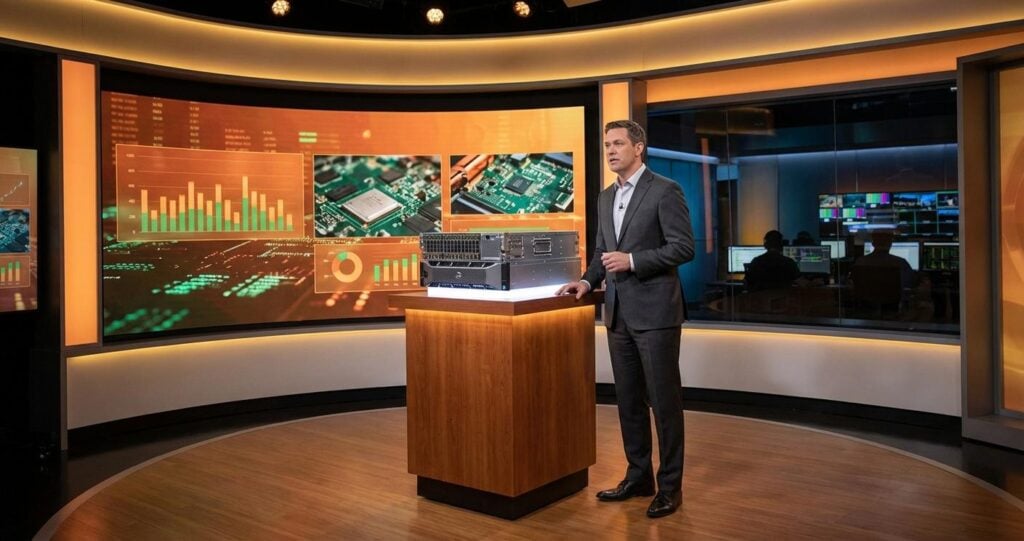
The Architecture of Influence: Engineering Immersive Digital Product Demonstrations
In the enterprise sector, a digital product demonstration is more than a simple presentation; it is a critical sales and marketing engagement. Standard webcam-based walkthroughs delivered over generic meeting platforms fail to capture the engineering sophistication and value proposition of complex B2B products. To truly engage technical decision-makers and C-suite executives, a fundamentally different approach is required. This involves creating a fully immersive, broadcast-quality environment that combines the clarity of an in-person demonstration with the reach of a global digital event. This is not about virtual reality headsets. It is about the meticulous application of professional production architecture, signal integrity, and multi-layered visuals to build an experience that is authoritative, clear, and compelling. Achieving this level of immersion requires a deep understanding of video transport protocols, production hardware, and network infrastructure, ensuring that every technical detail of the product is conveyed with absolute precision and professionalism.
Foundational Infrastructure: Signal Integrity and Transport Protocols
The bedrock of any immersive digital experience is pristine signal integrity. Before any creative elements can be considered, a robust architecture for acquiring, routing, and transporting high-resolution video and audio signals must be engineered. This foundation determines the ultimate quality and reliability of the entire production. For digital product demonstrations where detail is paramount, compromising on signal quality is not an option. This requires a professional broadcast-level approach to signal management, from the camera sensor to the final encoding process.
Baseband vs. IP: SDI and NDI Architectures
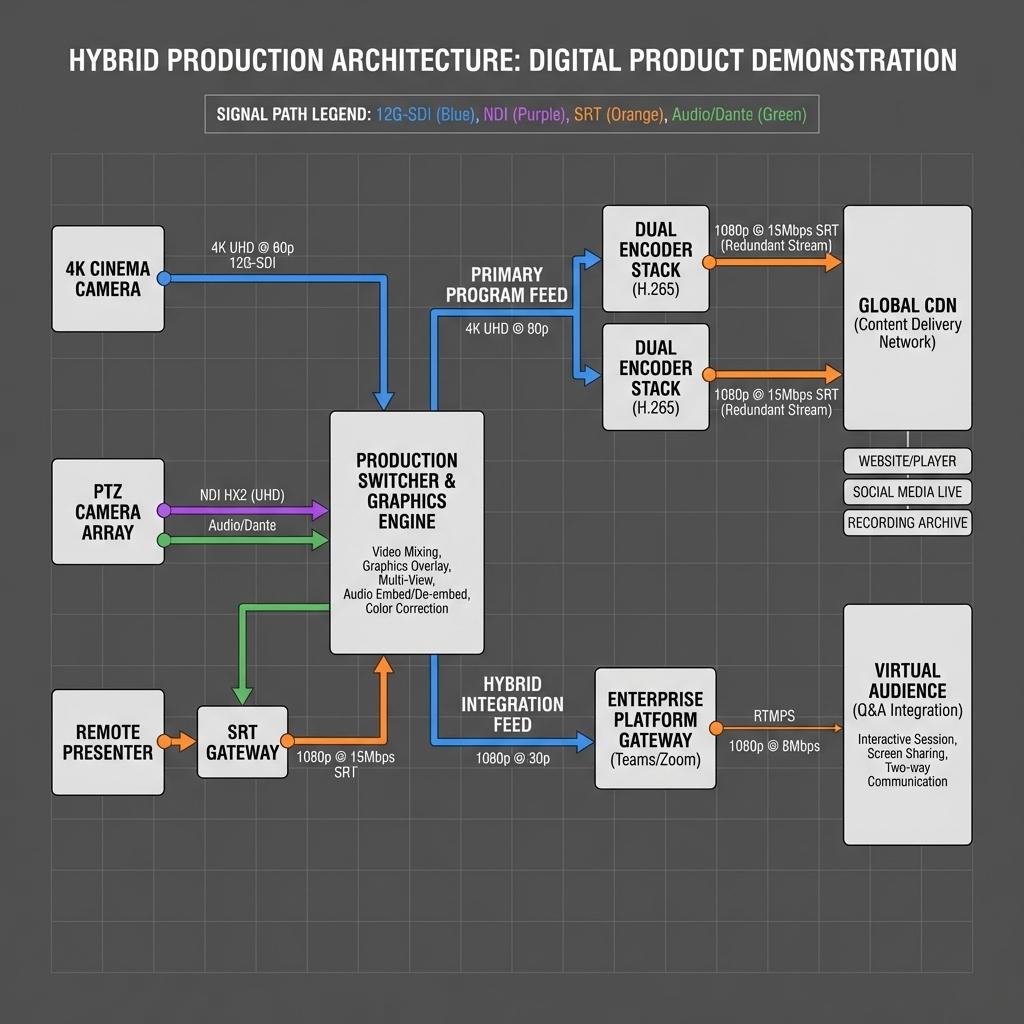
The initial choice of signal transport methodology within the production environment dictates workflow flexibility, scalability, and cost. For decades, the industry standard has been Serial Digital Interface (SDI), a baseband protocol that transmits uncompressed video over coaxial cable. For 4K/UHD (Ultra High Definition) at 60 frames per second, the 12G-SDI standard is the professional benchmark, providing a dedicated, point-to-point connection that guarantees signal delivery without network-related packet loss or latency. This makes it ideal for mission-critical connections between cameras, production switchers, and recorders in a localized control room.
However, modern productions increasingly leverage IP-based workflows for their flexibility. Network Device Interface (NDI), developed by NewTek, allows for the transport of high-quality, low-latency video over standard Gigabit Ethernet networks. Full-bandwidth NDI can carry a 4K/UHD signal at bitrates around 250 Mbps, offering a visually lossless feed that rivals baseband video. For environments with bandwidth constraints, NDI|HX and its subsequent versions use high-efficiency, low-bitrate encoding to transmit video at a fraction of that data rate, albeit with a slight increase in latency. An effective architecture often uses a hybrid approach: 12G-SDI for key camera sources requiring zero latency, and NDI for graphics systems, remote callers, and secondary sources where the flexibility of IP routing is advantageous.
Contribution Protocols for Remote Feeds: SRT vs. RTMP
When a product expert or presenter is located off-site, the protocol used to transport their video feed into the main production is critical. The widely used Real-Time Messaging Protocol (RTMP) is a TCP-based protocol that is poorly equipped to handle network instability. It can introduce significant latency and buffering when confronted with packet loss. For professional contribution, Secure Reliable Transport (SRT) is the superior open-source protocol. SRT operates over UDP, providing low-latency transmission while incorporating an intelligent packet loss recovery mechanism (ARQ – Automatic Repeat reQuest) that re-transmits only the lost packets. This allows for a stable, high-quality feed even over unpredictable public internet connections. A remote presenter can send a 1080p60 feed encoded with H.265 at 10-15 Mbps using SRT, achieving a glass-to-glass latency of under a second while maintaining exceptional image quality for integration into the main program.
Encoding and Bitrate Management for Immersive Quality
The final stage of delivery involves encoding the program feed for distribution to the audience. The choice of codec and bitrate strategy directly impacts the viewer’s experience. While H.264 remains a universally compatible codec, H.265, also known as High Efficiency Video Coding (HEVC), offers approximately 50% greater compression efficiency. This means a 4K stream can be delivered with higher quality at a lower bitrate. For a premium 1080p60 stream, a bitrate of 6-8 Mbps using H.264 is standard. For a 4K/UHD stream, a bitrate of 25-35 Mbps using H.265 is recommended to preserve fine detail. A Constant Bitrate (CBR) strategy is often preferred over Variable Bitrate (VBR) for live streaming, as it provides a predictable data flow that prevents buffer underruns on the viewer’s end, ensuring a smoother playback experience.
Multi-Source Production Design for Dynamic Visuals
An immersive demonstration is built by layering multiple visual and auditory sources into a cohesive and dynamic narrative. A single, static camera shot cannot adequately showcase a complex product. Instead, a multi-source production design is employed to guide the audience’s focus, highlight key features, and provide contextual information in a visually engaging manner. This requires a broadcast-level approach to live switching, graphics integration, and audio management, orchestrated from a central production control system.
Integrating Physical and Virtual Elements
The core of an immersive environment lies in the seamless blend of the physical product with digital assets. This is achieved using advanced graphics and display technologies. For instance, high-resolution LED video walls can replace traditional green screens, allowing presenters to interact with virtual environments and data visualizations in-camera. This technique, often called virtual production, eliminates post-production compositing and creates a more natural interaction for the presenter. Augmented Reality (AR) graphics can be layered on top of the live video feed to display product specifications, callouts, or animated cutaways that appear to interact with the physical object. This requires a powerful real-time graphics engine, such as Unreal Engine or Vizrt, integrated with the production switcher via SDI or NDI. The system must be capable of tracking camera movements to ensure the AR elements remain locked to the physical product from multiple angles.
Advanced Camera Systems and Robotics
To capture the product from every critical angle, a multi-camera setup is essential. This typically includes a primary wide shot to establish the scene, a dedicated camera on the presenter, and one or more cameras focused on the product itself. For detailed close-ups, robotic Pan-Tilt-Zoom (PTZ) cameras can be used, allowing a single operator to remotely control multiple cameras and quickly reframe shots. For cinematic quality that helps the product stand out, digital cinema cameras with large sensors can provide a shallow depth of field, drawing the viewer’s eye to specific details. Specialty tools like probe lenses can be used to achieve extreme macro shots of internal components, offering a perspective impossible to see with the naked eye. To ensure seamless switching between these sources without glitches, all cameras and video sources must be synchronized using a common reference signal, known as genlock, and timecode should be used to align recordings for post-event editing.
Audio Architecture for Clarity and Presence
Audio is arguably more critical than video for maintaining audience engagement. If the audience cannot clearly hear the presenter, the demonstration fails. A professional audio architecture begins with high-quality microphones. Presenters should be equipped with professional-grade lavalier microphones for consistent audio levels as they move. A boom microphone may be used to capture ambient sound or as a backup. All audio signals are fed into a digital audio mixer, where levels are managed, and equalization and dynamics processing are applied to ensure clarity. For productions with remote presenters, a mix-minus feed must be created. This is a custom audio mix sent back to the remote participant that contains the full program audio minus their own voice, preventing distracting echo and feedback. Increasingly, audio-over-IP protocols like Dante are used to route audio signals over the same network as video, simplifying cabling and increasing routing flexibility.
The Virtual Control Room and Hybrid Event Integration
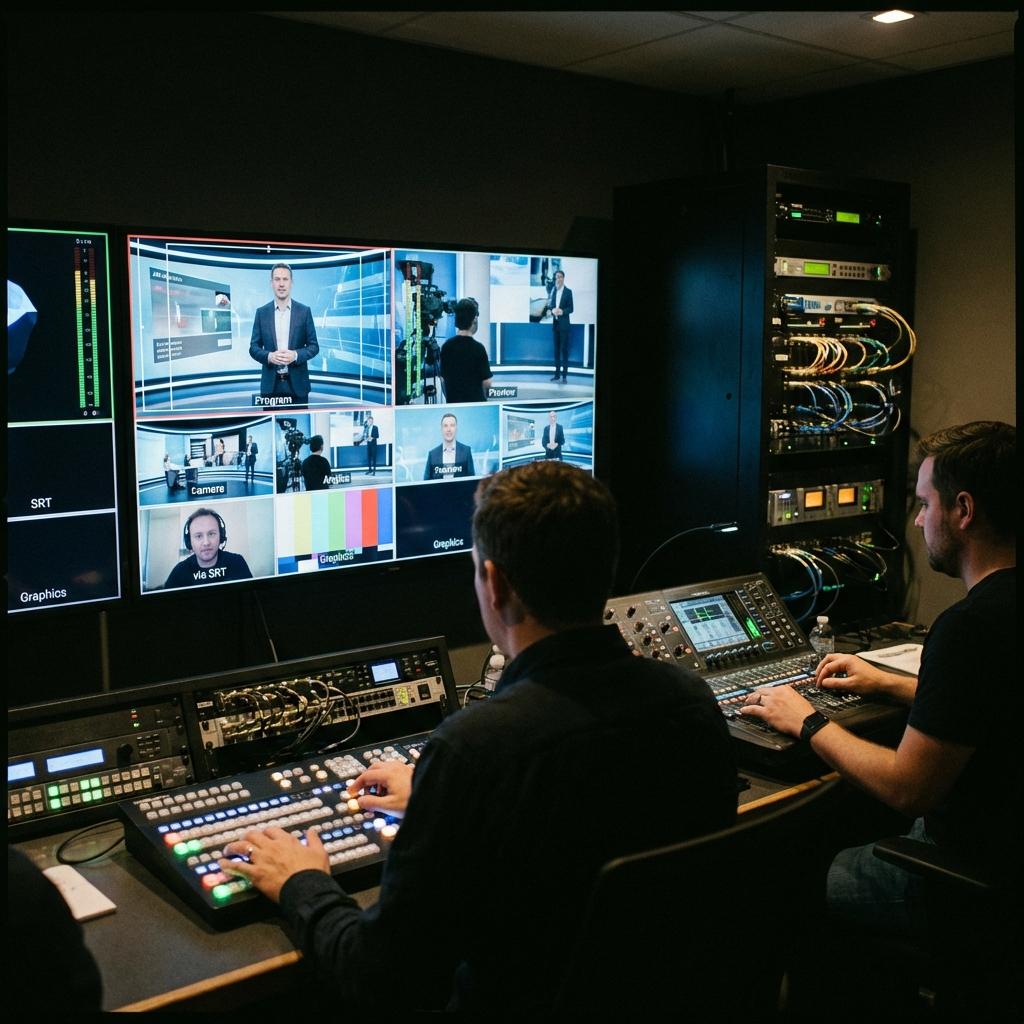
Orchestrating these complex productions requires a centralized control infrastructure. Whether this control room is a physical space or a cloud-based virtual environment, it serves as the technical hub for switching, monitoring, and distributing the final program. This is also where the critical integration with enterprise platforms occurs, allowing the high-production-value demonstration to be delivered within the client’s existing communications ecosystem.
On-Premise vs. Cloud-Based Production Switchers
The production switcher, or video mixer, is the heart of the control room. Hardware-based, on-premise switchers from manufacturers like Ross Video, Grass Valley, or Blackmagic Design offer the lowest possible latency and maximum reliability, making them the standard for broadcast-critical events. They provide tactile control surfaces that allow a technical director to execute complex switching sequences with precision. In contrast, cloud-based production solutions, such as vMix, Grabyo, or Simplylive, offer unparalleled flexibility and remote collaboration capabilities. An entire production team can be geographically distributed, accessing the switcher through a web interface. While cloud solutions introduce slightly more latency, their scalability and ability to ingest a wide variety of IP-based sources (like SRT feeds) make them a powerful option for decentralized production teams.
Redundancy and Failover Strategy
For high-stakes B2B events, failure is not an option. A robust redundancy and failover strategy is essential. The core principle is eliminating single points of failure. This starts with power, where all critical equipment is connected to an Uninterruptible Power Supply (UPS). For streaming, a 1+1 redundant encoder configuration is standard. Two identical encoders process the main program feed and stream to the Content Delivery Network (CDN) simultaneously. Should the primary encoder fail, the CDN can automatically switch to the secondary stream with minimal disruption. Network redundancy is achieved by using two separate internet service providers or by employing bonding technology that combines multiple network paths (e.g., fiber, 5G, satellite) into a single, more resilient connection, a common feature in SRT-based workflows.
Enterprise Platform Integration and Scalability
Finally, the immersive demonstration must be delivered to the target audience. While streaming directly to a custom webpage via a CDN offers the highest quality, many enterprises require integration with platforms like Microsoft Teams, Zoom, or Webex to manage registration and audience interaction. Simply screen-sharing the output is not a professional solution. Instead, the high-quality program feed from the production switcher is sent via RTMP or a virtual webcam output directly into the enterprise platform. This allows the audience to view the broadcast-quality demonstration within a familiar environment, while leveraging the platform’s Q&A and polling features. This hybrid approach delivers the best of both worlds: the production value of a professional broadcast and the interactivity of a collaborative meeting platform, ensuring the demonstration is not only immersive but also effective.
Jeremy Lee is a seasoned digital marketing director and strategist with over two decades of experience in the industry. As the founder of Sotavento Medios, I manage a diverse portfolio of over 50 businesses, helping brands grow through advanced search strategies and digital innovation. My work focuses on bridging the gap between traditional search engine optimisation and the evolving world of AI-driven answer engines.
get in touch