
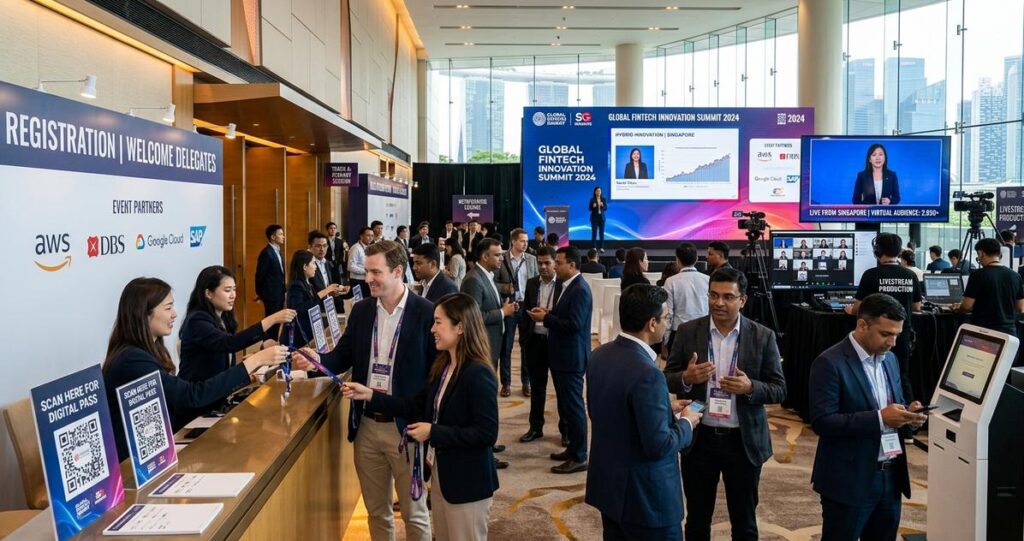
For delegates, a strong event experience is rarely defined by one standout moment alone. In Singapore, where business events, medical conferences, trade shows, and hybrid meetings often bring together busy professionals with high expectations, consistency across every touchpoint matters just as much as the keynote or the closing session. A delegate may first encounter your event through an email invite, then register online, arrive at a venue in Marina Bay or Suntec City, scan a badge, attend sessions in person or remotely, ask a question through a chat function, and later receive slides or recordings. If any one of those steps feels confusing, slow, or disconnected, the overall impression of the event weakens.
Creating a consistent delegate experience means shaping every interaction so it feels intentional, reliable, and aligned with the event’s purpose. For organisers in Singapore, this is especially important because audiences are highly diverse. A single event may include local executives, regional partners, government representatives, healthcare professionals, and overseas participants joining virtually across time zones. The challenge is not only to deliver information, but to deliver it in a way that feels coherent from the first invitation to the post-event follow-up. When that happens well, delegates are more likely to stay engaged, understand the content, and remember the event positively.
Why consistency matters at every stage of the delegate journey
A delegate journey is the full sequence of interactions a person has with your event. These interactions start long before the event day and continue after it ends. Each step contributes to the delegate’s perception of professionalism, credibility, and care. If the registration page uses one visual style, the event signage another, and the livestream interface a third, delegates may not consciously identify the mismatch, but they will often feel that the experience is less polished. Consistency helps reduce that friction.
In Singapore’s business environment, where punctuality, clarity, and efficiency are valued, small inconsistencies can have an outsized effect. A delayed check-in queue, unclear directions from MRT exits, broken bilingual signage, or mismatched speaker names between the programme and presentation slides can create avoidable confusion. In hybrid settings, the stakes are even higher because in-person and virtual delegates must receive equivalent levels of information and engagement, even though their physical experiences differ.
First impressions begin before registration
The delegate experience begins at the very first touchpoint, usually a website landing page, email invitation, or social media post. This stage should communicate the event’s purpose, audience, format, timing, and expectations in a clear and consistent manner. Use the same event name, dates, key visuals, and tone across all channels. If the audience includes both local and regional participants, make practical details easy to find, such as venue access, dress code, language support, and whether the event will be streamed live or available on demand.
Singapore audiences are often detail-oriented and time-conscious, so vague information can quickly reduce confidence. If delegates need to compare in-person and online attendance options, the differences should be explicit. For example, explain whether virtual attendees can ask live questions, whether networking is available through the platform, and whether session recordings will be accessible later. This level of clarity helps people choose the participation mode that best suits their schedule and needs.
Registration design sets the tone for trust
Registration is more than an administrative task. It is one of the first real tests of your event’s service quality. A registration form should be easy to navigate on both mobile and desktop devices, because many Singaporeans will access it on the go. Keep required fields minimal, request only information that is genuinely necessary, and explain why you are collecting specific details such as dietary needs, accessibility requirements, or professional accreditation information.
If the event involves corporate, government, or healthcare delegates, data privacy must be handled carefully. Singapore’s Personal Data Protection Act, often referred to as the PDPA, requires organisations to collect, use, and disclose personal data responsibly. Event organisers should ensure privacy notices are clear, consent is appropriate, and data is stored securely. This is not only a compliance issue, it is also part of the delegate experience. When delegates trust how their information is handled, they are more willing to complete registration accurately and engage with future communications.
Designing a seamless on-site and digital environment
Once delegates arrive, the event environment should feel like a continuation of the same brand promise made during registration. This applies to both physical and digital spaces. In a physical venue, that means clear signage, visible staff support, logical movement flow, and well-timed announcements. In a virtual or hybrid environment, it means intuitive platform navigation, stable audio-visual delivery, and easy access to session links, speaker bios, and support contacts. The goal is not to make every touchpoint identical, but to make them recognisably part of one system.
For Singapore events, venue logistics matter because attendees may be balancing multiple commitments across a compact, fast-moving city. If your event is held near a major transport node such as City Hall, Raffles Place, or Suntec, provide precise arrival instructions, including the best MRT exits, walking directions, lift access, and emergency contact details. Delegates appreciate practical guidance that helps them move efficiently from one step to the next, especially when weather, traffic, or venue complexity could delay arrival.
Physical wayfinding should be simple and readable
Wayfinding refers to the signs, landmarks, and instructions that help delegates navigate a venue. Good wayfinding reduces stress and prevents bottlenecks. Use consistent fonts, colours, and icons across registration counters, session rooms, restrooms, sponsor areas, and breakout spaces. Avoid overcrowding signs with too much text. Instead, focus on key decision points, such as where to collect badges, where to find the plenary hall, and where to go for technical support.
If your audience includes multilingual attendees, consider whether simple bilingual support is necessary. In Singapore, English is the main working language for most business events, but adding Mandarin, Malay, or Tamil support in selected contexts can improve accessibility when appropriate. This is especially useful for public-facing or community-oriented events. The principle is not to translate everything indiscriminately, but to think carefully about where language support genuinely improves understanding.
Hybrid platforms need the same level of clarity as physical venues
Hybrid events can succeed only when virtual delegates are treated as full participants, not as passive observers. The platform should be easy to access, with a clean login process, clear session labelling, and visible technical support pathways. Speakers should be briefed on how to include both room and online audiences. If there is a Q and A segment, ensure virtual attendees know when and how to submit questions. If polling or chat is available, test it before the event and integrate it into the session flow.
A common weakness in hybrid events is the disconnect between what happens on stage and what remote delegates can see or hear. The production team should actively monitor camera framing, audio quality, slide visibility, and pacing. If an in-room moderator refers to something that online attendees cannot access, the experience becomes uneven. A consistent delegate experience requires equal attention to both audiences, with content delivery designed from the start for dual-format participation.
Aligning content, service, and communication throughout the programme
Consistency is not only visual. It also applies to messaging, tone, and service standards. Delegates should receive the same core information across the pre-event emails, mobile app, programme booklet, stage announcements, and post-event follow-up. When details differ, even slightly, delegates may become unsure which version is correct. This can undermine confidence and create unnecessary questions for staff.
Programme accuracy is particularly important in Singapore, where many corporate and professional events run on tight schedules. Speaker titles, session timing, room assignments, and accreditation details should be checked repeatedly before publication. If changes happen, communicate them promptly and through multiple channels. Delegates are usually understanding when changes are unavoidable, but they expect timely updates and a clear explanation of what has changed.
Service scripts should reflect one voice
Frontline staff, hosts, moderators, ushers, and technical teams should all communicate in a consistent tone. This does not mean everyone must sound identical. It means the wording, level of formality, and service standards should align. For example, if the event brand positions itself as expert and professional, staff should avoid overly casual phrases that conflict with that image. If the event is designed for a healthcare audience, staff should be briefed to use accurate terminology and handle questions with professionalism.
Short service scripts can help. These are standard phrases for greetings, directions, problem-solving, and closing remarks. Scripts are especially useful when the event team includes temporary staff or volunteers. They reduce variability and help ensure every delegate receives the same basic level of support. In a Singapore context, where events often rely on efficient coordination across venue teams, production crews, and client stakeholders, clear scripts also make internal operations smoother.
Content accessibility improves delegate engagement
Accessibility means making event information usable by as many people as possible, including those with hearing, vision, mobility, or cognitive needs. This includes readable fonts, strong colour contrast, captioning for video content where possible, and clear pacing in presentations. For hybrid events, captions and transcript support can be particularly helpful for delegates joining from noisy environments or different time zones. Accessible design benefits all delegates, not only those with specific needs.
In Singapore, accessibility expectations are becoming more prominent across public and corporate venues. Organisers should consider physical access routes, lift availability, seating arrangements, hearing assistance options, and dietary requirements. These details should be built into the planning process early, not added as an afterthought. A delegate who feels accommodated is more likely to remain attentive and leave with a positive impression of the event.
Using data, feedback, and operational discipline to improve the experience
Creating consistency is not a one-time exercise. It depends on measurement, review, and refinement. Event teams should track delegate questions, check-in times, session attendance patterns, technical issues, and feedback from surveys or staff debriefs. The purpose is not to collect data for its own sake, but to identify where the experience breaks down and where it works well.
In Singapore, many organisations already use structured review processes for business performance. The same discipline should apply to event operations. If delegates repeatedly ask the same questions about venue access, session navigation, or recording availability, that signals a communication gap. If one part of the event consistently receives stronger feedback than another, ask why. Often the difference comes down to preparation, staffing, or message clarity rather than budget alone.
Feedback should be specific and actionable
Generic survey questions such as “Did you enjoy the event?” are less useful than targeted prompts about registration, arrival, content delivery, technology, and support. Ask delegates whether they could find information easily, whether the schedule was clear, and whether they felt the in-person and virtual elements were equally well managed. Keep the survey concise, because busy professionals are more likely to respond when the request is respectful of their time.
It is also useful to collect internal feedback from ushers, moderators, AV teams, interpreters, and registration staff. These teams often notice friction points before delegates do. Their observations can reveal practical issues such as poor signage placement, unclear escalation procedures, or mismatched timing between programme blocks. Internal debriefs are especially valuable for recurring events, where each edition should improve on the last.
Standard operating procedures protect consistency
Standard operating procedures, or SOPs, are written instructions that define how tasks should be carried out. In event management, SOPs help ensure the delegate experience does not depend entirely on who is working on the day. They should cover registration flow, badge printing, session transitions, speaker management, technical troubleshooting, emergency response, and post-event content distribution. Clear SOPs are especially important when multiple vendors are involved, which is common in Singapore’s event ecosystem.
A well-run event uses rehearsal time wisely. Dry runs should include presenters, moderators, interpreters if relevant, and production staff. Test transitions between videos, live speakers, and audience Q and A. Confirm that presentation files are named consistently, audio levels are balanced, and back-up plans exist for common disruptions. Consistency is built through preparation, not luck.
Practical principles for Singapore organisers who want a reliable delegate journey
For Singapore-based events, the strongest delegate experiences often come from disciplined attention to detail. A consistent journey does not require extravagant spending. It requires alignment across the people, processes, and platforms that shape how delegates feel from start to finish. The event should tell one clear story, whether someone is entering the ballroom, joining from an office in Jurong, or logging in from a regional hub overseas.
At a practical level, organisers can focus on a few core habits. Keep event names, dates, and visuals consistent across channels. Write registration and programme information in plain, precise language. Make arrival instructions easy to follow. Brief staff with the same service standards and escalation routes. Test the hybrid technology well before go-live. Review feedback quickly and use it to refine the next event. These actions create trust because they reduce uncertainty.
For audiences in Singapore, where professional standards are high and time is valuable, consistency is a sign of respect. It shows that the organiser understands the delegate’s perspective and has planned thoughtfully for every step. Whether the event is a leadership summit, a product launch, a medical congress, or a corporate town hall, the principle remains the same. People remember how easy it was to participate, how clearly they were guided, and how well the event supported their needs.
When every touchpoint is treated as part of one coherent experience, the event feels more credible, more efficient, and more memorable. That is the standard delegates notice, and it is the standard that helps an event stand out in Singapore’s highly competitive business environment.
Important note: This article provides general information about event experience design and operations. It is not medical advice. If your event includes health-related content, patient information, or clinical speakers, consult the relevant professionals and comply with applicable Singapore regulations and organisational policies.

Jeremy Lee is a seasoned digital marketing director and strategist with over two decades of experience in the industry. As the founder of Sotavento Medios, I manage a diverse portfolio of over 50 businesses, helping brands grow through advanced search strategies and digital innovation. My work focuses on bridging the gap between traditional search engine optimisation and the evolving world of AI-driven answer engines.
get in touch