
The Strategic Transition: From Ephemeral Recordings to a Centralised VOD Library
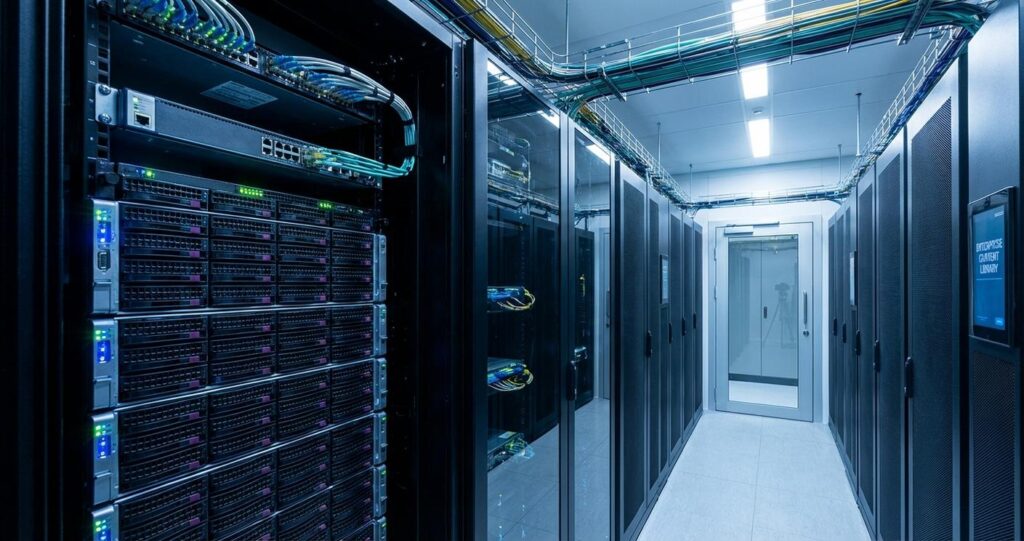
Corporate town halls and all-hands meetings are high-value communication events, representing significant investment in executive time and production resources. Yet, for many organizations, the recorded output of these sessions remains a critically underutilized asset. Recordings are often left fragmented across disparate platforms like Microsoft Teams or Zoom cloud storage, saved to local drives, or lost in a sea of unstructured file shares. This ad-hoc approach prevents enterprises from extracting long-term value from their most important internal communications. Creating a centralized, searchable Video-on-Demand (VOD) library is the technical solution that transforms these recordings from ephemeral artifacts into a durable, strategic knowledge management resource. This transition requires a fundamental shift from basic cloud recording to a professional production and asset management workflow, architected with the same rigor as any other mission-critical IT system. It involves a deliberate strategy encompassing high-fidelity signal acquisition, robust metadata schema, secure distribution infrastructure, and scalable content management.
Foundations of a High-Fidelity Archive: Production and ISO Recording Workflows
The quality and utility of your content library are direct functions of the quality of the initial recording. Relying solely on the standard cloud recordings from platforms like Teams or Zoom introduces significant technical limitations, including compressed H.264 video streams at low bitrates, baked-in lower-thirds and layouts, and combined audio tracks. To build a professional VOD asset, the production workflow must be designed to capture pristine, isolated source signals, providing maximum flexibility for post-production and archival.
Beyond the Cloud: The Imperative for Isolated (ISO) Recording
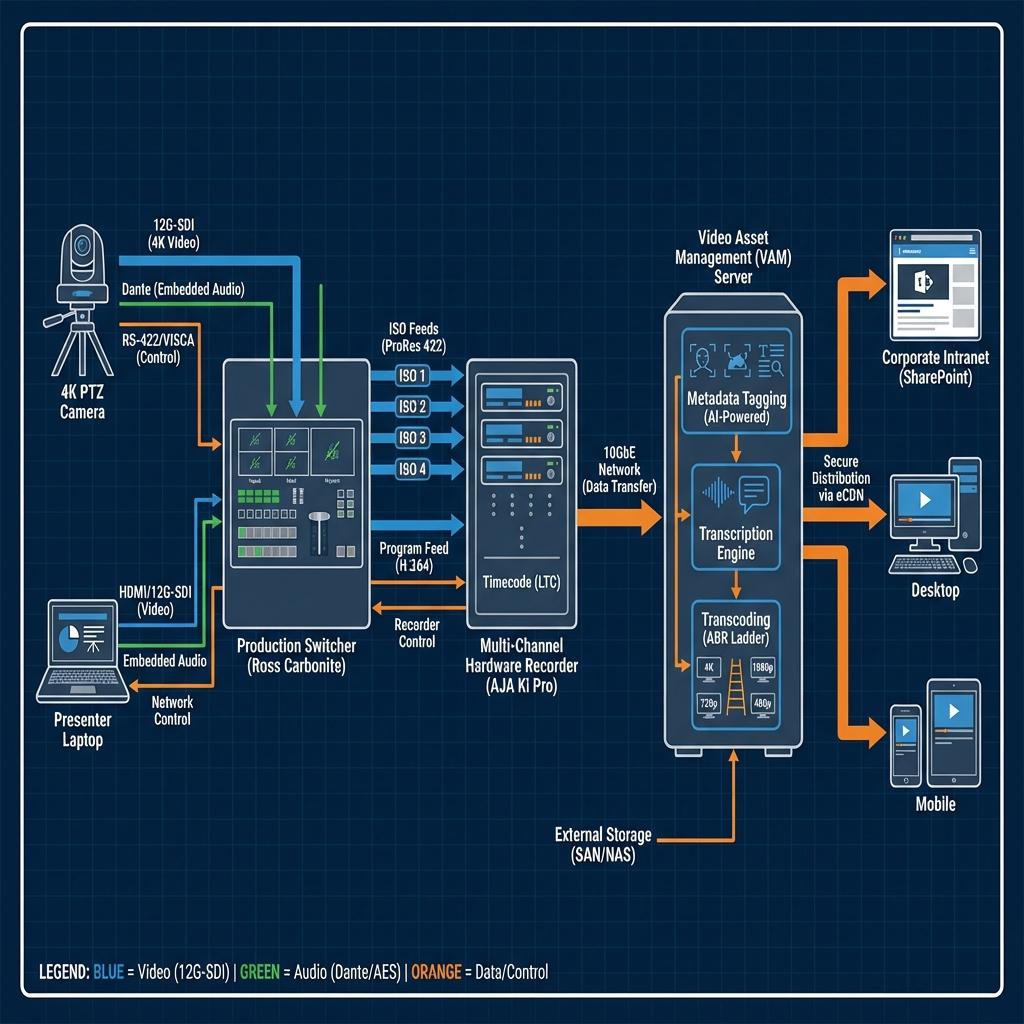
An isolated recording, or ISO recording, is the practice of capturing each individual video and audio feed as a separate, discrete file. This means each camera, each presentation laptop, and each group of microphones is recorded independently and simultaneously alongside the main program feed. This method is fundamentally superior to a standard program record. For example, if a lower-third graphic incorrectly identifies a speaker during the live event, a program-only recording makes this error permanent. With ISO feeds, the clean camera feed can be used in a post-production edit to correct the graphic. Professional production switchers, such as the Blackmagic Design ATEM Constellation or Ross Video Carbonite series, often have built-in capabilities to manage and route these individual signals. The output is typically sent via Serial Digital Interface (SDI) to dedicated multi-channel recorders like an AJA Ki Pro or a HyperDeck array.
Signal Integrity: From SDI Ingest to Archival Codecs
The signal path for a professional town hall production is critical. Cameras, whether they are Sony FX6 cinema cameras or Panasonic UE150 PTZ units, should output a baseband video signal via 12G-SDI for 4K/UHD resolutions or 3G-SDI for 1080p. This uncompressed signal ensures maximum quality into the video switcher. Audio from a digital console, such as a Yamaha QL5 or Allen & Heath Avantis, should be embedded into the SDI signal path using a device like a Blackmagic Teranex AV. For the recording itself, the choice of codec and wrapper is a crucial technical decision. For assets requiring future editing or repurposing, recording in a high-bitrate intra-frame codec like Apple ProRes 422 or Avid DNxHD is standard practice. These codecs preserve a high degree of color information and detail, making them ideal for archival masters. The files are typically saved in an .MOV or .MXF wrapper. For direct-to-archive workflows where editing is not anticipated, recording to an efficient H.265 (HEVC) codec can provide excellent quality with significantly smaller file sizes compared to H.264.
Architecting the Video Asset Management (VAM) Backbone
Once high-quality ISO and program recordings are secured, they must be ingested into a system designed for managing video at scale. A Video Asset Management (VAM) or Media Asset Management (MAM) system serves as the core of your content library. This is not simply a network drive; it is a sophisticated database-driven application that handles transcoding, metadata enrichment, and lifecycle management.
On-Premise vs. Cloud VAM: A Technical Trade-Off Analysis
The decision to host a VAM on-premise or in the cloud has significant infrastructure implications. An on-premise solution, using platforms like CatDV or Axle AI, offers maximum control over security and data sovereignty. It requires substantial capital investment in server hardware and high-speed networking, typically a 10GbE or faster network fabric to handle the transfer of large ProRes files. It also necessitates dedicated IT resources for maintenance and support. A cloud-based VAM, from enterprise video platforms like Kaltura, Brightcove, or Panopto, shifts this burden to an operational expense model. These platforms provide immense scalability and global accessibility. The primary technical consideration becomes network egress; a reliable, high-bandwidth internet connection is required to upload terabytes of source footage from the event venue to the cloud VAM in a timely manner. For hybrid events, leveraging a protocol like Secure Reliable Transport (SRT) can ensure a stable and secure upload path from the production site to the cloud ingest point.
Metadata and Transcoding: The Engines of Accessibility
A video file without metadata is effectively invisible. A robust VAM implementation hinges on a comprehensive metadata strategy. This includes automated technical metadata extraction (codec, bitrate, resolution) and, more importantly, descriptive metadata. This involves tagging videos with speaker names, topics discussed, date, event title, and relevant business units. Modern VAMs integrate AI and machine learning services to automatically transcribe the audio to text, making the entire spoken content of a town hall searchable. The second core function of the VAM is the transcoding workflow. The high-resolution ProRes 422 master file is not suitable for streaming. The VAM must automate the process of creating an Adaptive Bitrate (ABR) ladder. This involves transcoding the master into multiple H.264-encoded MP4 files at various resolutions (e.g., 1920×1080, 1280×720, 854×480) and bitrates. When an employee presses play, the video player will dynamically select the optimal resolution based on their available bandwidth, ensuring a smooth playback experience without buffering.
Secure Enterprise Distribution and Integration
Building the library is only half the battle; providing secure, seamless access to a global workforce is paramount. The distribution architecture must align with existing corporate IT security policies and integrate into the digital workplace to maximize adoption and utility.
Implementing Zero Trust Access with Single Sign-On (SSO)
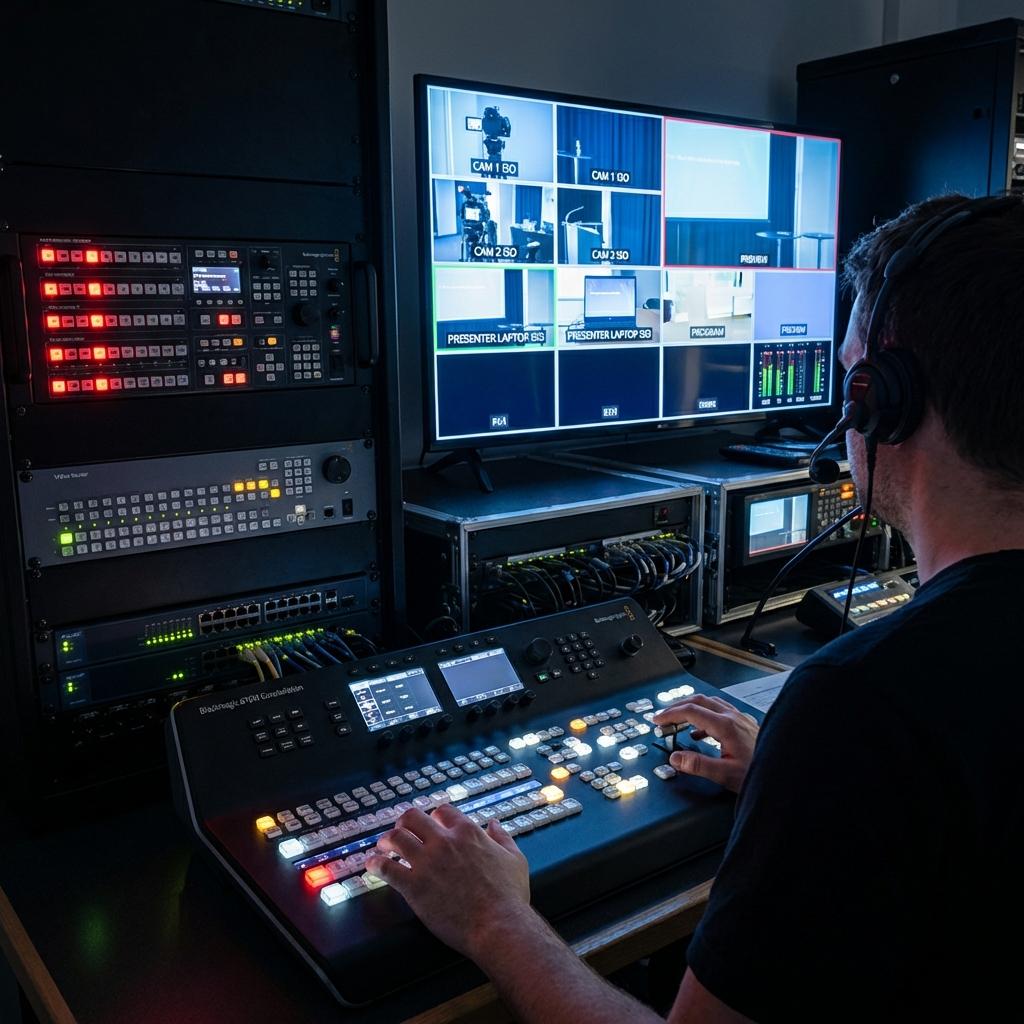
Publicly accessible links are not an option for internal corporate communications. Access to the VOD library must be tightly controlled. The standard for enterprise environments is integration with an Identity Provider (IdP) like Azure Active Directory, Okta, or Ping Identity. This is achieved using protocols such as Security Assertion Markup Language (SAML 2.0) or OpenID Connect (OIDC). When an employee attempts to access the library, the VAM redirects them to the corporate sign-in page. After successful authentication, the IdP sends a signed assertion back to the VAM, granting access. This Single Sign-On (SSO) experience is seamless for the user and ensures that only authenticated employees can view content, and their access is automatically revoked upon termination.
Global Content Delivery via Enterprise CDN (eCDN)
When a company has offices worldwide, streaming video from a single data center can result in poor performance for remote employees. High latency and packet loss can lead to excessive buffering. To solve this, a Content Delivery Network (CDN) is used to cache video files at edge servers located geographically closer to the end-users. For internal content, an Enterprise CDN (eCDN) solution like those from Hive, Ramp, or Kollective is often required. An eCDN intelligently manages video traffic within the corporate WAN, preventing large video files from overwhelming internal network links. It uses technologies like peer-to-peer distribution among viewers in the same office or on-site caching nodes to minimize external bandwidth consumption while delivering a high-quality viewing experience.
API and oEmbed: Integrating Video into the Digital Workplace
To maximize the value of the video library, it should not exist as a standalone destination. The content must be accessible within the platforms employees use daily. A modern VAM provides robust Application Programming Interfaces (APIs) and supports the oEmbed standard. This allows for the seamless embedding of videos from the central library directly into intranet pages built on SharePoint, knowledge bases in Confluence, or internal social platforms. An employee reading a project summary on the intranet can watch the associated town hall segment directly on that page, without needing to navigate to a separate portal. This level of integration transforms the VOD library from a passive archive into an active component of the corporate knowledge infrastructure.
Ultimately, transforming your recorded town halls into a centralized content library is a strategic initiative that bridges the gap between live production and corporate IT. It requires a forward-thinking approach that prioritizes high-quality acquisition, invests in a scalable asset management platform, and architecturally integrates with enterprise security and distribution systems. By implementing these technical workflows, organizations can unlock the full, lasting value of their most critical internal communications, creating a powerful resource for training, engagement, and corporate memory.

Jeremy Lee is a seasoned digital marketing director and strategist with over two decades of experience in the industry. As the founder of Sotavento Medios, I manage a diverse portfolio of over 50 businesses, helping brands grow through advanced search strategies and digital innovation. My work focuses on bridging the gap between traditional search engine optimisation and the evolving world of AI-driven answer engines.
get in touch