
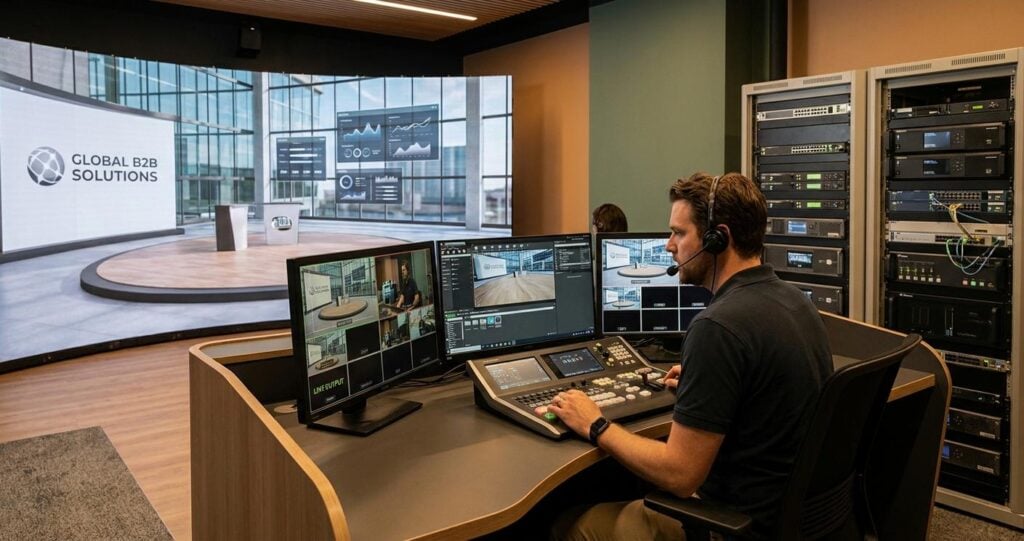
In the rapidly evolving landscape of B2B event production, virtual and hybrid corporate events have ascended from novelties to indispensable communication channels. Central to the success of these immersive experiences is the caliber of the virtual environment, meticulously crafted by a skilled 3D artist. However, selecting the right 3D artist for your virtual corporate production extends far beyond aesthetic sensibilities; it necessitates a profound understanding of their technical acumen and how their work integrates into and impacts the entire enterprise-grade streaming infrastructure. Spring Forest Studio understands that the virtual stage is not merely a backdrop; it is a critical component whose technical fidelity directly influences the quality of the live stream, the scalability of the production, and the overall audience experience. This article delves into the critical technical considerations for choosing a 3D artist whose expertise aligns with the stringent demands of B2B event streaming and hybrid production.
The Technical Intersect: 3D Artistry and Live Production Workflows
The role of a 3D artist in virtual corporate production is intrinsically linked to the underlying live production workflow. Their creations, whether bespoke virtual sets, dynamic infographics, or interactive elements, must be designed with real-time rendering and broadcast output in mind. This demands a 3D artist who is not only proficient in digital content creation (DCC) tools such as Autodesk Maya, Blender, or Maxon Cinema 4D, but also deeply conversant with real-time rendering engines like Epic Games’ Unreal Engine (UE) or Unity. These engines form the crucial bridge between static 3D assets and dynamic, live-rendered virtual environments that feed into professional video switchers and encoders.
Real-time Asset Optimization for Streaming Performance
A primary technical challenge in virtual production is managing computational load to maintain consistent, high frame rates for live output. A skilled 3D artist understands that an aesthetically pleasing model can become a significant bottleneck if not optimized for real-time performance. This involves meticulous attention to polygon count, texture resolution, and shader complexity. Overly dense meshes, unoptimized textures (e.g., 8K textures where 2K or 4K suffice for a given viewing distance), or complex, computationally expensive shaders (e.g., excessive tessellation, demanding volumetric effects) can drastically increase GPU and CPU utilization within the rendering engine. This increased load directly translates to dropped frames, rendering latency, and potential instability in the live production feed. Effective optimization includes techniques such as polygon reduction, level of detail (LOD) systems, texture atlas creation, judicious use of baked lighting (for static elements) versus real-time global illumination, and instancing for repetitive elements. The goal is to achieve visual fidelity while maintaining a consistent 59.94 frames per second (fps) or 29.97 fps output, crucial for seamless broadcast integration and avoiding motion artifacts in the encoded stream.
Integration with Virtual Production Technologies
Beyond asset optimization, the chosen 3D artist must possess a working knowledge of how their environments integrate with various virtual production technologies. This includes understanding the principles of camera tracking systems, such as those from Mo-Sys, Stype, or FreeD protocols, which enable physical camera movements to translate accurately into the virtual space. Proper scene calibration, scale, and pivot points within the 3D environment are paramount for precise compositing and maintaining perspective. Furthermore, knowledge of DMX (Digital Multiplex) lighting control for virtual lights that interact with physical stage lighting is highly advantageous, allowing for a cohesive lighting design across both real and virtual elements. A technically astute artist can build virtual environments with dedicated channels for DMX control, enabling lighting directors to manipulate virtual illumination in real-time. This level of integration ensures that the virtual elements are not merely superimposed, but are organically part of a unified production ecosystem, enhancing the immersion for the remote audience.
Bridging the Gap: From 3D Model to Enterprise Stream
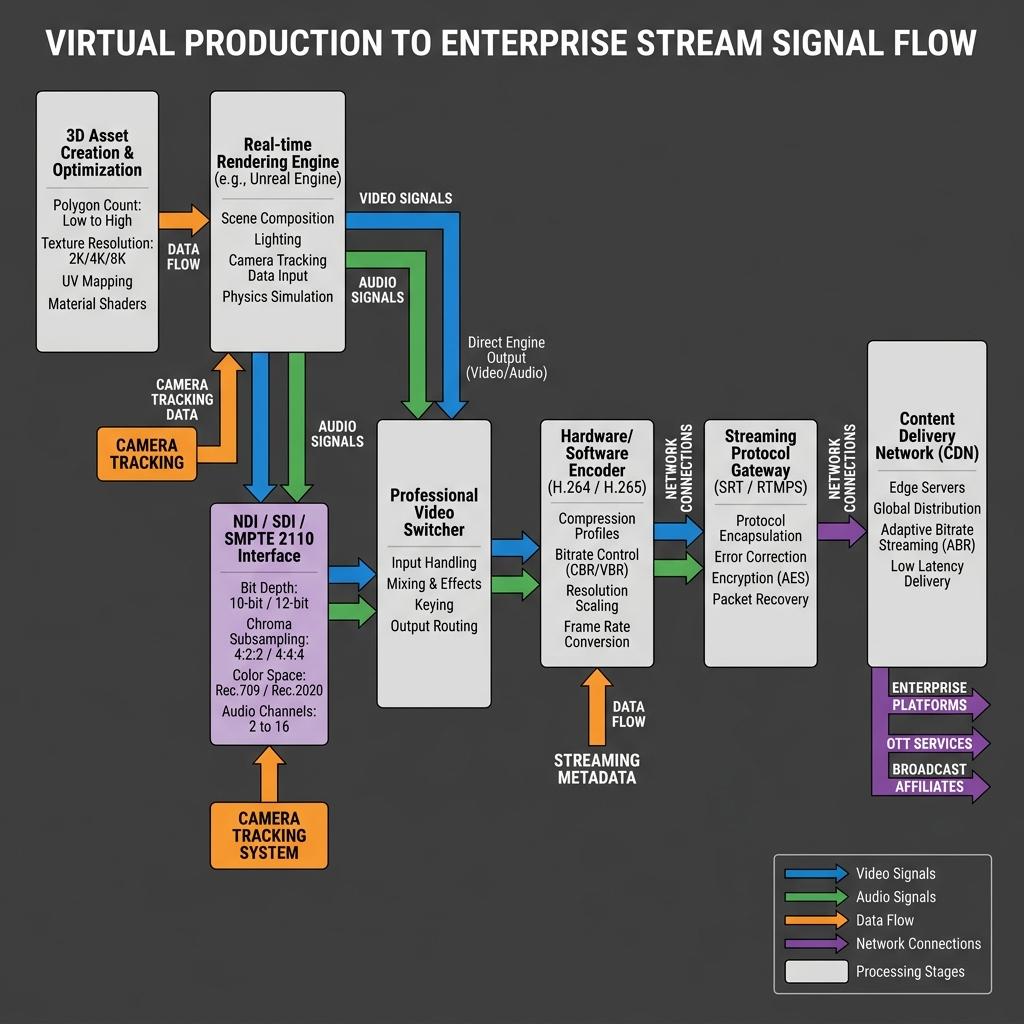
Once a virtual environment is rendered in real-time, the next critical phase involves its seamless integration into the broadcast signal flow and subsequent encoding for enterprise-grade streaming. The 3D artist’s technical decisions at the asset creation stage have ripple effects throughout this entire process, influencing everything from signal integrity to final stream quality and bandwidth requirements. Understanding this pipeline is vital for a successful virtual corporate event.
Signal Flow and Encoding Considerations for Virtual Environments
The output from a real-time rendering engine, often a high-resolution, uncompressed video signal, must be professionally managed. This typically involves output via a dedicated graphics card with professional I/O (Input/Output) or specialized capture cards that can handle uncompressed or lightly compressed video streams, such as those conforming to SDI (Serial Digital Interface) standards, or increasingly, IP-based protocols like NDI (Network Device Interface) or SMPTE ST 2110. A 3D artist’s understanding of color spaces (e.g., Rec. 709, Rec. 2020 for UHD), bit depth (8-bit vs. 10-bit), and chroma subsampling (4:2:2 vs. 4:2:0) is critical. For instance, creating assets with high-frequency color detail or fine gradients demands an understanding that higher chroma subsampling (4:2:2) is preferable for maintaining fidelity through the production chain, especially when color keying (chroma keying) is involved. These technical specifications directly impact the visual quality passed to hardware or software encoders responsible for converting the pristine program feed into a compressed stream using codecs like H.264 (AVC) or H.265 (HEVC). The efficiency and quality of these codecs are influenced by the visual complexity of the 3D environment, where high-motion, high-detail scenes require higher bitrates to avoid compression artifacts, particularly when streaming via protocols such as Secure Reliable Transport (SRT) or Real-Time Messaging Protocol Secure (RTMPS).
Network Infrastructure Demands for Virtual Production Feeds
The transmission of high-bandwidth video signals from the rendering engine to the production switcher and encoder places significant demands on the local network infrastructure. When utilizing NDI for internal signal routing, a dedicated 10 Gigabit Ethernet (GbE) network is often a minimum requirement, and for uncompressed SMPTE ST 2110 workflows, 25GbE or even 100GbE infrastructure becomes necessary. A 3D artist who understands the implications of their scene complexity on the data rates generated by the rendering engine can assist in mitigating potential network congestion. For example, rendering multiple outputs (program feed, clean feed, alpha masks) from the same engine increases bandwidth. Proper Quality of Service (QoS) implementation and dedicated VLANs are essential to prioritize video traffic and prevent dropped frames or increased latency due to network contention. This network stability is paramount for live virtual events, as any disruption in the internal signal chain directly impacts the reliability and quality of the outbound stream.
Ensuring Scalability and Redundancy in Virtual Corporate Streams
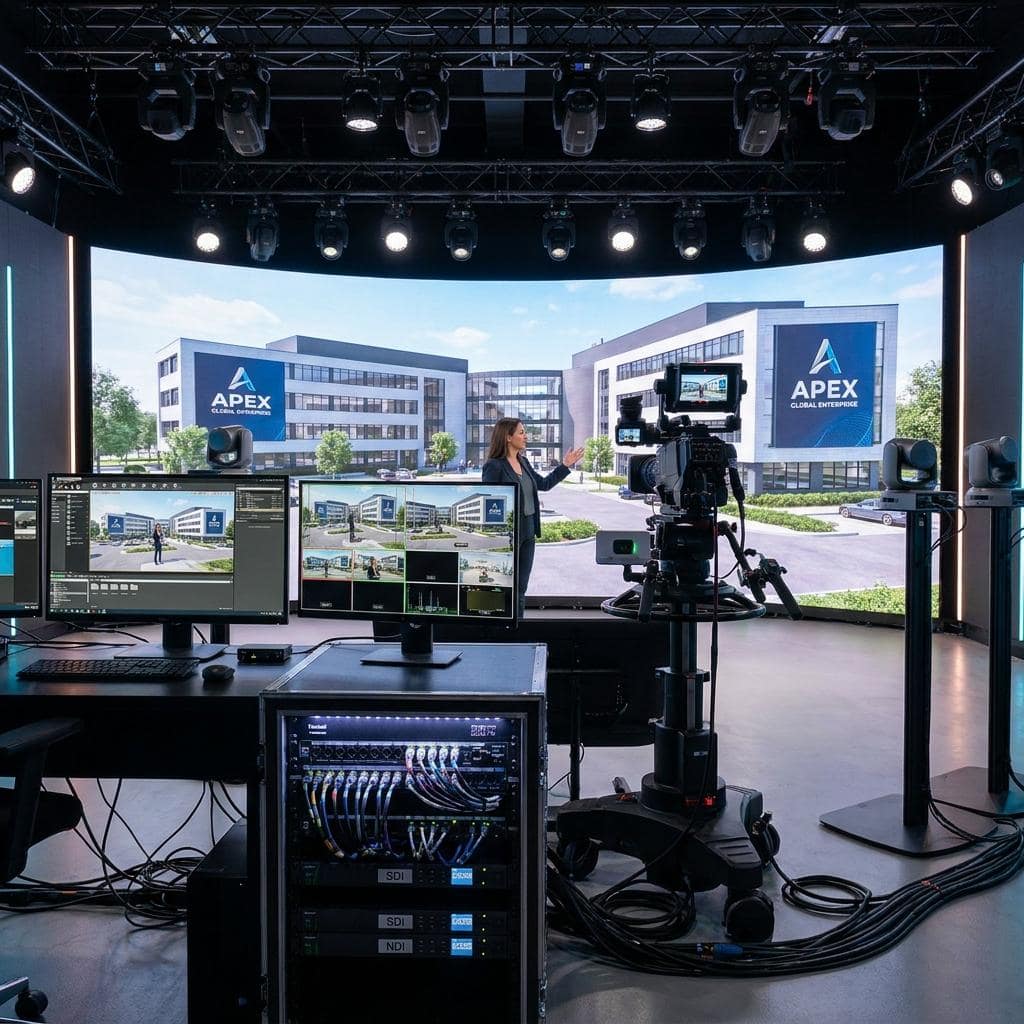
Enterprise-grade events demand not only high quality but also unwavering reliability and the capacity to scale. The technical decisions made during the 3D asset creation and virtual environment development phase directly contribute to or detract from the overall robustness and scalability of the streaming solution. A forward-thinking 3D artist contributes to a resilient production architecture.
Cloud-based Rendering and Distributed Virtual Production
For highly complex virtual environments or productions requiring multiple concurrent high-resolution outputs, on-premise rendering capabilities can become a limiting factor. Here, the artist’s awareness of cloud-based rendering solutions and distributed virtual production pipelines is invaluable. Concepts such as NVIDIA CloudXR or other remote rendering platforms allow for computationally intensive scenes to be rendered on powerful cloud GPUs, with the resulting video feed transmitted back to the local production facility, often over high-speed, low-latency protocols like SRT. The 3D artist must optimize assets for efficient loading and rendering in such distributed environments, understanding the data transfer requirements for scene assets and texture maps. This approach offers significant scalability, enabling rapid provisioning of render resources as production needs evolve, while also providing geographical redundancy and disaster recovery options. However, it introduces complexities in network latency management and secure data transfer, which a technically proficient 3D artist can help anticipate and mitigate.
Quality Assurance and Latency Optimization in 3D-Rich Streams
Maintaining visual quality and minimizing end-to-end latency are paramount in live B2B streaming, especially for hybrid events where real-time audience interaction is expected. A 3D artist’s work profoundly influences both. Poorly optimized scenes can introduce significant rendering latency, adding milliseconds that compound through the production chain (camera > switcher > render engine > encoder > network > CDN > viewer). This cumulative latency can severely degrade the interactive experience. The artist must understand how their choices affect the critical path of video processing. Quality assurance involves continuous monitoring of the program feed using professional multiview monitoring systems, waveform monitors, and vectorscopes to ensure color accuracy, proper luminance levels, and absence of compression artifacts. Integrating scene optimization diagnostics directly into the rendering engine’s workflow allows for proactive identification and rectification of performance bottlenecks. The artist’s ability to create technically sound, performant virtual environments is a direct contribution to achieving sub-second glass-to-glass latency, a gold standard for highly interactive virtual and hybrid corporate events.
The Collaborative Technical Blueprint: 3D Artist as a Core Production Engineer
The era of the purely artistic 3D creator, isolated from the technical realities of live broadcast, is over for B2B virtual production. Today, the ideal 3D artist functions as a core member of the technical production team, contributing to the engineering blueprint of the event. Their expertise transcends mere aesthetics, encompassing a deep understanding of the technical interdependencies across the entire streaming ecosystem.
Communication Protocols and Documentation
Effective collaboration hinges on clear communication and comprehensive documentation. The chosen 3D artist must be adept at communicating technical specifications, optimization strategies, and potential rendering challenges to video engineers, IT directors, and production managers. This includes documenting asset specifications, identifying specific shader requirements, outlining optimal lighting configurations for various outputs (e.g., specific gamma curves for LED walls versus encoded streams), and detailing any custom scripts or plugins used within the rendering engine. Adhering to established naming conventions for assets, layers, and scene elements within the virtual environment simplifies integration and troubleshooting for the broader technical team. This level of meticulous technical communication and documentation minimizes integration errors, streamlines the production workflow, and ensures that the virtual assets are not just visually stunning but also technically robust and manageable throughout their lifecycle.
The technical demands of modern B2B event streaming and hybrid production are immense, requiring a convergence of artistic vision and engineering precision. When selecting a 3D artist for your virtual corporate production, it is imperative to look beyond their portfolio of visually impressive renders. Prioritize an artist with a demonstrated understanding of real-time rendering optimization, broadcast-grade signal flow, network infrastructure implications, and scalability best practices. Their ability to integrate seamlessly with existing production technologies, anticipate technical challenges, and communicate effectively with the broader technical team will be the ultimate determinant of a successful, high-quality virtual event. At Spring Forest Studio, we believe the right 3D artist is not just a creative talent; they are a vital technical partner in crafting immersive, reliable, and engaging virtual experiences for your enterprise audience, ensuring every pixel streamed is a testament to technical excellence.
Jeremy Lee is a seasoned digital marketing director and strategist with over two decades of experience in the industry. As the founder of Sotavento Medios, I manage a diverse portfolio of over 50 businesses, helping brands grow through advanced search strategies and digital innovation. My work focuses on bridging the gap between traditional search engine optimisation and the evolving world of AI-driven answer engines.
get in touch