

Introduction: Securing Intellectual Property in B2B Virtual Workflows
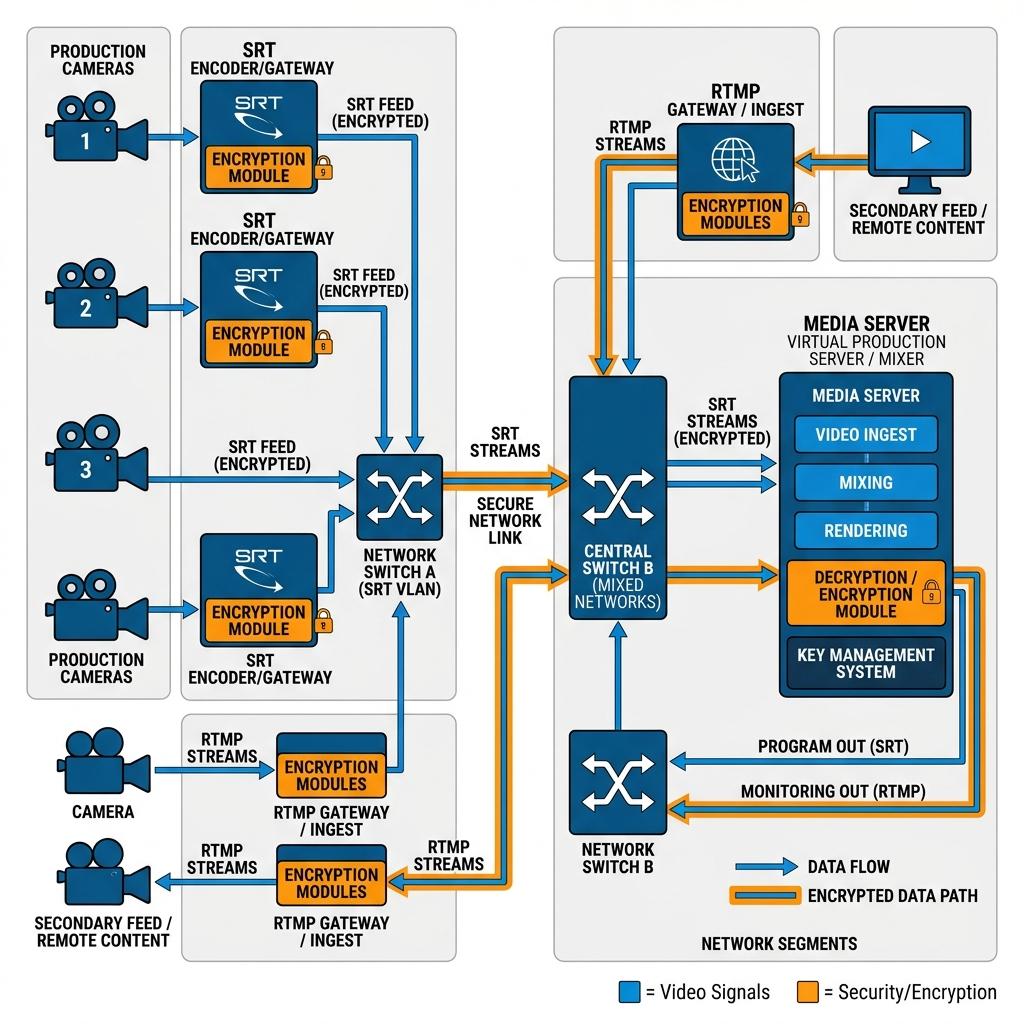
As digital transformation accelerates within corporate events, the necessity for secure virtual production workflows becomes paramount. In the B2B sector, the ability to manage and protect intellectual property (IP) during streaming events poses unique challenges, demanding robust technical solutions. This article delves into advanced production technologies, examining methods for safeguarding data while maintaining seamless streaming experiences. Key streaming protocols, such as SRT (Secure Reliable Transport) and RTMP (Real-Time Messaging Protocol), are pivotal in ensuring secure data transmission.
Understanding Streaming Protocols: The Backbone of Secure Workflows
Secure Reliable Transport (SRT)
SRT protocol provides enhanced security and reliability. Encryption and packet-loss recovery features ensure that content remains protected and intact, even during transmission over unpredictable networks. Its open-source nature allows customization and adaptation to specific B2B requirements.
Real-Time Messaging Protocol (RTMP)
RTMP is integral to live streaming. Despite being traditionally associated with Flash-based content, its ability to maintain low latency makes it suitable for hybrid events. Upgrading to RTMPS (RTMP Secure) ensures encrypted connections, vital for securing IP against unauthorized access.
Hybrid Production: Balancing Virtual and Physical Security
Multi-layered Security Architectures
Implementing a security-first architecture involves numerous technologies. Utilizing NDI (Network Device Interface) for secure video transport within closed networks, alongside SDI and HDMI connections for reliable physical signal flow, forms a comprehensive hybrid architecture.
Network Infrastructure and Redundancy
Enterprise-grade events require robust network designs. VLAN segmentation and dual redundant paths can prevent data leaks while optimizing performance. Utilizing cloud-based solutions with on-premise fallback infrastructure prevents data loss and enhances reliability.
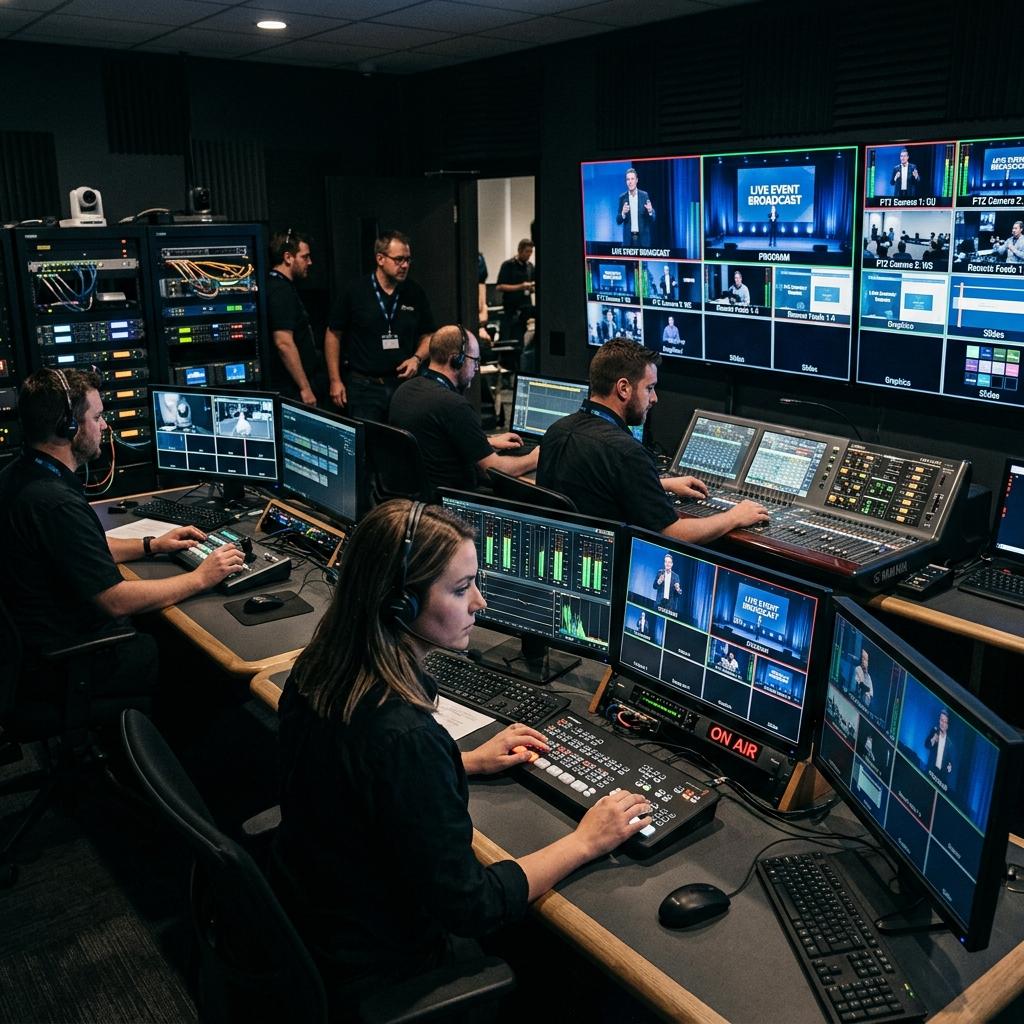
Quality Assurance and Redundancy in Streaming Workflows
Encoding and Transcoding Standards
Using H.264 and H.265 codecs not only supports high efficiency but also integrates efficiently into existing workflows. These codecs facilitate real-time transcoding, meeting different audience bandwidth capabilities without compromising IP security.
Implementation of SMPTE Standards
Adherence to strict SMPTE (Society of Motion Picture and Television Engineers) standards ensures that every element of production, from color grading to audio levels, is optimized for both quality and security.
Implementing Secure Production Practices
Practical Recommendations
Enterprises should employ encryption across all levels of production. Implementing ISO recording allows for secure, high-quality capture of all inputs for future verification and editing. Frequent security audits and hardware updates remain essential for sustaining IP integrity.
Engagement with Secure Platforms
Integration with platforms like Microsoft Teams and Zoom should be conducted with encrypted APIs and endpoints. This approach ensures that hybrid events cater to both on-site and virtual participants without risking unauthorized data access.
Conclusion
By employing advanced production frameworks and adhering to industry standards, enterprises can protect intellectual property in virtual production environments. Understanding and implementing secure protocols like SRT and embracing hybrid network solutions will enable the confidence needed to engage robustly with virtual event landscapes.

Jeremy Lee is a seasoned digital marketing director and strategist with over two decades of experience in the industry. As the founder of Sotavento Medios, I manage a diverse portfolio of over 50 businesses, helping brands grow through advanced search strategies and digital innovation. My work focuses on bridging the gap between traditional search engine optimisation and the evolving world of AI-driven answer engines.
get in touch