
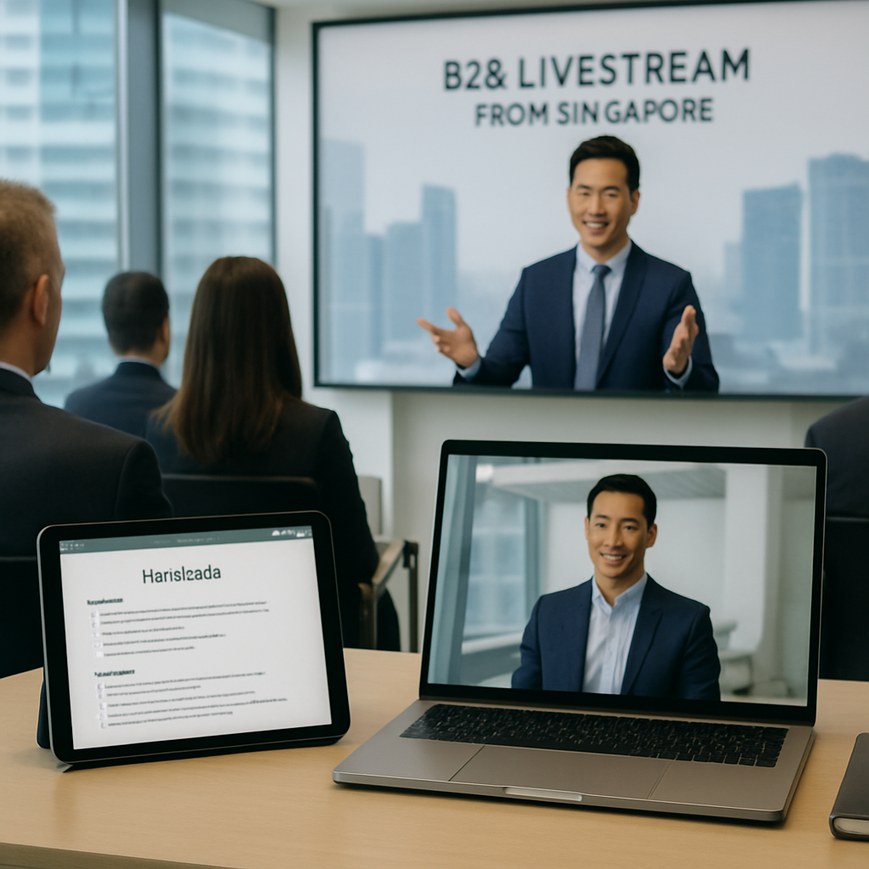
For Singapore businesses hosting B2B streams, whether it is a product launch, a training session, a stakeholder briefing, or a regional town hall, the live broadcast is only one part of the experience. The supporting materials that accompany the stream, such as digital handouts, presentation decks, agenda sheets, resource links, and follow-up documents, often determine how well the audience understands, remembers, and acts on the information shared. In a business environment where many viewers are joining from offices, co-working spaces, home setups, or while travelling across the region, digital resources provide structure and continuity that a livestream alone cannot fully deliver.
In Singapore, where business audiences are often time-conscious, bilingual, and accustomed to highly efficient communication, the quality of these materials can influence whether a B2B stream feels polished and credible. A well-prepared digital handout helps attendees follow technical content, capture key points, and continue learning after the session ends. It also supports accessibility, which matters when an audience includes different levels of familiarity with the subject matter, varying internet conditions, and diverse device types. For organisations investing in hybrid or streamed events, digital handouts are not a decorative extra. They are a functional part of the communication strategy.
These resources also play a role in professional trust. When participants receive clear materials before, during, and after a stream, they are more likely to perceive the event as well-managed and the host organisation as reliable. In B2B communication, trust is built not just through what is said on camera, but through how information is organised, distributed, and reinforced. That is why digital handouts deserve the same level of planning as the live production itself.
Why digital handouts matter in B2B streams
Digital handouts serve several purposes at once. They provide a reference point during the live session, reduce the cognitive load on viewers, and support post-event recall. In a business setting, audiences may be listening to complex explanations about software adoption, compliance changes, supply chain processes, or customer strategy. Without a supporting document, participants may struggle to capture the full meaning of each point while also paying attention to the speaker, slides, chat messages, and live demonstrations. A concise handout allows them to stay engaged without worrying that they will miss important details.
They also help standardise communication across different viewer groups. A B2B stream in Singapore may include local teams, regional partners, distributors, prospects, and internal stakeholders. Each group may need slightly different levels of detail. Digital resources make it possible to give everyone a consistent base of information, while still tailoring specific versions for different roles or markets. For example, a technical audience may receive a specifications sheet, while a business audience receives a one-page summary of benefits, use cases, and next steps.
Another important function is retention. People are more likely to remember a message when they can review it after the event. This is especially useful for virtual or hybrid sessions where attention can fragment quickly. The stream may end, but the handout continues working as a memory aid, a sales enablement tool, or a training reference. That continued usefulness is one reason many B2B teams now treat digital handouts as part of the event deliverables rather than optional follow-up material.
Supporting attention and comprehension during live viewing
Live streams move quickly. Speakers may cover background, demonstrate a product, answer questions, and move between topics in a short period of time. A digital handout can act as a guide, helping viewers anticipate what is coming next and locate key information without distraction. This is particularly helpful in sessions with technical terminology, regulatory references, or multi-step workflows. When a participant can scan the handout and then return attention to the live video, the overall learning experience improves.
In Singapore, where many professionals are used to efficient meetings and concise business communication, overly dense slides alone may not be enough. Handouts can present the content in a cleaner and more readable format. They can also include glossaries for specialist terms, especially when the audience includes non-technical decision-makers. Plain-language definitions reduce confusion and make the event more inclusive.
What makes an effective digital handout
An effective handout is not simply a PDF version of a slide deck. It is a deliberate communications tool with a clear purpose. The best handouts are easy to scan, logically structured, and aligned with the goals of the B2B stream. They should support, not duplicate, the live presentation. If the event is educational, the handout may include learning objectives, key terms, diagrams, and links to further reading. If the event is sales-focused, it may include product features, implementation steps, comparison tables, and contact points for follow-up.
Clarity matters more than quantity. Including too much information can make a digital handout harder to use. In a business context, the audience often needs a document they can open quickly, search easily, and circulate internally. A well-designed handout should therefore use headings, short paragraphs, bullet points, and clean visual hierarchy. It should also be formatted for mobile access, since many viewers in Singapore and across the region review event materials on phones or tablets as well as desktops.
File accessibility is another core issue. A handout that cannot be opened on common devices, or that is too large to download efficiently, reduces its value. Event teams should test the format across operating systems and browsers before distribution. Where possible, resources should be optimised for fast access, with sensible file sizes and predictable naming conventions. This matters particularly for participants joining from different office networks, public spaces, or travel situations.
Content elements that improve usefulness
Several elements consistently improve the usefulness of digital handouts in B2B streams:
- Agenda overview, so viewers know the flow of the session and can follow along.
- Key message summary, to reinforce the most important points.
- Speaker notes or speaking points, when appropriate, to provide context beyond slides.
- Glossary of terms, especially for technical, legal, or industry-specific language.
- Call-to-action section, such as registration links, contact details, or next-step instructions.
- Reference links, to white papers, product pages, standards documents, or recordings.
When these elements are presented clearly, attendees can use the handout as a practical working document rather than passive reading material. That is especially important for B2B audiences, who often need to brief colleagues, compare options, or justify a decision after the live event.
Digital resources as part of the full event journey
The most effective B2B streams do not treat resources as an afterthought. Instead, they integrate them across the whole event journey. Before the stream, digital materials can build anticipation and set expectations. During the stream, they can guide attention and improve comprehension. After the stream, they can support lead nurturing, internal review, training, or implementation. In practice, this means event planners should think about resources as a sequence, not a single file download.
Pre-event materials may include registration confirmations, calendar invitations, speaker profiles, reading lists, or pre-session questionnaires. These can help segment the audience and tailor the content more accurately. During the stream, attendees may benefit from live links, downloadable worksheets, or QR codes that connect them to relevant pages. After the stream, a replay link, summary sheet, FAQ document, and contact details can extend the lifespan of the event and increase the chance of follow-through.
For Singapore-based organisations working with regional teams, the follow-up stage is particularly important. Time zones, business priorities, and internal approval processes may delay action. A strong digital resource pack makes it easier for someone who missed the live session to catch up quickly. It also supports internal sharing, which is often how B2B content spreads from an initial audience to wider decision-makers.
Using resources to support lead generation and education
Digital handouts can support both education and business development, but the balance matters. If the document feels too sales-driven, it may reduce trust. If it is too generic, it may fail to drive action. The most effective approach is to provide clear value first, then guide the reader toward a practical next step. That could be booking a consultation, downloading a technical guide, requesting a demo, or contacting a regional representative.
In Singapore’s B2B setting, where buyers are often well-informed and careful about vendor credibility, useful content matters more than promotional language. A resource that explains a problem clearly, sets out options, and answers common questions can establish authority more effectively than a hard sell. This is why many high-performing event teams use handouts to bridge the gap between marketing, education, and sales enablement.
Compliance, accessibility, and trust in the Singapore context
Trust in digital event materials depends not only on accuracy, but also on responsible handling of information. Singapore organisations should ensure that any personal data collected through event registration, downloads, or follow-up forms is managed in line with the Personal Data Protection Act, commonly known as the PDPA. That means being transparent about why data is collected, how it will be used, and how attendees can contact the organisation if they have questions. Clear consent language and careful data management are essential, especially when resources are gated behind sign-up forms.
Accessibility should also be part of the planning process. Handouts should be readable, logically structured, and not dependent on colour alone to convey meaning. Font choices, contrast, and document layout affect whether a wide audience can use the material comfortably. Where possible, teams should include alt text for images in digital documents and ensure that headings are tagged properly so screen readers can navigate them. These measures support users with different needs and reflect good professional practice.
Another aspect of trust is factual accuracy. In B2B streams, especially those involving health, finance, technology, legal, or regulatory topics, all claims in the handout should be checked carefully against the latest available sources. If a document refers to an external standard, product specification, or regulatory framework, the reference should be current and precise. This is particularly important for Singapore audiences, who often expect a high standard of professionalism and may cross-check materials with internal compliance teams.
Quality control before distribution
Before digital handouts are released, the event team should review them for spelling, formatting, file size, link functionality, and content accuracy. A practical checklist can include the following:
- Check that all links open correctly on desktop and mobile devices.
- Verify that speaker names, job titles, and company details are correct.
- Review all dates, times, and time zones carefully, especially for regional audiences.
- Ensure that downloadable files are labelled clearly and consistently.
- Confirm that the final version matches the live presentation in substance.
- Test whether the document remains readable when printed or viewed in grayscale.
These checks may seem simple, but they have a direct effect on how credible the event appears. A broken link, outdated term, or poorly formatted handout can undermine the confidence built during the stream.
Practical planning for B2B teams in Singapore
For organisations in Singapore, digital handouts work best when they are planned alongside the event format, audience profile, and business objective. A product demonstration for procurement teams will need different supporting resources from a leadership briefing or partner training session. The more precise the audience understanding, the more useful the handout becomes. It is also helpful to think about bilingual needs, regional distribution, and internal sharing habits, since some attendees may pass the materials to colleagues who did not attend the live session.
Event teams should also consider how the resource pack fits the overall user journey. If attendees need to search multiple places for the agenda, slides, and replay link, the experience becomes fragmented. A centralised landing page or organised email sequence can help. The goal is to make the materials easy to access without creating unnecessary friction. In B2B communication, convenience is not a minor detail, it affects whether people actually engage with the content.
When handled well, digital handouts and resources increase the value of the entire stream. They help participants follow the session, reinforce the message, support internal sharing, and encourage next steps. They also show that the host organisation has taken time to design a complete experience, not just a live broadcast. For Singapore businesses operating in a competitive and detail-conscious environment, that level of preparation can make a meaningful difference.
If you are planning a B2B stream, treat the handout pack as part of the production itself. Build it with the same care you would apply to camera setup, audio quality, or speaker preparation. Focus on clarity, accessibility, compliance, and usefulness. When those elements come together, digital resources become more than supporting documents. They become a practical extension of your event strategy, one that helps the right people understand, remember, and act on what they heard.

Jeremy Lee is a seasoned digital marketing director and strategist with over two decades of experience in the industry. As the founder of Sotavento Medios, I manage a diverse portfolio of over 50 businesses, helping brands grow through advanced search strategies and digital innovation. My work focuses on bridging the gap between traditional search engine optimisation and the evolving world of AI-driven answer engines.
get in touch