
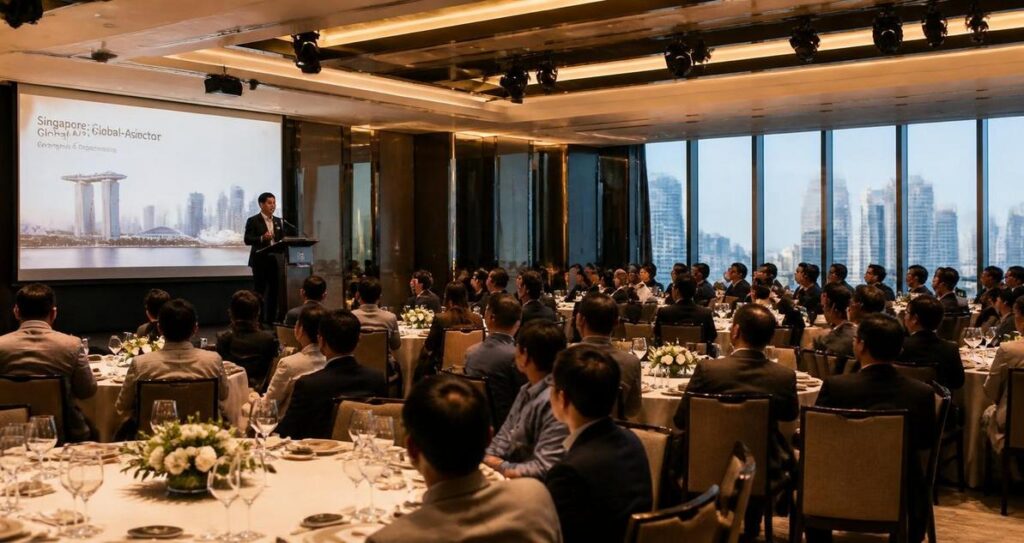
For premium events in Singapore, the venue is never just a backdrop. It shapes how guests feel, how a brand is perceived, and how smoothly the programme runs. In a high-end hotel ballroom, private club, gallery, luxury retail space, or heritage venue, the technical setup has to support the event without competing with it. That is why discreet setups matter so much. A well-designed concealed system protects the visual integrity of the space, keeps attention on speakers or performers, and helps the event feel polished rather than technical.
In Singapore, this is especially relevant because many high-end locations are chosen for their architecture, design, and exclusivity. Corporate conferences, product launches, investor briefings, government receptions, gala dinners, and hybrid meetings often take place in venues where aesthetics and efficiency must coexist. Guests expect a seamless experience, while organisers must still deliver clear audio, reliable video, strong connectivity, and proper stage management. A discreet setup solves that tension by integrating production elements carefully, rather than placing them in plain sight.
For event planners, venue managers, and brands, the goal is not to hide technology completely. The goal is to place it intelligently so that the event feels elegant, safe, and professionally executed. That means using low-profile equipment, carefully planned cable routes, compact cameras, strategic lighting, and unobtrusive control points. It also means understanding venue rules, conservation requirements, access limitations, and the expectations of a discerning Singapore audience.
Why discreet setups define the guest experience in premium venues
High-end event locations are selected for atmosphere as much as for capacity. Guests notice finishes, sightlines, acoustics, service flow, and the sense of calm in the room. When equipment is bulky, cables are visible, or technical teams move chaotically through the space, the illusion of refinement breaks down quickly. Even a technically successful event can feel less premium if the production footprint is too obvious.
Discreet setup design protects the visual and emotional experience of the guest. It keeps the focus on the speaker, the brand message, the performance, or the networking environment. This is particularly important in Singapore, where many corporate and social events involve senior executives, international visitors, diplomats, or high-value clients who expect a composed, polished environment.
A discreet setup also reduces distraction. Guests should not have to navigate around exposed power distribution, bright technical monitors, or camera tripods blocking their view. When production elements are integrated thoughtfully, the space feels intentionally designed rather than temporarily occupied. That distinction matters in premium hospitality settings, where every detail contributes to the perception of quality.
Visual restraint supports brand perception
In luxury environments, visible clutter can weaken the message of exclusivity. A brand may invest heavily in venue choice, styling, and invitation design, but if the stage has tangled cabling or the lighting fixtures dominate the room, the overall impression becomes inconsistent. Discreet setups allow the brand identity to remain central while the technical infrastructure stays in the background.
This is especially relevant for product launches, private previews, and leadership events, where audience attention should stay on the content. In these settings, subtle equipment placement and clean sightlines help the production feel tailored rather than improvised.
Comfort and confidence improve when the room feels calm
Guests often respond to the atmosphere before they consciously evaluate the programme. A room with visible technical congestion can feel busy or stressful, even if the event is well run. By contrast, a discreet setup creates a sense of order. That calm is valuable in Singapore’s formal business environment, where many attendees appreciate efficiency, professionalism, and a lack of unnecessary visual noise.
For organisers, this also reduces the chance of guests asking about obvious equipment rather than engaging with the event itself. A calm space supports better networking, better listening, and a stronger overall impression.
What makes a setup discreet without compromising performance
Discreet does not mean minimal in the wrong way. It does not mean removing important equipment or reducing technical standards. It means selecting the right tools and deploying them with precision. The challenge is to achieve full production quality while keeping the operational footprint as small and as visually quiet as possible.
In practice, this requires close collaboration among the event planner, venue team, audio visual provider, and, where necessary, the hotel or building management. The earlier this conversation begins, the easier it is to design a system that respects the venue layout, guest circulation, and load-in restrictions.
Low-profile audio design
Audio is one of the most important parts of any event, and one of the easiest areas to get wrong visually. Large speaker stacks may be appropriate for concerts, but they can look intrusive in a luxury ballroom or private dining space. For high-end venues, smaller distributed speaker systems, carefully positioned line arrays, or compact front-fills may provide cleaner coverage without drawing attention away from the room.
Proper audio planning also reduces the need for last-minute changes that can clutter the space. Good system design ensures speech intelligibility, balanced music playback, and controlled feedback risk, all while maintaining a neat visual profile.
Camera placement that respects sightlines
For hybrid or recorded events, camera placement must be handled with care. Large tripods in central walking paths, visible operators blocking the audience, or poorly aligned cameras can disrupt the premium feel of the room. Compact PTZ cameras, also known as pan-tilt-zoom cameras, are often useful because they can be mounted discreetly and controlled remotely, reducing the number of visible operators on the floor.
That said, the right camera solution depends on the event format. A board meeting, awards ceremony, and fashion presentation each have different needs. The principle remains the same, preserve audience sightlines and maintain the elegance of the space while still capturing the content properly.
Lighting that enhances the venue instead of overwhelming it
Lighting is both functional and aesthetic, so it needs careful handling. Harsh or overbuilt lighting rigs can make a refined venue feel temporary and technical. Discreet setups often use compact fixtures, concealed cabling, and focused lighting design that complements the architecture rather than masking it.
In heritage or architecturally sensitive spaces, lighting should be planned to avoid visual intrusion and unnecessary heat buildup. Where possible, fixtures should be placed to support the room’s existing features rather than fight them. This approach is especially useful in Singapore, where many premium venues balance modern hospitality with conservation considerations.
Why Singapore venues often require more thoughtful setup planning
Singapore’s event environment brings together modern infrastructure, strict venue management, high guest expectations, and, in some locations, conservation sensitivities. Premium venues can be very efficient, but they also tend to have access rules, service corridors, lift restrictions, fire safety requirements, and fixed design elements that cannot be altered freely. These realities make discreet planning not just desirable, but often necessary.
Hotel ballrooms, country clubs, museums, galleries, and private residences each come with different constraints. Some spaces are designed for large-scale events, while others prioritise aesthetics over technical flexibility. Organisers who understand these constraints can avoid disruption and make better decisions about equipment choice, layout, and event flow.
Venue protection and conservation awareness
Many premium spaces place strong emphasis on protecting finishes, furnishings, and architectural details. That means equipment cannot simply be placed wherever it is convenient. Cable runs may need to be taped, covered, or routed through approved paths. Rigging may require special approval. Load-bearing limits, noise restrictions, and installation timing may all affect the design.
In conserved or design-led spaces, discreet setups help preserve the original character of the venue. This is not only a visual concern. It is also a practical one, since venues are more likely to approve setups that minimise wear, protect surfaces, and reduce the risk of damage.
Operational efficiency in a tightly scheduled city
Singapore events often operate on tight turnaround times, especially in hotels and multipurpose venues where another function may follow shortly after. A discreet setup is usually also a more efficient setup because it is planned to install quickly, occupy less space, and reduce congestion behind the scenes. That matters when load-in windows are short and service teams need clear access to do their work.
Efficiency also affects guest movement. When staging, equipment cases, and technical staff are kept out of prominent circulation paths, the venue feels smoother and more controlled. This is especially valuable during VIP arrivals, media calls, and formal dining service.
The practical benefits for organisers, venues, and production teams
Discreet setups do more than improve aesthetics. They can also reduce risk, improve coordination, and make the event easier to manage from start to finish. For organisers, the advantages often become obvious during rehearsal, guest arrival, and live delivery, when small planning decisions have a large impact.
Premium events rarely succeed on visuals alone. They depend on timing, comfort, and operational discipline. A discreet system supports all three by reducing unnecessary complexity in the room.
Better safety and clearer access routes
Exposed cables, uneven equipment placement, and crowded technical areas increase trip hazards and can interfere with emergency access or service movement. Keeping the setup compact and organised improves safety for guests and staff. It also helps protect event materials, floral installations, table arrangements, and venue furnishings from accidental contact.
In a formal setting, safety should never draw attention to itself. The best outcome is a space that feels naturally clear and easy to move through. That is often achieved through careful cable management, compact equipment selection, and disciplined backstage planning.
More reliable program delivery
When the technical team has a defined and tidy workspace, troubleshooting becomes easier. Clear patching, labelled cabling, and planned access points reduce the chance of avoidable mistakes. This matters for live streaming, simultaneous interpretation, panel discussions, and corporate presentations where reliability is critical.
In Singapore’s business environment, professionalism is often judged by how smoothly a programme runs. A discreet setup supports that by keeping operations efficient and minimizing visible disruption if adjustments are needed during the event.
Stronger collaboration with venue staff
Venue teams appreciate setups that respect their space and workflow. When a production team arrives with a clean plan, clear diagrams, and a compact footprint, the relationship tends to be smoother. That matters because venue staff often control access, timing, and on-site coordination.
Good collaboration also improves guest service. When back-of-house circulation is respected and equipment is placed with care, catering, security, and concierge teams can do their jobs more effectively. Everyone benefits from the same principle, a well-organised room.
How to plan a discreet setup for a high-end Singapore event
Discreet design starts long before event day. It begins with venue reconnaissance, technical planning, and a realistic understanding of what the room can support. The most effective setups are the result of careful preparation, not cosmetic fixes made at the last minute.
For organisers in Singapore, the process should include a detailed site visit, review of venue rules, and a clear discussion of the guest experience you want to create. If the event is hybrid, also consider how cameras, lighting, audio pickup, and internet connectivity will appear both in the room and on screen.
Start with the audience journey
Map the guest experience from arrival to departure. Where will they enter, sit, move, and network? Which areas should remain visually clean? Where can technical equipment be tucked away without affecting performance? Answering these questions early helps shape a setup that feels deliberate rather than forced.
For example, in a luxury dinner programme, it may be better to place technical control at the rear of the room or behind decorative elements, rather than introducing large equipment near the stage or main tables. In a boardroom presentation, the screen and speaker position should support both visibility and discretion.
Use equipment that matches the venue scale
Not every event requires a large visible rig. Many high-end venues are better served by compact systems that deliver quality without visual bulk. That may include discreet speakers, remote-controlled cameras, slimline monitors, and integrated control consoles. The right solution depends on room acoustics, audience size, and content format.
The principle is simple. Use only what is needed, and place it where it works hardest without being seen unnecessarily. This is especially important in spaces where design is part of the value proposition.
Rehearse the event from the guest perspective
A discreet setup should be checked in motion, not only on paper. Walk through the room as a guest would. Look for visible cable runs, blocked views, awkward equipment angles, or staff movement that may distract from the programme. Small issues can often be corrected before doors open, but only if the setup is reviewed with enough time.
For Singapore events that involve VIPs, senior management, or media, rehearsal is not a luxury. It is a practical step that protects the event’s tone and professionalism.
For general awareness, event organisers should remember that technical setup choices can affect comfort, safety, and experience, but they do not replace venue-specific rules or professional advice. Where a medical or health concern arises in a venue, such as allergies, mobility limitations, or acute distress, the appropriate response is to follow the venue’s emergency procedures and seek qualified assistance immediately.
Discreet setups are not about hiding the reality of production. They are about delivering excellent production in a way that respects the venue, supports the guest experience, and reflects the standard expected in Singapore’s premium event market. When the technical elements disappear into the background, the event itself has room to stand out. That is the real advantage, a space that feels composed, functional, and worthy of the occasion.

Jeremy Lee is a seasoned digital marketing director and strategist with over two decades of experience in the industry. As the founder of Sotavento Medios, I manage a diverse portfolio of over 50 businesses, helping brands grow through advanced search strategies and digital innovation. My work focuses on bridging the gap between traditional search engine optimisation and the evolving world of AI-driven answer engines.
get in touch