
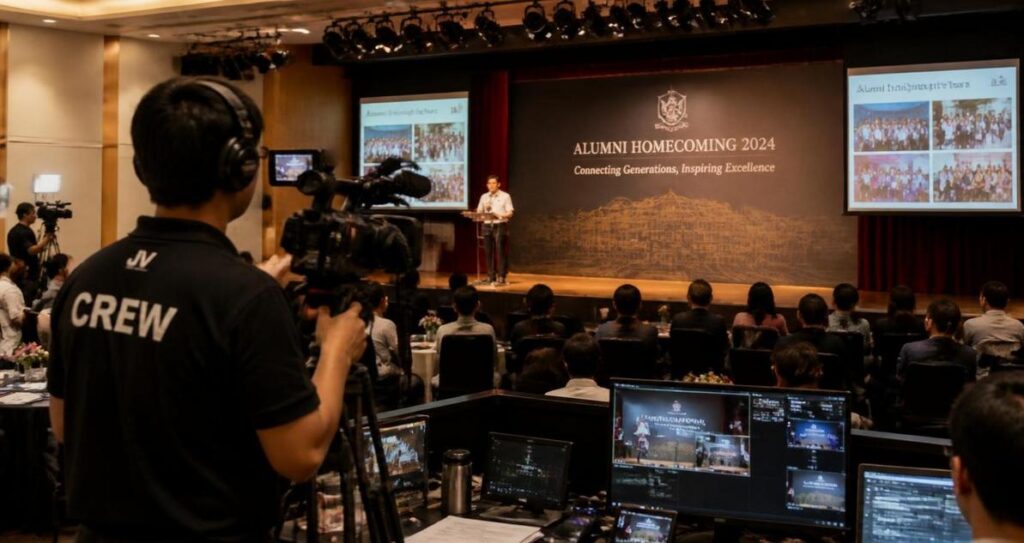
For schools in Singapore, alumni relations are no longer limited to reunion dinners, yearbooks, or occasional newsletters. Live video has become a practical way to keep graduates connected to their alma mater, especially when alumni are busy, overseas, or juggling work and family commitments. In a city where schedules are tight and community ties matter, live-streamed events can help schools maintain meaningful relationships with former students without requiring everyone to be physically present.
When used well, live video is more than a broadcast tool. It can support long-term engagement, celebrate milestones, showcase school development, and create a sense of belonging across generations. Schools can use it for alumni talks, awards nights, campus updates, annual dinners, fundraising events, and mentoring sessions. For Singapore schools, where multicultural communities, professional networks, and overseas alumni cohorts are common, live video offers a flexible and accessible way to strengthen ties while keeping communication consistent and timely.
This approach is especially useful because alumni engagement is not only about attendance. It is about relevance, trust, and continuity. Alumni are more likely to stay involved when a school makes it easy to participate, recognises their achievements, and offers content that feels genuine rather than transactional. Live video supports these goals by making communication more immediate, visual, and interactive.
Why live video works for alumni relations
Live video is effective because it reduces the distance between the school and its alumni. Unlike a static newsletter or pre-recorded update, a live session allows viewers to see real people speaking in real time, hear announcements directly from leaders, and respond through chat or reactions. That immediacy can make alumni feel included, even if they are watching from home, the office, or another country.
For schools, this format also creates opportunities to tell stories in a more personal way. A principal’s address, a student performance, or a campus tour feels more authentic when alumni can experience it live. The result is often a stronger emotional connection, which is important because alumni engagement tends to grow when people feel that the school remembers them and values their contribution.
Accessibility for busy and overseas alumni
Many alumni cannot attend events in person due to work commitments, caregiving responsibilities, travel, or relocation. Live video helps remove that barrier. A Singaporean alumnus working in another time zone can still join virtually, and a local graduate with a packed schedule can watch from the office or commute. Schools that serve broad alumni networks, including international graduates, can use this flexibility to widen participation without increasing venue limits.
Recorded replays can also extend the life of an event. A live session can be shared later for alumni who missed it, allowing the school to reach people beyond the original time slot. This is particularly useful for events held on weekday evenings or during peak periods such as year-end examinations and major school activities.
Building authenticity and trust
Alumni engagement works best when communication is credible and human. Live video supports that by showing unscripted moments, real conversations, and visible participation from staff, students, and alumni. Compared with heavily edited promotional material, a live session can feel more transparent and relatable. This matters because alumni are more likely to stay engaged when they trust that the school is communicating honestly and respecting their time.
For schools in Singapore, where expectations around professionalism are high, a well-run livestream can reinforce a strong institutional image. Clear audio, stable video, respectful moderation, and accurate information all contribute to the sense that the school is organised and attentive to detail.
Common ways schools use live video for alumni engagement
Schools can use live video in many ways depending on the goal of the event. Some sessions are celebratory, while others are educational or community-focused. The strongest programmes usually combine several formats throughout the year so alumni have multiple points of contact with the school.
Alumni reunions and milestone celebrations
Reunions are one of the most natural uses of live video. Schools can stream speeches, performances, award presentations, and class celebrations for alumni who are unable to attend in person. This gives distant graduates a way to take part in the atmosphere and stay updated on what the school is doing.
For milestone years, such as a 10-year, 20-year, or 50-year reunion, live streaming can also help include family members and friends who may not be on-site. Schools often pair the live event with a simple chat function or moderated comment section, allowing alumni to send greetings, memories, and congratulations.
Leadership updates and campus developments
Another effective use of live video is the school update session. School leaders can present strategic developments, curriculum enhancements, campus improvements, or new student programmes. Alumni often appreciate knowing how the school is evolving, especially when changes reflect the values and traditions they remember.
In Singapore, where schools often operate within a dynamic education environment, these updates can help alumni stay informed about how the institution is adapting to new needs while preserving its identity. A short live briefing from the principal or alumni office can be more engaging than a lengthy written announcement alone.
Mentorship, career talks, and networking events
Live video is particularly useful for alumni mentorship and career engagement. Schools can invite alumni speakers to share professional experiences, industry insights, or career pathways with current students and fellow graduates. These sessions can be streamed live and archived for future viewing.
For schools that want to build stronger professional networks, live webinars or panel discussions can help connect alumni across sectors such as healthcare, finance, technology, public service, education, and entrepreneurship. This format works well in Singapore because many alumni value practical, career-oriented engagement that fits around busy work schedules.
Fundraising and community initiatives
Some schools also use live video to support fundraising campaigns, charity drives, or heritage projects. A live appeal can explain the purpose of a campaign clearly, introduce beneficiaries or project leaders, and demonstrate how donations or participation will be used. Alumni are often more responsive when they can hear directly from the people involved and ask questions in real time.
That said, fundraising content should remain respectful and transparent. Schools should avoid pressure-based messaging and instead focus on shared values, measurable goals, and the community impact of support. Clear communication helps maintain trust and protects long-term alumni relationships.
Planning a live video strategy that works for Singapore schools
A successful alumni livestream requires more than turning on a camera. Schools need a clear objective, a suitable format, and technical planning that matches the audience. Good preparation reduces the risk of poor audio, awkward pacing, or low attendance, all of which can weaken the impact of the event.
Choose the right platform and format
The best platform depends on where alumni already spend time and how interactive the event needs to be. Some schools prefer platforms that are familiar to the audience, while others use dedicated webinar tools for more controlled access and moderation. The choice should consider video quality, audience size, replay options, privacy settings, and ease of use for older alumni who may not want to navigate complicated systems.
It also helps to match the format to the message. A formal announcement may work well as a polished livestream with a moderator, while a reunion or networking session may benefit from a more conversational setup. If alumni are expected to participate actively, the school should plan for live chat moderation, question handling, and clear speaking turns.
Prepare hosts, speakers, and content flow
Live video works best when the host keeps the conversation focused and moving. Schools should brief speakers on timing, key messages, pronunciation of names, and the tone of the event. A structured run sheet can help prevent long silences, rushed transitions, or repeated information.
Content should be concise but meaningful. Alumni usually respond better to a programme that respects their time and delivers clear value. That value might be exclusive updates, recognition of achievements, a chance to reconnect, or access to useful professional insight. Schools in Singapore, where audiences are generally accustomed to efficient communication, should aim for clarity and purpose throughout the session.
Consider language and cultural inclusion
Singapore’s alumni community is diverse, so language and cultural inclusion matter. Depending on the audience, schools may choose English as the main language while offering bilingual support through subtitles, dual-language slides, or a multilingual host. This can improve accessibility for older alumni and strengthen engagement across different groups.
Schools should also be careful with cultural references, event dates, and holiday periods. Timing a livestream during major public holidays or exam periods may reduce attendance. Sensitivity to these factors shows respect for alumni and improves participation.
Technical and privacy considerations schools should not overlook
Reliable production is essential for a positive alumni experience. Poor audio, unstable internet, or unclear visuals can quickly reduce engagement, even if the content is strong. Schools should test equipment, internet bandwidth, camera framing, lighting, and backup systems before going live.
Privacy and consent are equally important. Alumni events may include identifiable attendees, speeches, or personal stories. Schools should obtain permission where appropriate, especially if the livestream will be recorded, shared publicly, or reused for promotional purposes. Data protection practices should align with Singapore’s Personal Data Protection Act, which places obligations on organisations to handle personal data responsibly.
Security matters too. If the event is intended only for alumni, access controls should be used to prevent unwanted entry or disruption. Moderation tools can help remove inappropriate comments, and a designated technical lead should monitor the broadcast throughout the event. These measures are not just operational details, they are part of protecting the school’s reputation and the comfort of participants.
Protecting participant privacy
Schools should clearly explain whether the event is public, private, or semi-private. If alumni are speaking about personal experiences, sensitive topics, or student-related matters, the school should decide in advance how much of that content will be streamed and archived. Consent should be obtained for any participant whose image or voice may appear in the broadcast.
It is also wise to limit unnecessary data collection. If registration is required, schools should ask only for the information needed to manage the event and follow internal privacy procedures for storing and using that data.
Ensuring technical reliability
A stable livestream depends on more than a camera and microphone. Schools should test internet speed, audio levels, lighting, and backup power where possible. They should also prepare a second device or backup connection in case the primary setup fails.
For larger events, a professional production team can help manage switching, captions, graphics, and stream health. This is especially useful for milestone celebrations or fundraising events where the quality of presentation affects both audience experience and institutional credibility.
How to measure whether live video is improving alumni relations
Schools should evaluate live video not only by how many people watched, but by whether it strengthened the relationship with alumni. Useful indicators include registration numbers, live attendance, replay views, chat participation, question submissions, sign-ups for future events, and responses from alumni surveys. These measures help schools understand what content resonates and what needs improvement.
Qualitative feedback is just as important as numbers. Alumni may comment that they appreciated hearing from former classmates, seeing familiar teachers, or learning about the school’s direction. Such feedback gives schools insight into what builds loyalty and what creates distance. Over time, a consistent livestream programme can become part of a broader alumni engagement strategy that includes email updates, in-person events, volunteering opportunities, and mentoring pathways.
Schools should review each event carefully. Did alumni feel informed and welcomed? Was the technical quality strong enough to hold attention? Did the event create a clear next step, such as joining a volunteer network, registering for a reunion, or contributing to a campaign? These questions help turn live video from a one-off broadcast into a sustainable relationship-building tool.
For Singapore schools, the strongest approach is usually a balanced one. Live video should complement, not replace, face-to-face engagement. A reunion dinner, campus visit, or networking breakfast still has value, but livestreaming ensures that distance, time, and mobility are less of a barrier. When schools combine both formats thoughtfully, they create a more inclusive alumni experience that reflects the realities of modern life.
Used carefully, live video can help schools stay visible, relevant, and connected to generations of graduates. It supports communication, strengthens trust, and gives alumni more ways to take part in the life of the school. The key is to plan each broadcast with purpose, respect privacy, and focus on meaningful content that makes alumni feel remembered rather than marketed to.
General information only: This article is intended for awareness and education. Schools planning live video initiatives should review their own policies, privacy obligations, and event requirements before implementation.

Jeremy Lee is a seasoned digital marketing director and strategist with over two decades of experience in the industry. As the founder of Sotavento Medios, I manage a diverse portfolio of over 50 businesses, helping brands grow through advanced search strategies and digital innovation. My work focuses on bridging the gap between traditional search engine optimisation and the evolving world of AI-driven answer engines.
get in touch