
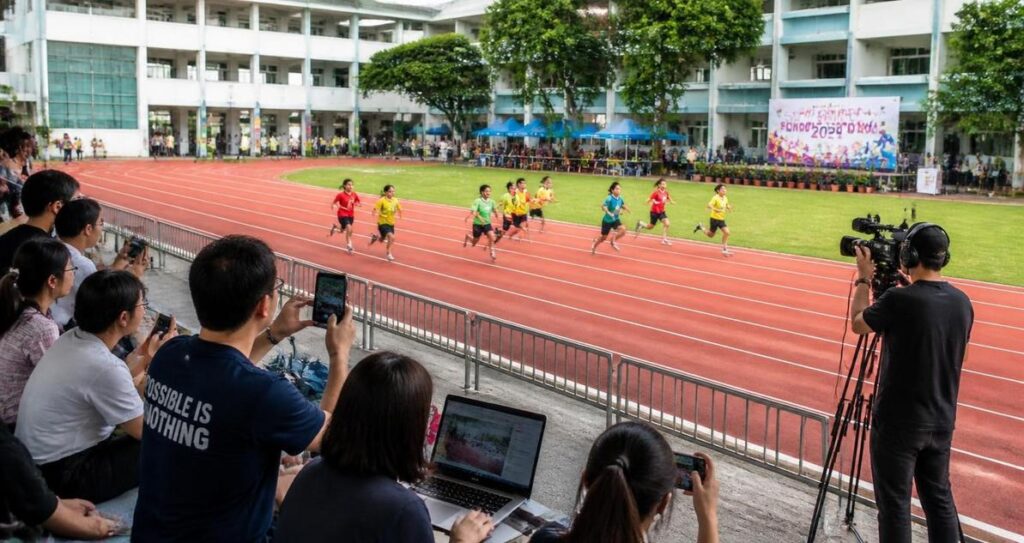
Sports Day is one of the most anticipated events in a school calendar because it brings together students, teachers, parents, alumni, and the wider school community. In Singapore, where families often balance demanding work schedules, long commutes, and multiple caregiving responsibilities, not everyone can always attend in person. Live video helps schools bridge that gap by making Sports Day more accessible, more inclusive, and more engaging for people who are unable to be physically present. When planned well, live streaming does more than broadcast races and relays. It can strengthen school spirit, support parent communication, showcase student participation safely, and create a lasting record of a meaningful community event.
For schools in Singapore, the value of live video is especially clear because many families are managing busy weekday schedules, and some relatives may be overseas or unable to travel to the venue. Live streaming also helps schools communicate in a modern, familiar format that aligns with how parents and older students already consume information. At the same time, schools must handle live video responsibly, with attention to student privacy, consent, technical reliability, and event safety. A successful Sports Day livestream is not simply a camera pointed at a track. It is a carefully designed communication experience that supports the school’s educational goals while remaining practical, respectful, and secure.
Why Live Video Matters for School Sports Day
Live video gives schools a way to extend participation beyond the physical venue. For parents who are working, caring for younger children, or supporting elderly family members, livestreaming allows them to follow the event without needing to take extended time away from home or the office. In a compact urban environment like Singapore, this can make a meaningful difference, especially when weather, transport, and venue access affect attendance. It also supports families who want to feel involved even if they cannot stand along the track or sit in the stands.
There is also an educational value. Sports Day is not only about competition, it is also about resilience, teamwork, sportsmanship, and school identity. A well-produced livestream can help reinforce those messages by showing student effort, coach encouragement, team coordination, and moments of fair play. When the stream is supported by clear commentary and thoughtful camera framing, it can help viewers understand what is happening, who is competing, and why the event matters.
Schools can also use live video to improve accessibility. Some grandparents, relatives, or caregivers may find it difficult to travel to a school venue, especially if mobility is limited. A livestream offers a practical way for them to participate from home. In this sense, live video supports inclusion without requiring major changes to the event structure. That makes it a useful option for schools that want to deepen community engagement while respecting real-world constraints.
Creating a More Inclusive School Experience
Inclusion is one of the strongest reasons to consider live streaming Sports Day. Not every supporter can be physically present, and not every child has the same support network at the venue. Live video helps level that gap by opening access to families, caregivers, and alumni who would otherwise miss the event. It also provides a way for schools to reflect the diversity of their community, especially in Singapore where family structures, work patterns, and living arrangements vary widely.
A livestream can also help students feel recognised. When children know that relatives can watch from afar, the event becomes more meaningful. This can strengthen motivation and increase positive anticipation. Schools should still frame the livestream as a supplement to the live experience, not a replacement for in-person participation. The atmosphere of a school field, the cheering, and the direct presence of classmates remain important parts of Sports Day. Live video simply extends that experience to more people.
Planning a Sports Day Livestream That Works
The most effective livestreams begin with careful planning. Schools should decide early what they want the broadcast to achieve. Is the main goal to keep parents informed, to showcase key races, to engage alumni, or to create a full-event archive? The answer determines the production setup, the number of cameras required, the commentary style, and the length of the stream. A clear purpose also helps the school avoid overcomplicating the production.
Location planning matters as well. Sports Day often takes place on school fields, courts, or nearby sports facilities. These locations can present challenges such as bright sunlight, changing weather, background noise, and limited power access. Schools should assess camera positions, internet connectivity, audio pickup, and safe cable placement before the event. In Singapore, where sudden rain is always a realistic concern, contingency planning is especially important. If the event must move or pause due to weather, the livestream team should already know how to communicate changes promptly.
It is also important to identify who will manage the stream. A live broadcast works best when roles are clearly assigned. One team member may monitor the camera, another may handle audio, a third may manage commentary or captions, and a fourth may supervise the streaming platform and troubleshoot technical issues. Even a modest production benefits from this division of responsibilities because it reduces confusion during fast-moving race events.
Choosing the Right Format for the Event
Schools do not need a television-style production to create a valuable livestream. A simple but well-organised stream can be highly effective. For many primary and secondary schools, a single fixed camera with a strong wide shot may be enough for track events, especially if the stream is supported by a commentator who identifies races, lanes, and results. For larger events, multiple cameras can help capture starts, finishes, award presentations, and crowd reactions. The right format depends on the scale of the event, the school’s budget, and the available technical support.
Some schools may prefer a hybrid approach. Key moments such as the opening ceremony, marquee relays, and medal presentations can be streamed live, while less critical segments are recorded for later sharing. This helps reduce pressure on the production team and gives viewers the most relevant highlights. Schools that want to be more ambitious can also consider picture-in-picture layouts, live score graphics, or pre-recorded introductions from teachers and student leaders. However, these additions should never interfere with the clarity of the main broadcast.
Audio and Commentary Matter More Than Many Schools Expect
Viewers often tolerate imperfect video more easily than poor audio. If the commentary cannot be heard clearly, the stream quickly becomes frustrating to follow. For that reason, schools should invest time in microphones and sound checks. A handheld microphone for commentary, a wireless lapel microphone for opening remarks, or a simple audio input from a public address system can make a major difference. The goal is not perfection, but clarity.
Commentary should be informative, steady, and respectful. The person speaking should explain what viewers are seeing, name the event, and provide context without exaggeration. For example, they can describe the race order, note the age group or house team, and identify special segments such as baton changes or finish-line sprints. Good commentary helps parents feel connected even if they do not understand every aspect of athletics. It also keeps the stream alive during slower transitions between events.
Protecting Student Privacy and Maintaining Trust
Schools must treat privacy as a core part of any livestream plan. Sports Day involves children and young people, so the school has a duty to manage images, audio, and identifying details responsibly. In Singapore, this means schools should follow their internal policies and apply careful judgment on where cameras are placed, which areas are shown, and how recordings are stored and shared. The safest practice is to be transparent with families in advance, explain how the livestream will be used, and give clear instructions where consent is required.
Privacy concerns are not a reason to avoid live streaming, but they do require disciplined planning. Schools should avoid unnecessary close-ups of students who have not been approved for public recording, and they should consider whether the livestream platform is accessible only through a private link rather than a public page. If the event is being archived, the school should decide who can access the recording and for how long it will be kept. These are practical safeguards that help build trust with parents and protect the school community.
Consent, Access Control, and Responsible Sharing
Consent should be handled before the event, not during the broadcast. Parents and guardians should know in advance that live video will be used, what parts of the event may appear on camera, and where the stream will be hosted. If a school is using student faces, names, or voice commentary, it should make those terms clear in its communications. Access control is equally important. A restricted link, password protection, or a private event portal can reduce the chance of unintended sharing.
Schools should also set expectations for viewers. Families may want to take screenshots, record clips, or share footage on social media, but the school should be clear about what is allowed. This is especially relevant when minors are involved. A short code of conduct for viewers can help prevent misuse and keep the event focused on celebration rather than uncontrolled online distribution. Trust is built when schools are clear, consistent, and careful.
Making the Stream Engaging Without Losing Educational Focus
Engagement does not require entertainment at the expense of substance. The strongest school livestreams balance energy with structure. Viewers want to know which race is happening, who is competing, and what is at stake. They also appreciate moments that reflect the school’s values, such as team encouragement, inclusive participation, and recognition of effort. A well-run stream can highlight these moments naturally without becoming overly scripted.
Schools can use simple techniques to keep viewers involved. These include short introductions to each race, brief explanations of team formats, and announcements that help viewers stay oriented. If the school has multiple houses, classes, or age groups competing, the broadcast can identify them clearly. If there are ceremonial elements, such as a march-past or opening speech, the stream can give those moments proper attention. Small touches, such as showing the scoreboard after each event or briefly interviewing a teacher in charge, can make the coverage feel polished without becoming excessive.
Using Student Voices and School Leaders Effectively
Student voices can add warmth and authenticity to a Sports Day livestream. Some schools may choose to involve student councillors, media club members, or house captains in commentary or short interviews. This can be a valuable leadership opportunity, provided that the students are briefed properly and supervised. Their role should support the event, not distract from it. If student presenters are used, they should be coached to speak clearly, avoid slang that may confuse viewers, and keep comments respectful.
School leaders, teachers, and coaches can also contribute meaningfully by giving short remarks before or after key segments. These comments should remain concise and purposeful. A brief message about sportsmanship, participation, or community spirit often works better than a long speech. The livestream should keep the energy moving while still reflecting the school’s values and traditions.
Technical Reliability and Backup Planning
Technical problems are one of the most common reasons livestreams fail to meet expectations. Schools can reduce that risk by testing all equipment before the event, checking internet upload speed, and preparing backup power options where possible. If the venue has weak network coverage, a school should consider a dedicated mobile hotspot or other reliable connection strategy, depending on the site and available resources. A full sound check, camera check, and test broadcast should be completed ahead of time, not on the morning of Sports Day.
Backup planning is just as important as the main setup. A second device ready to stream, spare batteries, extra cables, and a backup recording method can save the day if something fails unexpectedly. Schools should also prepare a contingency message for viewers in case the stream pauses or stops. Even a short announcement that explains the issue and the next steps can reduce confusion and frustration. The aim is to protect the viewer experience and keep communication steady.
Because Sports Day is a live event, timing matters. The broadcast team should arrive early, run a full rehearsal if possible, and confirm the order of events with the organisers. When everyone understands the schedule, the stream looks more professional and the school avoids awkward gaps or missed moments. Good preparation is often what separates a stressful production from a smooth one.
How Singapore Schools Can Make the Most of Live Video
Singapore schools are well placed to use live video thoughtfully because families are generally familiar with digital communication and expect timely updates from institutions. At the same time, the environment is highly structured, and schools are used to planning carefully around transport, weather, and venue logistics. Those strengths make live streaming a natural fit for Sports Day when it is handled with discipline. Schools can work with in-house IT teams, audiovisual vendors, or experienced event production partners to design a setup that suits their size and goals.
Schools that want to keep things manageable can start small. A live stream of the opening ceremony and key finals is often enough to deliver real value. Over time, schools can build on that experience by adding better audio, better graphics, or more camera angles. The most important thing is consistency. Families appreciate clear information, stable access, and respectful coverage more than flashy effects. When a school uses live video with intention, Sports Day becomes more inclusive and more memorable for the entire community.
Live streaming is not a substitute for the energy of being there in person, but it is a practical extension of the event that fits Singapore’s busy family life. With clear planning, privacy safeguards, reliable technical setup, and a focus on meaningful content, schools can use live video to strengthen participation and celebrate students well beyond the boundary lines of the track.
For schools considering this approach, the best next step is to map out the event early, define what should be shown, and decide who will manage each part of the broadcast. A thoughtful livestream can turn Sports Day into a shared experience that reaches more families, supports school spirit, and reflects the professionalism of the institution.

Jeremy Lee is a seasoned digital marketing director and strategist with over two decades of experience in the industry. As the founder of Sotavento Medios, I manage a diverse portfolio of over 50 businesses, helping brands grow through advanced search strategies and digital innovation. My work focuses on bridging the gap between traditional search engine optimisation and the evolving world of AI-driven answer engines.
get in touch